A status report is a fantastic opportunity to update your boss on the progress of tasks, even if they haven't specifically asked for it. This report not only informs your supervisor about advancements but also boosts your confidence in the direction you’re taking. In this article, we’ll go through the key steps to make your status report clear and engaging.
Creating a Status Report
Step 1. Specify the Report Title and Date.
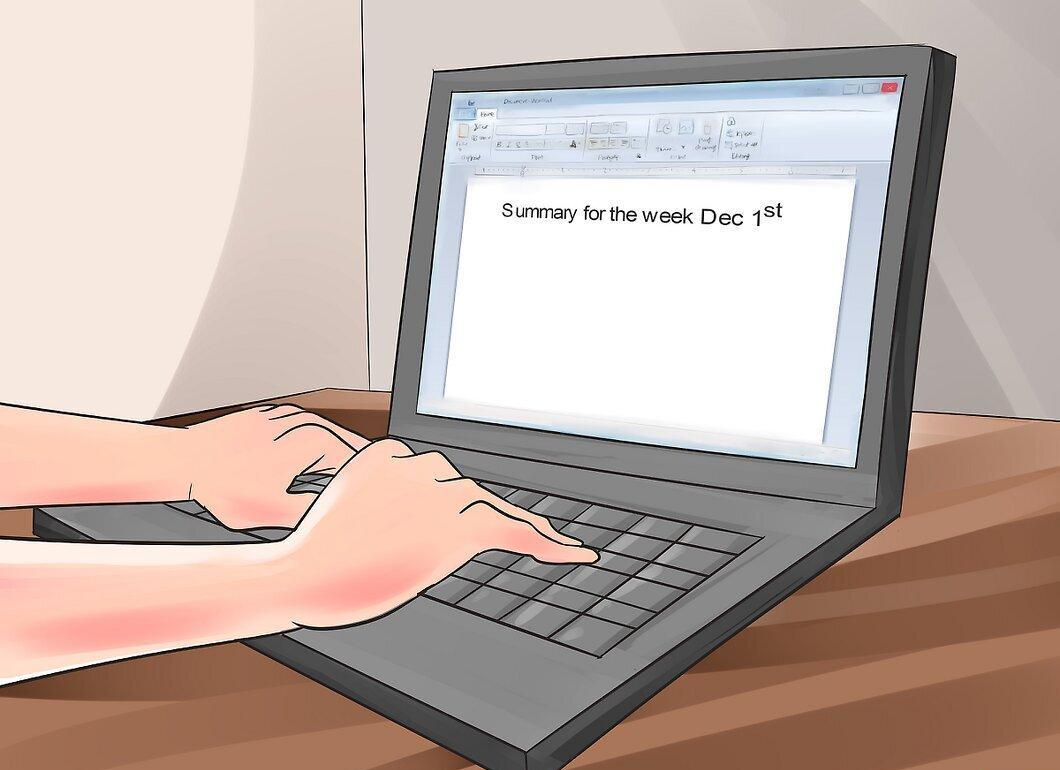
Start with a title that includes the date, such as "Weekly Report for December 1st" — a simple yet effective approach. Don’t forget to include the date within the report itself.{{#txtscrl:Title and date of the report||Weekly Report for December 1st}}
- If you're sending the report via email, mention this in the email subject.
- If it’s a separate document, place this information in the header at the top of the page.
Step 2. Clarify Which Project You're Referring To.
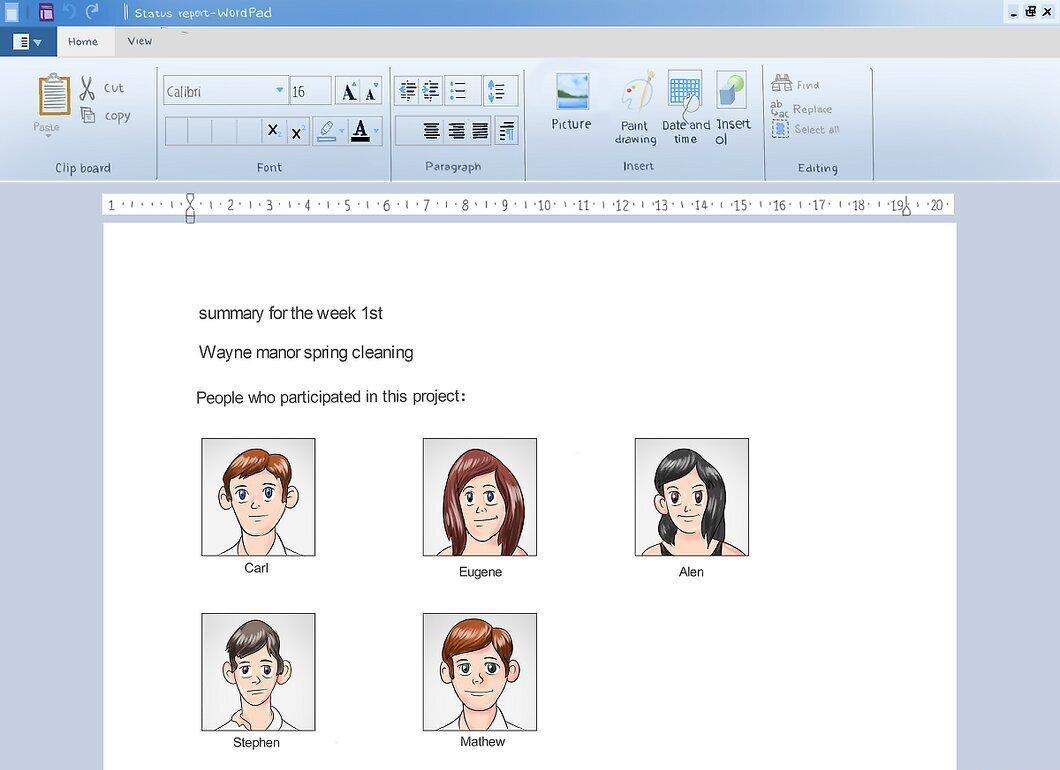
Describe the project, including its name, purpose, start and end dates, as well as the names of team members involved.{{#txtscrl:Provide details clarifying which project this is|Weekly Report for December 1st|Sergeyev K., Spring Cleaning Project}}
Step 3. Outline What Has Been Accomplished So Far.
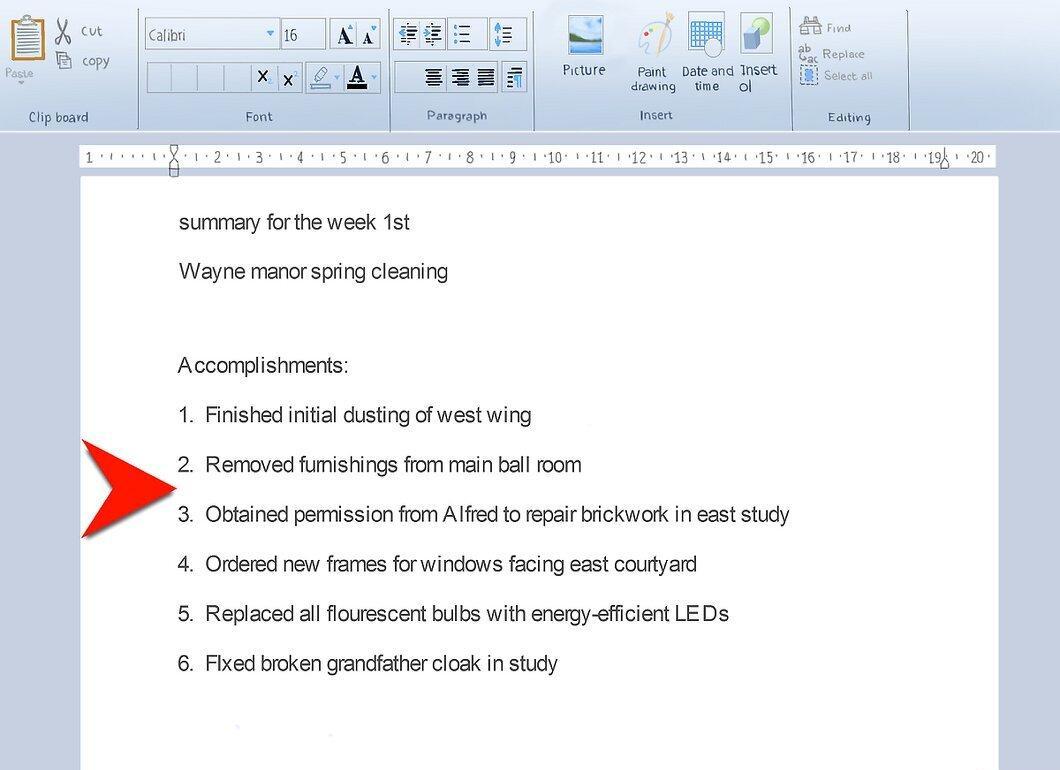
List the tasks that have already been completed. Break this section into parts with headings like "Completed" or "Finished Tasks".{{#txtscrl:Explain what part of the work has already been completed|Weekly Report for December 1st|Sergeyev K., Spring Cleaning Project|Completed: • Initial dusting in the west wing finished • Furniture moved from the main banquet hall • Permission obtained from Nikolaev for masonry work in the east office • New window frames ordered for the eastern courtyard • All fluorescent lamps replaced with energy-saving LED bulbs • Old floor clock repaired in the office}}
- Don't forget to specify the period for which the report is made (week, month, etc.).
- Use active verbs at the beginning of sentences, such as completed, defined, developed, organized, etc.
- For a brief report, 3-6 bullet points will suffice.
Step 4. List the Tasks Planned for the Next Period.

Create a list of what you plan to accomplish before the next report. Suitable headings include "Next Steps" or "Planned Tasks".{{#txtscrl:Tasks to be completed for the next reporting period|Weekly Report for December 1st|Sergeyev K., Spring Cleaning Project|Completed: • Initial dusting in the west wing finished • Furniture moved from the main banquet hall • Permission obtained from Nikolaev for masonry work in the east office • New window frames ordered for the eastern courtyard • All fluorescent lamps replaced with energy-saving LED bulbs • Old floor clock repaired in the office|To be completed: • Sweep and wax the floors • Update the parquet flooring in the banquet hall • Replace chipped bricks in the office • Replace window frames}}
- Provide estimated completion dates for tasks if possible. For example: "Document changes to the support structure. (Deadline: 2 days)".
- Refer to previous plans if they exist.
- For a short report, 3-6 sentences will also be sufficient.
Step 5. Identify Current or Potential Issues.
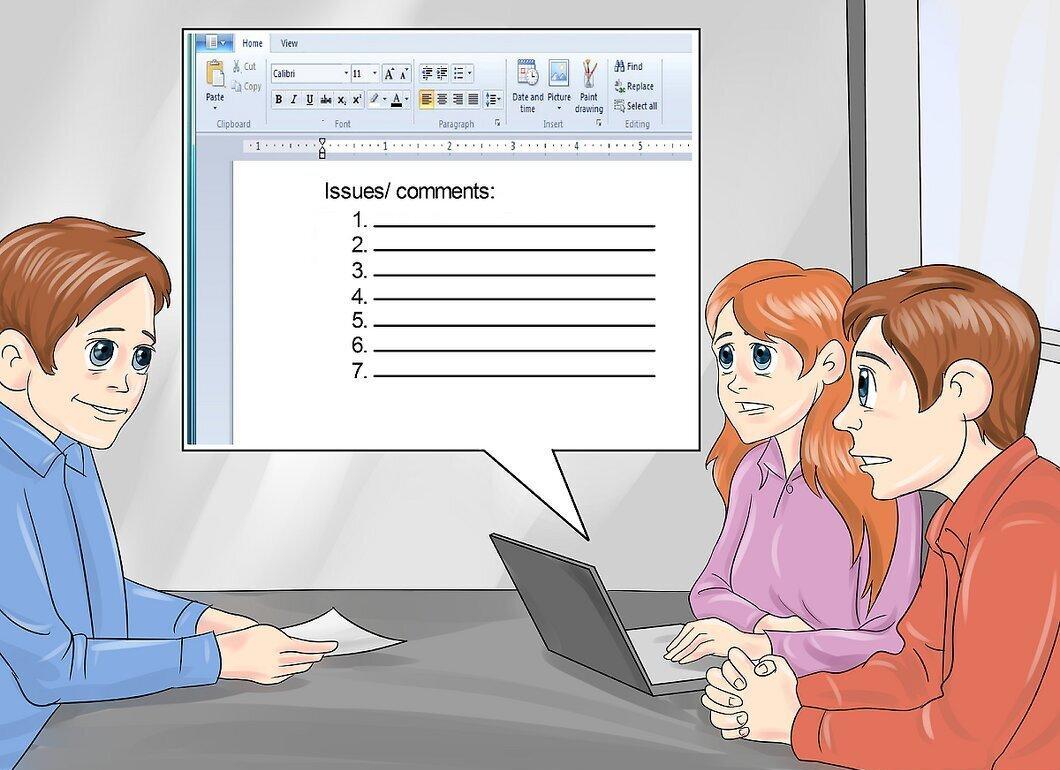
Highlight any current or potential issues, specifying if assistance is needed. Suitable headings could be "Open Questions" or "Issues and Comments".{{#txtscrl:Discuss current or potential issues|Weekly Report for December 1st|Sergeyev K., Spring Cleaning Project|Completed: • Initial dusting in the west wing finished • Furniture moved from the main banquet hall • Permission obtained from Nikolaev for masonry work in the east office • New window frames ordered for the eastern courtyard • All fluorescent lamps replaced with energy-saving LED bulbs • Old floor clock repaired in the office|To be completed: • Sweep and wax the floors • Update the parquet flooring in the banquet hall • Replace chipped bricks in the office • Replace window frames}}
- You might be facing difficulties with suppliers or want to suggest improvements in the work process. Include these points in this section.
- If you're merely reporting a problem and do not require assistance, make it clear that you plan to address the situation independently. A phrase like "We plan to sort this out in the next couple of days" will show that you don’t need intervention, just oversight.
- If the problem isn’t resolved, your manager will have no reason to fault you for not warning them.
Step 6. Proofread and Send to the Appropriate Recipient.

Make sure to proofread the text for errors before sending it to the designated recipient.{{#txtscrl:Check for errors|| &# 8227; Check for errors and send it to the appropriate person}}