Packing for a trip becomes much easier when you plan ahead. Before you embark on your journey, decide what essentials to bring based on the weather, destination, and activities planned. It’s also helpful to have a sturdy bag for your essentials. Regardless of the type of bag or suitcase you choose, you can always pack your items as compactly as possible to save space. Always place toiletries, medications, and valuables, such as jewelry, in a separate travel bag.
Optimize Your Bag Space
Step 1. Decide Whether to Fold or Roll Your Clothes.
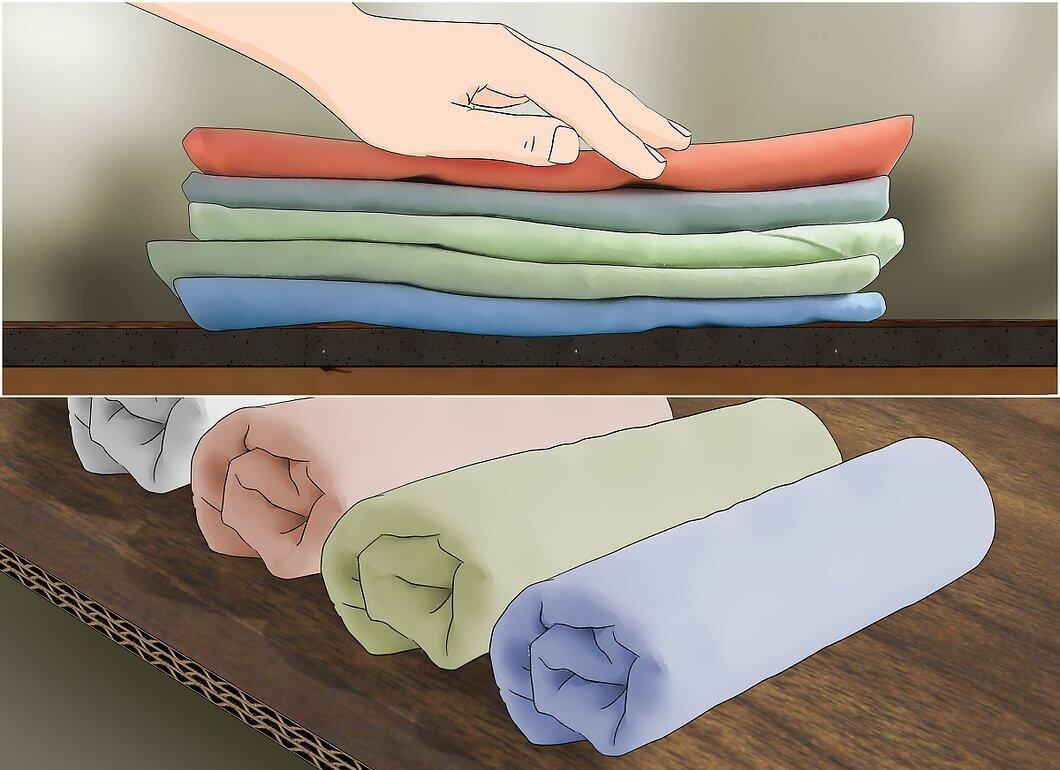
Decide whether to fold or roll your clothes. If you need more space in your suitcase and weight isn’t a concern, roll your clothes into tight cylinders. They will take up significantly less space compared to folded shirts or pants. If you don’t need much space and want to avoid overloading your suitcase, then folding is the way to go. Generally, if you have items that wrinkle easily, it’s better to fold them too.
- Roll your items as tightly as possible to save even more space. You can even use rubber bands or hair ties to keep your clothes tightly rolled.
- To maintain order in your suitcase, tightly pack rolled items, making this method ideal for those trying to fit as much as possible into a small bag.
Step 2. Use Packing Cubes to Keep Everything Organized.
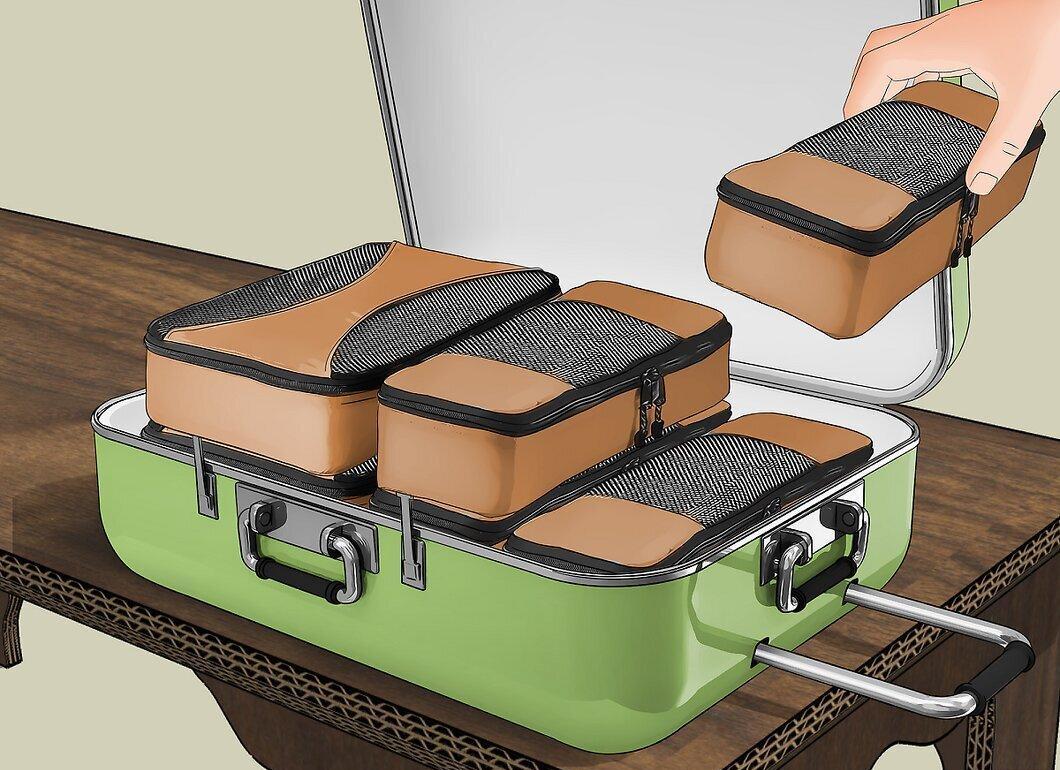
Use packing cubes to keep everything organized. Packing cubes are small bags that can be used to sort items in your suitcase. Depending on your needs, they can be chosen based on clothing capacity, weight, or for packing different types of items. For example, you can purchase large, medium, and small cubes for different types of items, or use one to fit all your shirts, underwear, and more.
- Packing cube sets are sold in many stores as well as online.
- You may find vacuum bags; however, consider whether you will be able to unpack everything after opening them. They will take up more space once you open the bag, and you’ll need somewhere to store them unless you have a vacuum pump to re-pack everything.
Step 3. Use the Inside of Your Shoes for Storage.
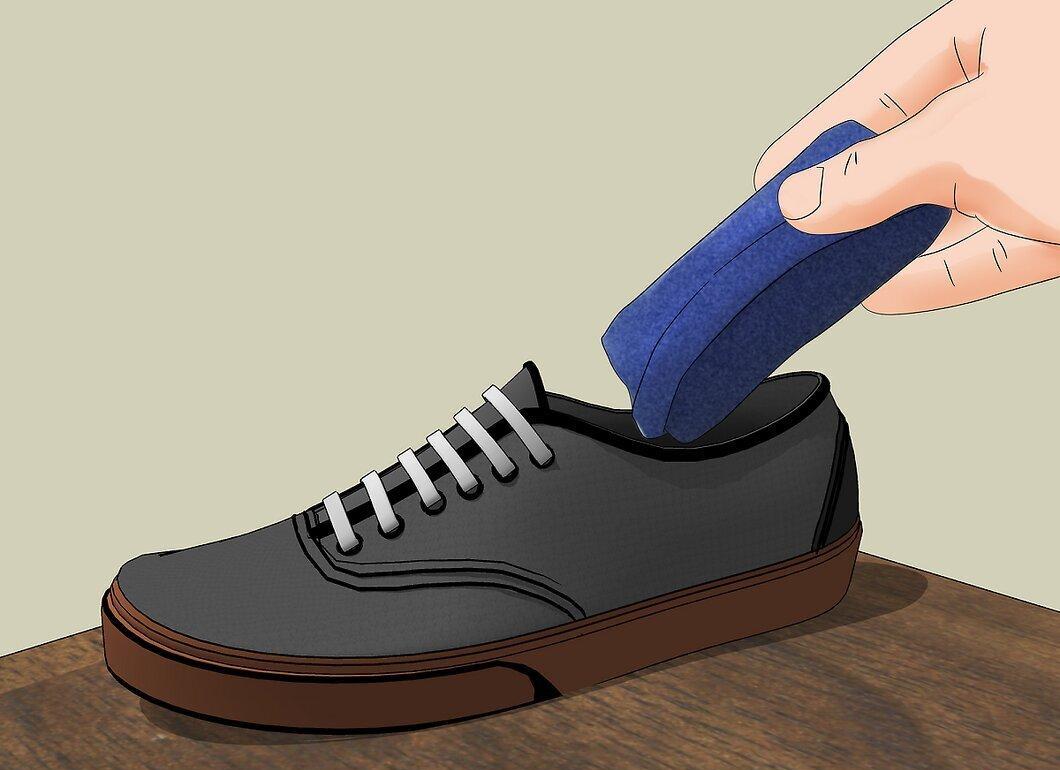
Use the inside of your shoes for storage. Place socks inside your shoes if you run out of space. Other small clothing items, like underwear, can also be easily rolled and tucked away in your shoes. Small, fragile trinkets and souvenirs fit well in shoes too, as they provide extra cushioning and protection.
Step 4. Use Gaps and Empty Spaces to Store Underwear.
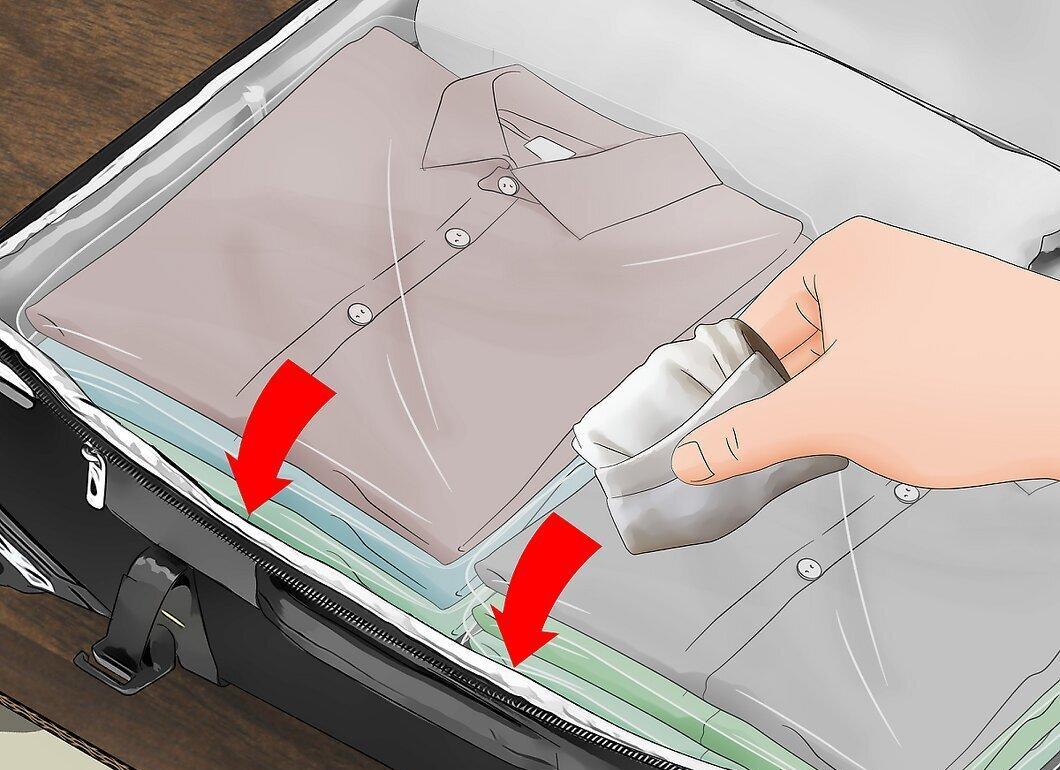
Use gaps and empty spaces to store underwear. Once your suitcase is filled, place underwear and socks along the sides or in the space between clothing. This way, you won’t waste valuable middle space on small items.
Pack Light
Step 1. Check the Weather at Your Destination.
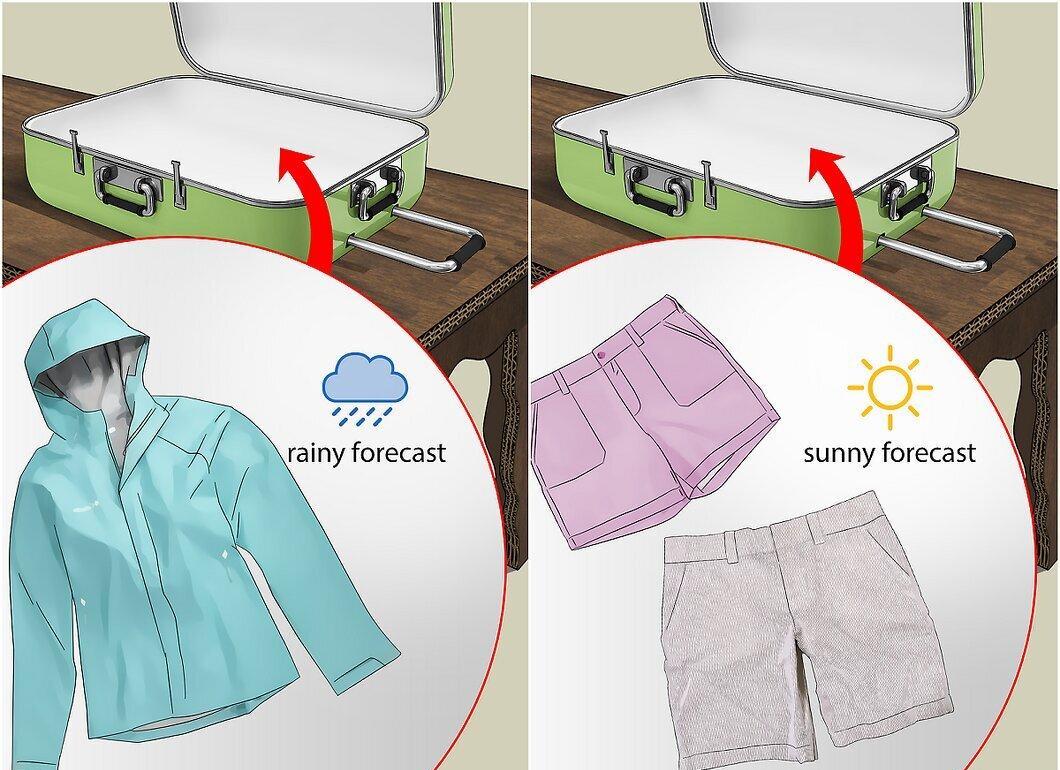
Check the weather at your destination. Look up the information online or check the weather forecast for your travel period. Pack items according to the weather and avoid bringing out-of-season clothing.
- Is it going to rain? Pack a rain jacket or something that dries quickly when wet. If it’s going to be hot, include shorts.
- Conversely, if it’s going to snow all the time, it’s probably best to leave the shorts at home, no matter how cool they are.
Step 2. Plan Your Wardrobe According to Your Travel Schedule.
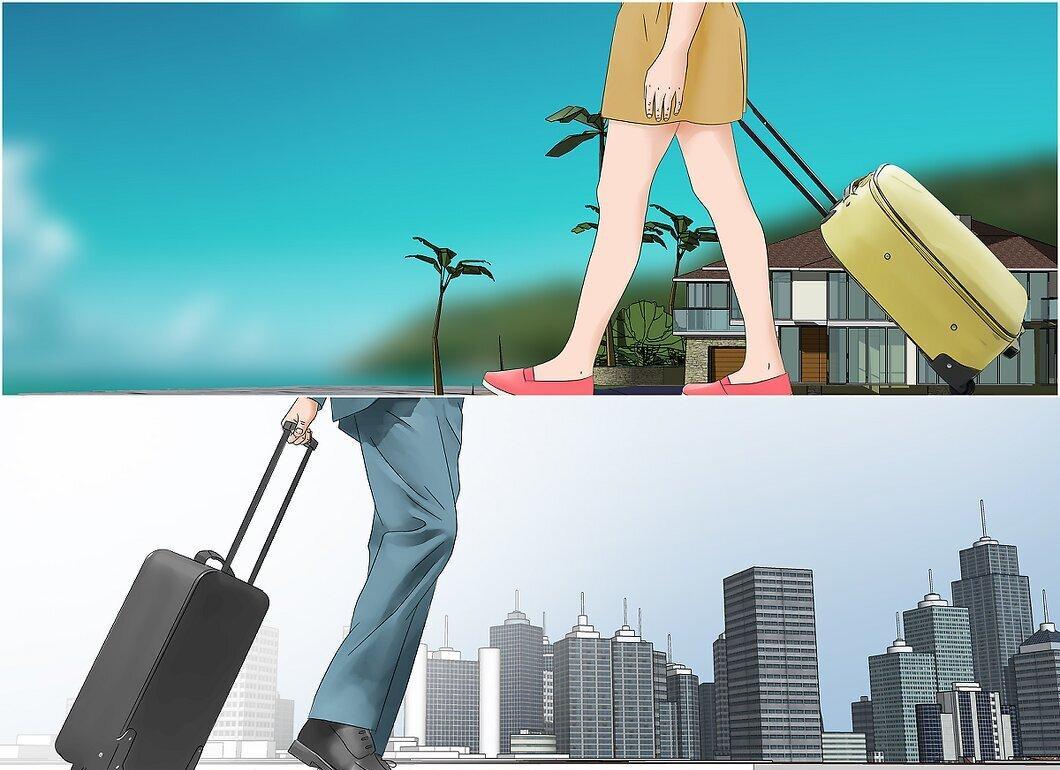
Plan your wardrobe according to your travel schedule. Think about what you will be doing during the trip and choose appropriate clothing. For instance, if you plan to spend most of your time at the beach, the majority of your clothes should be swimsuits and light clothing. If you are going on a business trip, you may want to opt for more professional attire—classic shirts and a blazer.
- Where possible, plan each day in advance. Pack complete outfits instead of individual pieces. This way, it will be easier to understand what specific clothing to take.
Step 3. Choose Versatile Items.
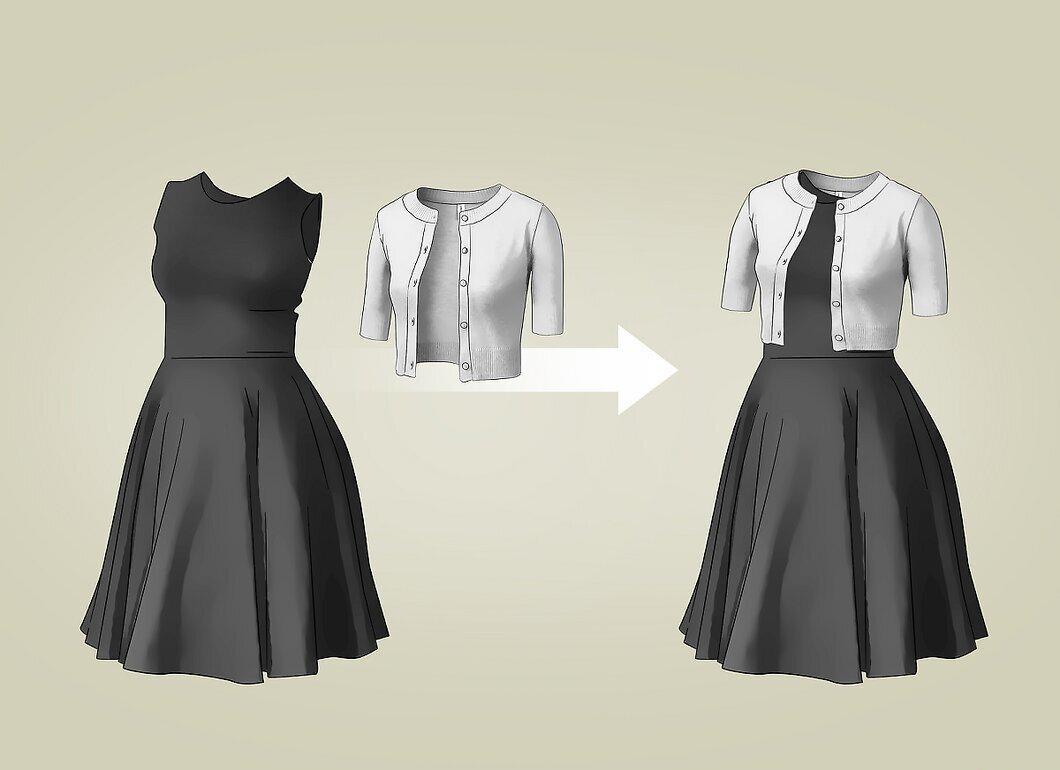
Choose versatile items. While some trips require an outfit for a special occasion, this is more of an exception. In most cases, items that can be dressed up (made more formal) or dressed down (made more casual) depending on the circumstances will suffice. Try to pack items in a cohesive color scheme so that things can mix and match.
- For example, instead of taking two dresses, one for daytime and one for evening, take one nice and comfortable black dress. Wear it with a cardigan or sweater to look casual, or simply wear it as is for an evening out.
- Save suitcase space by bringing 1-2 pairs of neutral shoes that will go with many outfits. For instance, black chunky-heeled ankle boots can replace a pair of flats or high heels, as well as sneakers for walking around the city.
Step 4. Pack Several Lightweight Layers That Can Be Worn Together.
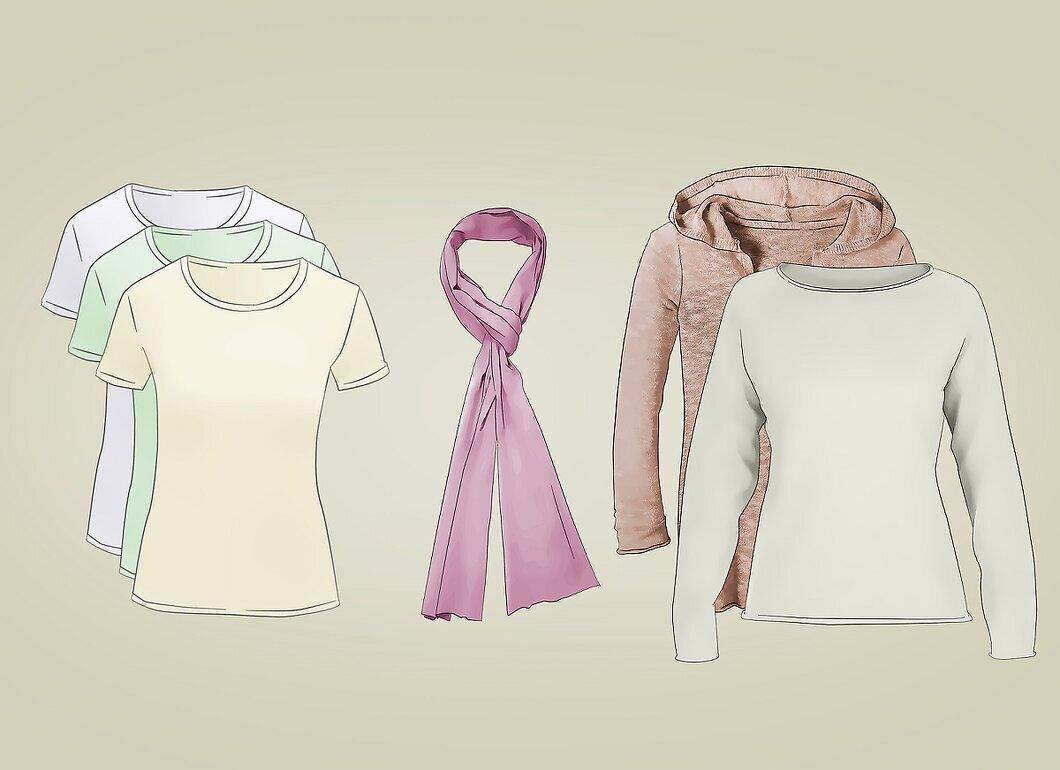
Pack several lightweight layers that can be worn together. These items are usually useful in both warm and cool weather. If you will be in places with varying climates, pack basic t-shirts, light jackets, and sweatshirts, and scarves that can be easily put on or taken off as needed.
- If you’ll be attending various events, bring basic wardrobe staples like skirts or blouses. With a blazer, they will look formal, and with casual accessories, they can look more relaxed.
- Packing several items in layers can be useful but might not be suitable for every trip. If you’re heading to the North Pole in winter, it’s better to take a warm coat rated for sub-zero temperatures rather than a couple of light sweaters.
Step 5. Consider Your Accommodation and Whether There Will Be Laundry Services.
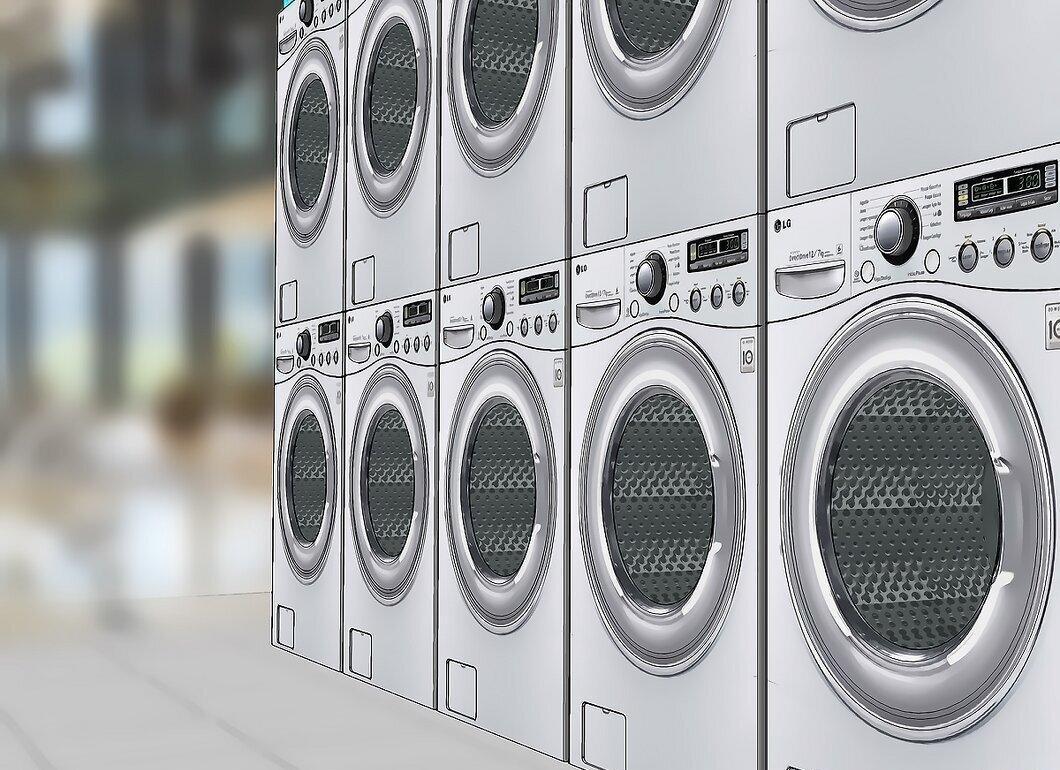
Consider your accommodation and whether there will be laundry services. Some hotels and hostels have laundry facilities for guests. Other places might offer self-service laundry or dry cleaning. Check if there are laundry services where you will be staying or nearby. If so, plan to do laundry 1-2 times so you can rewear clothes instead of needing to buy new ones (which will take up space in your suitcase!).
Step 6. Make a Packing List.
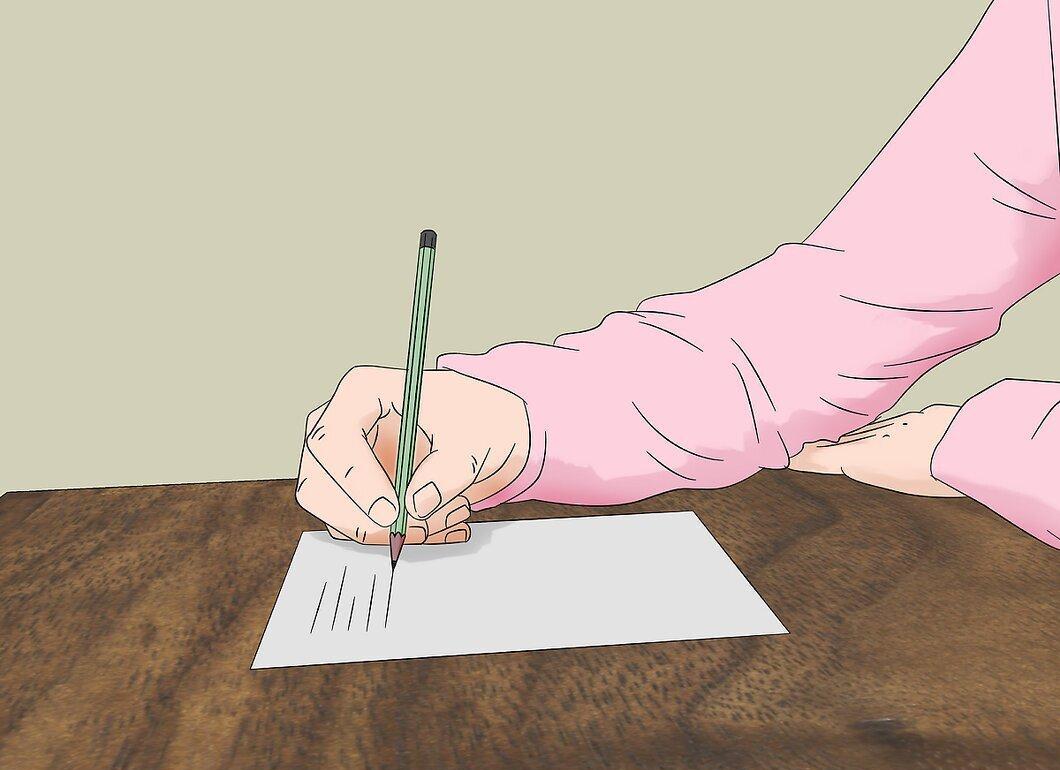
Make a packing list. Once you have a clear idea of the weather and your schedule, create a list of items. This way, you can organize the packing process and only take what you truly need. If an item isn’t on the list, it’s unlikely you need to pack it. EXPERT TIP Allyson Edwards, traveler and international consultant, graduated from Stanford University with a degree in International Relations. She has since worked on developing international partnerships in agencies across over 20 countries and has consulted companies in education, fintech, and retail. Allyson Edwards advises: "I love making a packing list.
- Don’t forget to include underwear, socks, sleepwear, and toiletries on your list. These items are easy to forget.
Get the Most Out of Your Bag
Step 1. Choose the Right Bag for Your Trip.
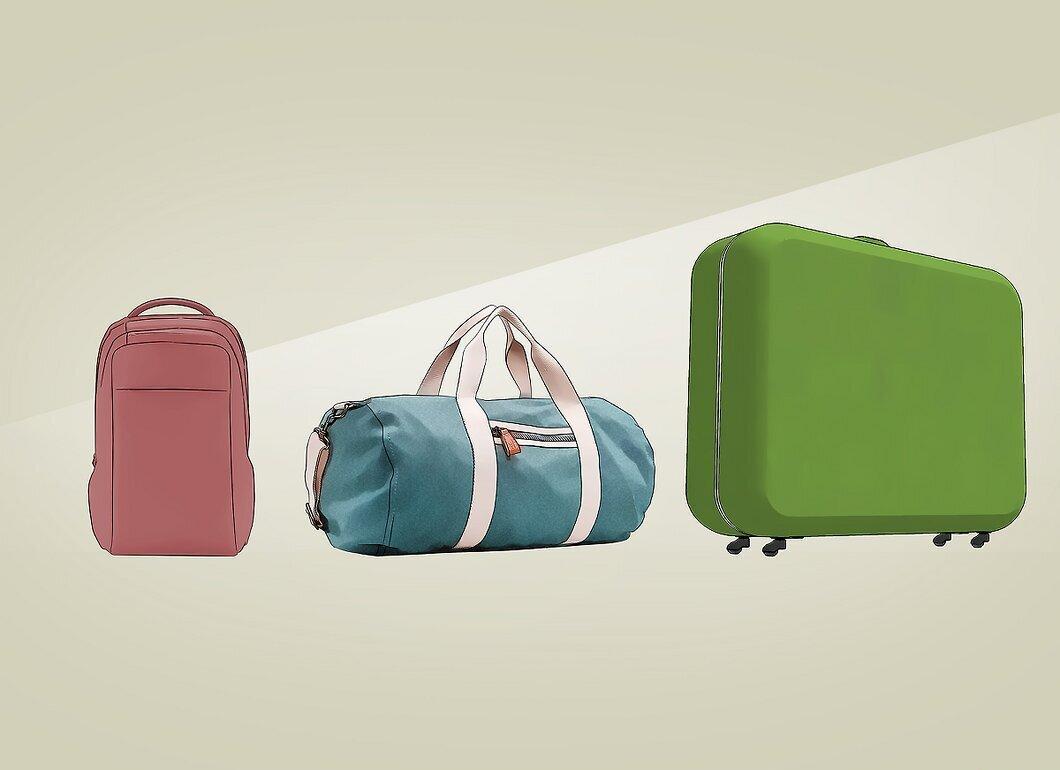
Choose the right bag for your trip. Different trips may have different baggage requirements. Think about what type of luggage will best suit your travel. Is it a short trip? If so, you might want to take a smaller bag. Are you going to multiple places? Consider bringing a convenient backpack instead of a bulky suitcase.
- If you prefer to carry your bag on your shoulder, want to carry it with you, or prefer to pack your items into something softer for easier maneuverability, then a duffel bag would be your best bet.
- Suitcases are generally easier to pack and unpack and provide better organization. However, they can be cumbersome to carry around during the day and hard to store in small spaces.
- Depending on your needs, look for bags with built-in compartments for toiletries, shoes, laptops, and gadgets, as well as clothing pouches and other features.
Step 2. Pack Items in a Duffel Bag Based on Priority.
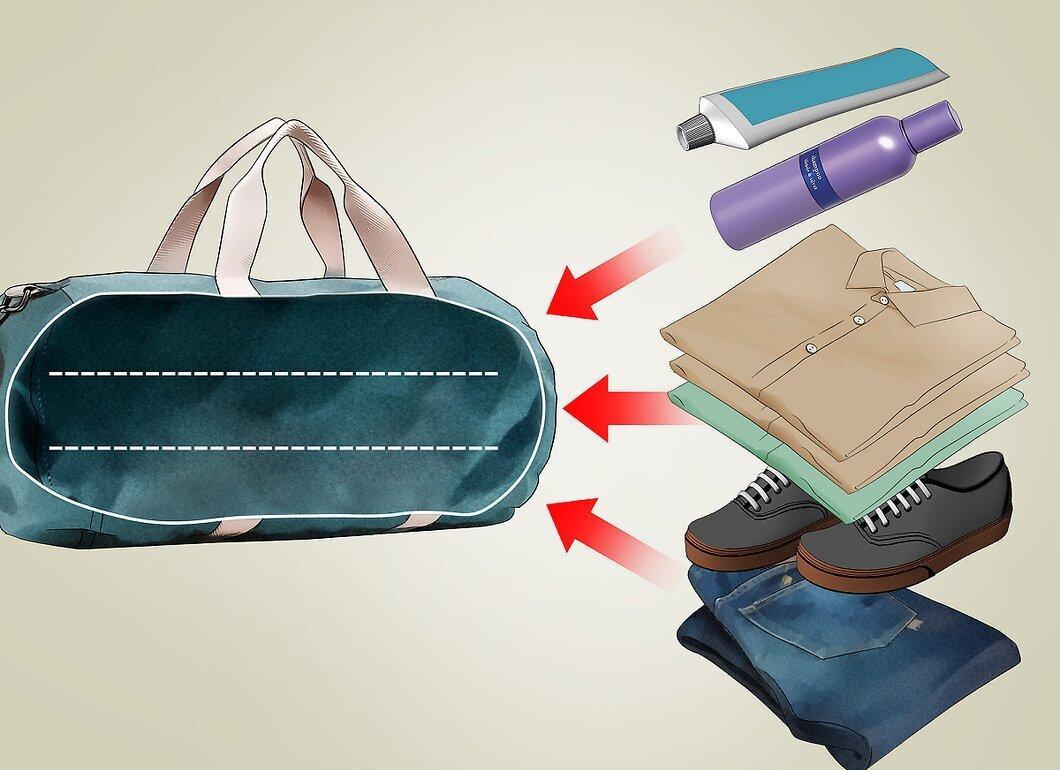
Pack items in a duffel bag by prioritizing them. Duffel bags are great for packing small items, but they open differently than suitcases. This means you need to organize your items so that the most needed items are on top.
- Low-priority items, like spare jeans or shoes, can go at the bottom.
- Items you will need immediately (including toiletries if you will go through security) should be placed on top.
- For fragile items, you can buy a small sturdy container to pack in your bag. Items that might leak, such as shampoo or lotion, should be placed in a waterproof container. Alternatively, you can transfer liquids into special travel-sized bottles.
Step 3. Arrange Your Items in a Suitcase with Heaviest on the Bottom and Lightest on Top.
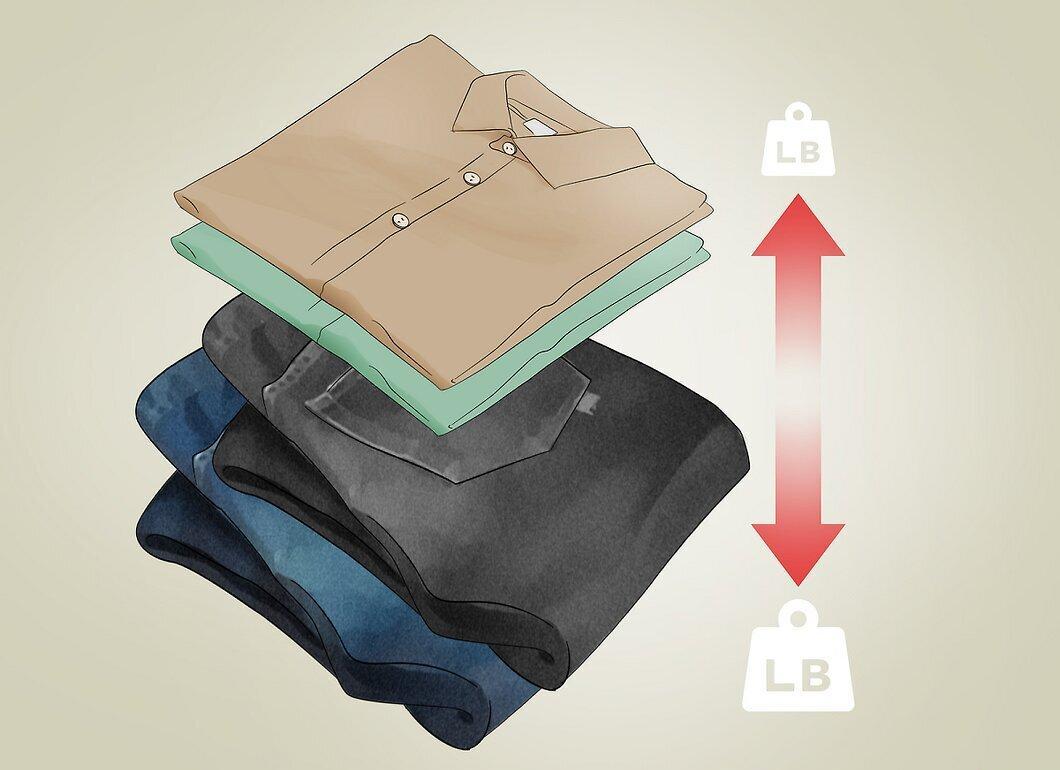
Arrange your items in a suitcase with the heaviest on the bottom and the lightest on top. Always place the heaviest and bulkiest items at the bottom of the suitcase. This makes it easier to find things, plus heavy items won’t crush or damage lighter elements like souvenirs or toiletries.
- Place lighter items, like dress shirts, on top. This way, you’ll distribute the weight evenly, and lighter clothing will wrinkle less.
Step 4. Place Fragile Items in the Center of the Suitcase.
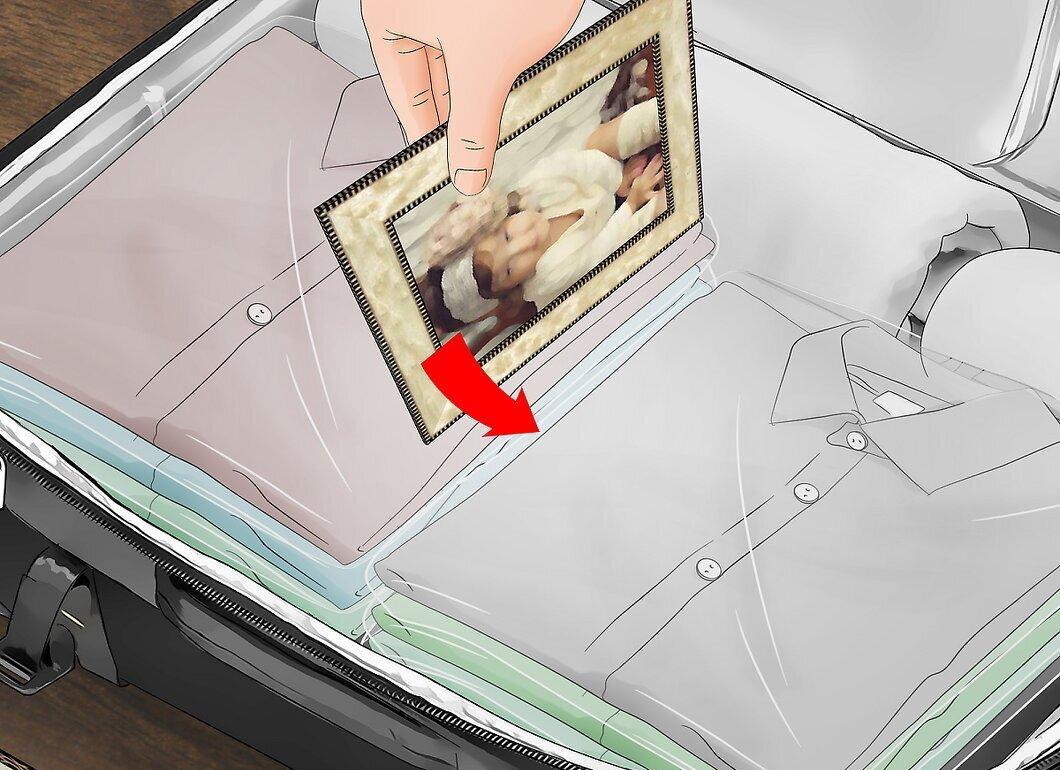
Place fragile items in the center of the suitcase. This way, they are less likely to break. You can also wrap them in t-shirts or other clothing to provide an extra layer of cushioning and protection.
Step 5. Bring Plastic Bags for Dirty Shoes and Laundry.
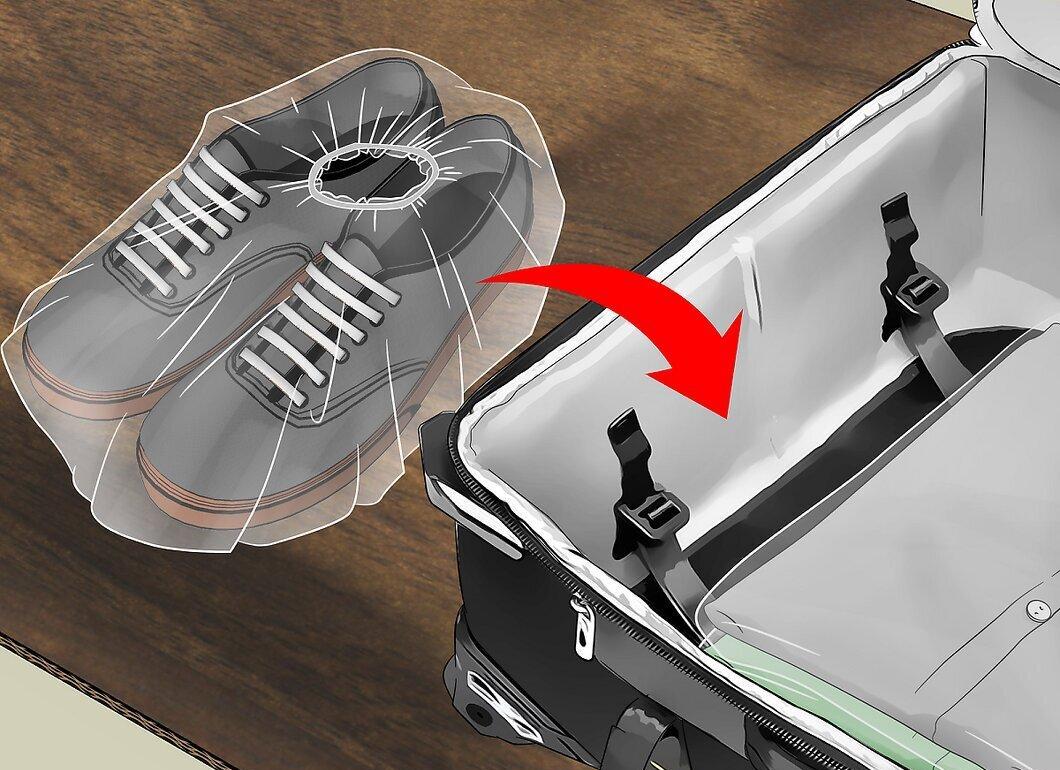
Bring plastic bags for dirty shoes and laundry. Pack a few plastic bags to store dirty shoes or laundry. This way, you won’t have to create a separate bag for dirty clothes or free up a whole section in your suitcase for them. You can use grocery bags, small trash bags, or even shower caps to wrap your shoes.