The Ultimate Guide to Crafting a Debate Plan
Debates are an assignment that students encounter in schools and universities, involving two teams or individuals discussing a predetermined topic. There are numerous approaches to writing a debate plan, similar to how one creates an outline for essays or reports. However, it’s important to remember that debates don’t always take place in an informal setting, so learning how to effectively structure a plan to defend your position is crucial.
Part 1: Creating Your Plan
Step 1. Determine the Format of the Debate.
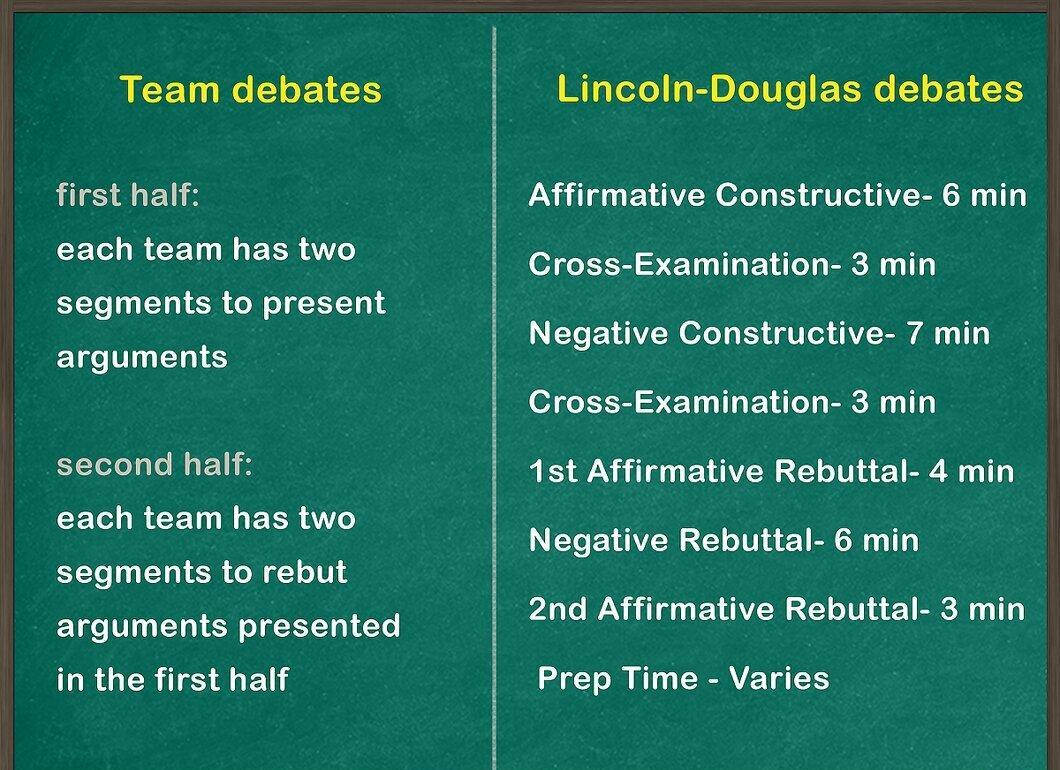
First, choose the format of the debate. Each format has its unique structure, which will serve as the foundation for your plan. In educational settings, two forms are most common, although there are other types of debates that vary by time limits and organization.
- Team Debates — one of the most popular forms. In the first part, each team has two opportunities to present their arguments, and in the second part, they have two chances to refute the opponent's points.
- Lincoln-Douglas Debates. One team presents its arguments first, followed by questioning from the opponent. Then, the second team presents, facing cross-examination, and finally, each team has the right to a closing rebuttal.
Step 2. Conduct Research.

Research is a key stage. Regardless of your debate format, you will have the opportunity to present your arguments. Gather information based on your research and aim to find easily digestible arguments. Write them down. Include quotes, examples, data, and statistics. Don’t forget to cite your sources.
- Use a wide range of resources; don’t limit yourself to the first pages of Google search results. You need reliable evidence, so dig deeper. It’s advisable to visit the library and explore peer-reviewed journals on the topic.
- Every piece of evidence you present should also include potential counterarguments. Prepare in advance, and you’ll find it easier during the debate.
- It’s wise to have a few additional arguments on hand just in case.
Step 3. Follow the Rules of Structuring a Plan.
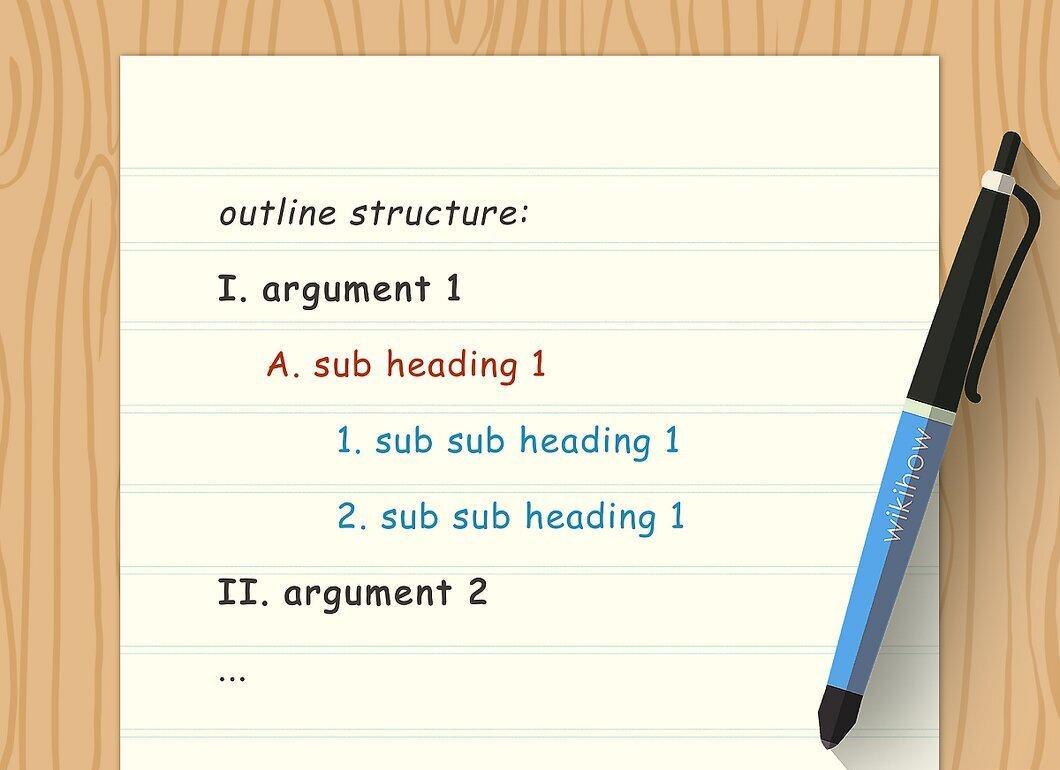
Adhere to the rules of creating a plan. The structure of your plan should correspond to the type of debate. If you’re preparing a plan for a school assignment, it’s best to break it down into categories that need to be considered.
- Divide the information into sections. Use headings for your arguments, while subheadings can contain additional information.
- Use symbols correctly. Main headings should be denoted by Roman numerals (I, II, III, IV), subheadings by capital letters (A, B, C), and subsections by Arabic numerals (1, 2, 3). Maintain this sequence in your plan.
- Start each section with a paragraph. This will help maintain the flow of arguments and keep your plan structured.
Step 4. Outline Your Arguments.
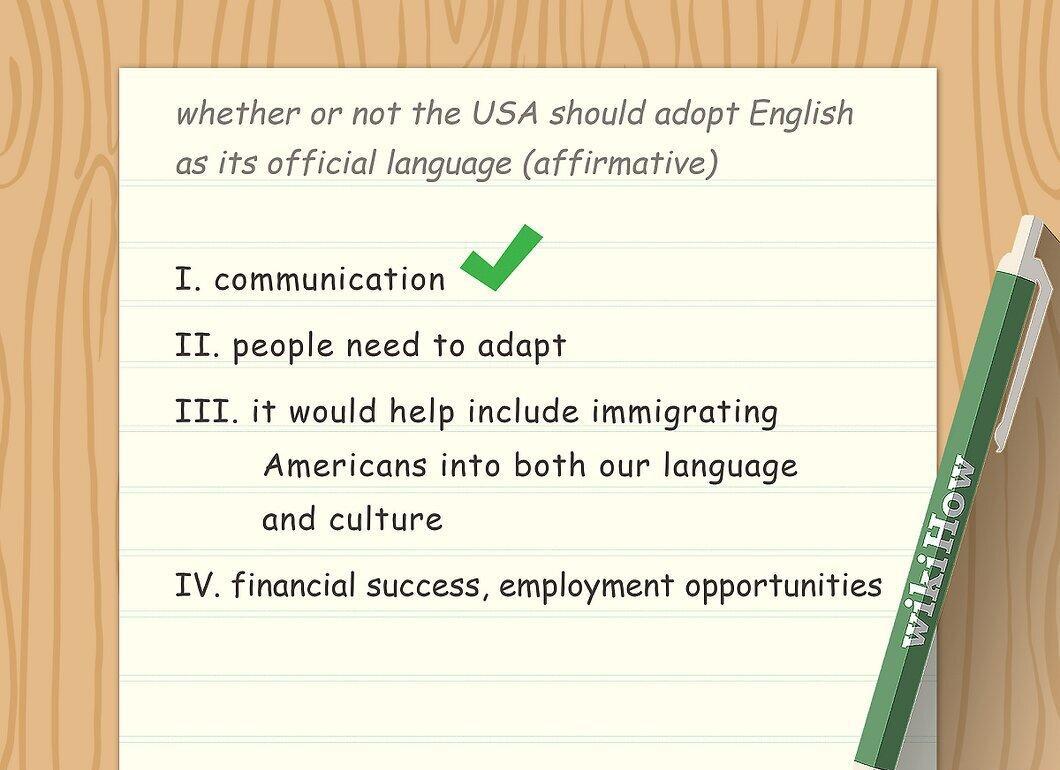
Create a plan for your arguments. They should highlight the importance of your position. Start by organizing a list of points. Arrange them in order: the strongest first, followed by moderate ones, and finally, a few compelling arguments.
- If you anticipate lengthy debates, categorize your points into legal, moral, and economic aspects.
- Your plan should contain at least three arguments.
- Remember, quality is more important than quantity.
Step 5. Prepare Counterarguments Against Opponent's Points.
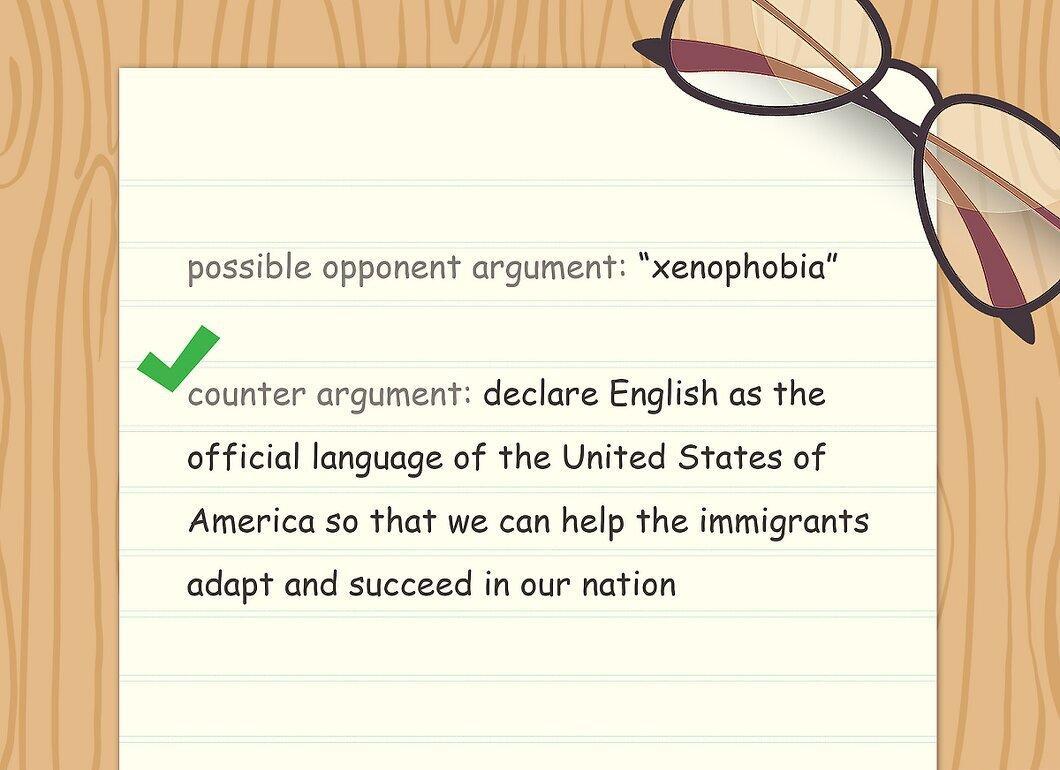
Prepare counterarguments against your opponent's points in advance. You will have a chance to demonstrate that their arguments are unfounded. Think about how you can refute them, as your arguments will also be subject to criticism. Be ready to defend your position.
- Also, work on counterarguments to personal points raised by your opponent. This will strengthen your position in the debate.
- During discussions, you will have to engage in multiple disputes. If you pay attention, you can not only refute their arguments but also persuade the audience of the correctness of your stance.
Step 6. Add Details.
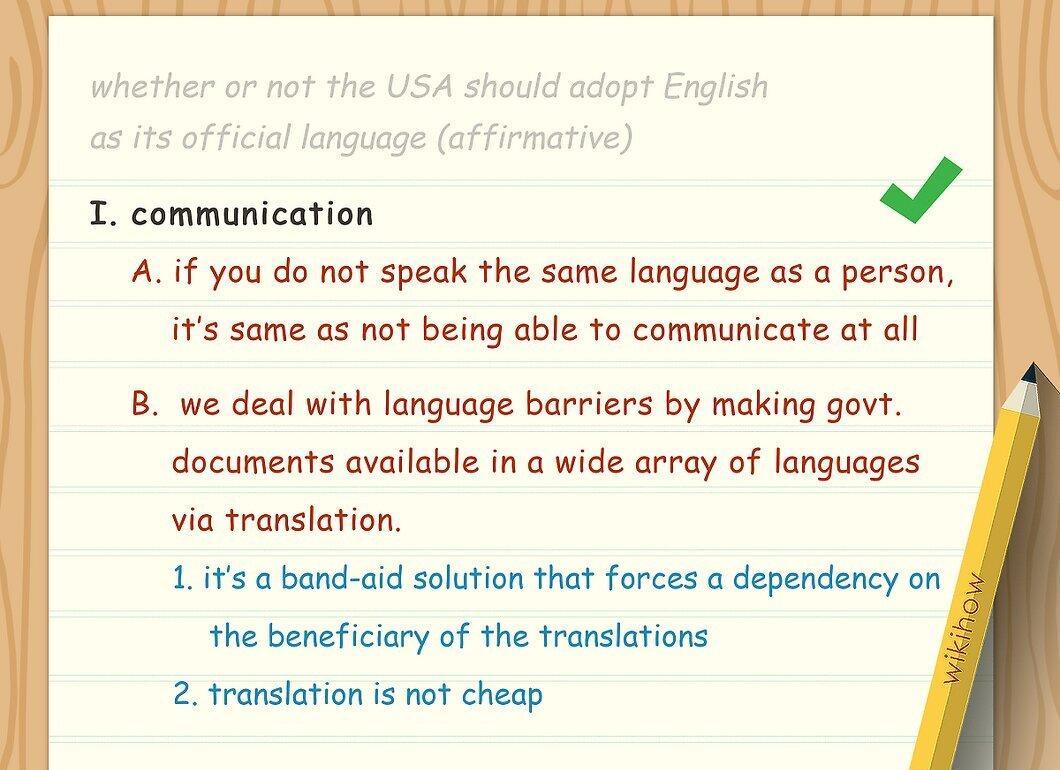
Enhance your arguments with details. You’ve already presented the essence of the issue and the arguments; now it’s time to back them up with additional information. Include these details in your plan in full sentences, using headings, paragraphs, and lists without numerical bullets.
- Write your plan as if you are already debating. This will help you articulate your thoughts clearly and understand your arguments more deeply, as well as prepare for possible questions and counterarguments.
- Avoid fallacious logic in your arguments or rebuttals. A solid argument should be backed by substantial evidence that you can reference if needed.
Part 2: Fallacious Logic
Step 1. Avoid the “Straw Man” Fallacy.
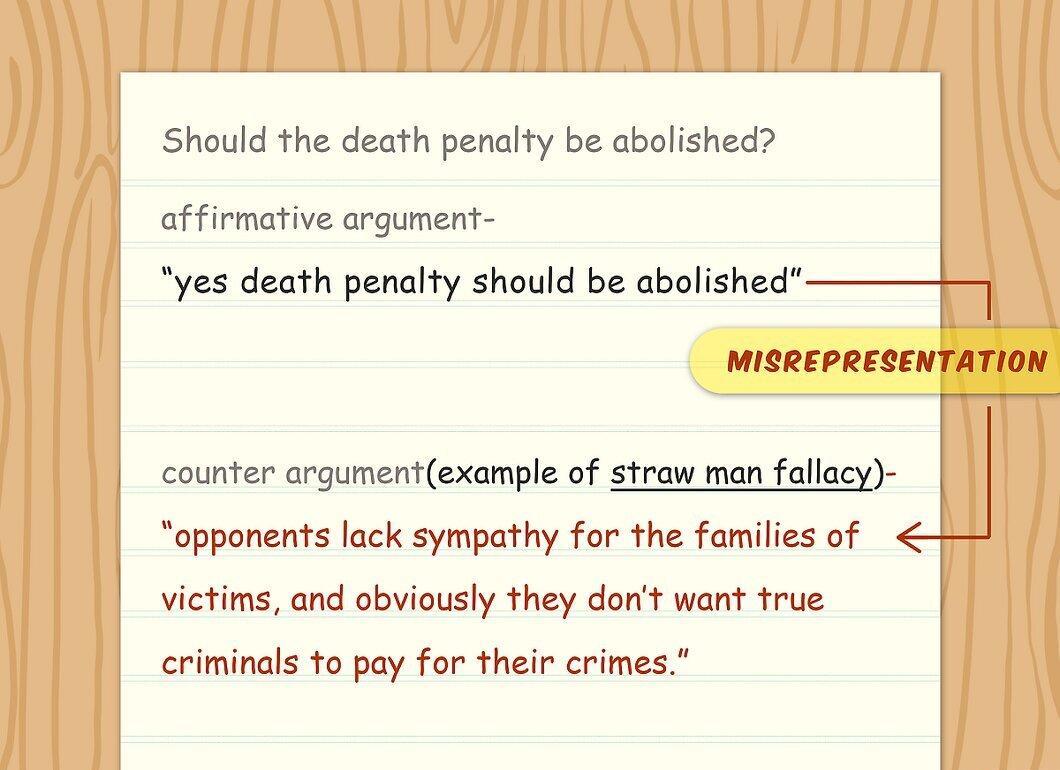
Avoid the “Straw Man” fallacy, where one participant distorts the opponent's argument by replacing it with a weaker version. This tactic is often used by inexperienced debaters. Do not employ it in your rebuttals and be prepared to recognize it if it is used against you.
- For instance, if you advocate for the abolition of the death penalty, your opponent may use this tactic by claiming you don’t care about the victims' families and don’t want criminals to face consequences.
Step 2. Don’t Let “Slippery Slope” Arguments Slide.
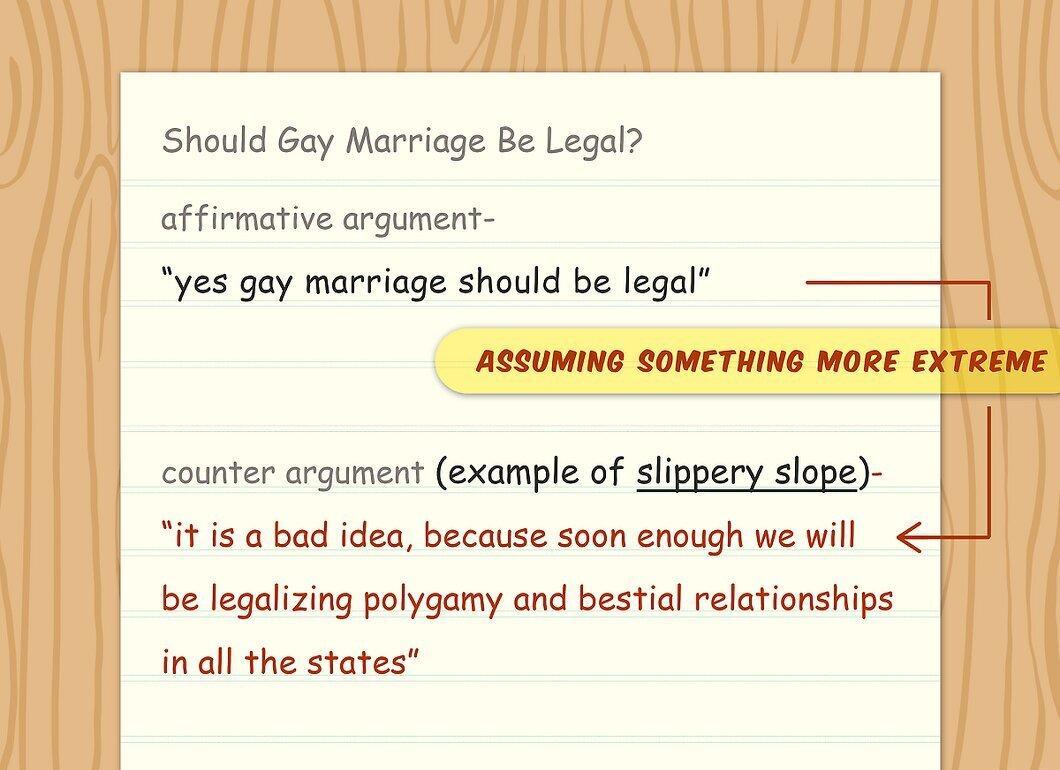
Be cautious if your opponent starts using the “slippery slope” argument. When presenting your points, opponents may exaggerate, even when there’s no basis for extreme conclusions.
- For example, if you support the legalization of same-sex marriage, your opponent may try to argue that this will lead to the legalization of polygamous relationships or marriages to animals.
Step 3. Don’t Distract from the Core Issue.
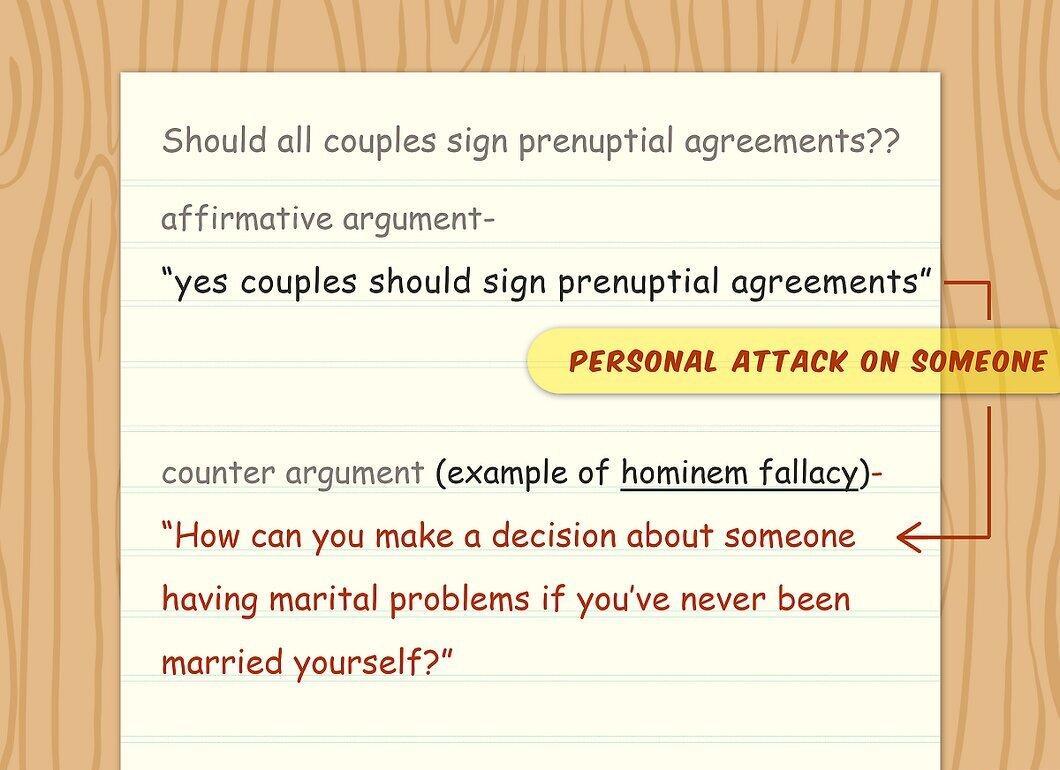
Avoid arguments that are irrelevant to the core issue. This tactic is often used by the losing side when they can’t counter your points and start focusing on your flaws rather than your logical reasoning.
- For example, if your opponent can’t refute your arguments, they might start discussing your personal issues, such as poor grades or alcoholism. These matters are unrelated and won’t impact the debate.
Step 4. Avoid Provocative Questions.
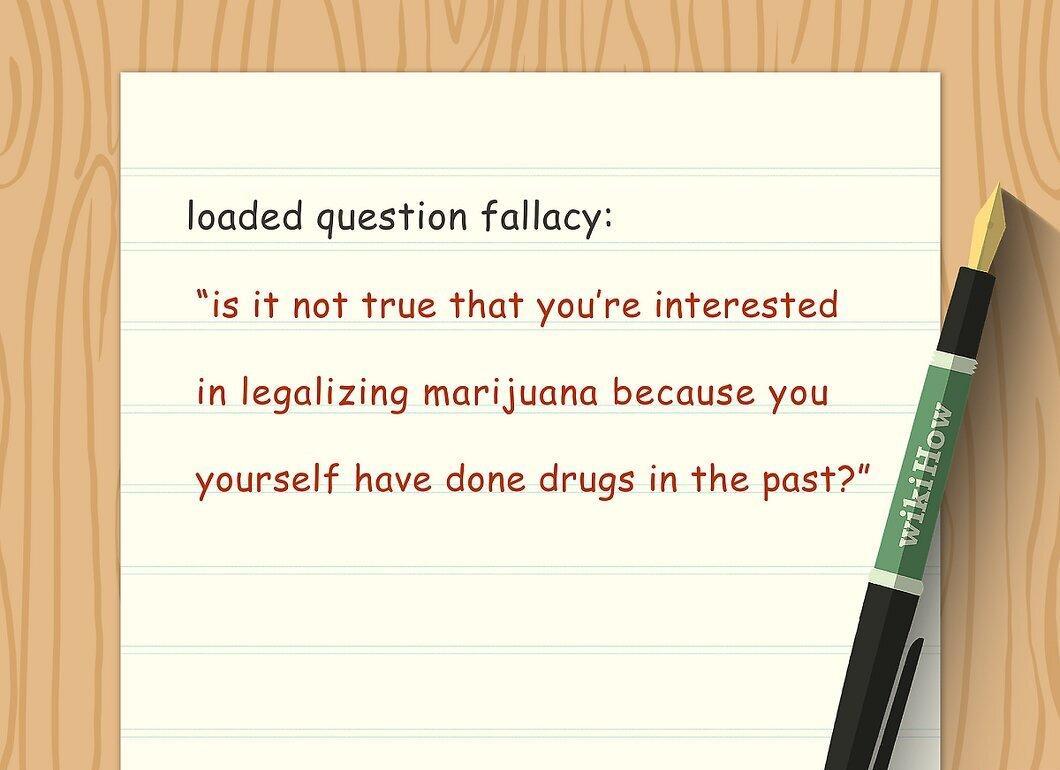
Steer clear of provocative questions. At first glance, they may seem like ways to uncover flaws in your opponent's logic, but their real goal is to disorient and unsettle your opponent, even if it’s unjustified.
- For example, in a debate about marijuana legalization, you might be asked, “Are you in favor of legalizing marijuana because you used to be involved with it?”
Step 5. Avoid Ambiguous Language.
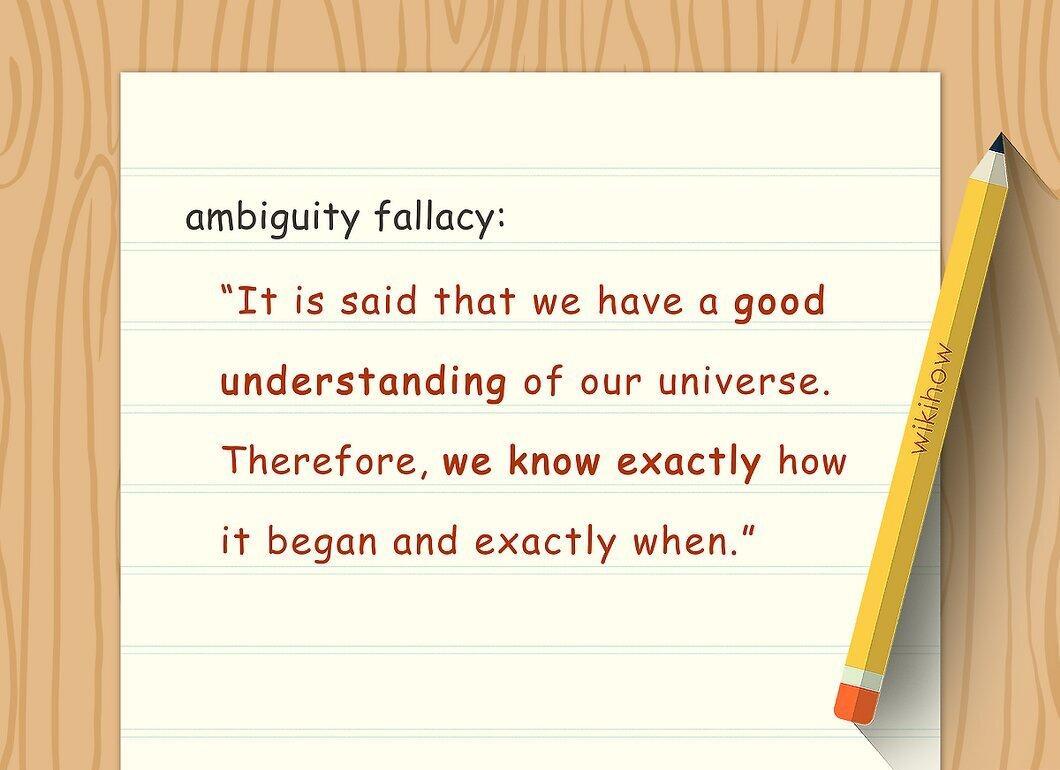
Avoid ambiguities and unclear explanations. If a participant cannot answer a question precisely, it may indicate the use of this tactic. Such arguments are often weakly tied to the topic at hand.
- For instance, your opponent should convince you of the importance of socialist ideas, but instead of delivering concrete evidence, they merely promise a better life for the working class.
Step 6. Don’t Fall for the Bandwagon Effect.
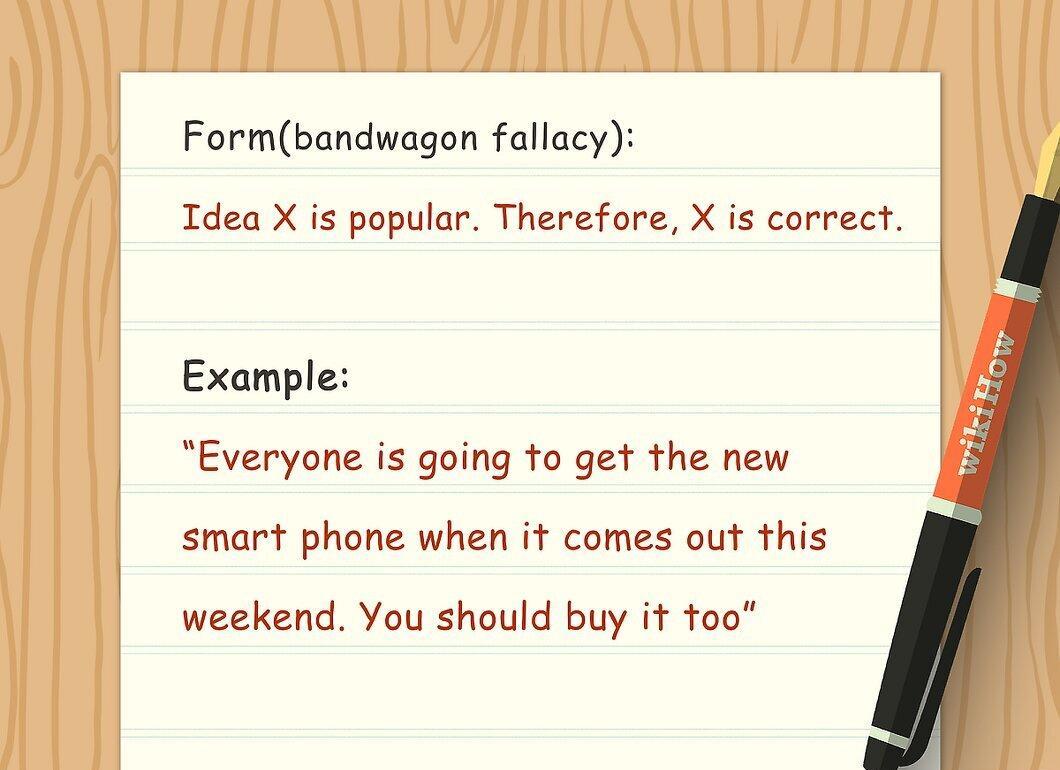
Beware of the bandwagon effect. This is a common mistake where you believe your arguments are correct simply because they are supported by many people.
- For example, you might support the death penalty just because many consider it an effective form of punishment.
Step 7. Be Cautious with False Dilemmas.

Use false dilemmas carefully. They involve ignoring other possible options besides the two being discussed. Usually, one is dismissed as logically incorrect, while the remaining one is accepted as true without evidence for the existence of only two possibilities.
- For instance, your opponent might claim that there are only two options: legalize drugs or completely ban them.
Step 8. Don’t Substitute Evidence with Anecdotes.
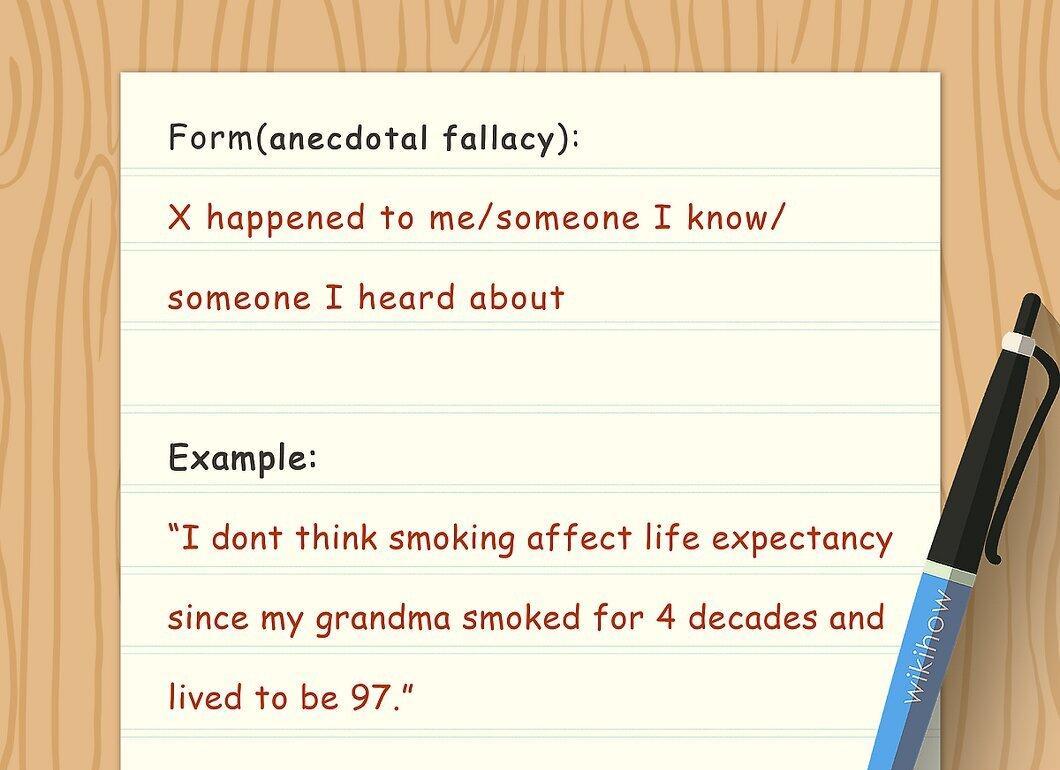
Don’t replace facts with personal stories. While it’s easier to use examples from personal experience when addressing an audience, it’s crucial to find other evidence.
- For example, if your opponent states that their friend decided to keep a child instead of having an abortion, it doesn’t mean this will be the case for everyone.