
Have you ever thought about how to bring about change in your community, region, or even the country? Write a petition! A well-crafted petition can work wonders. If you already have an idea or cause, we’ve put together some helpful tips to help you create a persuasive document.
Research the Issue
Step 1. Ensure your petition falls within the jurisdiction of local authorities.

Check if your issue falls under the jurisdiction of your local government. You should reach out to the administrative office or visit the authorities' website. Your petition might need to be considered at the county or state level. Ask the staff to direct you to the appropriate department that handles such matters and inquire about the rules for drafting petitions.
Step 2. Find out the required number of signatures.

Make sure you know how many signatures you need. This is crucial. Imagine gathering 1,000 signatures only to find out you need 2,000. Also, check if your petition needs to be approved before being circulated.
Step 3. Know how the petition must be signed to be valid.

Ensure you understand what information signatories must provide for your petition to be valid. For example, if you’re gathering signatures for a candidate's registration, you may need to collect addresses from the signers.
Step 4. Research the issue to understand all viewpoints.

Study your topic to grasp all sides of the issue. This will help you determine if a similar petition has already been filed.
Step 5. Identify the best locations to collect signatures.

Consider where it will be most convenient to distribute your petition. Regardless of your choice, it’s important to draft the petition text correctly (additional tips on this can be found below). Written petitions are usually more effective for local issues, while online petitions can be quickly spread through the internet. Use platforms like ipetitions.com, Petitions24.com, or GoPetition.com, which ensure high efficiency. Facebook can also serve as an excellent tool for garnering online support. The same rules apply for electronic petitions as they do for paper ones.
- If your issue requires active participation from people, consider alternative options, like collective actions. You can start a campaign on an online forum like The Point, where support can be more active rather than just passive signing.
Writing the Petition
Step 1. Create a clear and specific slogan that emphasizes your demands.
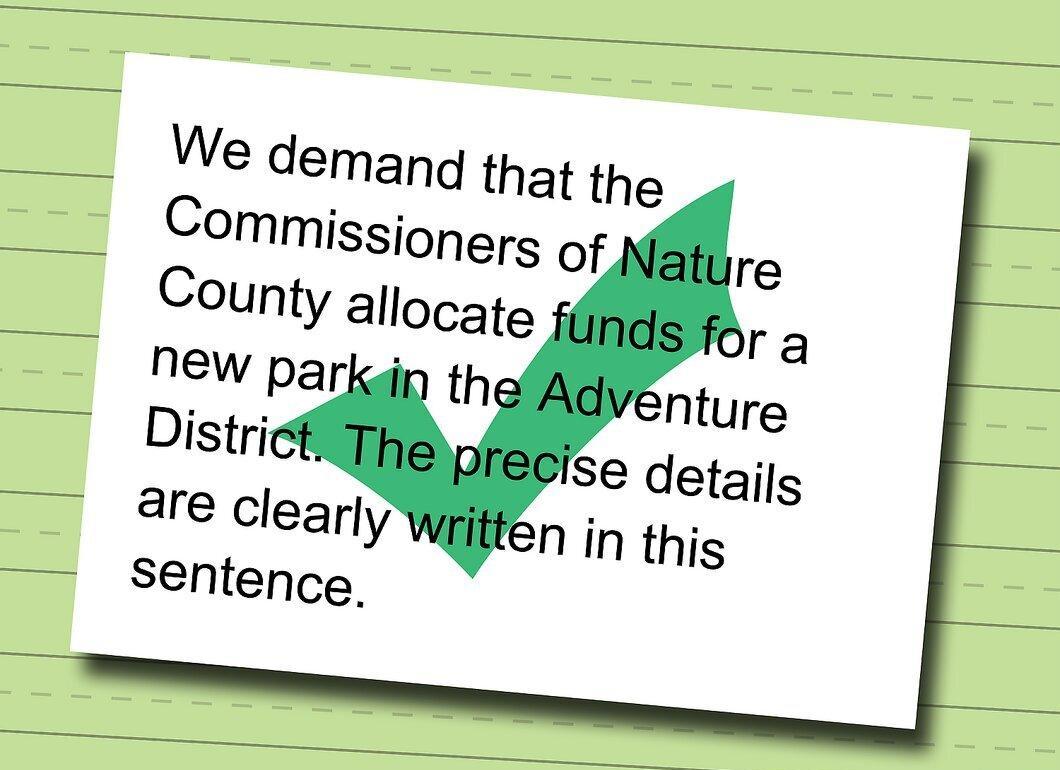
Formulate a specific slogan that clearly states what you want others to support. It should be clear, concise, and informative.
- Weak: We urge to allocate more funds for park development. This is too vague. Which park exactly? What amount?
- Strong: We demand that the members of the County Conservation Committee allocate funds to create a new park in the Entertainment area. Here, specific details are provided.
Step 2. Keep your petition text brief.
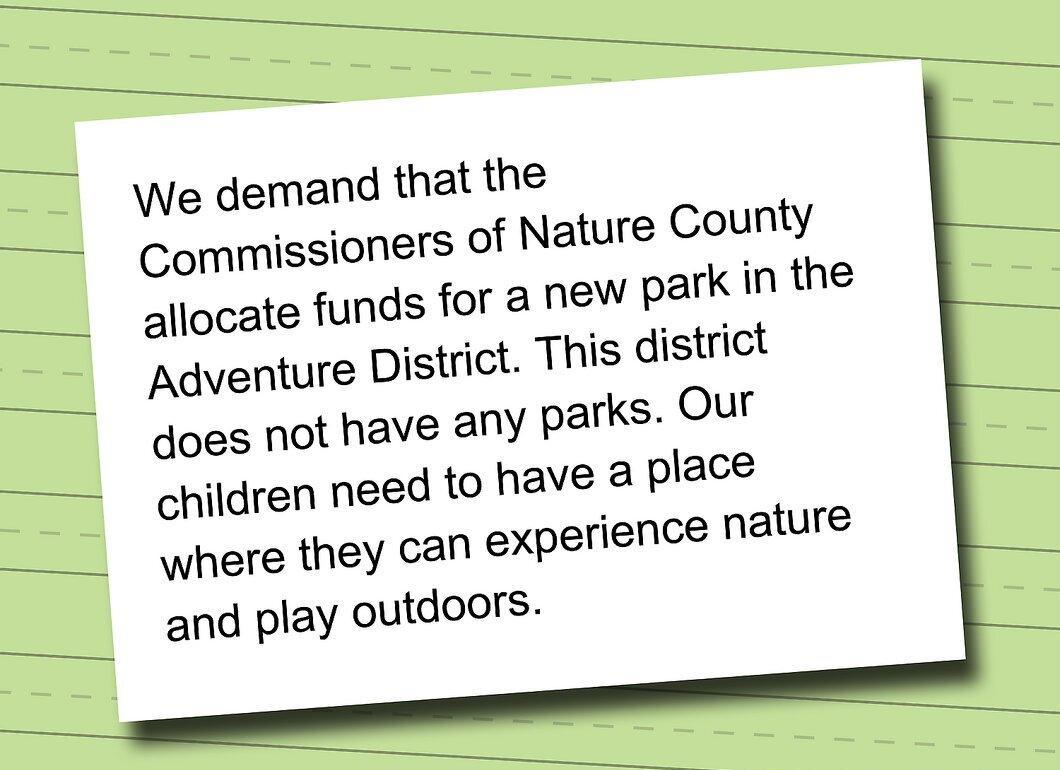
Aim to make your petition concise. People are less likely to sign if they have to read a lengthy text. Clearly state your goal in the first paragraph, then outline the reasons for the petition. This paragraph is the one most often read.
- Example of the first paragraph: We demand that the members of the County Conservation Committee allocate funds for a new park in the Entertainment area. There are no parks in this area, and our children need a place to play and enjoy nature.
Step 3. Add justification for your initial statement.
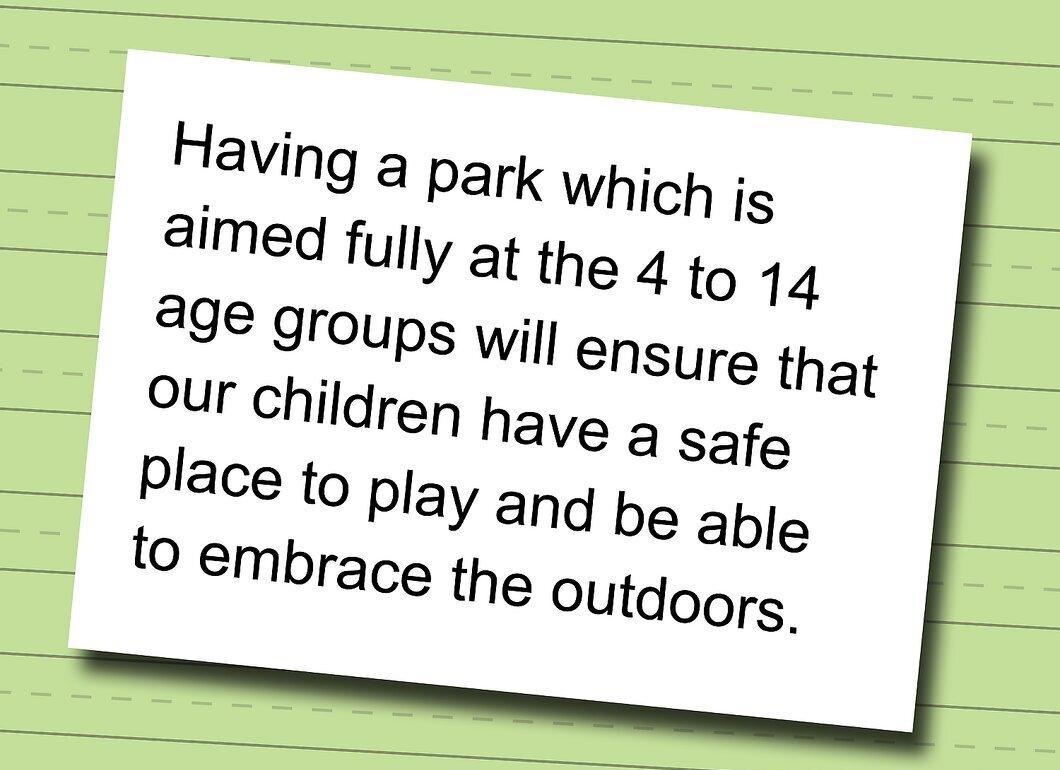
Include text that justifies your initial statement. Use specific examples that highlight the importance of your cause. Write as much as needed, but remember that most people you’ll be speaking to won’t read the entire text.
Step 4. Revise your text carefully.
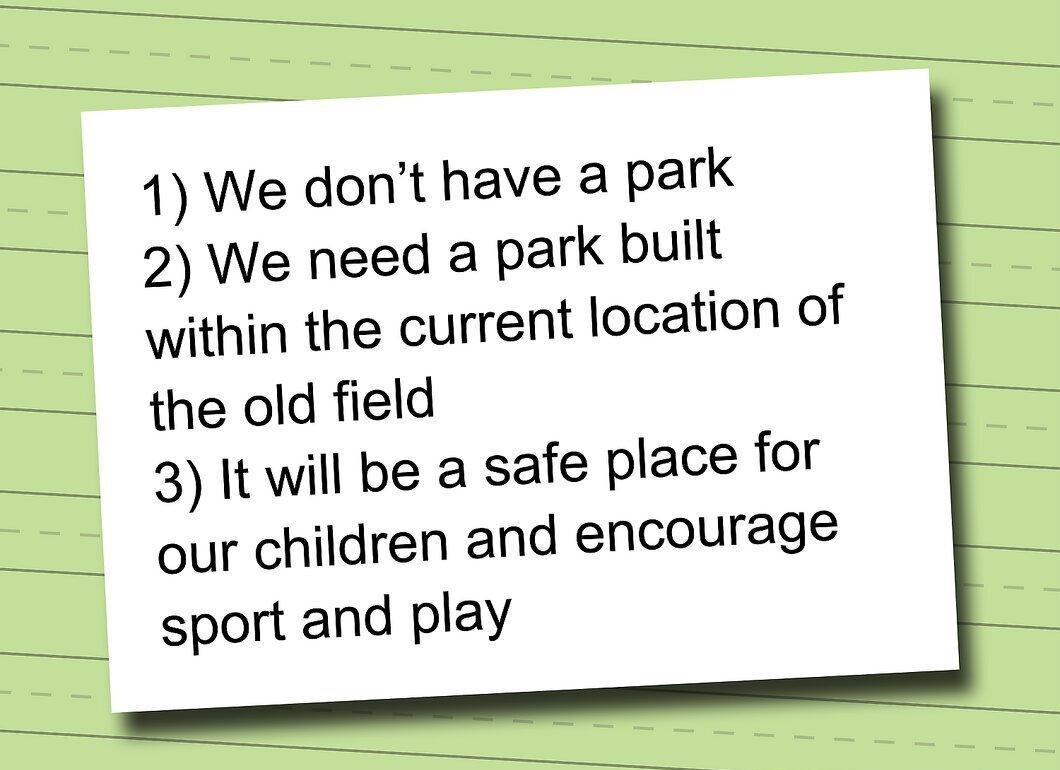
Thoroughly review your text. Ensure that it (1) describes the situation, (2) contains a call to action, and (3) explains why it is necessary. If you were unaware of the situation, would it be clear to you after reading your petition?
Step 5. Check the text for errors.

Proofread your petition for grammatical and spelling errors. If your text contains many typos, it won’t be taken seriously. Use spell check and read the text aloud to evaluate how it sounds and makes sense.
Step 6. Ask someone else to read your petition.

Ask someone who is unfamiliar with the situation to read your petition. Do they understand your goal? Can they explain the essence of your demands and why they are important?
Creating a Signature Sheet
Step 1. Create a signature sheet on a separate page.
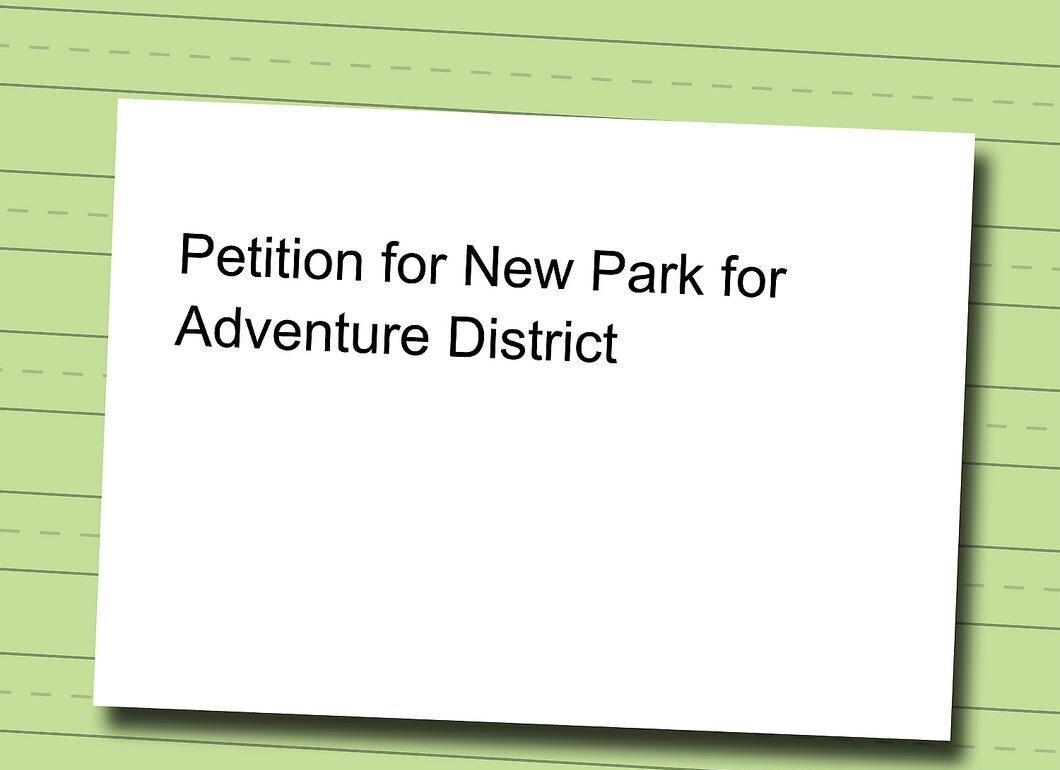
Prepare a signature sheet on a separate page. At the top, place the title of your petition; it should be concise and expressive.
- Example title: Petition for the Creation of a New Park in the Entertainment Area.
Step 2. Use software to create the signature sheet.

Use a spreadsheet program to create the signature sheet. It will look more professional, and it will be easier to make changes if needed. Divide the page into five columns: "Name", "Address", "Email", "Phone", and "Signature". In some cases, you may need to add a column for "Voter Registration Number". Make sure to leave enough space in the "Address" column. Add 10-20 lines on the page.
- If you don’t have access to a computer, visit your local library where volunteers can help you create a petition. If that’s not possible, take a ruler and divide an A4 sheet into five (or six) columns as mentioned above and follow the further instructions.
Step 3. Make copies of the signature sheet.

Make copies of the signature sheet. Ensure you have enough pages for the required number of signatures. Number the pages to make it easier to track the collected signatures. Ask those gathering signatures to initial the pages they used so you can ask them any questions.
Distributing Your Petition
Step 1. Communicate with people in person.

Engage with people face-to-face. Look for places where you can meet many people who care about your issue. If your petition relates to a school, talk to visitors at the school. Distribute the petition through your office and post announcements on local bulletin boards.
Step 2. Use email.

Create an electronic version of the petition and send it to your friends and family. However, don’t overwhelm them with messages—it's better to send a few reminders throughout the petition's duration.
Step 3. Create an online platform to discuss your petition.

Set up a blog or forum to discuss your petition. Social media platforms like Facebook and Twitter are great for garnering wide support.
Step 4. Reach out to local media.

Contact local media to cover your petition. Start with local radio stations or newspapers to draw attention to your cause.
Step 5. Be polite.

Maintain politeness in your interactions. People rushing to work may not appreciate an aggressive approach. Even if someone supports your idea, they may not have the time or resources to help. Don’t take it personally! Stay friendly—they may reach out to you later when they have the opportunity to assist.