
Summer nights for those in the Northern Hemisphere can be truly mesmerizing, with hundreds, sometimes even thousands, of stars twinkling in the night sky. At first glance, it may seem daunting, but by remembering a few key constellations, you’ll be able to navigate the celestial sphere with confidence by following these simple tips.
Part 1
Step 1. The image shows a typical summer night sky (in this case – July 14 at 9:00 PM or 10:00 PM, considering daylight saving time) at a latitude of approximately 35° North (near cities like Tennessee, USA, Tokyo, Japan, and Tehran, Iran).
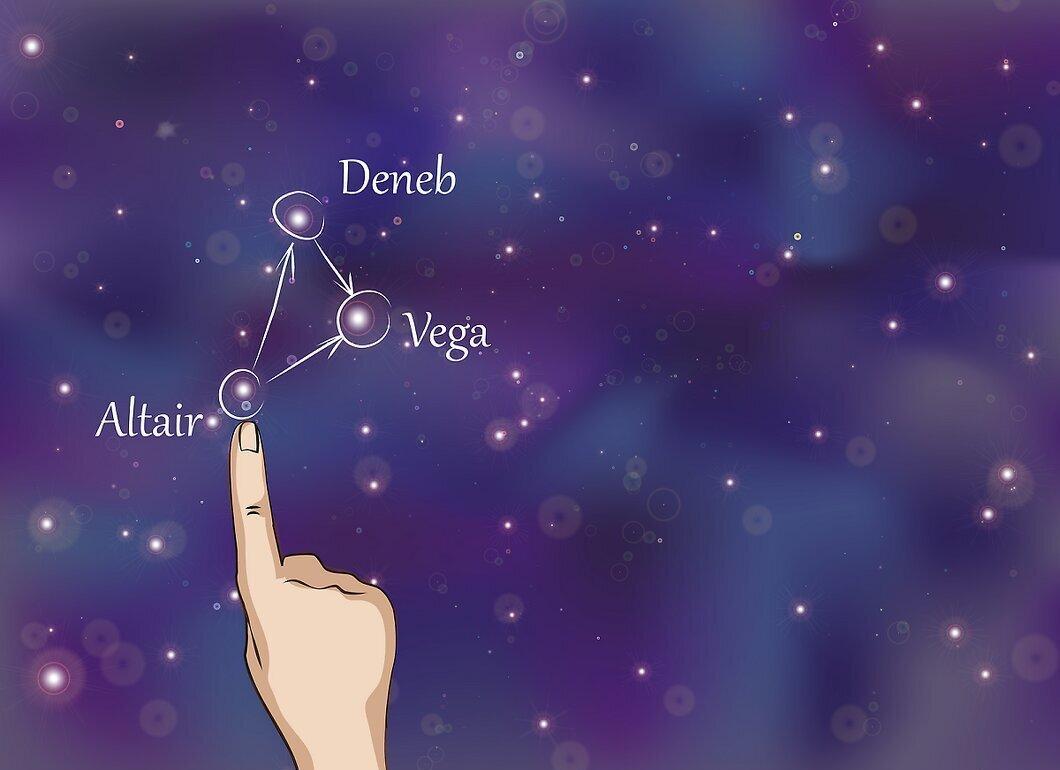
In this image, you see a typical summer night sky (July 14 at 9:00 PM or 10:00 PM with daylight saving time) at a latitude of about 35° North (close to cities like Tennessee, USA, Tokyo, Japan, and Tehran, Iran). If you look straight up while facing south, you will notice three bright stars to your left (to the east). These are Vega, Altair, and Deneb, which together form a prominent asterism known as the Summer Triangle.
Step 2. Once you’ve located the Summer Triangle, you can identify the three constellations it represents:
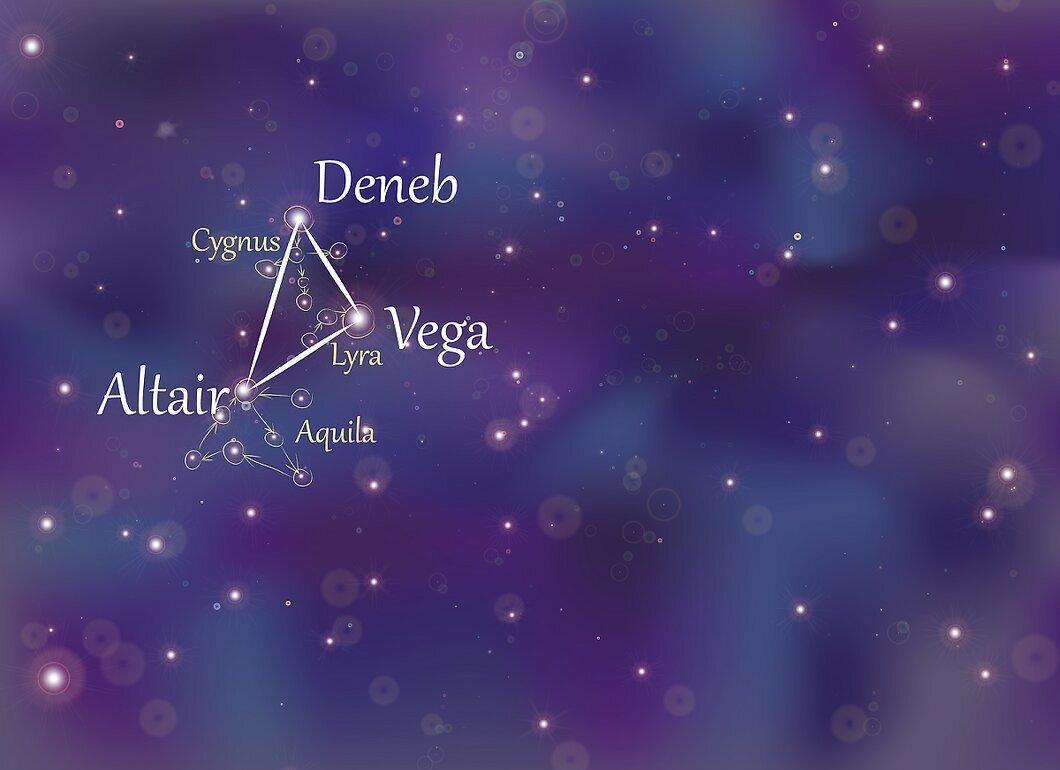
By identifying the Summer Triangle, you can determine the three constellations associated with these stars: Lyra, Aquila, and Cygnus.
Step 3. A little further north and to the west, you will find the Big Dipper (also known as the Plough), which is actually another asterism (we’ll talk more about this later).
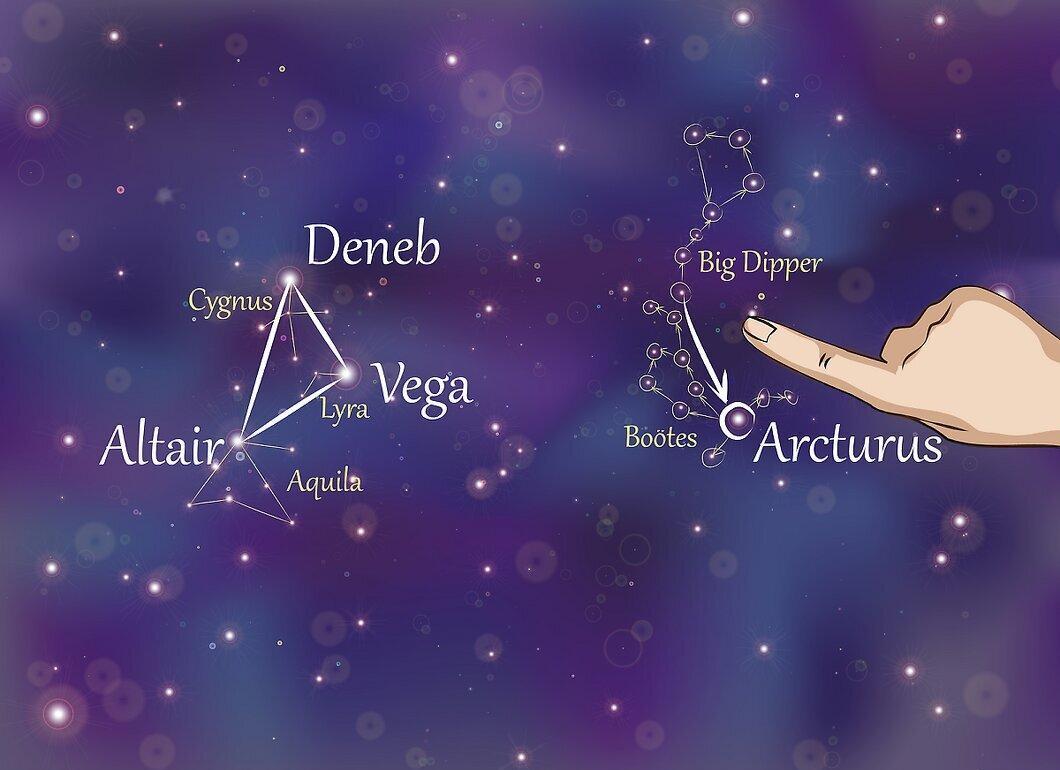
A bit further north and to the west, you’ll see the Big Dipper (also called the Plough), which is another asterism (we’ll cover it later). Follow the curve of the handle south to a bright star; the “arc to Arcturus,” a shining orange star that marks the constellation Boötes.
Step 4. Now let’s find another bright constellation.
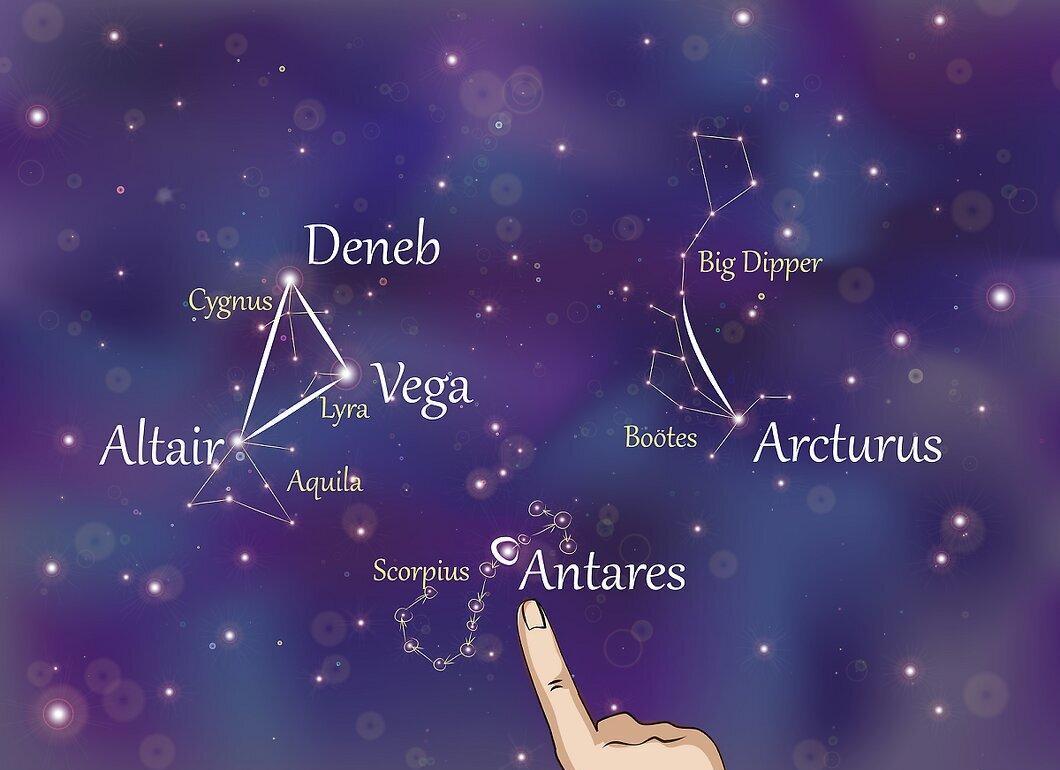
Now let’s uncover another bright constellation. This is perhaps the most impressive summer constellation – Scorpius, which lies further south. The brightest star of Scorpius is Antares, a red giant.
Step 5. Now that we’ve found some of the brightest constellations, let’s use them to locate fainter ones.
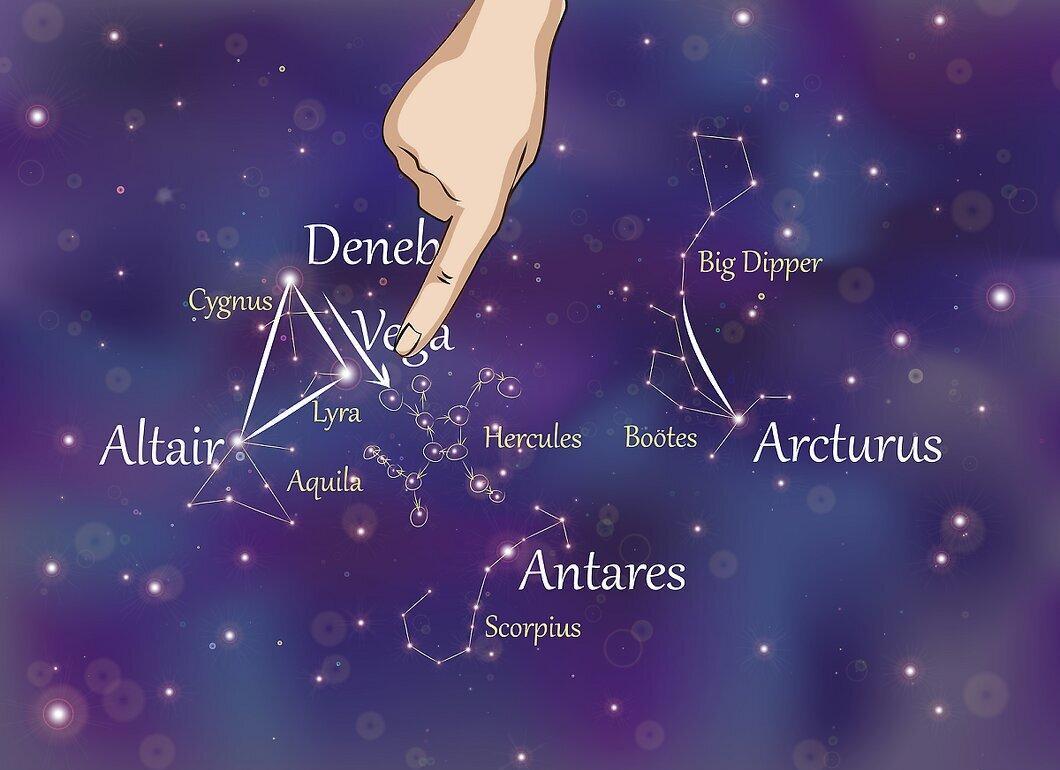
Now that we’ve discovered some of the brightest constellations, let’s use them to find less prominent ones. Draw an imaginary line from Deneb through Vega and a bit further west – this will lead you to the constellation Hercules.
Step 6. Let’s head back west to the bright star Arcturus.
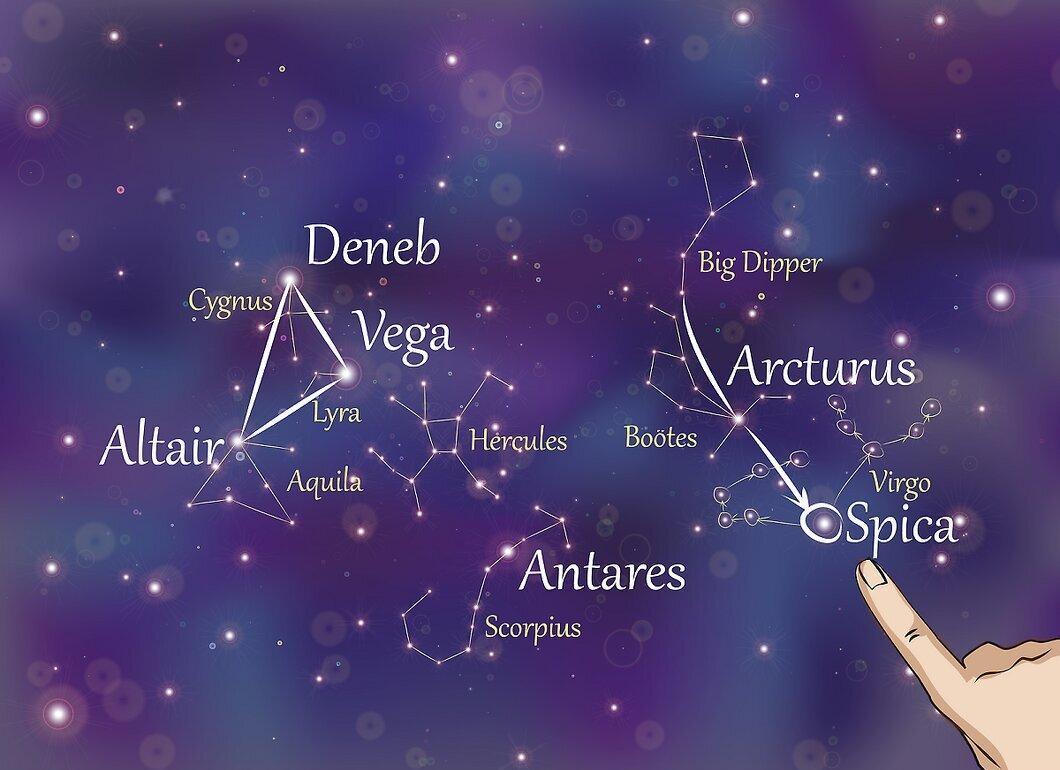
Let’s return west to the bright star Arcturus. Since we’ve already followed the “arc to Arcturus,” we can now move on to Spica, the brightest star in the constellation Virgo.
Step 7. Heading back south to Scorpius, we can spot the asterism “The Teapot,” formed by the brightest stars of the constellation Sagittarius (fun fact:
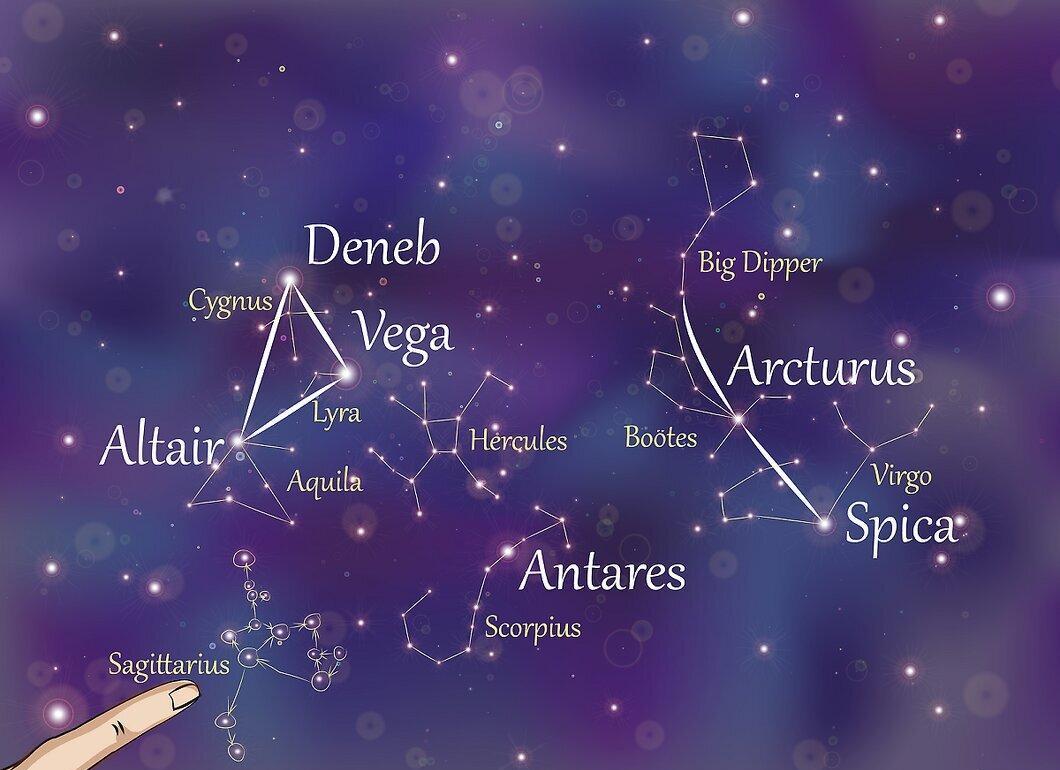
Returning south to Scorpius, we can notice the asterism “The Teapot,” which consists of the bright stars of the constellation Sagittarius (a fun fact: the area above the “spout” and between Scorpius points towards the center of the Milky Way, our galaxy).
Step 8. Now let’s head back north.
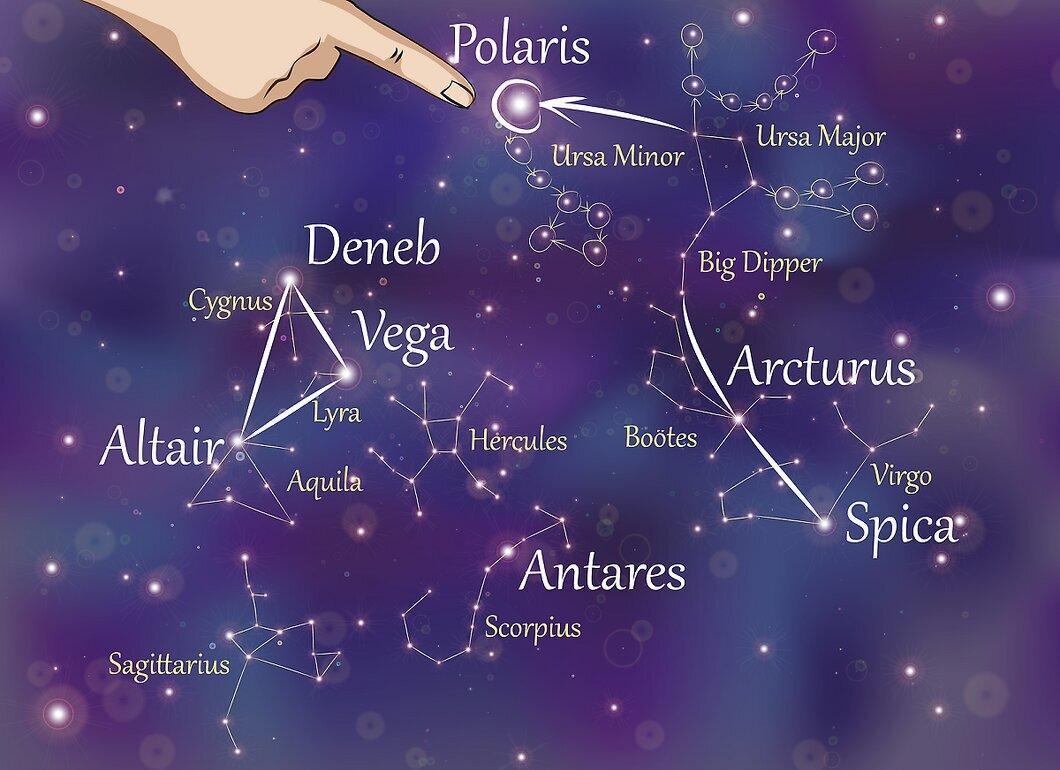
Now let’s make our way back north. Earlier we mentioned the Big Dipper as an asterism. In fact, it is part of a larger constellation known as Ursa Major. If you draw an imaginary line through the two stars opposite the handle (“pointer stars”), you will notice they almost precisely point to the North Star, which is located at the end of the handle of the Little Dipper, another asterism. This is actually Ursa Minor.
Step 9. If you continue the line through the North Star, you will reach a constellation that is almost directly opposite Ursa Major.
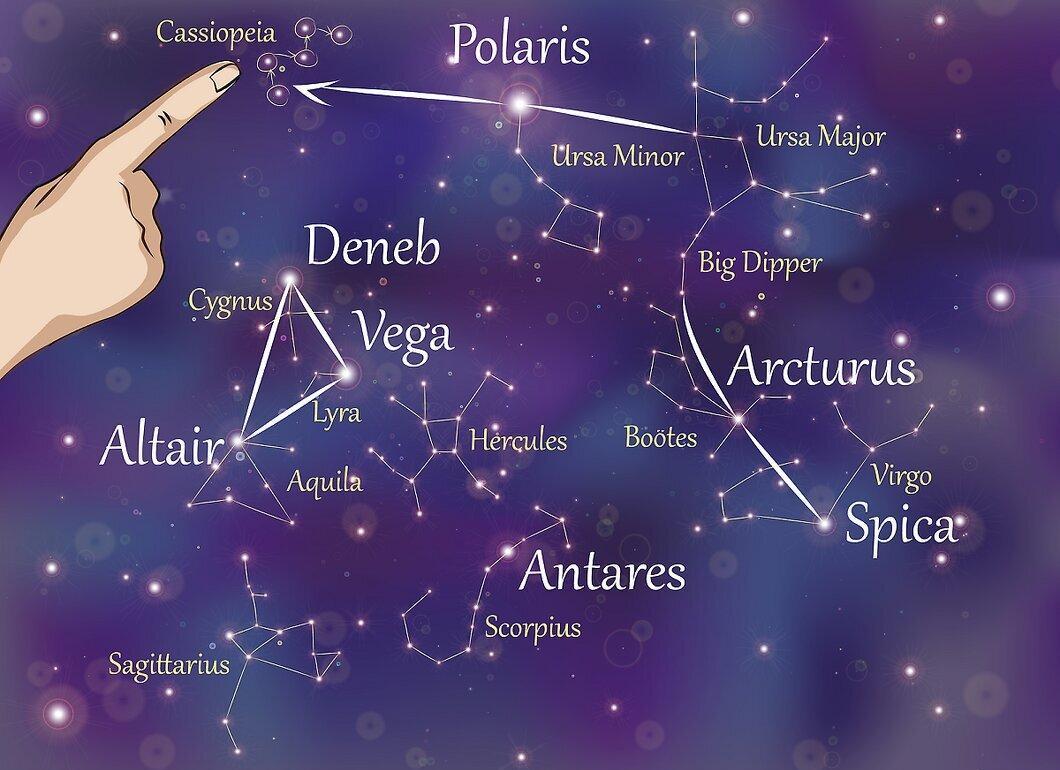
If you continue the line through the North Star, you will reach a constellation that lies almost directly opposite Ursa Major. This is Cassiopeia, one of the brightest autumn constellations.
Step 10. Finally, we will find one of the smallest of the 88 official constellations, located south of the Summer Triangle.
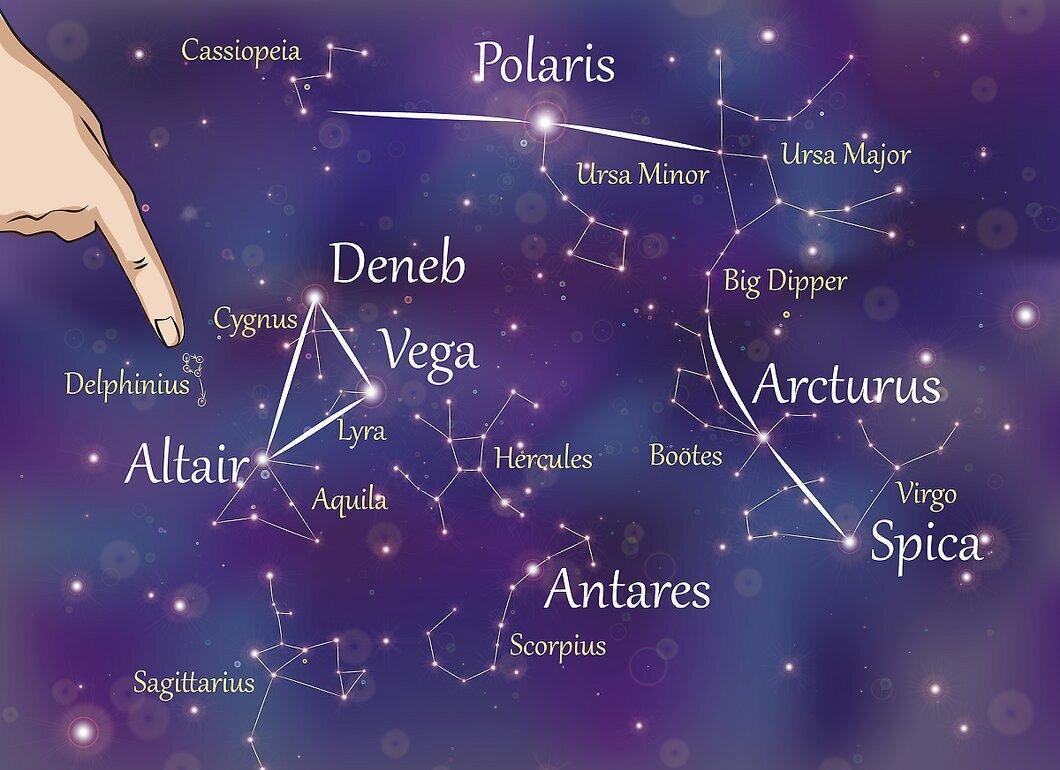
Finally, we will find one of the tiniest of the 88 official constellations, situated south of the Summer Triangle. This is the constellation Delphinus (which indeed resembles its namesake).