
Acceleration is a measure of how quickly an object's motion changes. If an object's speed remains constant, then there is no acceleration. It occurs only when the speed changes. When the speed of an object increases or decreases by a fixed amount, we deal with constant acceleration. Acceleration is measured in meters per second squared (m/s²) and is calculated based on two speeds and the time taken or the force acting on the object.
How to Calculate Average Acceleration Using Two Speeds
Step 1. The Formula for Calculating Average Acceleration.
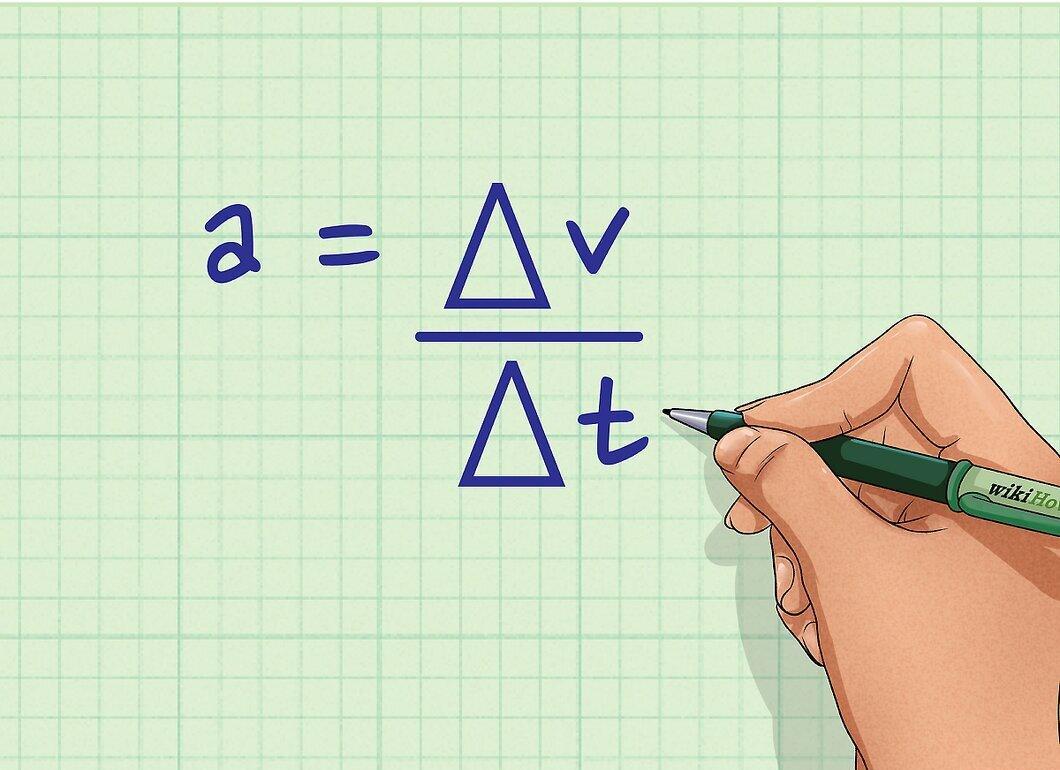
To calculate average acceleration, you need to know the initial and final speeds of the object (speed is a quantity that indicates the direction of motion) and the time taken to reach the final speed. The formula is: a = Δv / Δt, where a is acceleration, Δv is the change in speed, and Δt is the time over which this change occurred.
- Acceleration is measured in m/s².
- Acceleration is a vector quantity, which means it has both a magnitude and a direction. If the object is slowing down, the acceleration will be negative.
Step 2. Identify the Required Variables.
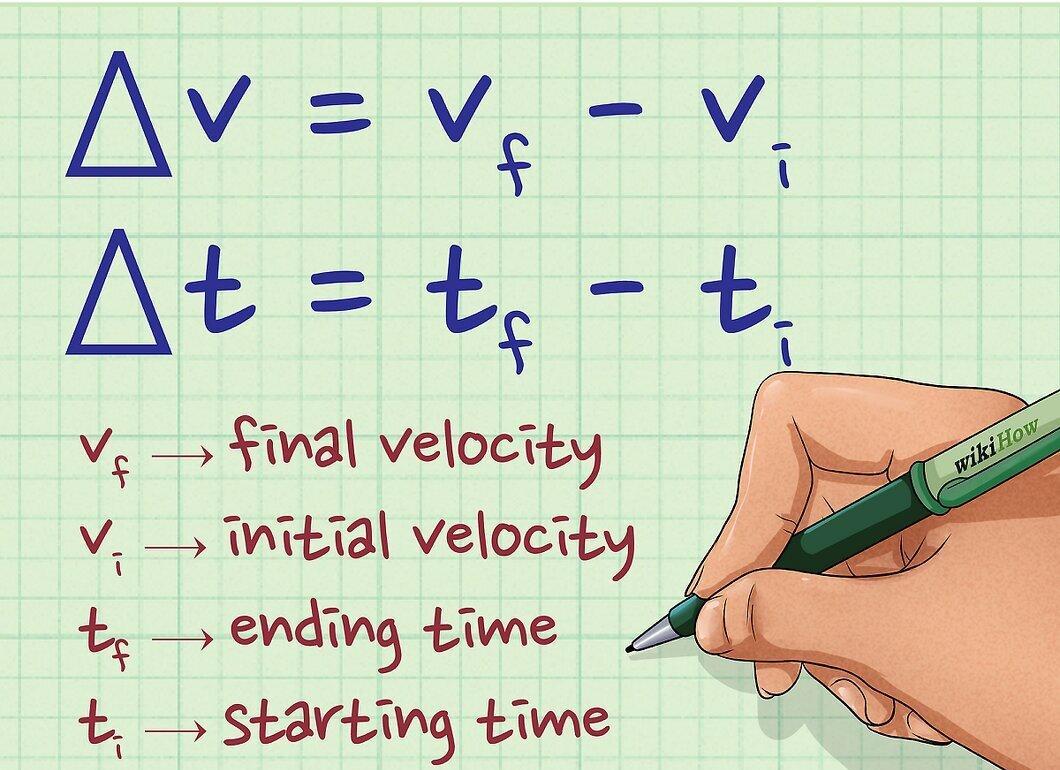
To compute Δv and Δt, use the following equations: Δv = v_f - v_i and Δt = t_f - t_i, where v_f is final speed, v_i is initial speed, t_f is final time, and t_i is initial time.
- Since acceleration has a direction, always subtract the initial speed from the final speed; otherwise, the direction of your result will be incorrect.
- If the initial time is not given, assume t_i = 0.
Step 3. Find Acceleration Using the Formula.
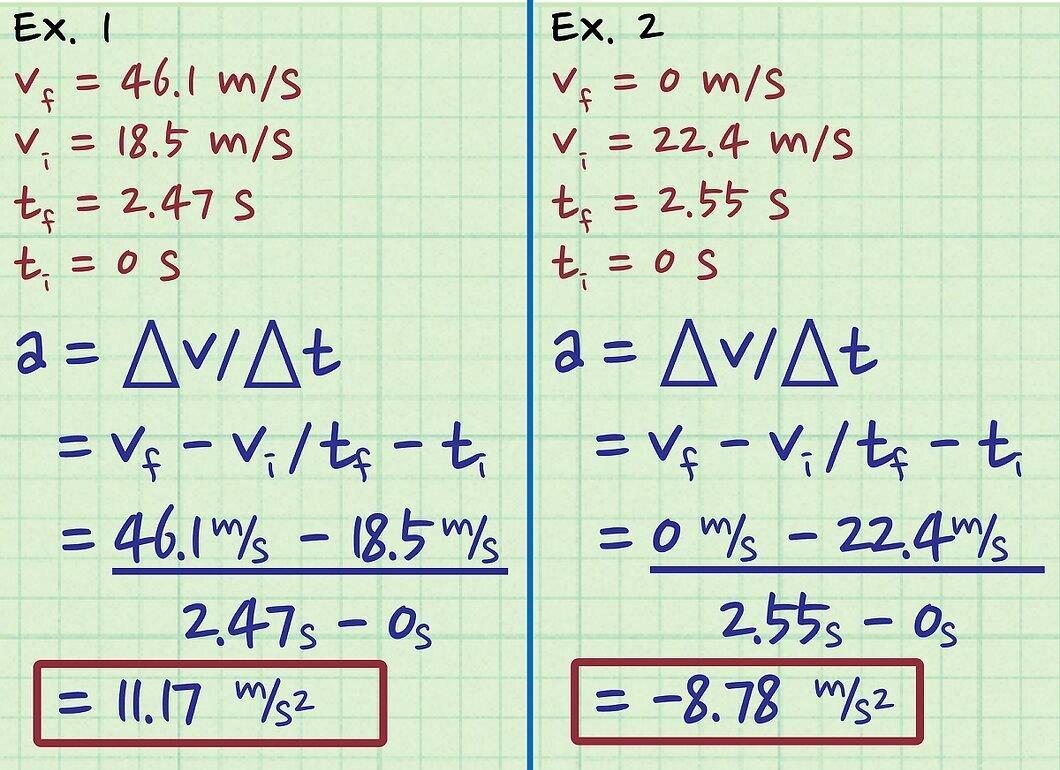
Write down the formula and substitute the values of the variables. Formula: a = Δv / Δt = (v_f - v_i)/(t_f - t_i). Subtract the initial speed from the final speed and divide the result by the time (change in time) to get the average acceleration over the specified period. For example, a motorcycle begins to brake from a speed of 22.4 m/s and stops in 2.55 s. Find the average acceleration.
- If the final speed is less than the initial speed, the acceleration will be negative, indicating deceleration.
- Example 1: a car accelerates from 18.5 m/s to 46.1 m/s in 2.47 s. Find the average acceleration. Write the formula: a = Δv / Δt = (v_f - v_i)/(t_f - t_i)
- Variables: v_f = 46.1 m/s, v_i = 18.5 m/s, t_f = 2.47 s, t_i = 0 s.
- Calculation: a = (46.1 - 18.5)/2.47 = 11.17 m/s².
- Formula: a = Δv / Δt = (v_f - v_i)/(t_f - t_i)
- Variables: v_f = 0 m/s, v_i = 22.4 m/s, t_f = 2.55 s, t_i = 0 s.
- Calculation: a = (0 - 22.4)/2.55 = -8.78 m/s².
Determining Acceleration from Force
Step 1. Newton's Second Law.
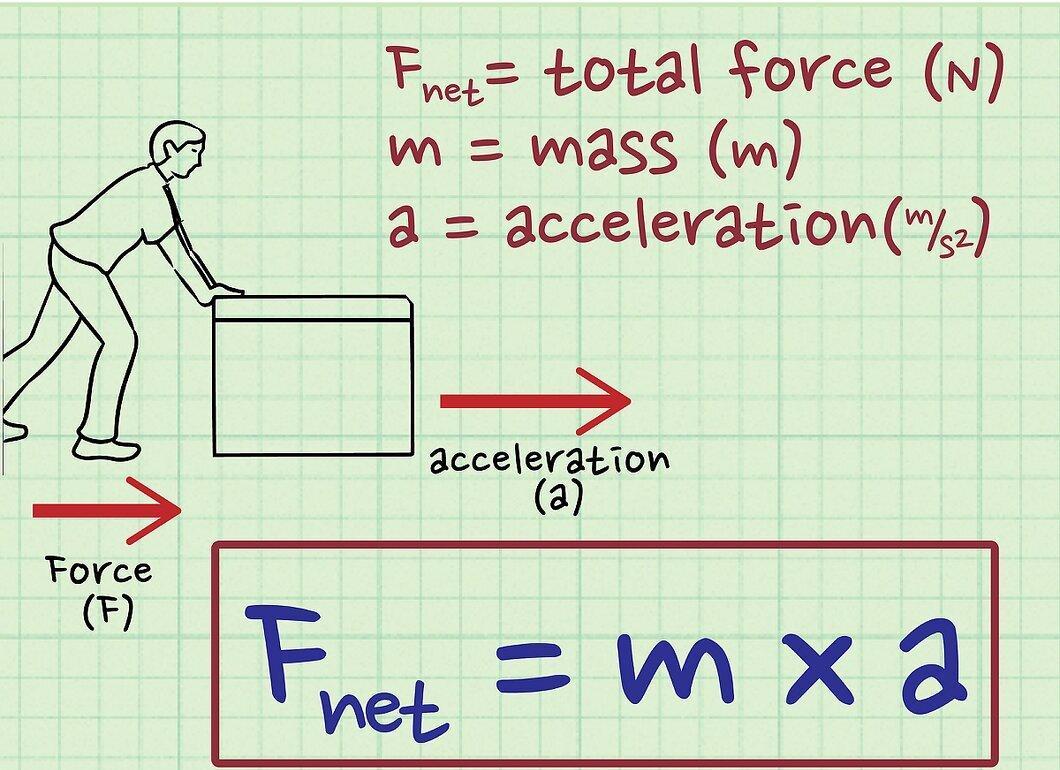
According to Newton's second law, an object will accelerate if the forces acting on it are unbalanced. Acceleration depends on the net force acting on the object. Knowing the mass of the object and the force, you can calculate its acceleration.
- Newton's second law is represented by the formula: F_net = m × a, where F_net is the net force acting on the object, m is the mass, and a is acceleration.
- Use the metric system: mass in kilograms (kg), force in newtons (N), acceleration in m/s².
Step 2. Determine the Mass of the Object.
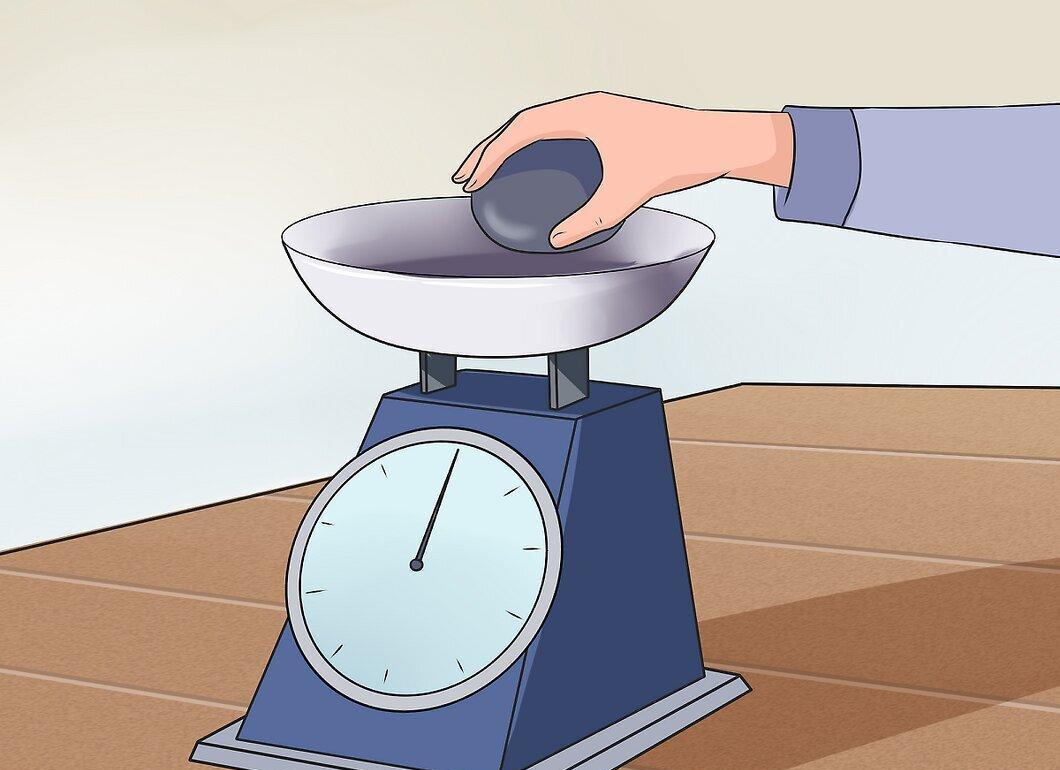
To find the mass, weigh the object and record its mass in grams. If the object is large, you can find its mass in reference books or online. Large objects are usually measured in kilograms.
- Don’t forget to convert grams to kilograms by dividing the mass in grams by 1000.
Step 3. Determine the Net Force Acting on the Object.
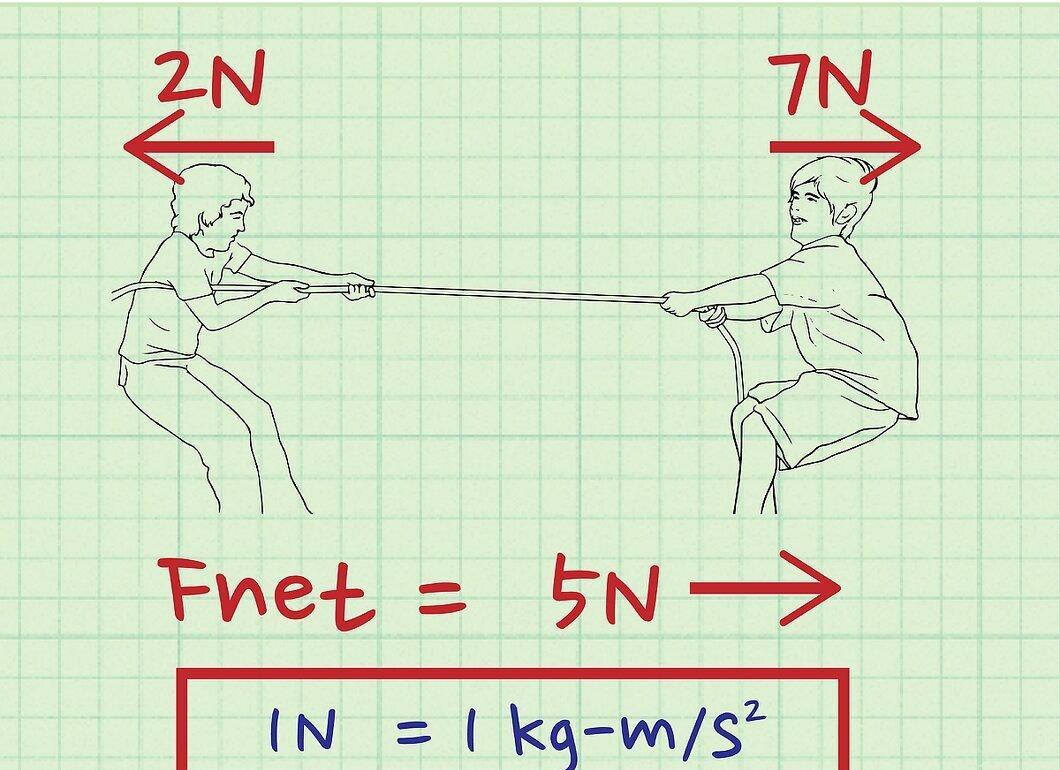
The net force is the force that is not balanced by other forces. If two forces are acting on an object in opposite directions, the net force will be in the direction of the greater force. Acceleration occurs when a force causes a change in the object's speed in the direction of that force.
- For example, if you and your brother are pulling on a rope, you with a force of 5 N and your brother with a force of 7 N in the opposite direction, the net force will be 2 N and directed toward your brother.
- Remember, 1 N = 1 kg·m/s².
Step 4. Rearrange the Formula F = ma to Calculate Acceleration.
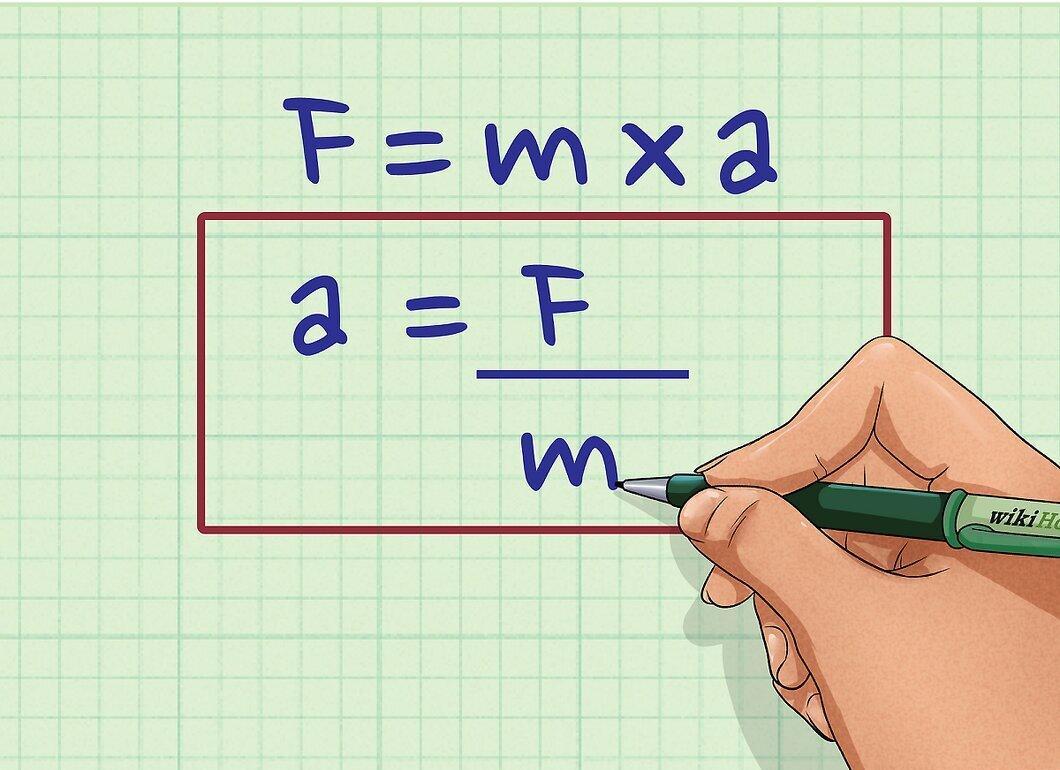
To find acceleration, divide both sides of the formula by m (mass): a = F/m. Thus, to calculate acceleration, divide the force by the mass of the object.
- Acceleration is proportional to force: the greater the force, the faster the object accelerates.
- At the same time, mass is inversely proportional to acceleration: the greater the mass, the slower the acceleration.
Step 5. Calculate Acceleration Using the Formula.
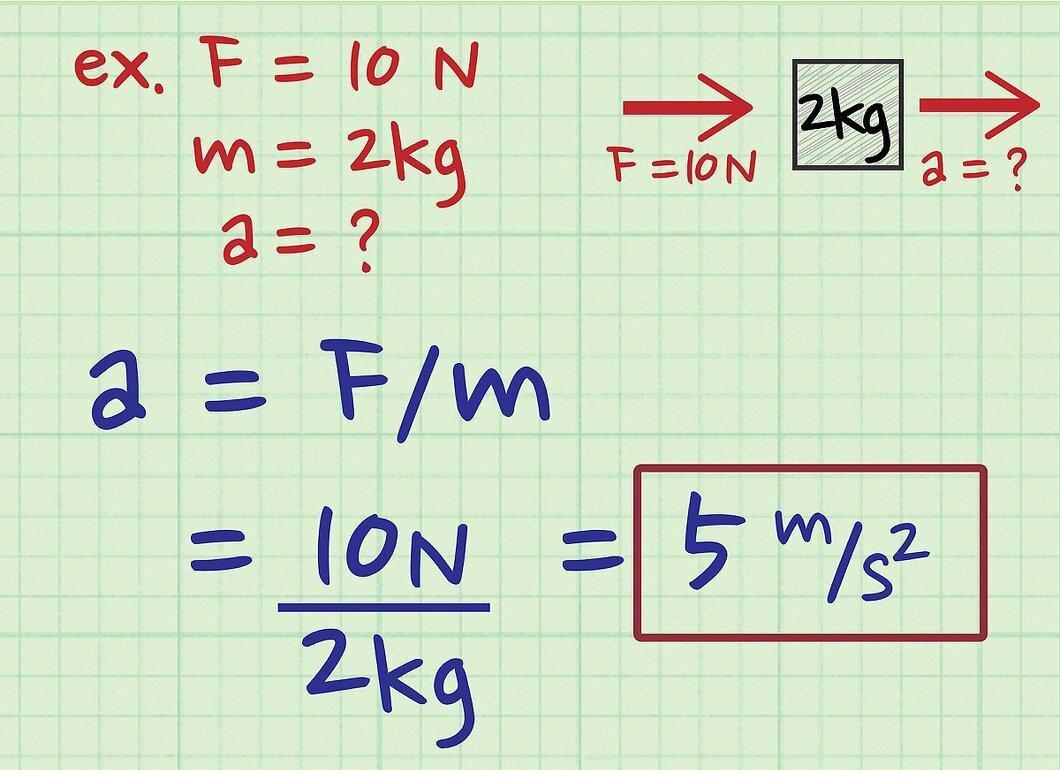
Acceleration is calculated as the ratio of the net force to the mass of the object. Substitute the known values into the formula to get the acceleration.
- For example: if a force of 10 N acts on an object with a mass of 2 kg, find its acceleration.
- a = F/m = 10/2 = 5 m/s²
Testing Your Knowledge
Step 1. Check the Direction of Acceleration.
It’s important to remember that the scientific understanding of acceleration may differ from everyday use of the term. Acceleration has direction: if it is directed upward or to the right, it is positive; if downward or to the left, it is negative. Check your calculations against the following table:
Step 2. Check the Direction of Force.
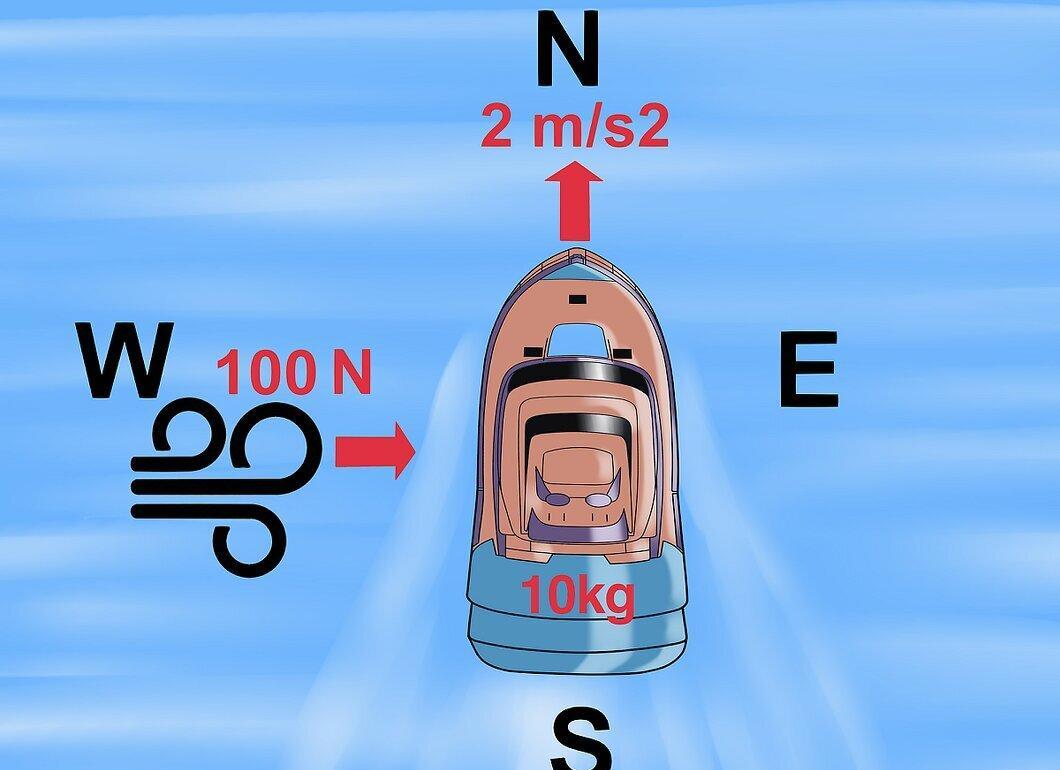
Acceleration always points in the same direction as the force acting on the object. Some problems may provide information that could confuse you.
- Example: a toy boat with a mass of 10 kg is moving north with an acceleration of 2 m/s². The wind blowing from the south exerts a force of 100 N on the boat. Find the boat's acceleration to the north.
- Solution: since the force is perpendicular to the direction of motion, it does not affect the motion in that direction. Thus, the boat's acceleration to the north remains 2 m/s².
Step 3. Finding the Net Force.
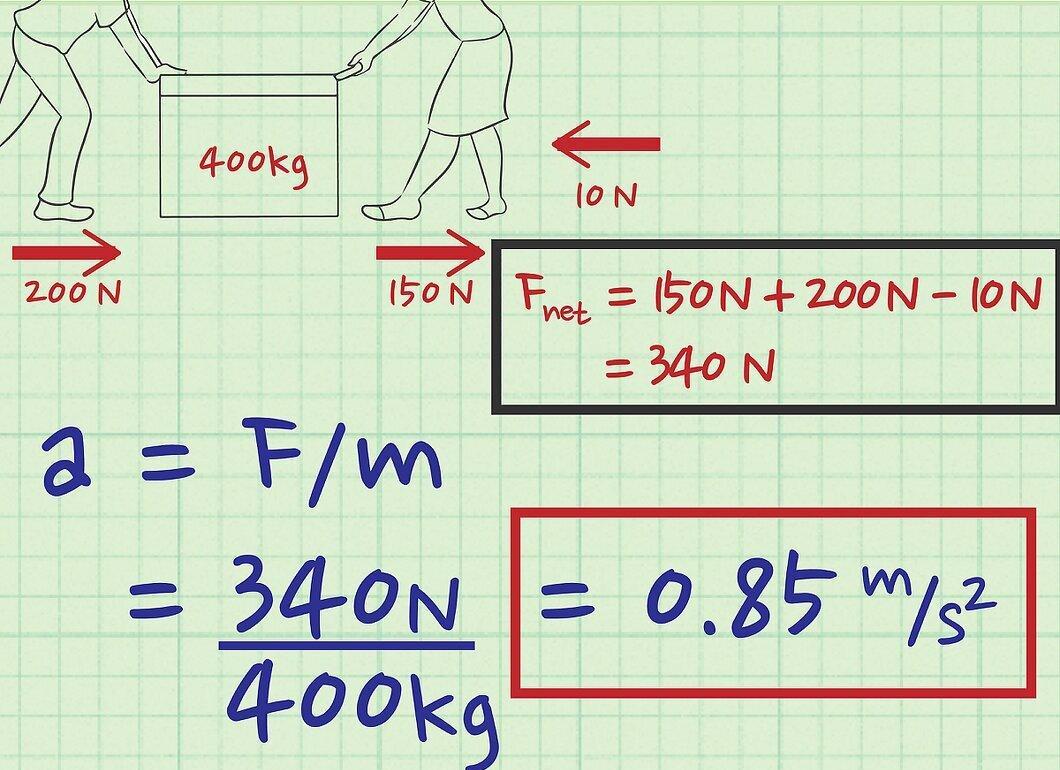
If multiple forces are acting on an object, first find the net force, then proceed to calculate the acceleration. Consider the following problem.