
If you've ever faced the challenge of determining the total amount of money paid over a specific period, don't worry. These problems are quite manageable once you understand what each component of the formula represents and how to use them.
Understanding Interest Rate Calculation Formulas
Step 1. Understand the units you'll be working with in the interest rate formula.

Understand the units you'll be working with in the interest rate formula. When solving for the interest rate, such as the interest charged on a loan, you'll be dealing with several variable quantities. These include:
- P = principal amount of the loan.
- i = interest rate.
- N = loan term in years.
- F = total amount paid at the end of the specified period.
Step 2. Know the formula to use to calculate the total amount you will pay.
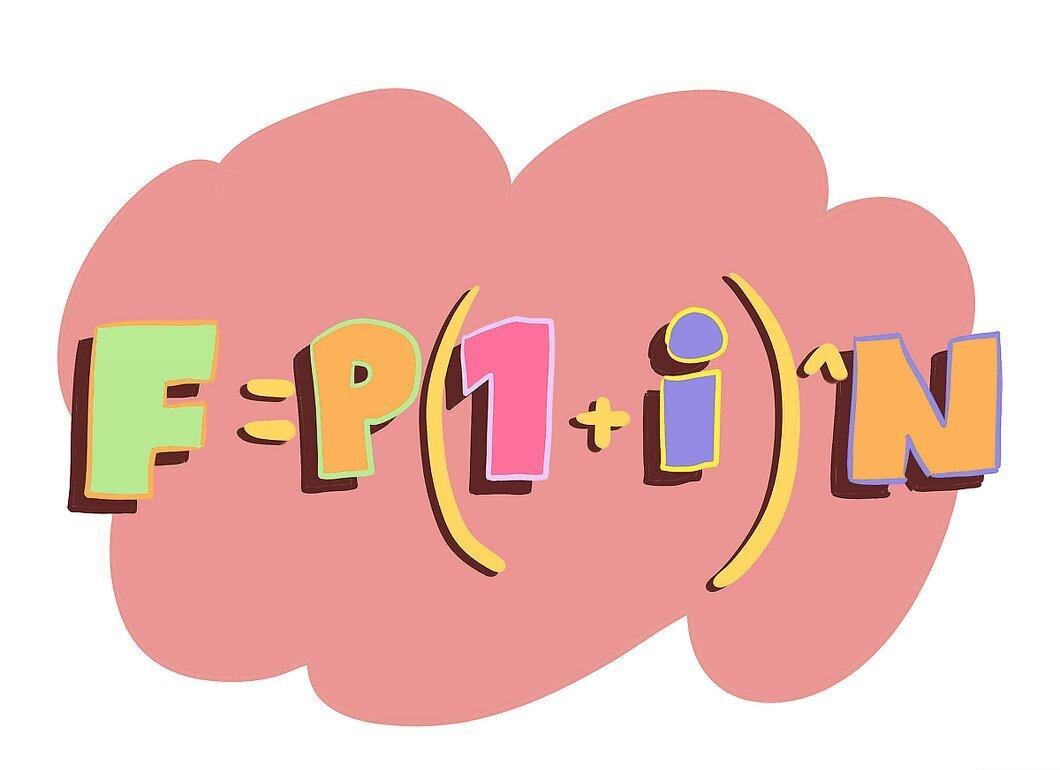
Know the formula to use to calculate the total amount you will pay. To find the total amount due at the end of the loan term, you need to multiply the principal amount by the interest rate plus 1, then raise this sum to the power equal to the number of years. The formula looks like this:
- F = P(1 + i)^N
Step 3. Walk through the formula and identify which numbers correspond to which variables.

Walk through the formula and identify which numbers correspond to which variables. Usually, interest rate problems will be presented in written form, and you'll need to deduce what each number represents. For example, you might be given: "You borrowed $4000 from the bank and agreed to repay the original loan amount plus interest after 4 years at an annual rate of 10%. How much will you pay back after 4 years?".
- P will be $4,000.
- i will be 10%.
- N will be 4 years.
- F will be the answer you're looking for.
Step 4. Substitute the known values into the formula for a fixed interest rate.
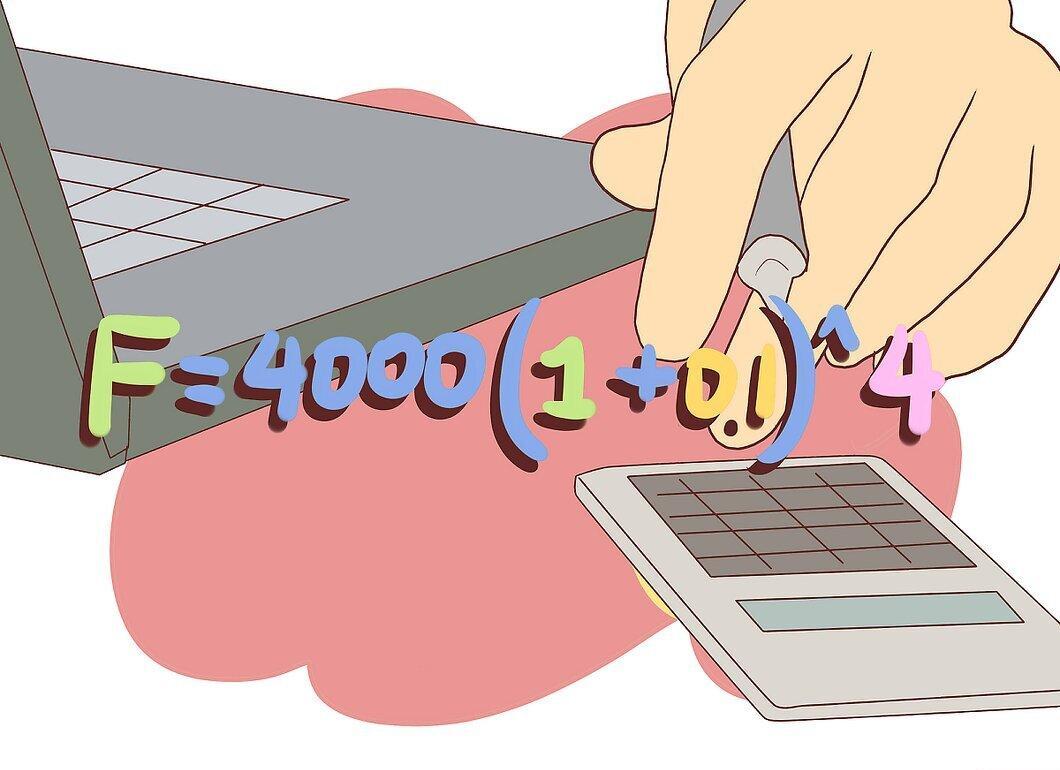
Substitute the known values into the formula for a fixed interest rate. Once you understand what each number represents, plug them into the formula to find the fixed amount. Our formula will look like this:
- F = 4000(1 + 10%). Note that it's easiest to solve the problem if you convert the interest rate from a percentage to a decimal, so the formula becomes F = 4000(1 + 0.1)^4.
Solving the Interest Rate Formula to Find the Total Amount Paid
Step 1. Work through the solution step-by-step.

Work through the solution step-by-step. To find the total amount you will pay over the loan term, you'll need to proceed methodically. Let's break down an example in this article:
- You took out a loan from the bank for $5000 and plan to repay the entire principal plus accrued interest over 5 years. The interest rate is 10%. What total amount will you pay after 5 years?
Step 2. Create your formula.
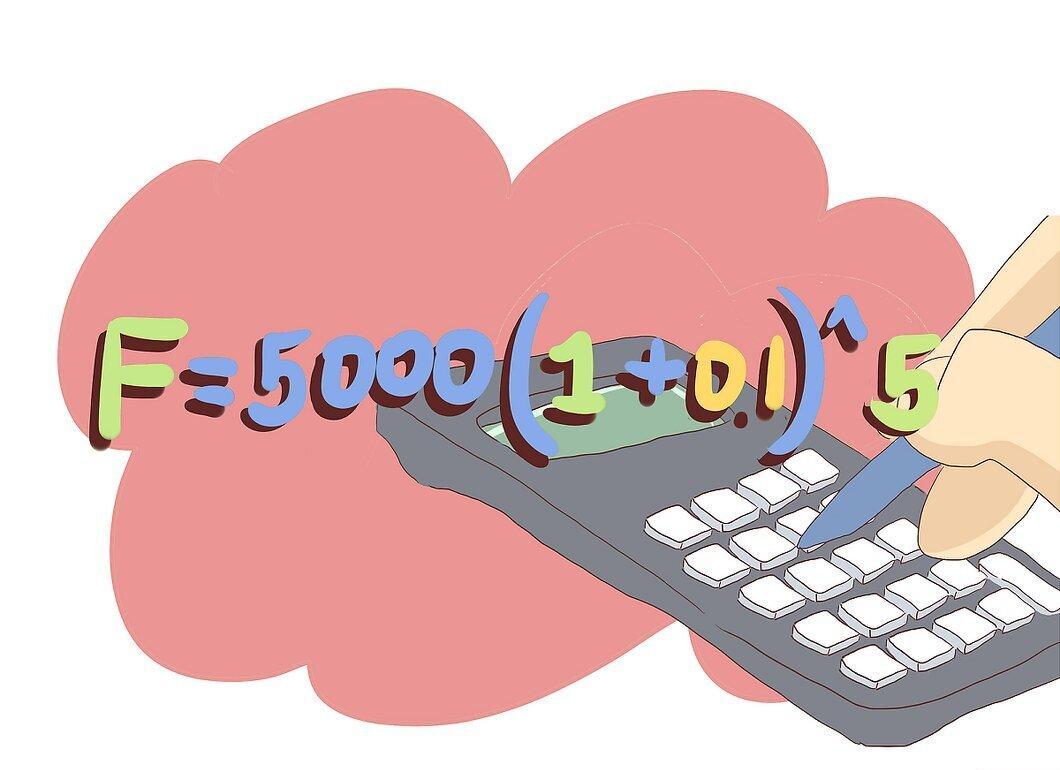
Create your formula. Once you've read the problem, write down the formula based on the standard equation F = P(1 + i)^N. For our problem, the formula will look like this:
- F = 5000(1 + 0.1)^5.
Step 3. First, calculate what’s in the parentheses.
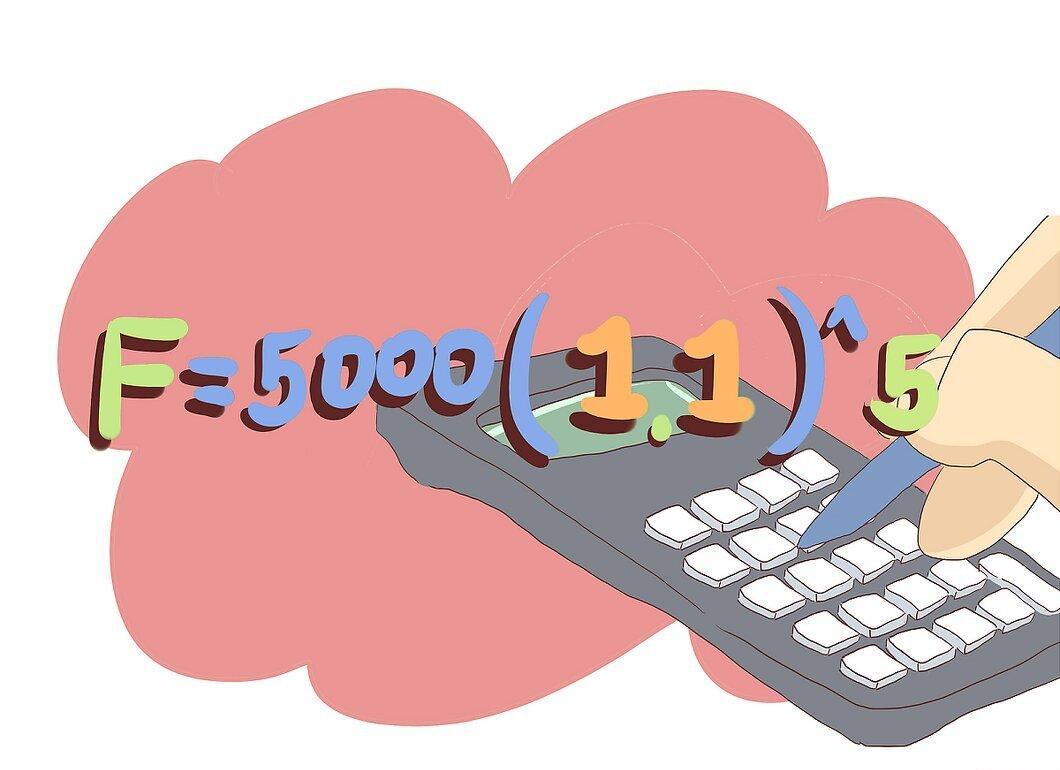
First, calculate what’s in the parentheses. After writing down your formula, start solving it. The first step will be to determine what's in the parentheses. In our case:
- Solve (1 + 0.1) = 1.1. Now our equation looks like this: F = 5000(1.1)^5.
Step 4. Next, use N to solve the next part of the equation.
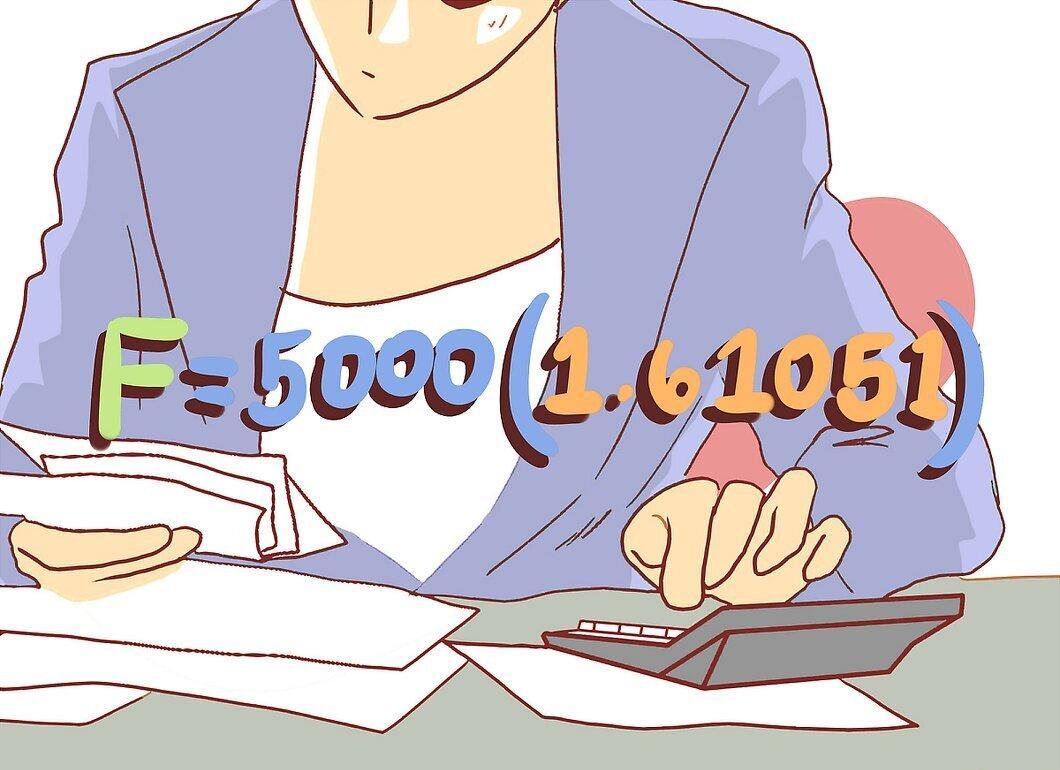
Next, use N to solve the next part of the equation. Once you've simplified the expression in the parentheses, you need to incorporate the years (N) into the formula. This means raising the expression in parentheses to the power of N. In our case:
- (1.1)^5 means multiplying 1.1 by itself five times. Thus, (1.1)^5 = 1.61051.
Step 5. Complete the calculation.
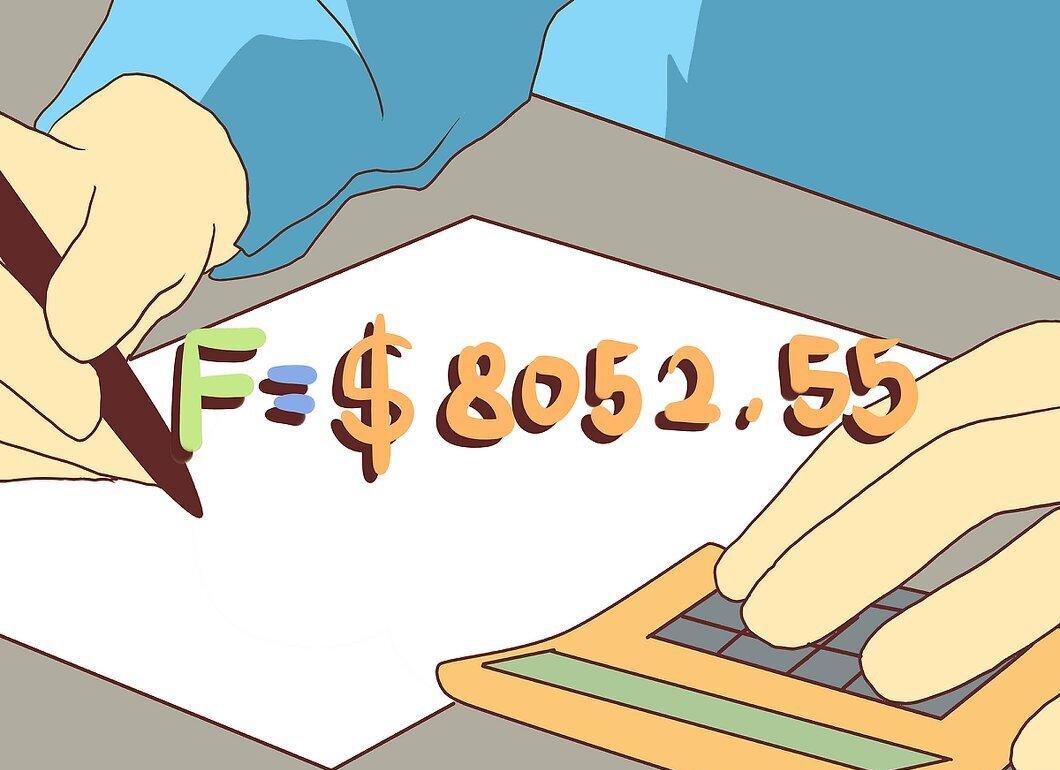
Complete the calculation. Now you should be left with one last step to solve the entire equation. To finish the calculation for the formula and find F, or the total payment amount, you need to multiply P by the value in the parentheses. In our case:
- F = 5000(1.61051), which gives F = $8,052.55. This means that after 5 years, you will need to pay $8,052.55.