In life, there often arises a need to comment on various texts, and the ability to do so constructively is very important. This skill is useful for educators, students, budding critics, and editors alike. While there is no universal formula for writing comments, a successful comment will depend on the subject of analysis, your goals, and your attitude towards the text. Regardless of what you're doing, a clear understanding of your objective and logical reasoning will aid you in crafting a quality comment.
Comment on a Literary Work
Step 1. Define Your Thesis.

Start by formulating your main thesis. Educational institutions often assign literary commentaries that require evaluating a work, be it a novel, poem, or play. The foundation of a successful comment is a clear and logical thesis.
- A thesis is your point of view or assertion. Here, you express your stance and subsequently provide arguments to support it.
- For example, if you're commenting on the novel "Great Expectations," your thesis might read: “Dickens's novel is not only engaging but also vividly illustrates the social disparities in Britain during the Industrial Revolution.”
Step 2. Create an Outline.
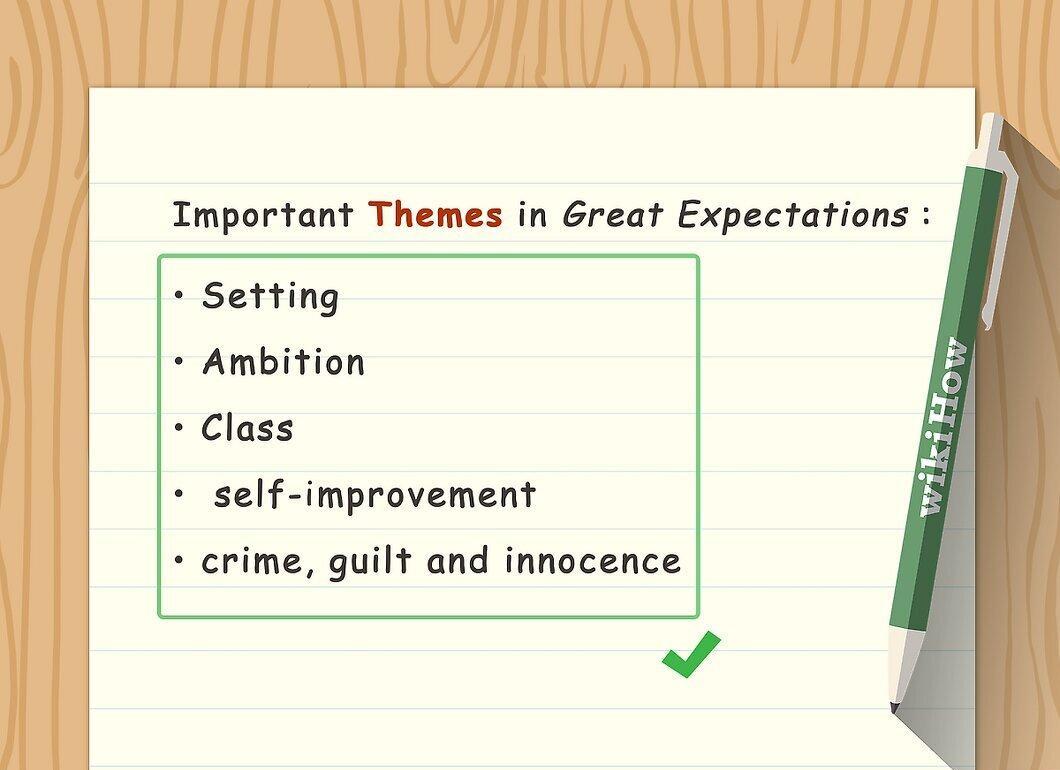
Draft an outline. It should correspond to the length of your comment. A brief comment may be suitable for a bulleted list or a single paragraph with essential information, while a more extensive commentary requires a clear and logical structure.
- For instance, you could write a heading like “Main Themes of the Work” and list points such as “Setting,” “Ambitions,” “Social Classes.”
Step 3. Introduce the Selected Theme.

Present the main theme. In the introduction, it is essential to focus on the key aspects of your comment. Here, you can outline the context of the literary work and your thesis before analyzing the merits, drawbacks, and themes.
- For example, you might start with: “The descriptions in 'Great Expectations' create an atmosphere that immerses the reader in 19th-century England alongside the protagonist Pip. Themes of class inequality, ambition, and love help to better understand the social divisions of that time.”
- After this, you can list the themes that will be discussed in the main text.
Step 4. Support Your Thesis with Examples.
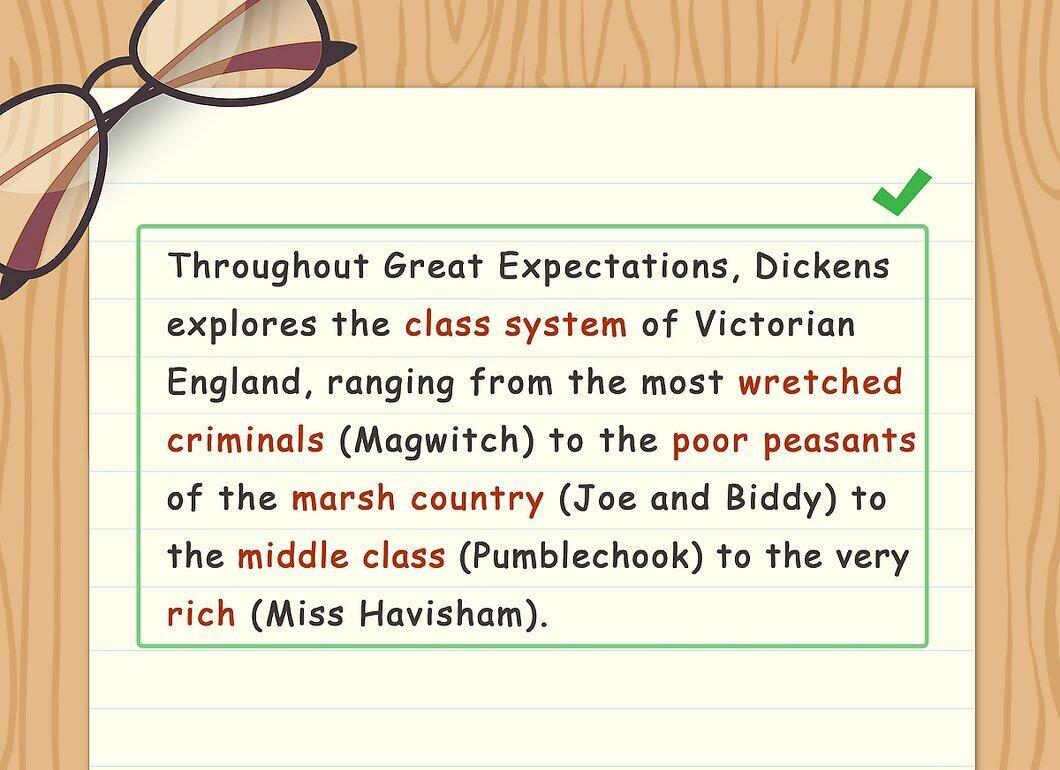
Illustrate your thesis with specific examples. Indicate where in the work the chosen theme is discussed and analyze its impact on the text. For instance, you could state that Miss Havisham's obsession with lost love is a central theme in "Great Expectations."
- An example here could be the fact that the character continues to wear her wedding dress, despite being abandoned decades ago.
Step 5. Connect Examples to the Theme.

Clearly show how your examples relate to the main theme. Miss Havisham's worn wedding dress serves as a symbol of her loss. The reader will appreciate your explanations.
- For instance, write: “Miss Havisham is a striking example of how love does not always bring happiness. This aspect is crucial for understanding the relationship between Estella and Pip.”
- Use smooth transitions. Before introducing a new example, add appropriate words or phrases: “similarly,” “on the other hand,” “also.”
Step 6. Conclude with a Summary.

Write a compelling conclusion. The final part should unify all elements of the comment. Don’t forget to summarize the main arguments and state why it’s important to engage with this work.
- In the commentary on "Great Expectations," it’s important to reiterate that the book opens up the theme of class inequality and shows that ambition is not always a positive trait.
- You might also draw parallels with other works of that time to highlight the significance of Dickens's novel, but try to avoid introducing new information in the conclusion.
Step 7. Compile a Bibliography.
Provide a list of sources used. If you relied on other works, be sure to format them correctly. Don’t forget to add citations at the end of the comment.
Comments on Informational Texts
Step 1. Familiarize Yourself with the Requirements.

Study the requirements for writing a comment. A comment on an informational text, like other types, should analyze the presented information. Unlike a comment on a literary work, here you need to evaluate the research, which may stand alone as a text but is usually included in the “Results” or “Discussion” section.
- If your supervisor or teacher asks you to write a comment, clarify the length and other requirements.
Step 2. Create a Brief Overview.

Draft a brief overview. One of the key elements of a comment on an informational text is a synopsis of the research. You should concisely summarize the results and significance of the work, analyzing and synthesizing the data.
- For example, if the study is about high school graduates in Yekaterinburg, describe the statistics and emphasize the importance of the results obtained.
Step 3. Highlight Key Points.
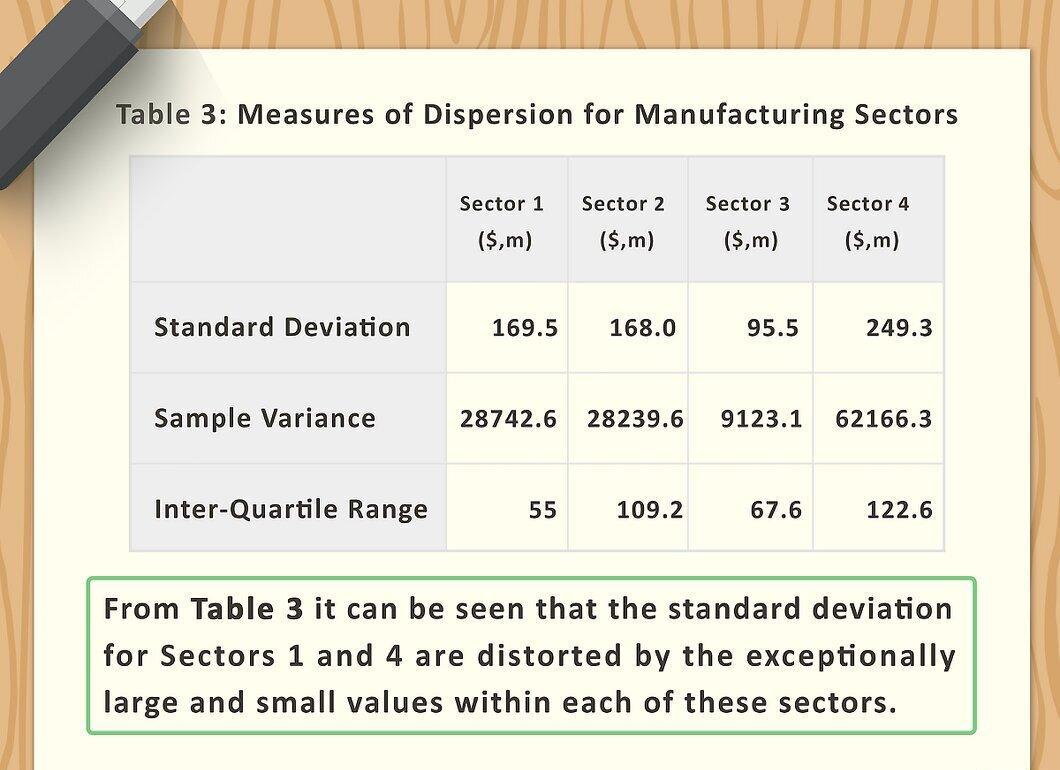
Emphasize key points. In the comment on an informational text, you can include graphs and charts to clarify the results. For instance, use a table of expenses for residents of Moscow and comment on it.
- Write: “As seen in Figure 1.2, healthcare expenses have steadily increased since 2000.”
Step 4. Draw a Conclusion.
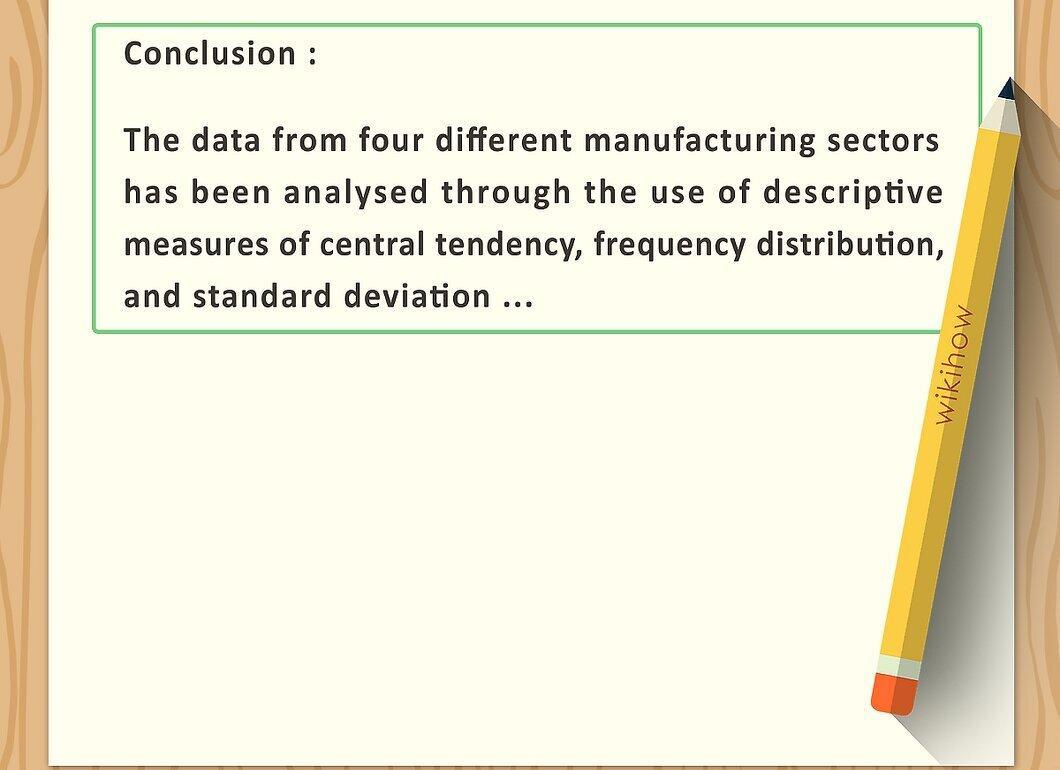
Conclude with a summary. In the conclusion, avoid simply repeating what has been stated before; highlight the importance of the results using different phrasing and suggest alternative research methods.
- Like in the rest of the comment, it is important to point to specific data in the conclusion.
Step 5. Provide a List of References.
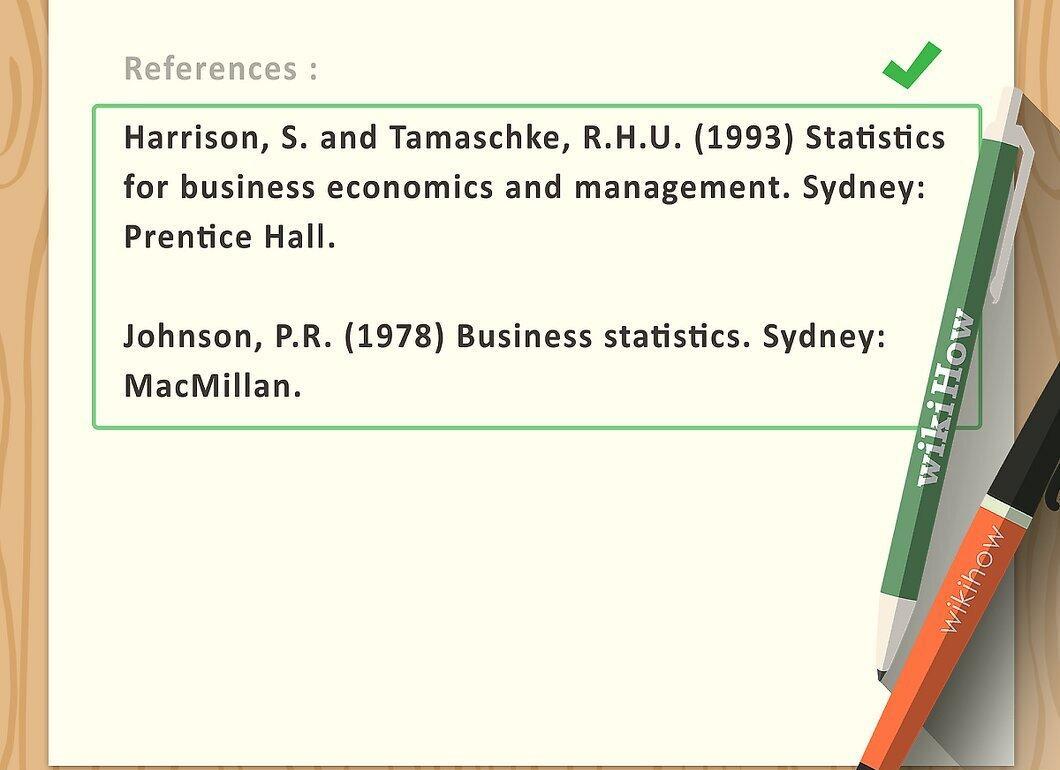
Include a list of sources used. The comment should contain facts, figures, and references to sources of information. Follow citation formatting guidelines, placing them at the end of the text.
- Ensure that all quotes and figures in the text are accompanied by references to sources.