
Crafting a report might seem like a challenging task, but by selecting an engaging topic and dedicating time to preparation, the process can become enjoyable and even fun. Once you research your topic and develop a plan, all that’s left is to organize your points and get ready for the presentation.
Choosing a Topic
Step 1. Review the Report Guidelines.
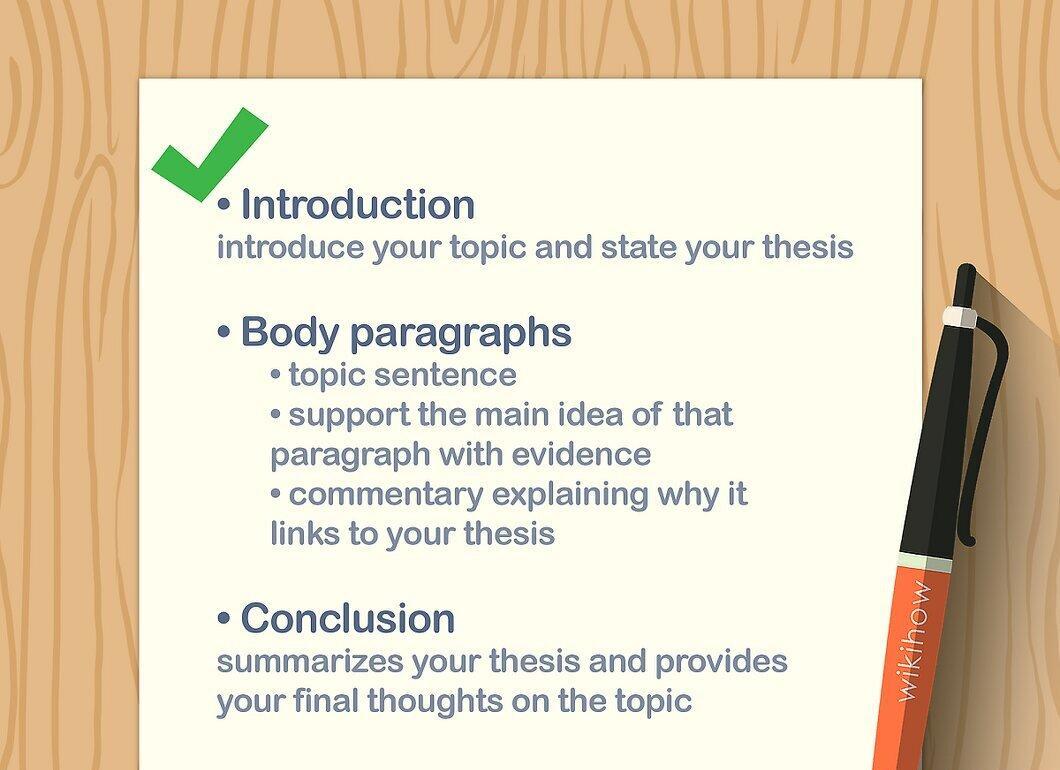
Carefully examine the instructions for writing the report. If your teacher or supervisor has provided guidelines, make sure to read them thoroughly and ensure you understand the assignment. Typically, the instructions outline the genre requirements (informative or persuasive), the target audience, and key issues to be addressed.
- Teachers often specify requirements for the structure and format of the report.
- If you have any questions, resolve them as soon as possible; otherwise, you may end up having to redo your work due to misunderstandings about the assignment.
Step 2. Find a Topic That Interests You.

Choose a topic that genuinely fascinates you. Usually, the author is allowed to select their own topic, and if you find it interesting, the process of gathering information and writing will be much more enjoyable. This approach will lead to a more informative and engaging report, likely resulting in positive feedback and a high grade. Tips: Before you start, confirm with your supervisor or teacher that they approve of your chosen topic.
- For example, if your report is about a famous person, select someone who truly intrigues you. You could discuss the first woman to fly in space or Kalashnikov, the creator of the famous rifle.
- Even if your topic options are limited, try to find interesting aspects within the assignment. For instance, if you need to write about events in the 1960s in the USSR, focus on how popular music reflected these events.
Step 3. Define a Narrow Topic.
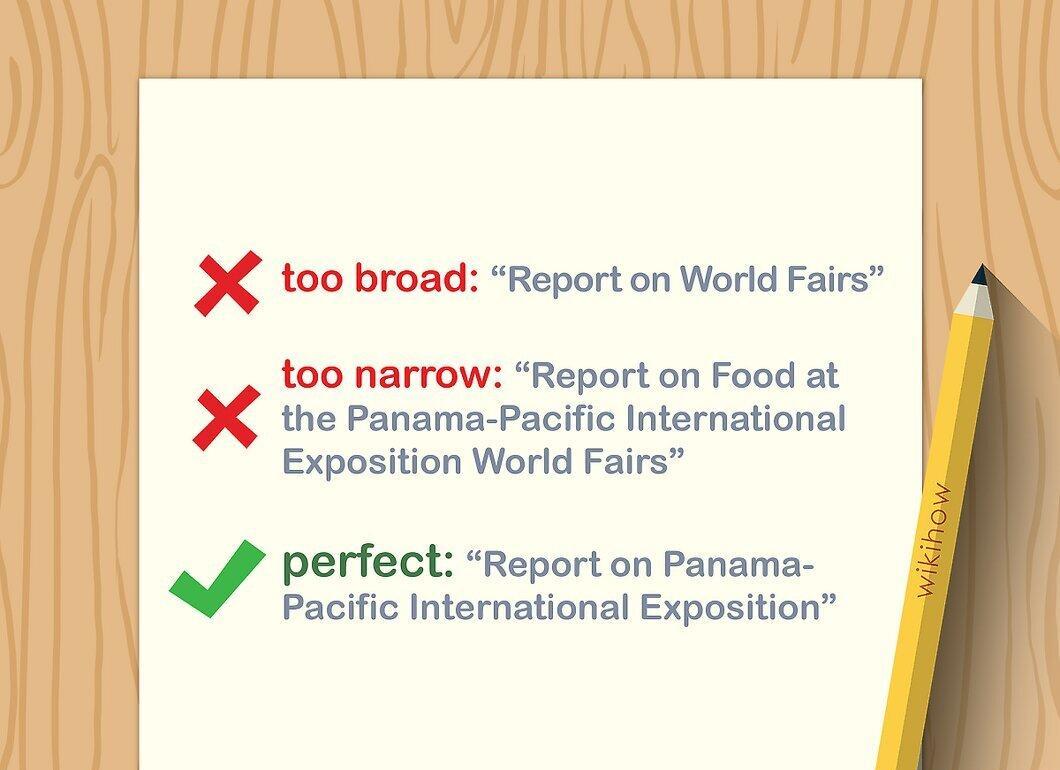
Aim to choose a topic that is as narrow as possible. If you settle on a topic that is too broad, your report may end up looking disorganized, as you'll have to handle too much information. However, your topic shouldn't be too narrow either, or you will struggle to find the necessary information. Identify an aspect of the topic that has plenty of interesting details.
- If you’re unsure where to start, choose a broader topic and then narrow it down as you write.
- For instance, if you want to report on international conferences during World War II, select one specific conference, such as the Yalta Conference.
- However, avoid narrowing the topic to something excessively specific, like "What the Conference Participants Wore," as it will be difficult to find reliable sources and cover such a narrow topic.
Researching Your Topic for the Report
Step 1. Use Only Reliable Sources.
When writing your report, rely only on credible sources. If the instructions specify recommended sources or a limit on the number, make sure to follow these guidelines. No matter how well you write your report, if the sources are unreliable, your grade will suffer. Use books, scholarly articles, and other authoritative materials.
- If there are no guidelines regarding the number of sources, aim for 1-2 reliable sources per page.
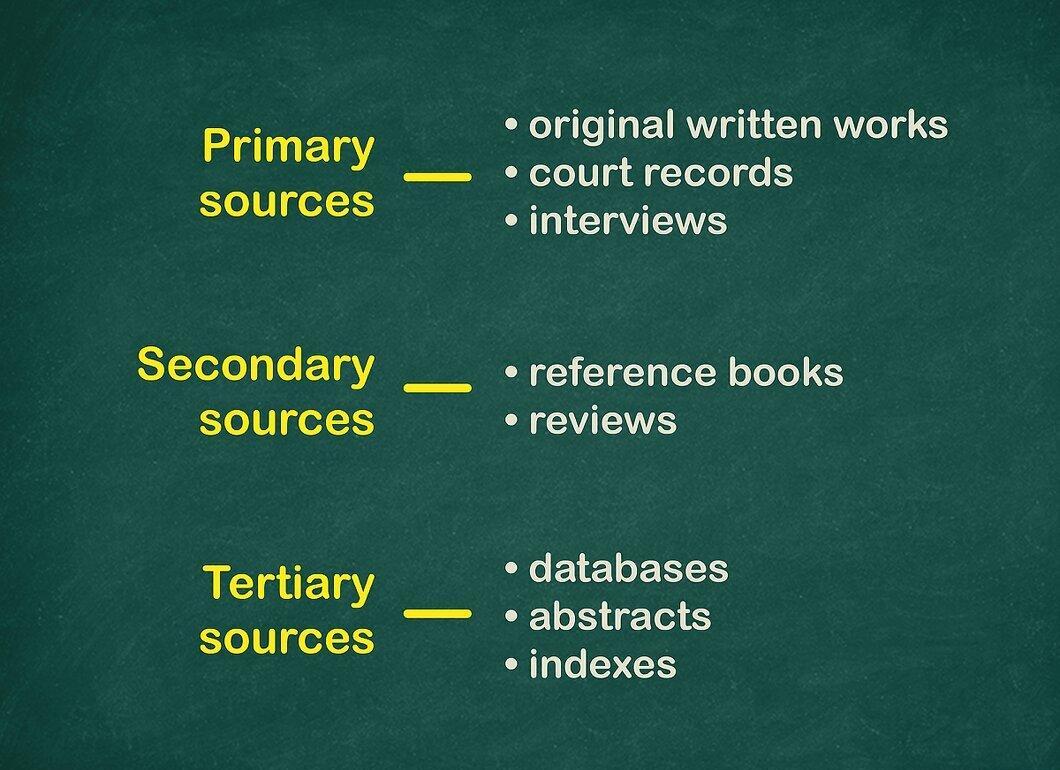
- Sources are categorized as primary (e.g., original research, interviews) and secondary (e.g., reference books and reviews).
- Databases and abstracts are considered tertiary sources and can help you find primary and secondary data for your report.
- If you're writing a business report, you may be provided with additional materials such as market research or sales reports, or you may need to gather this information independently.
Step 2. Start with the Library if You're Writing for School.

If you're preparing a report for school, start by visiting the library. Even if you are allowed to use the internet, the library is a great place to begin. Visit your school library or any public library and use their databases to access books and scholarly articles that may not be available online. Tips: Don’t leave writing the report until the last minute to avoid a quality of work that reflects a lack of care.
- Librarians can be a great resource, helping you find the necessary books and articles.
- Teachers often limit the number of online sources that can be used. If you gather most of your information from the library, you can use the internet for additional insights.
Step 3. Look for Only Scholarly Sources Online.

When searching for information online, use only scholarly sources. Since anyone can publish information online, it can be challenging to separate facts from myths. Start your search with academic search engines like Google Scholar or use resources recommended by your school.
- Reliable online sources include government websites, expert articles, and materials from peer-reviewed journals.
Step 4. Use Your Sources' Bibliographies to Find New Materials.

You can find new materials using the bibliographies of your sources. Investigate the references to materials that the authors of your sources used. If an article mentions another work on a similar topic, try to find it. This can help deepen your understanding of the subject.
- If you are using a book as one of your sources, check the end, where a list of works cited is often provided.
Step 5. Don’t Forget to Take Notes, Including Citations.

While writing your report, remember to take notes and record citations. If you find useful information, write down everything you need, including the author, publication date, and page number. This will assist you in creating a bibliography, as all the data will be recorded.
- Be sure to number your notes pages to keep track of sources.
- Keep in mind that you will need to cite the sources you use, and this will depend on the format assigned to you.
Step 6. Use Your Notes to Write Thesis Statements.

Based on your notes, formulate thesis statements. As you read and summarize articles, a main idea will emerge. Use this idea to write a structured and engaging report. The thesis should succinctly convey what you want to communicate to the reader, and all key points should relate back to the main theme.
- Generally, a report should not contain the author's personal opinion. However, the thesis should present an argument that you will defend in the main text.
- Example thesis for an informative report: "The Yalta Conference addressed three key issues related to military plans and post-war politics."
- Example thesis for a deeper analysis: "The Yalta Conference was intended to open a second front, yet many already understood that the USSR could achieve victory without the Allies' assistance."
Step 7. Organize Your Notes into a Unified Structure.
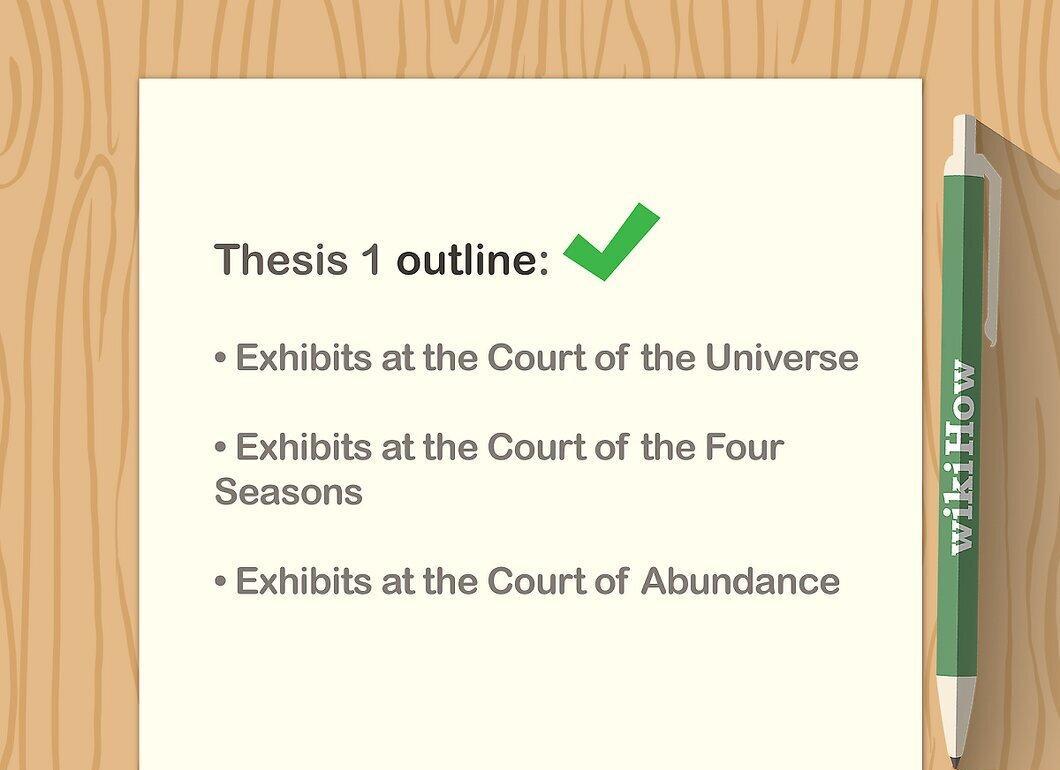
Organize your notes into a coherent structure. After forming your thesis statements, start arranging your notes into a logical structure for your report. Begin with the main idea, and highlight 3-4 key points you wish to elaborate on. Tips: You can use a computer or other devices for taking notes and creating thesis statements if that's more convenient for you.
- Thesis statements will help you envision what the report will look like. You can create a simple list or a diagram, depending on what works best for you.
- Aim to organize the information so that it logically flows together. For example, it can be helpful to group related elements, such as significant events in a person's life if you're writing a biographical report.
- Example thesis ideas: issues discussed at the Yalta Conference.
Writing the Draft
Step 1. Ensure Your Report is Properly Formatted.
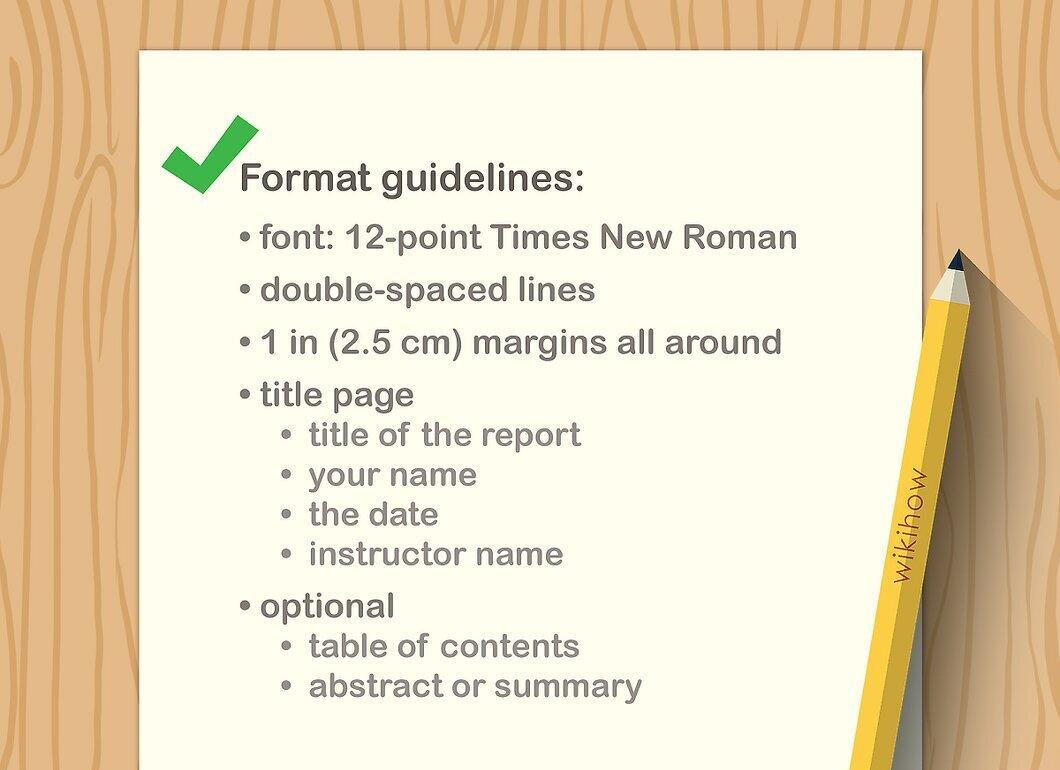
Format your report according to the requirements. It’s better to set font, margin, and spacing parameters before you start writing than to fix everything at the end. While writing, remember to immediately add citations for your sources, so you don’t overlook this at the very end.
- Follow the formatting guidelines. If none are provided, choose a classic font like Times New Roman or Arial in size 12, with 1.5 spacing and standard margins.
- At the end of the report, you will typically need to provide a list of sources used. You may also need a title page with the report title, your name, date, and the instructor's name.
- For some types of reports, a table of contents and abstract may be required, which are easier to write after completing the draft.
Step 2. Introduce Your Topic in the Introduction.

Present your topic in the introduction. This is the section where you introduce the topic and explain its essence. The introductory text should be engaging to capture the reader’s interest and encourage them to continue reading. Provide some background information about the topic, then state your main idea.
- Example introduction for a thesis: "The Yalta Conference of the Allied Powers — a meeting of the leaders of the anti-Hitler coalition — the USSR, USA, and Great Britain, aimed at establishing a post-war world order, took place at the Livadia Palace in Yalta."
Step 3. Start Each Paragraph with a Topic Sentence.

Begin each paragraph with a topic sentence. The paragraphs should present evidence supporting your main idea. Each paragraph should contain a topic sentence and arguments that support it. The topic sentence introduces the main thought of the paragraph and ties it to the overall theme. Tips: Assume your reader is unfamiliar with the subject. Provide details and definitions to explain specialized terms.
- It’s important to present the most significant information at the beginning of the report.
- Example topic sentence for a thesis: The Declaration on Liberated Europe at the Yalta Conference.
Step 4. Support Each Statement with Evidence.

Every statement should be backed by evidence from your research. After writing the topic sentence in the main paragraph, present the evidence found in your sources. Incorporate them into the text using both quotes and paraphrasing. By linking each paragraph to the topic sentence, you will create a logical structure for your report, making it more engaging.
- Paraphrasing is rephrasing the original ideas of the author in your own words, while quoting involves using the exact words from the source enclosed in quotation marks with proper attribution.
- For instance, in a sentence about the Declaration on Liberated Europe, you should outline the principles of policies on reclaimed territories and their implementation.
- Use sources to support your main idea, but avoid plagiarism. Always express information in your own words. Don’t forget to properly cite all sources according to your instructor's requirements.
Step 5. Add Commentary to the Evidence.

Accompany the evidence with commentary explaining how it relates to your thesis. A commentary is your reflections on the topic and the evidence presented. Explain how they support your ideas and connect them to your report. This will help the reader follow your logic, making your arguments more convincing.
- Your commentary should contain 1-2 sentences, and for longer reports, more elaborate explanations may be necessary.
Step 6. Conclude with a Summary in the Final Paragraph.

The concluding paragraph should summarize your research. It includes the key points and main conclusions. Remind the reader what they should take away from the report, emphasizing the importance of the information presented.
- Avoid introducing new information in the conclusion. Don't surprise the reader at the very end. Instead, briefly reiterate everything that was stated earlier.
Reviewing and Editing the Report
Step 1. Read Your Report to Check Important Information.

Read your report from beginning to end, imagining yourself as a reader who is encountering this information for the first time. Pay attention to how easy it is to follow the logic of the presentation and how clearly the topic is revealed. Also, verify whether your evidence supports the main idea. Tips: If possible, set the report aside for a few days and then read it again to catch errors you might have missed.
- Ask yourself, "Would I understand the topic if I were reading this report for the first time?"
Step 2. Carefully Check the Text for Errors.

Thoroughly check the text for spelling and punctuation errors. Even if the information is good, too many mistakes will make your report appear sloppy. Using a word processor with spell check can help identify errors during writing, but nothing replaces careful editing.
- Try reading the text aloud. This can help reveal logical errors or long sentences that you might not notice when reading silently.
Step 3. Read Sentences in Reverse Order.

Read each sentence from the end of the text to the beginning. Sometimes even after thorough checking, you can overlook text that you have already read multiple times. After editing, try reading it backward, starting from the last sentence.
- This is an excellent method for spotting spelling and grammatical errors that might have been missed.
Step 4. Ask Someone Else to Read Your Report.

Have someone else read your report. A fresh perspective can be invaluable, especially after repeated readings of the text. If you can find someone willing to help, ask them to point out any errors and provide feedback on the clarity of your arguments.
- Ask questions like: "Is it clear what I wanted to convey?", "Is there anything that should be removed or added?" and "What can be improved?"
Step 5. Compare Your Report with the Instructor’s Guidelines.

Compare your report with the instructor’s guidelines to ensure it meets the requirements. All your work should be fairly evaluated; don’t risk losing points due to non-compliance with instructions. Review the guidelines to ensure your document meets the criteria for a successful evaluation.
- If you have questions about the requirements, be sure to clarify them with your instructor. It’s important to understand how your assignment will be evaluated.