
To become part of the student council and contribute to your school, you need to show commitment and prepare a compelling speech. It's also essential to find the right audience.
How to Write a Speech for Student Council
Step 1. Reflect on Your Motivations.
Think about your reasons. Why do you want to be a member of the student council? What ideas do you plan to implement if elected? Answer these questions. If you don’t have a clear answer, it might not be the right path for you.
- Recall what the student council chairperson has said. Is there anything from their words that you would like to include in your speech? How long should your speech be?
Step 2. Jot Down Your Thoughts.
Write down your ideas. It’s helpful to document your responses to potential questions. For example, describe how your school will improve with your involvement in the council, what goals you aim to achieve, and how the council can help bring your ideas to life.
Step 3. Start Writing.
Begin by stating your desire to be part of the student council. Then, list the reasons why this is important to you and explain what you plan to do once you gain support. Don’t forget to sprinkle in some humor to make your speech more engaging. People always appreciate a good sense of humor. Pay attention to the performances of comedians and politicians.
Step 4. Conclude Your Speech.
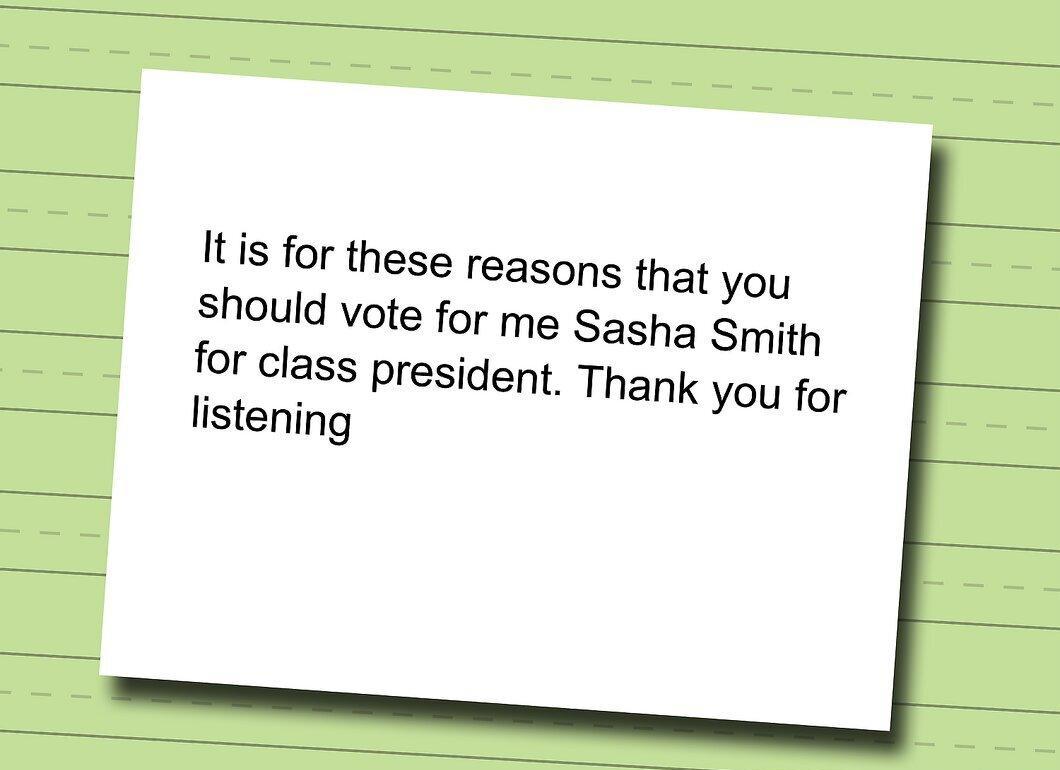
Wrap up by saying, “Thank you for your attention, and please support me with your vote.”
Step 5. Read Your Speech Aloud.

How does your speech sound? Is there anything you would like to change? Read it over and correct any mistakes.
Step 6. Ask Someone to Review Your Speech.

Ask someone to sincerely share their thoughts on your speech. Would they vote for you?
Step 7. Review Your Speech Again.
Read your speech one more time. You might want to write it down on a separate sheet of paper for clarity.
Step 8. Mention Topics of Interest to Your Peers.

Don’t forget to mention topics that may interest your classmates, such as Halloween celebrations, school dances, themed evenings, or charity events. Ultimately, it’s worth discussing your ideas with a teacher and getting their feedback.