Determining the age of your turtle can be quite challenging, especially if you're unsure when it was born. While there is a method that involves counting the rings on the plastron of the shell, this approach is more indicative of feeding periods rather than its actual age. If your turtle is still young, you can compare its size to that of adult turtles to estimate its age.
Counting Rings on the Shell
Step 1. Choose a scute for counting rings.
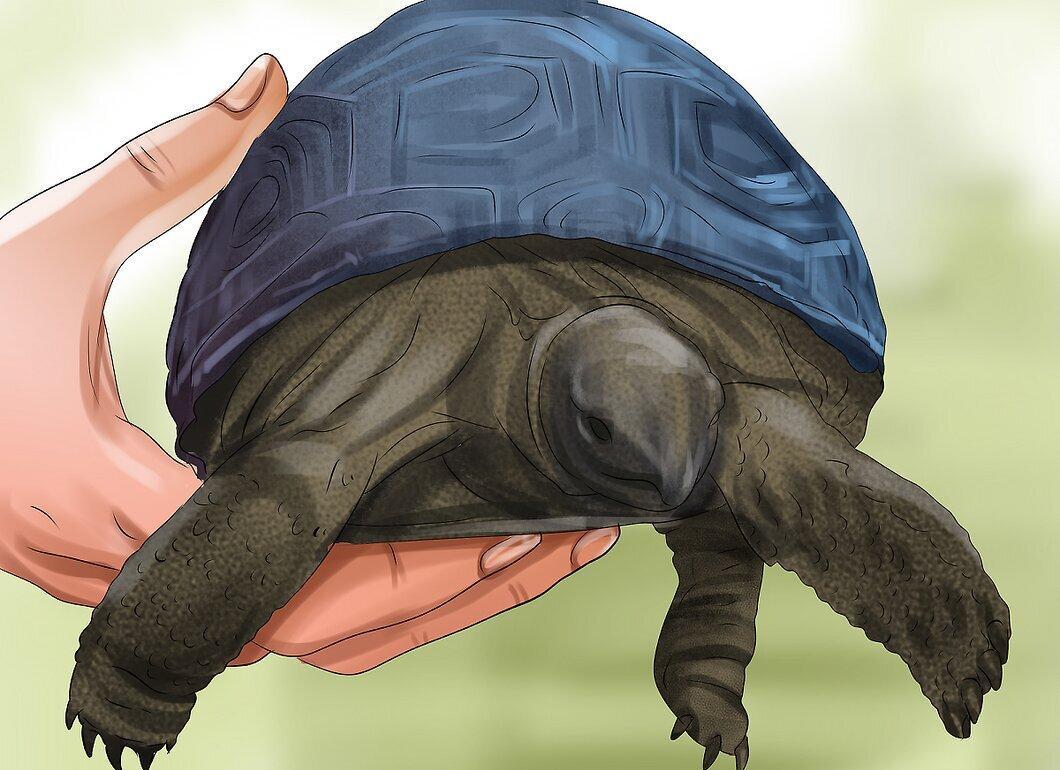
Start by selecting a scute on which to count the rings. This process will help you roughly estimate the age of the turtle. Scutes are the scaly elements that make up the shell. Keep in mind that this method will only provide an approximate estimate, as rings form during both periods of food scarcity and abundance. In simple terms, a ring can arise from starvation or an abundance of food, not solely depending on the season.
Step 2. Count the rings.
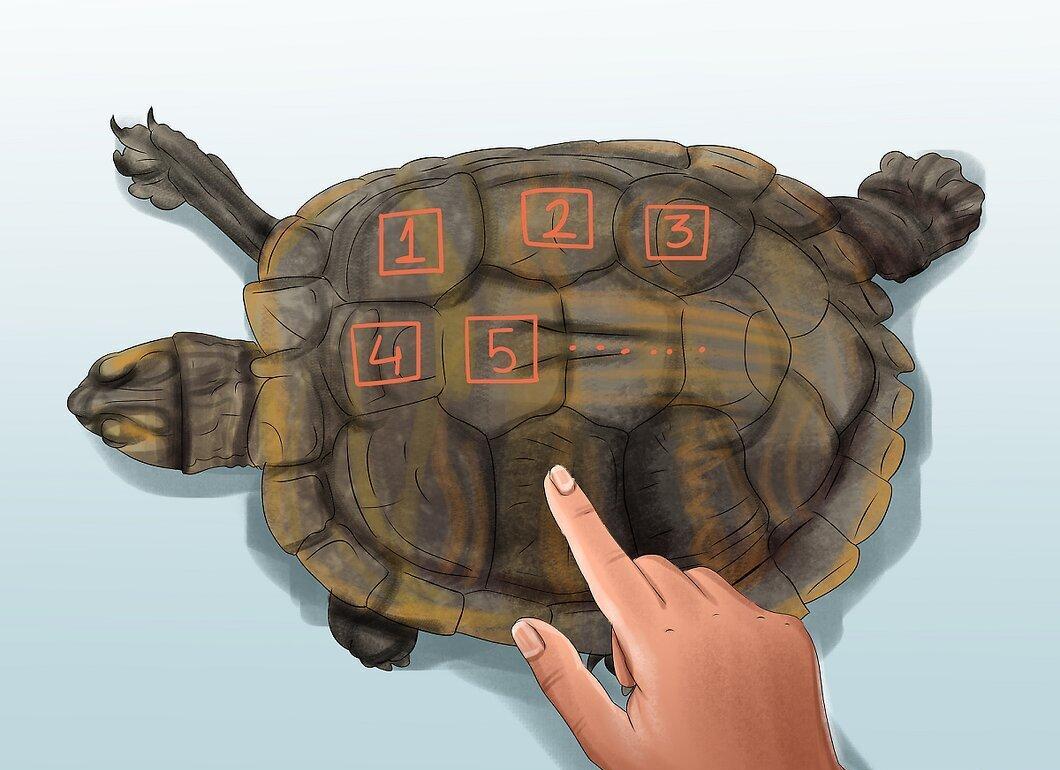
Proceed to count the rings. The rings on the scutes can vary in width and color. Typically, wider rings form during the warm months when the turtle has plenty of food. In contrast, narrow rings occur in the colder months when food was scarce. By counting the rings and dividing the total by two, you can obtain an approximate estimate of your turtle's age.
- Focus specifically on the rings. You don't need to worry about the number of scutes, as that does not reflect the turtle's age. Concentrate on the rings on each individual scute.[3] X Source
Step 3. Estimate the age.
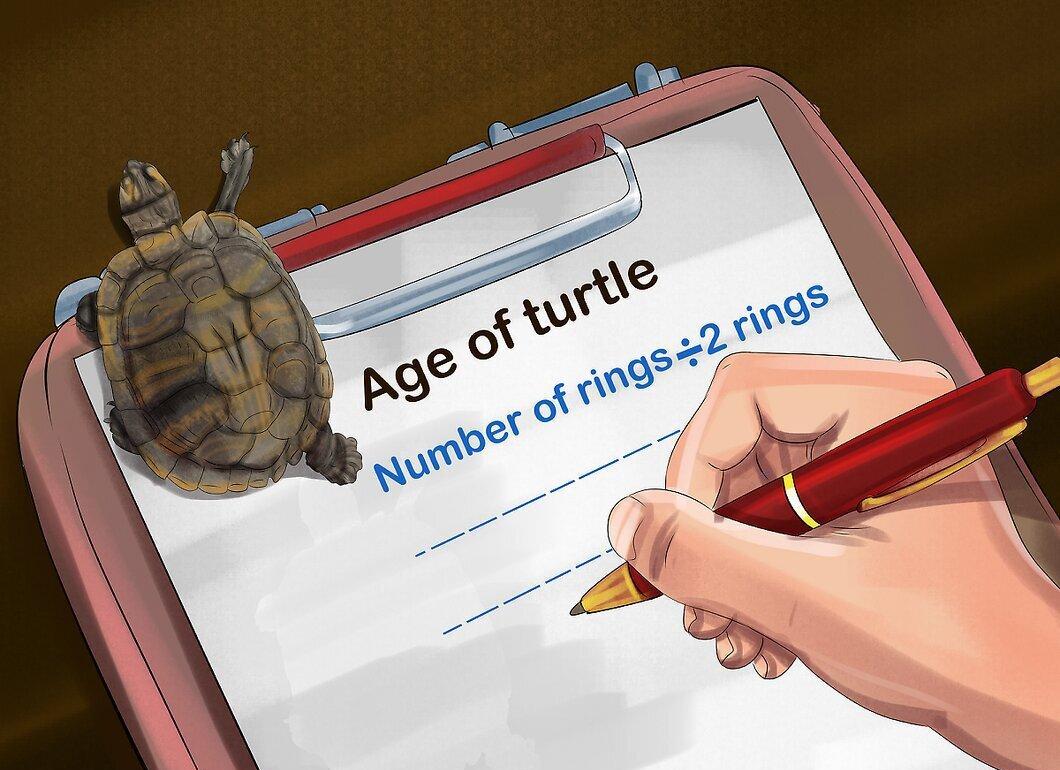
Now that you've counted the rings, try to estimate the turtle's age. For instance, if you counted 14 rings, this might suggest that your turtle is around 7 years old, as one ring typically forms each year.
- Rings will form in both wild and captive turtles.
- As turtles age, starting from around 15 years, it becomes more challenging to determine their age, as the rings will be spaced closer together.[4] X Source
Assessing Turtle Size
Step 1. Measure your turtle.
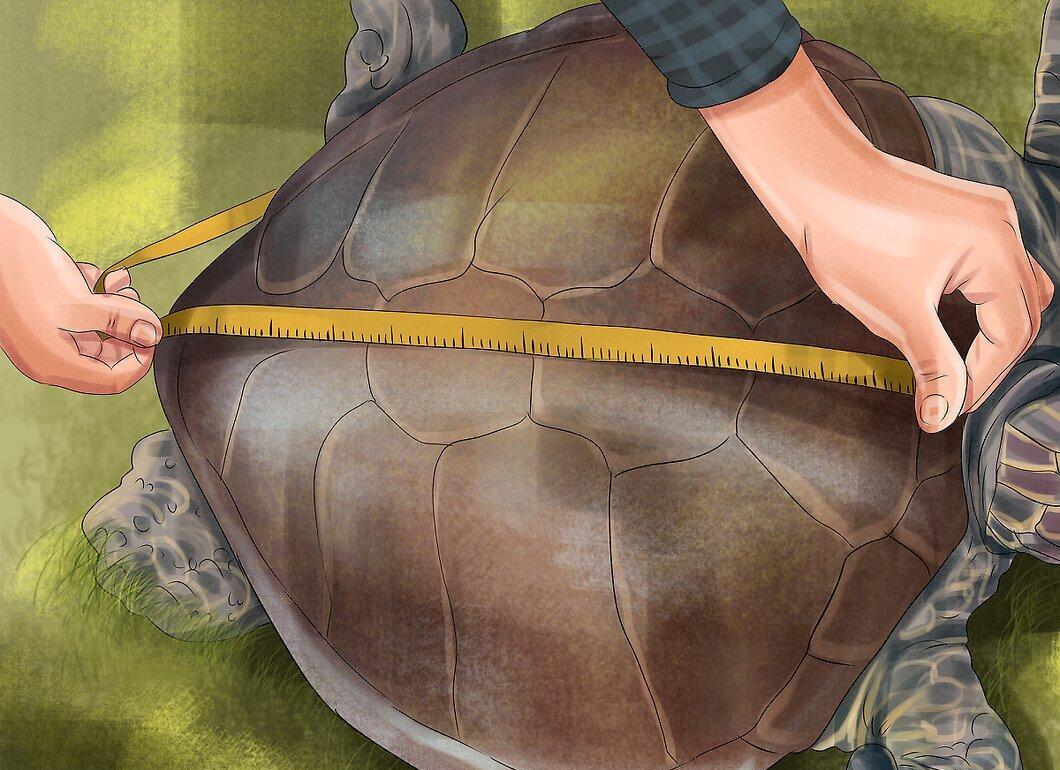
First, measure your turtle. Its size can help in determining its age, especially if it is still young. Measure it from the tip of its nose to the tip of its tail to get an overall idea of its length. Try to take measurements when the turtle is stationary to avoid inaccuracies. If you offer it a treat, the turtle will likely stretch its head out of its shell.
Step 2. Find the average size of turtles of your species.

Now, look for a size chart that corresponds to your species of turtle. Such charts will show the average size of turtles based on their age. Be sure to find a chart specifically for your species, as even turtles of the same type can vary significantly in size. You can search for this information online or in specialized books.
- For example, the southern painted turtle typically maxes out at 15 cm, while the larger western painted turtle can grow up to 20 cm.
- Turtles in captivity usually grow faster than their wild counterparts. Remember, a larger size might mislead you regarding their age.
Step 3. Compare sizes.
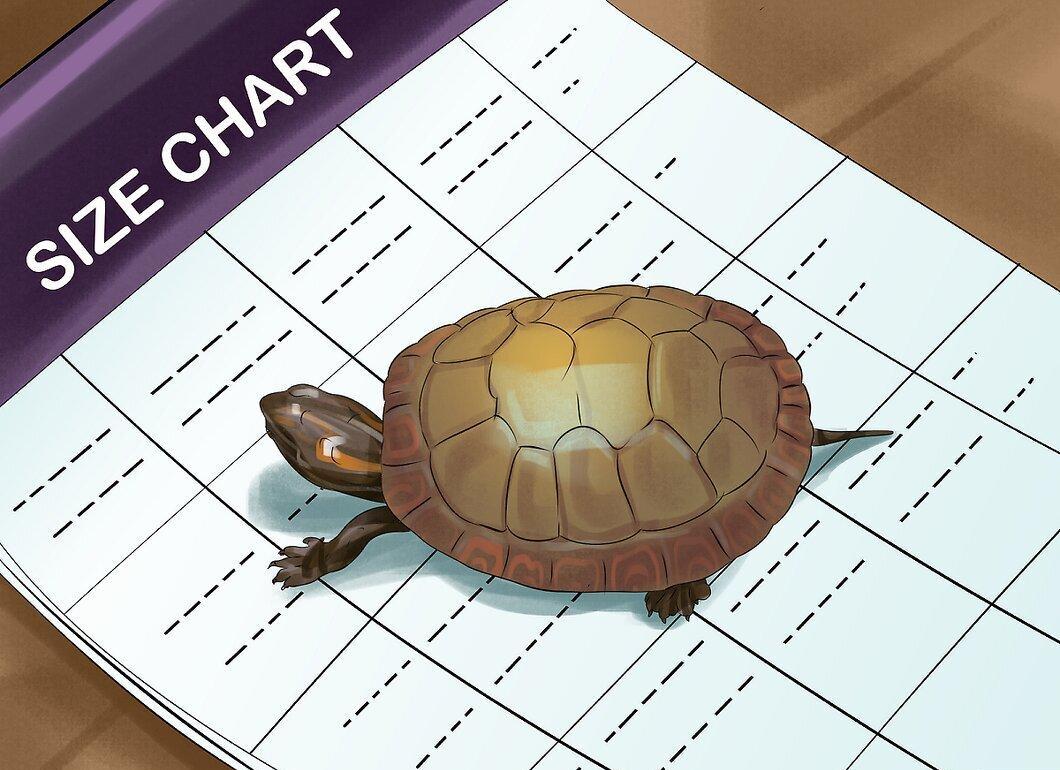
Now, compare your turtle's size with the data from the chart. This will help you roughly determine its age if it hasn't reached maturity yet.