
Calculating the perimeter of a rectangle is quite straightforward. You only need its width and length. If you don't have these measurements, you'll need to take them. In this article, we will show you how to do this.
The Basic Method
Step 1. The Perimeter Formula.
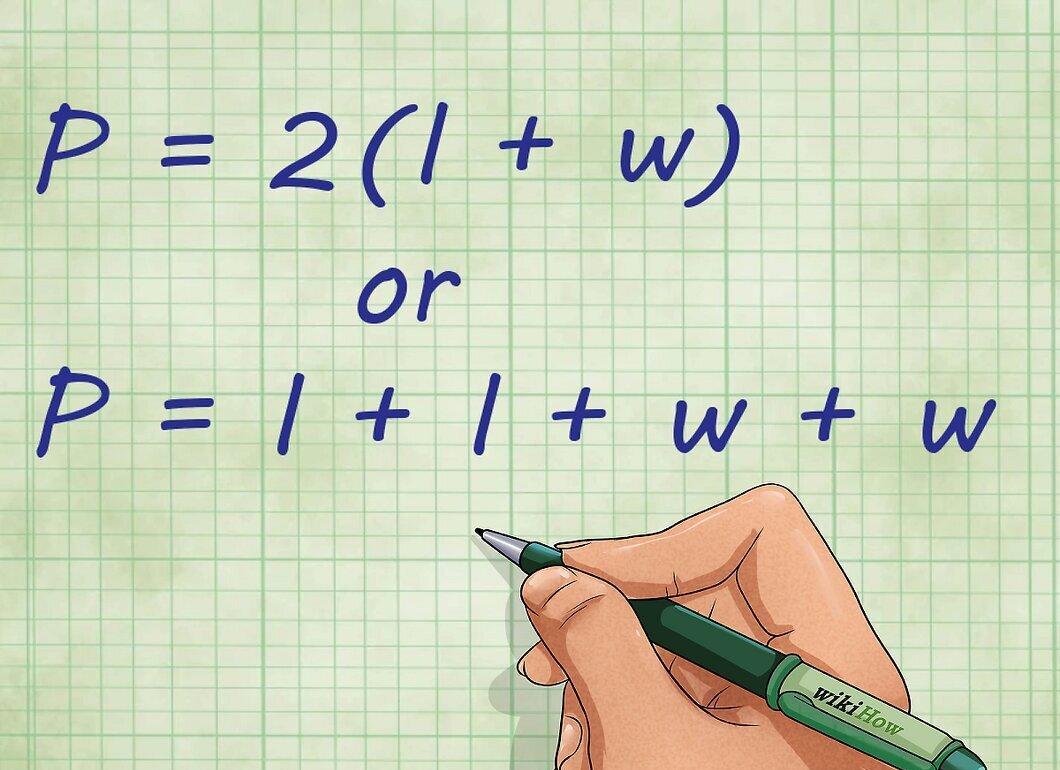
First, remember the basic formula for finding the perimeter: P = 2 * (l + w).
- The perimeter is the total length of all the sides of the shape.
- In this formula, P stands for perimeter, l stands for length, and w stands for width of the rectangle.
- The length is always greater than the width.
- A rectangle has two identical lengths and two identical widths, so it’s enough to measure one length (l) and one width (w).
- The formula can also be written as: P = l + l + w + w.
Step 2. Measure the Length and Width.
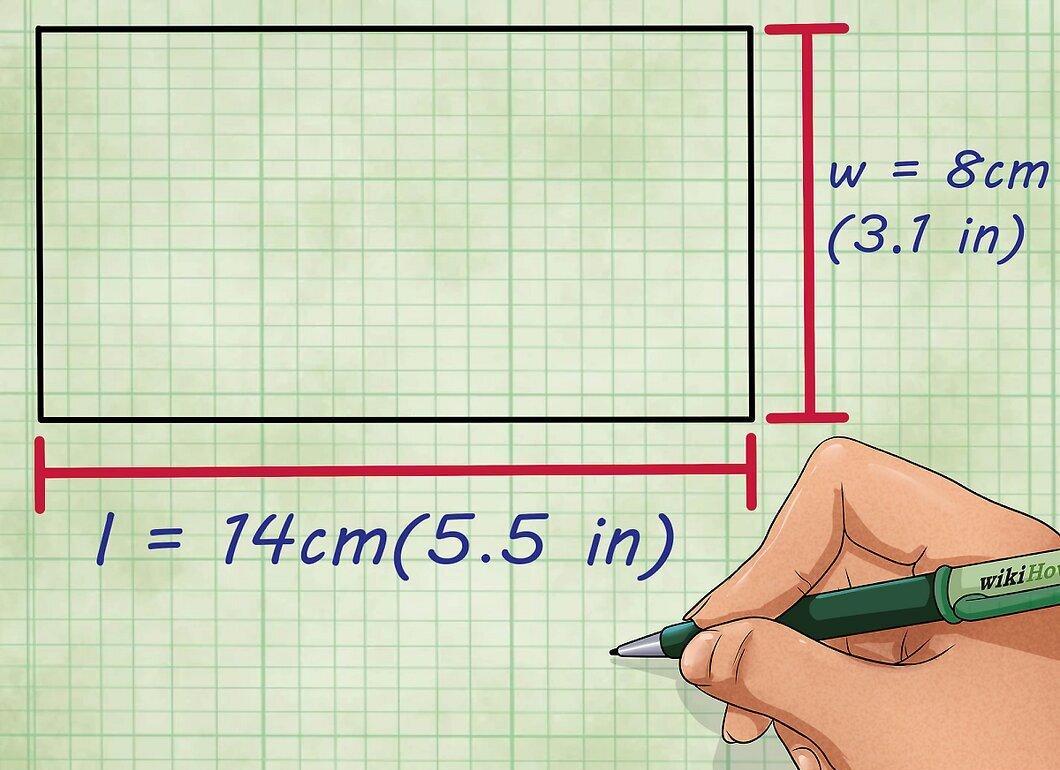
Now you need to find out the length and width. Most of the time, these parameters are already provided in problems, but if you're working in real life, use a ruler or tape measure for your measurements.
- If you are measuring in real conditions, use a tape measure to accurately determine the length and width of the area you need. If you are outdoors, make sure the parallel sides align.
- For example: l = 14 cm, w = 8 cm.
Step 3. Add the Length and Width.
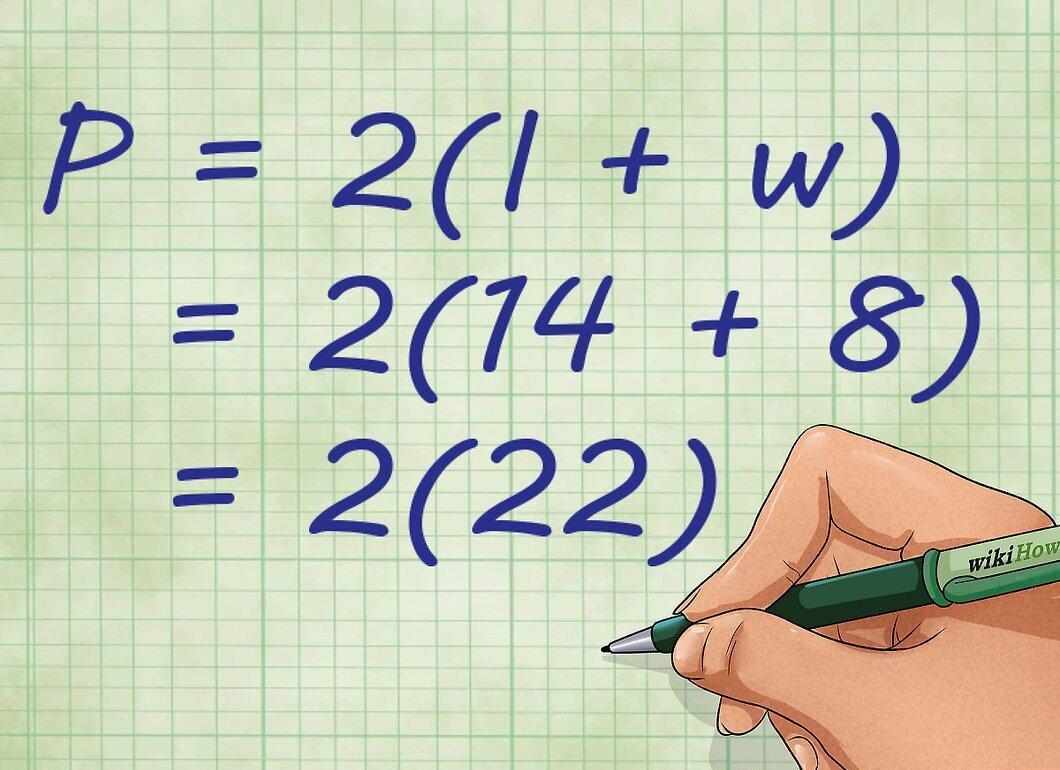
Now substitute the found values into the formula and add them together.
- Keep in mind that according to the order of operations, you should solve expressions in parentheses first.[2] X Source
- For example: P = 2 * (l + w) = 2 * (14 + 8) = 2 * (22).
Step 4. Multiply by Two (as per the formula).
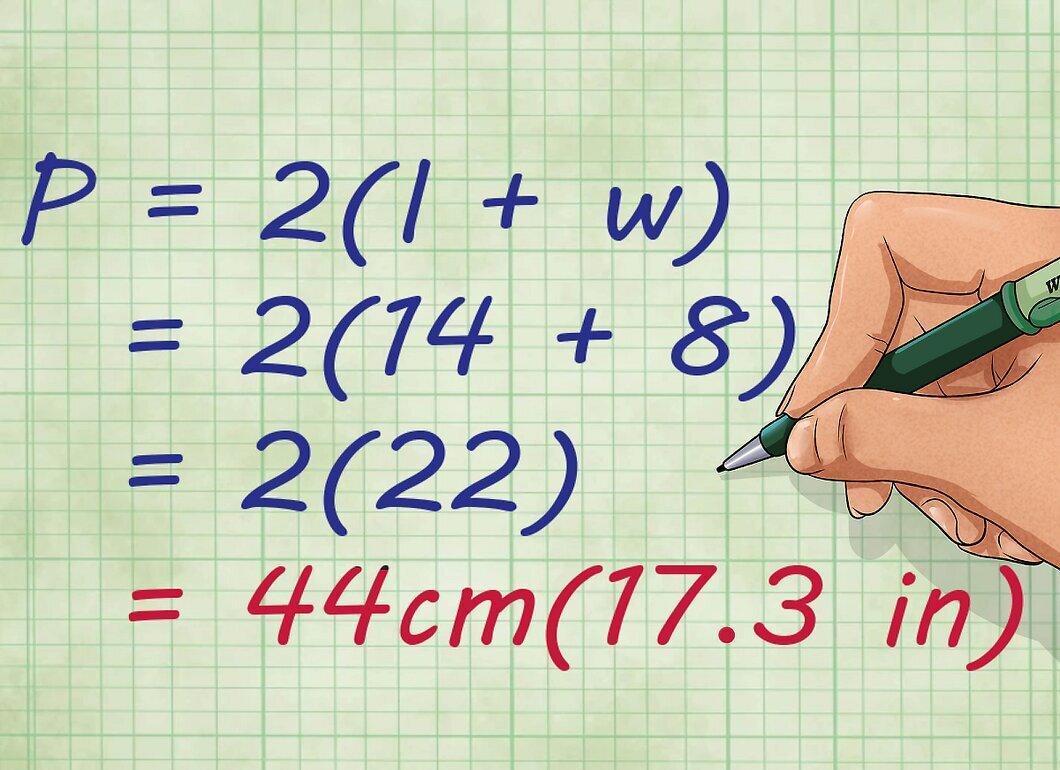
- By multiplying the sum by two, you account for the other two sides of the rectangle. Adding the width and length only accounts for two sides. Since the other two sides are equal, the total sum is multiplied by two.
- The result will be the perimeter of the rectangle.
- For example: P = 2 * (l + w) = 2 * (14 + 8) = 2 * (22) = 44 cm.
Step 5. Alternative Method:
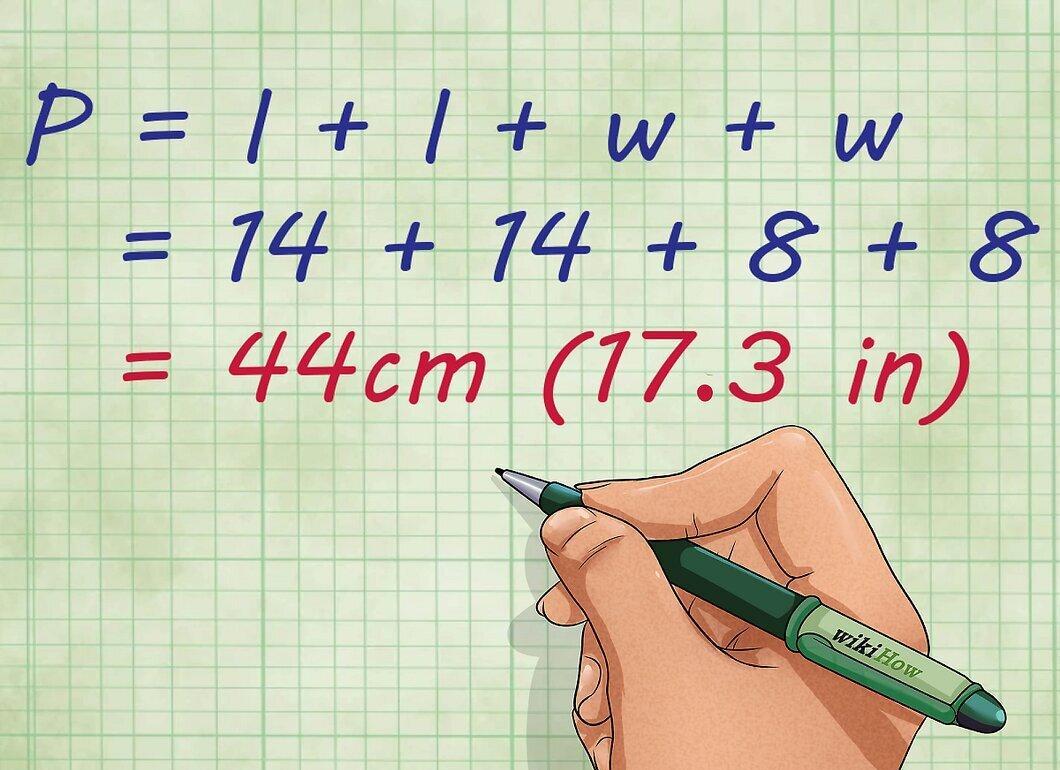
You can also add all the sides together: l + l + w + w. Instead of adding just two sides and multiplying by two, you can simply sum all four sides to find the perimeter.
- If you find it difficult to understand what the perimeter is, this method may be easier for you.
- For example: P = l + l + w + w = 14 + 14 + 8 + 8 = 44 cm.
Calculating the Perimeter from the Area and One Side
Step 1. The Formula for the Area of a Rectangle.
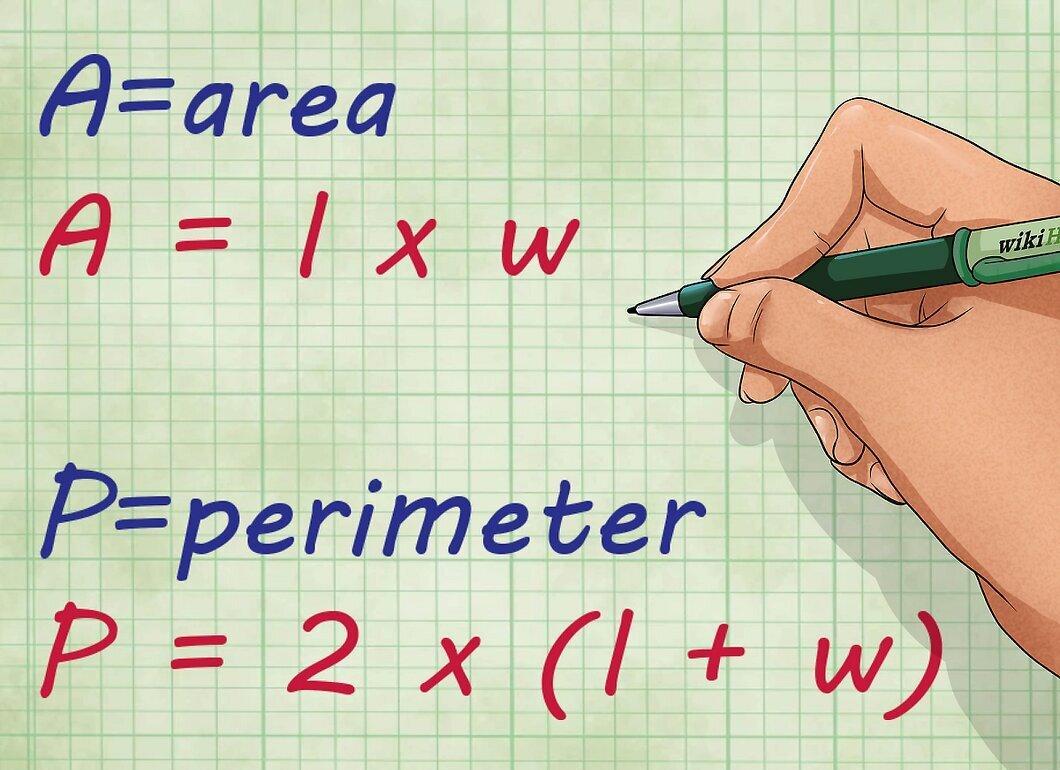
If you know the area of the rectangle, you should know the formula for calculating it to find the missing parameters for the perimeter.
- The area of the shape is the value of the total space enclosed by its sides.
- The formula for calculating the area: A = l * w.
- The formula for the perimeter: P = 2 * (l + w).
- In these formulas, A is the area, P is the perimeter, l is the length, and w is the width.
Step 2. Divide the Area by the Known Side.
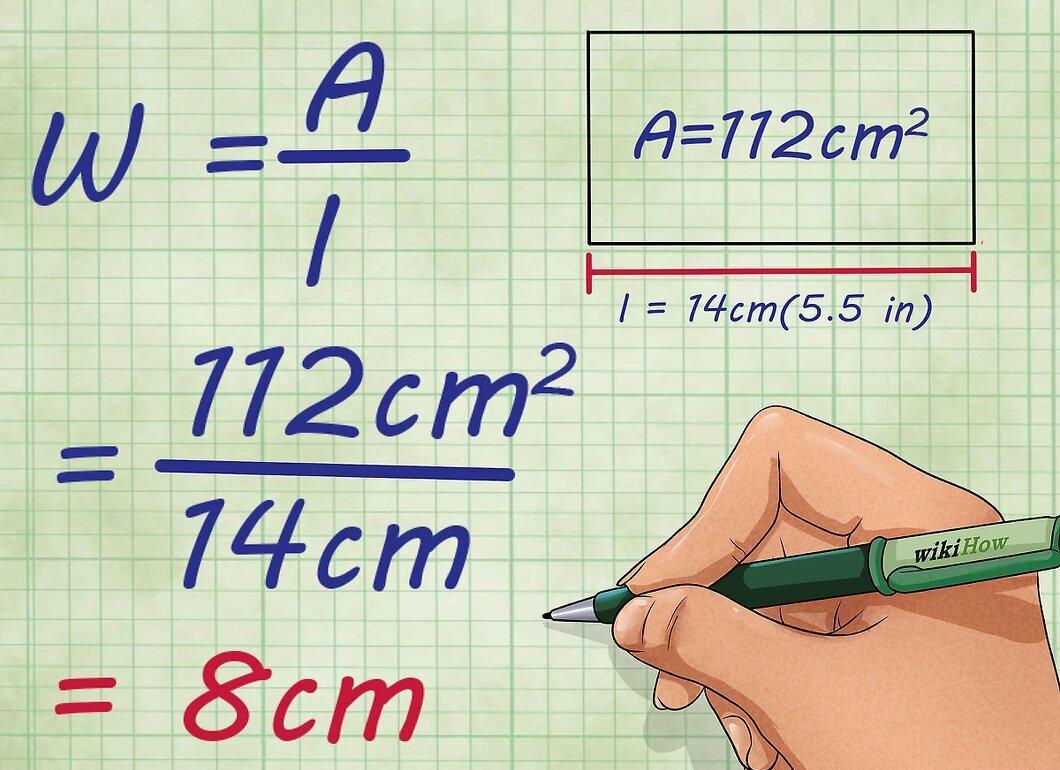
- To find the missing side, divide the area by the known value. For example, if A = 112 cm² and l = 14 cm, then A = l * w.
- 112 = 14 * w.
- Dividing 112 by 14 gives you w.
Step 3. Add the Length and Width.
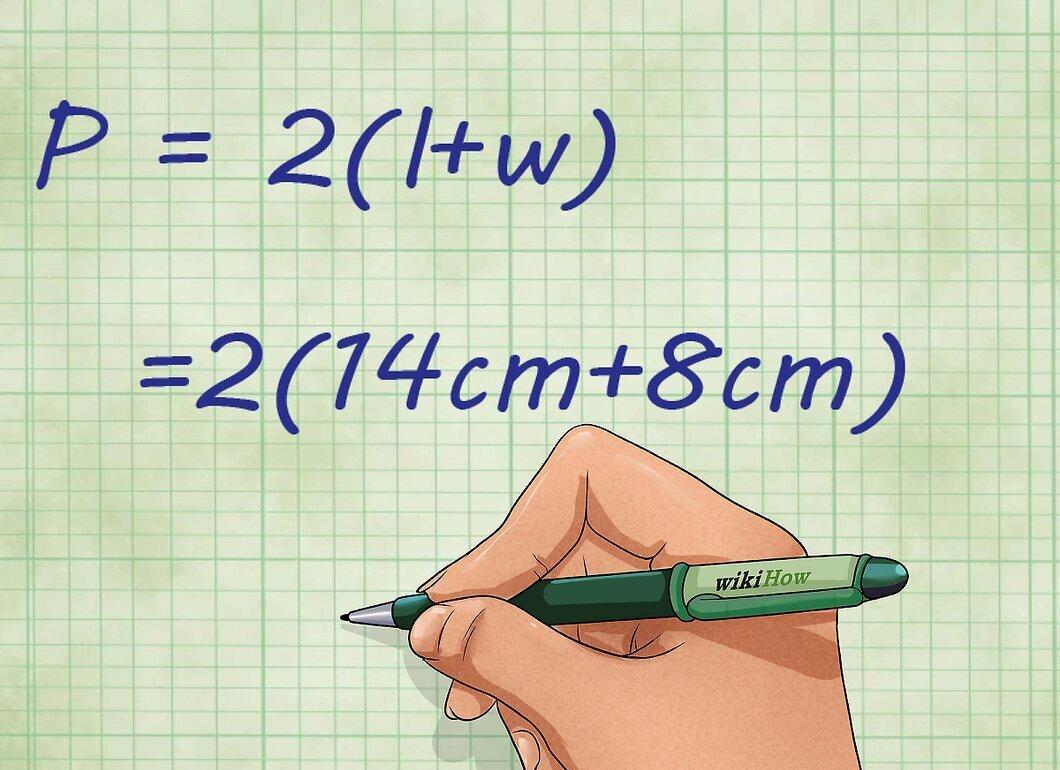
Now that you have the length and width, substitute them into the perimeter formula.
- First, add the length and width, since this part of the equation is enclosed in parentheses.
- According to the order of calculations, operations in parentheses are performed first.[3] X Source
Step 4. Multiply the Sum by Two.
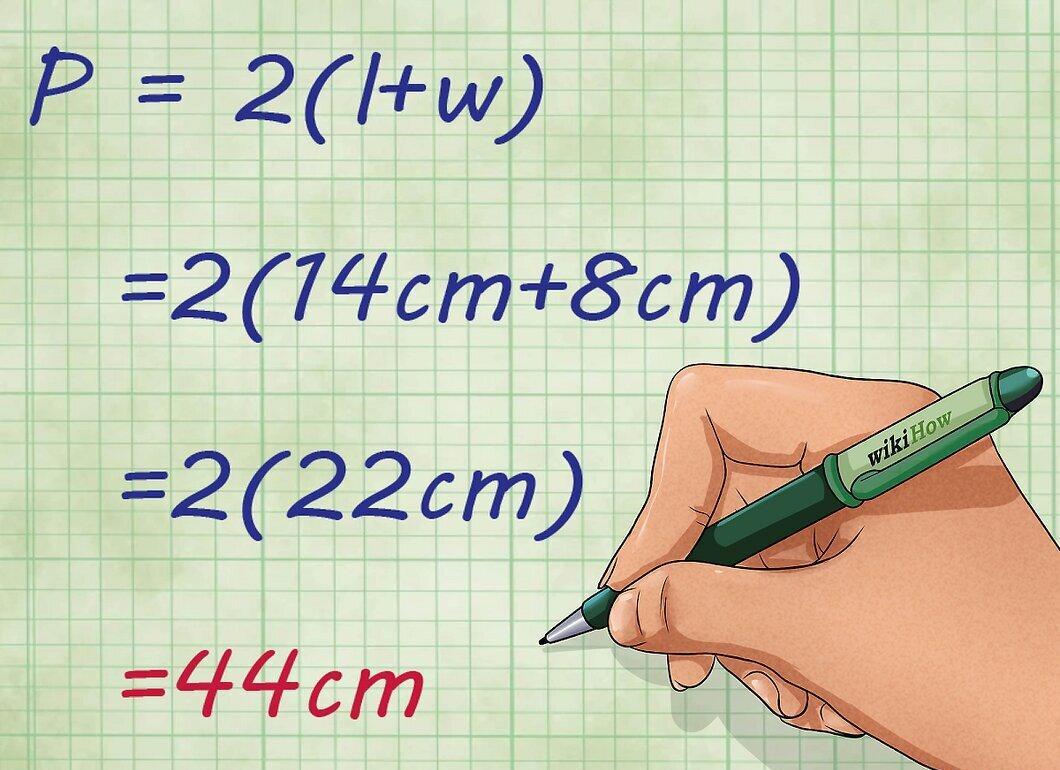
After adding the length and width, multiply the result by two to account for the other two sides of the rectangle.
- The opposite sides of a rectangle are equal, so the sum must be multiplied by two.
- For example: P = 2 * (14 + 8) = 2 * (22) = 44 cm.
The Perimeter of a Rectangular Shape
Step 1. Write the Basic Formula.
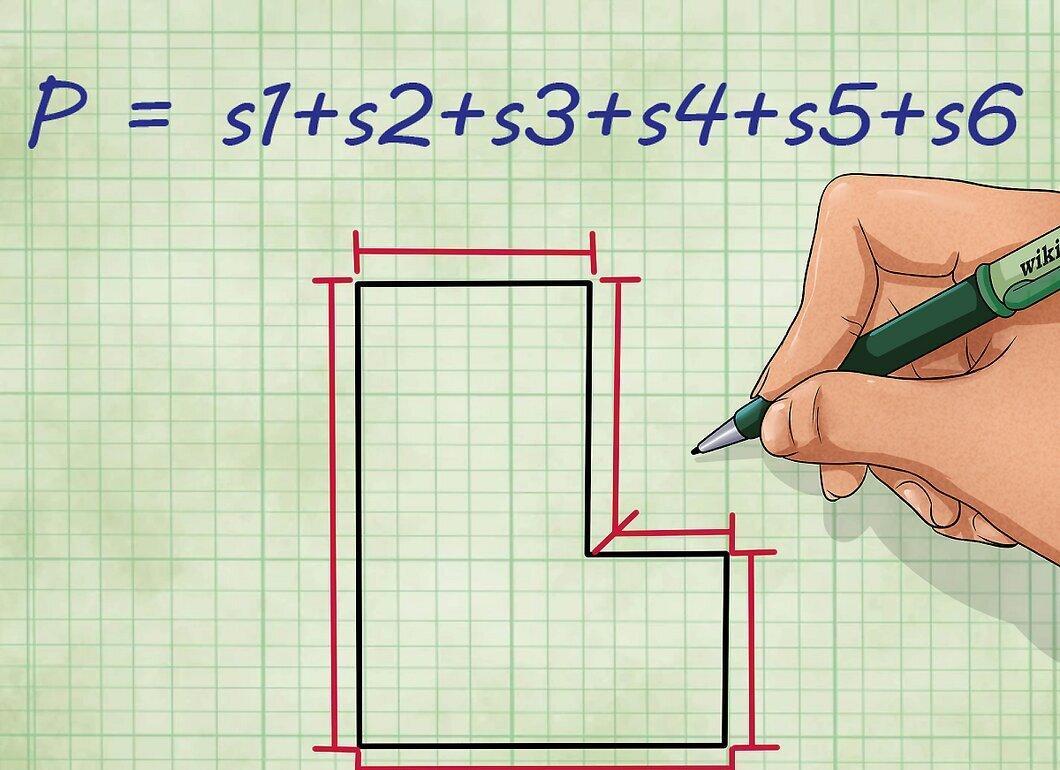
Write down the basic formula for the perimeter. The perimeter is the total length of all the sides of the shape.
- A rectangle consists of four sides. The sides forming the length are equal, as are the sides forming the width. Therefore, the perimeter is the sum of these four sides.
- Consider a shape in the form of an "L". It can be broken down into two rectangles, but when calculating the perimeter, this breakdown is not taken into account. The perimeter of the shape will be: P = S1 + S2 + S3 + S4 + S5 + S6, where S represents the sides of the shape (see the illustration).
- Each “s” is a separate side of the complex rectangle.
Step 2. The Sides of the Shape are Usually Given.
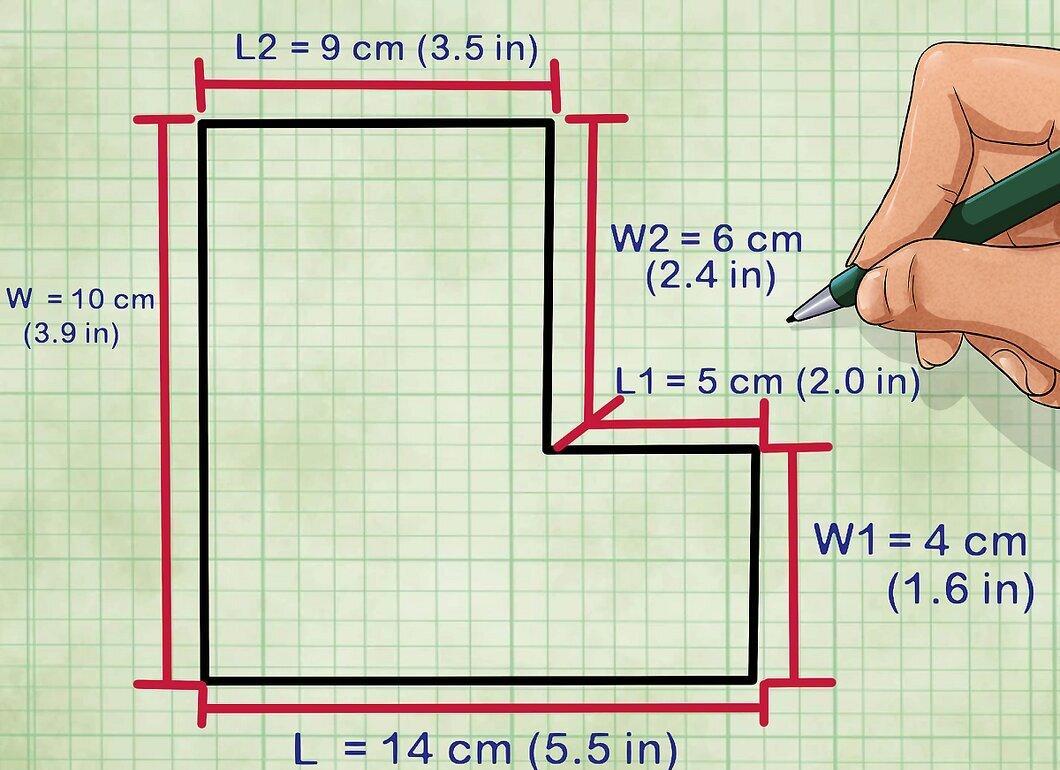
In standard problems, the sides of the shape are usually known. If you are looking for the perimeter of a rectangular shape in real life, use a ruler or tape measure for your measurements.
- Let’s denote: L, W, l1, l2, w1, w2. The capital L and W denote the full length and width, while the lowercase l and w denote the incomplete length and width.
- The formula P = S1 + S2 + S3 + S4 + S5 + S6 can be expressed as: P = L + W + l1 + l2 + w1 + w2.
- Example: L = 14 cm, W = 10 cm, l1 = 5 cm, l2 = 9 cm, w1 = 4 cm, w2 = 6 cm. Note that l1 + l2 = L, and w1 + w2 = W.
Step 3. Add the Sides Together.
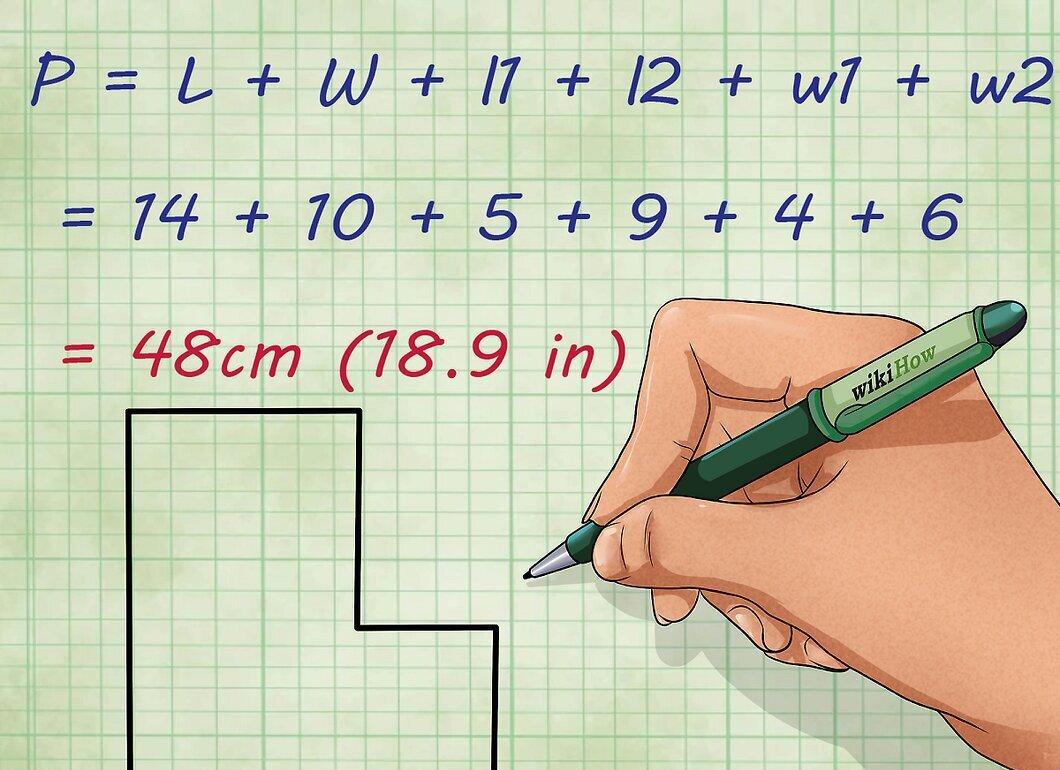
Now substitute the values into the formula and calculate the perimeter of the shape.
- P = L + W + l1 + l2 + w1 + w2 = 14 + 10 + 5 + 9 + 4 + 6 = 48 cm.
The Perimeter of a Rectangular Shape (if not all sides are known)
Step 1. Analyze the Known Sides.
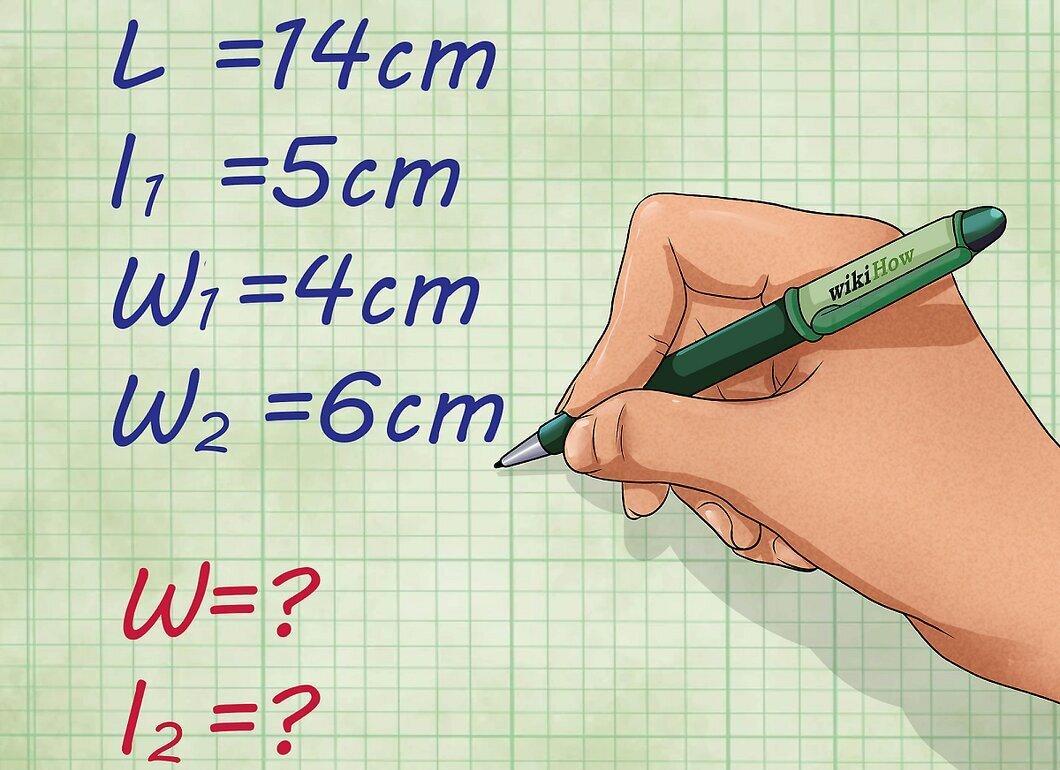
You can calculate the perimeter of a rectangular shape if at least one full length or width is known along with three incomplete lengths and widths.
- For an "L"-shaped figure, use the formula P = L + W + l1 + l2 + w1 + w2.
- In this formula: P is the perimeter, the capital L and W denote the full length and width, and the lowercase l and w denote the incomplete length and width.
- Example: L = 14 cm, l1 = 5 cm, w1 = 4 cm, w2 = 6 cm; you need to find: W, l2.
Step 2. Find the Unknown Sides.
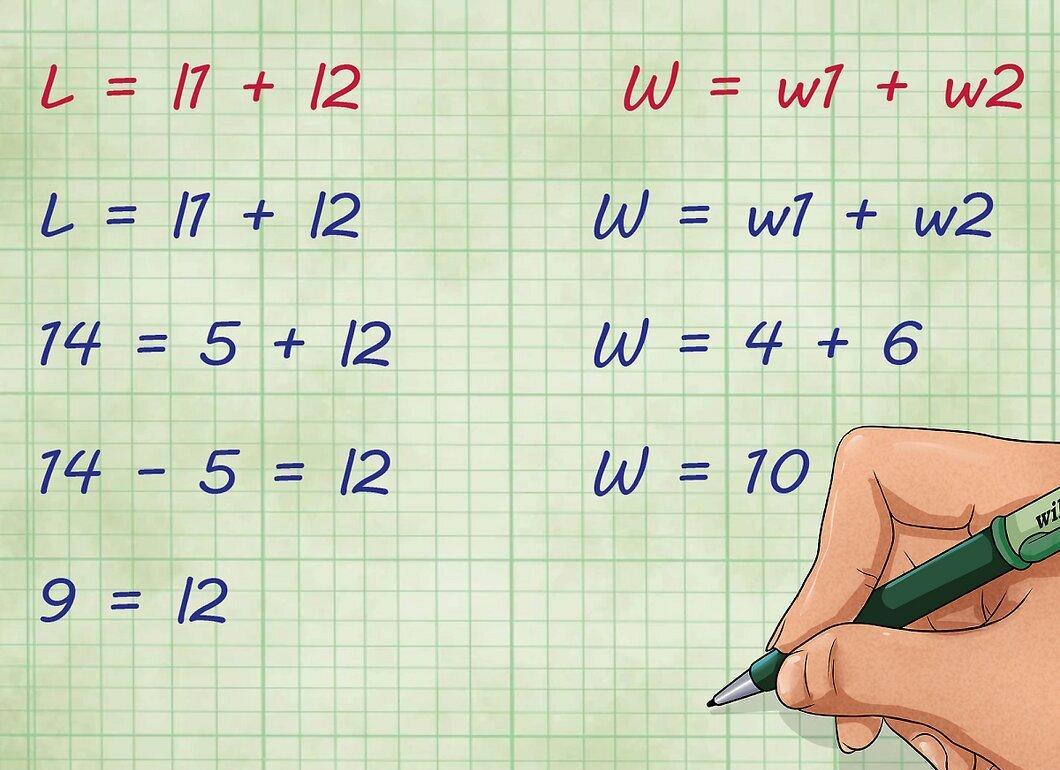
Using the known values, find the missing sides. Remember that l1 + l2 = L, and w1 + w2 = W.
- For instance: L = l1 + l2; W = w1 + w2.
- 14 = 5 + l2.
- 14 - 5 = l2.
- l2 = 9 cm.
- W = w1 + w2.
- W = 4 + 6 = 10 cm.
Step 3. Add the Sides Together.
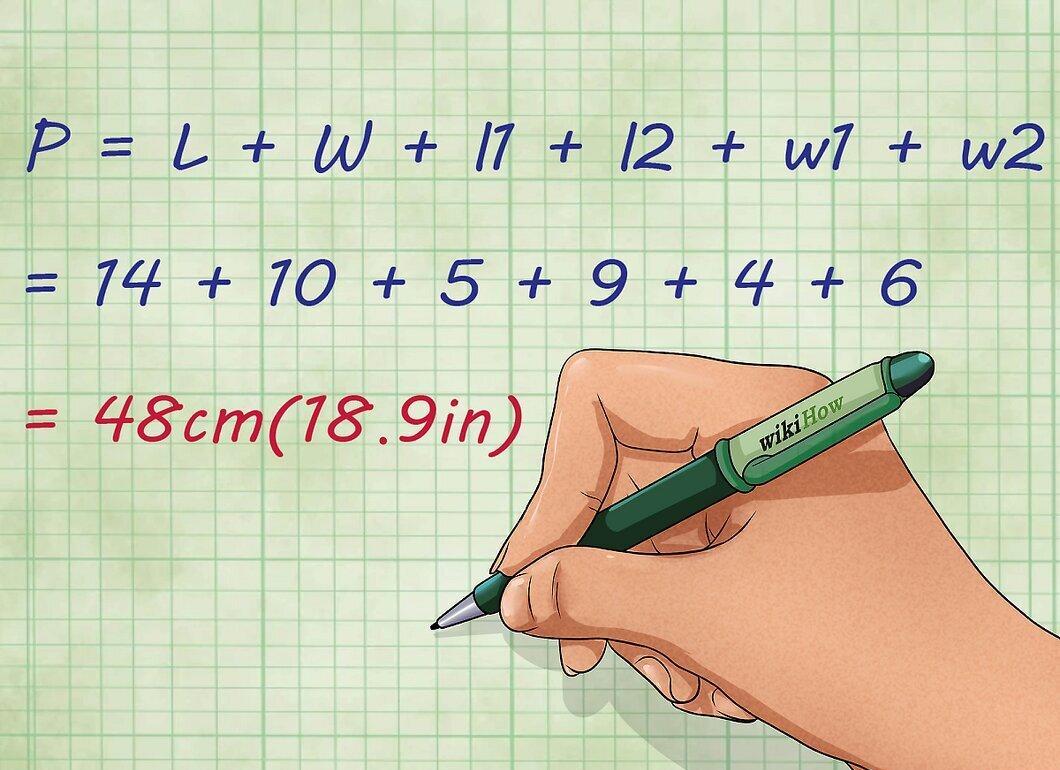
Now substitute all values into the formula and calculate the perimeter of the shape.
- P = L + W + l1 + l2 + w1 + w2 = 14 + 10 + 5 + 9 + 4 + 6 = 48 cm.