
The gothic subculture is one of the most diverse and thoughtful communities, spreading its dark aesthetic worldwide. While the striking makeup and dark clothing grab attention, the depth of the culture can be intimidating when goths in white contact lenses throw around terms like "ethereal chillwave" and quote Moonstone. If you're interested in joining the community, take your time to explore the gothic subculture and immerse yourself in this uncharted territory.
Clothing and Appearance
Step 1. Choose Black Clothing
Opt for black clothing. Familiarize yourself with the basic principles of gothic style. In the early days of the subculture, goths had little idea of how to present themselves. The style developed and evolved, forming common traits among its members. Today, many so-called "gothic" styles exist, but traditional ones include classic goth, deathrock, and romantic goth (a style used by many gothic bands of the 90s), while other styles draw inspiration or blend gothic elements with various styles, creating new subgenres. Key elements of gothic style include:
- dark colors, including purple and shades of red; [2] X Source: Hodkinson, P, (2002), <i>Goth: Identity, Style and Subculture</i>, The Emergence of a Style, p.47 ISBN 978-1859736050
- satin corsets and corsets; [3] X Source: Venters, J, (2009), <i>Gothic Charm School</i>, Am I a Goth?, pp.11 ISBN 978-0061669163
- striped tights and stockings; [4] X Source: Polhemus, T (1994), <i>Street Style: From Sidewalk to Catwalk</i>, goths, p.97 ISBN 978-0500277942
- lace gloves with ruffles;
- lace skirts;
- handmade leather jackets, usually adorned with logos of favorite bands;
- fishnet stockings; [5] X Source: Roberts, C, Livingstone, H and Baxter-Wright, E, (2014), <i>Goth: The Design, Art and Fashion of a Dark Subculture</i>, Fashion, p.181 ISBN 978-1780978864 [6] X Source: Hodkinson, P, (2002), <i>Goth: Identity, Style and Subculture</i>, The Emergence of a Style, pp.36 - 49 ISBN 978-1859736050
- pointed shoes [7] X Source: Harriman, A and Bontje, M, (2014), <i>Some Wear Leather, Some Wear Lace</i>, Winklepickers, p.202 - 207 ISBN 978-1783203529, heeled shoes with spikes, lace-up pointed shoes, high glossy boots, or Dr. Martens; [8] X Source: Goodlad, L and Bibby, M (2007), <i>Goth: Undead Subculture</i>, Introduction, p.3 ISBN 978-0822339212
- items made of leather, lace, velvet, silk, or PVC. [9] X Source: Goodlad, L and Bibby, M (2007), <i>Goth: Undead Subculture</i>, Introduction, p.3 ISBN 978-0822339212
Step 2. Hair Color and Style
Hair color and style. Hair has always been a significant aspect of the shocking gothic aesthetic, with styling often taking longer than preparing clothing and makeup.
- During the peak of the Batcave club scene, some girls emulated Siouxsie Sioux by teasing their hair to great heights, while others drew inspiration from Patricia Morrison of The Sisters of Mercy, dyeing their long hair black.[10] X Source: Harriman, A and Bontje, M, (2014), <i>Some Wear Leather, Some Wear Lace</i>, Painted bird, p.66 ISBN 978-1783203529 In men's fashion, the tone was set by Bauhaus, Robert Smith of The Cure, Specimen, and Dave Vanian, while keyboardist Johnny Slut became l
Step 3. Use Makeup
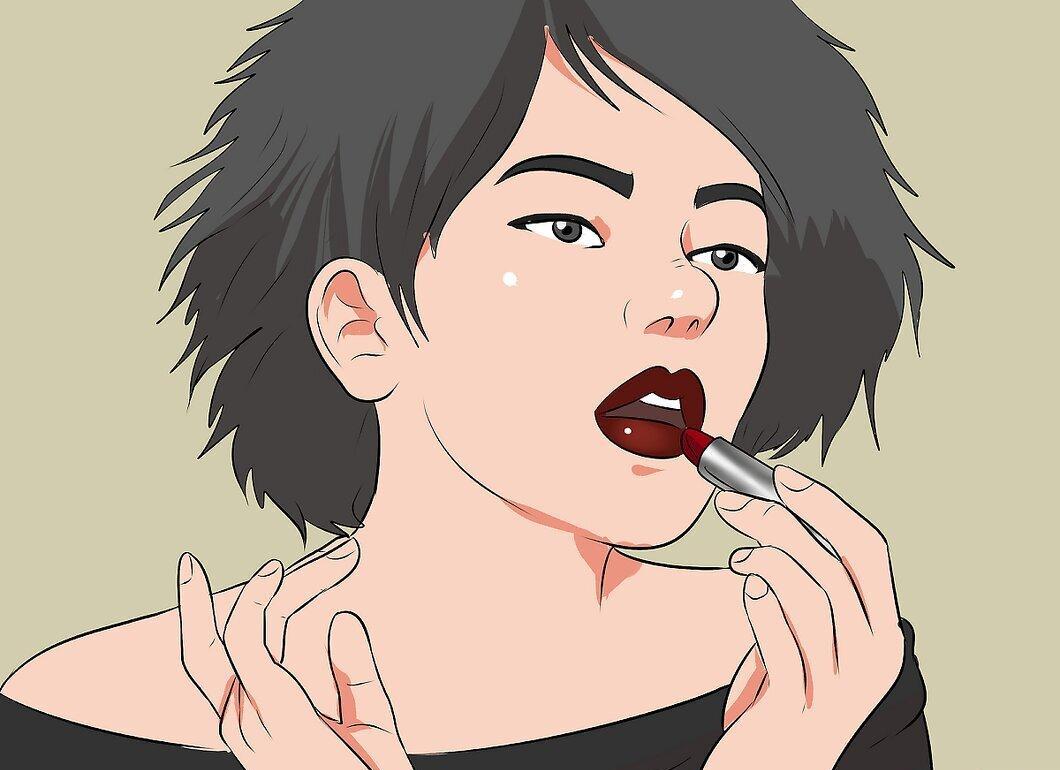
Use makeup. Siouxsie Sioux's makeup inspired many girls to spend time creating Cleopatra-style eyeliner, while Daniel Ash encouraged men to draw black, arched eyebrows. Popular eyeshadow colors included electric blue, purple, and metallic shades, with women's eyebrows often being thin and arched like Morticia Addams or thick and triangular like Siouxsie Sioux. If this style doesn't resonate with you, create your own solutions, but historically, music fans aimed to mimic their idols.
Step 4. Accessories
Accessories. The more accessories, the fuller the look. Various accessories complement different themed outfits (for example, fake fangs for a vampire costume, a corset for a romantic look, and sunglasses for a traditional gothic outfit).
- Notable accessories include: piercings for lips, eyebrows, tongues, and navels. [13] X Source: Hodkinson, P, (2002), <i>Goth: Identity, Style and Subculture</i>, Femininity and Ambiguity, pp.48 ISBN 978-1859736050
- Sunglasses (like those worn by The Sisters of Mercy), top hats, cloaks, neckties, or bags. Colored contact lenses, fangs, and piercings are also very popular.[14] X Source: Goodlad, L and Bibby, M (2007), <i>Goth: Undead Subculture</i>, Introduction, p.3 ISBN 978-0822339212
- Silver jewelry in the form of skulls, human skeletons, bats, or religious symbols (crosses in the form of large rings, brooches, and necklaces).[15] X Source: Roberts, C, Livingstone, H and Baxter-Wright, E, (2014), <i>Goth: The Design, Art and Fashion of a Dark Subculture</i>, Fashion, p.181 ISBN 978-1780978864
- Nail polish. The most common colors are black, purple, and red.[16] X Source: Goodlad, L and Bibby, M (2007), <i>Goth: Undead Subculture</i>, Introduction, p.3 ISBN 978-0822339212 [17] X Source: Harriman, A and Bontje, M, (2014), <i>Some Wear Leather, Some Wear Lace</i>, Painted bird, p.66 ISBN 978-1783203529
Step 5. Save and DIY
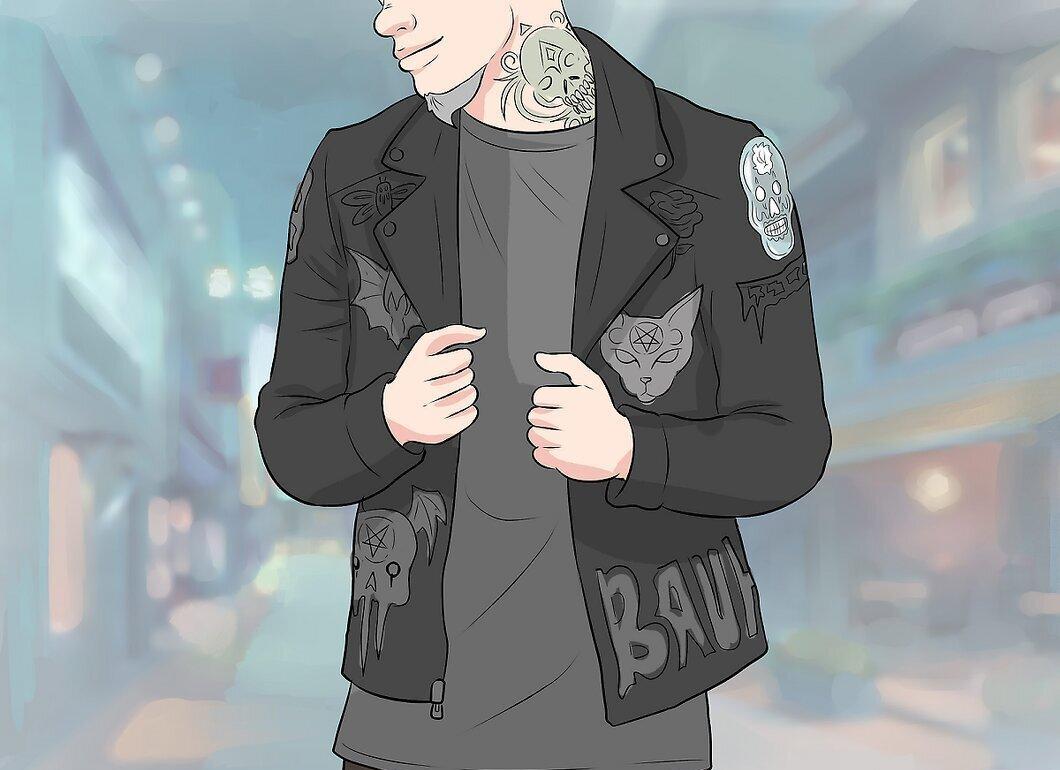
Save and DIY. In the early days of the gothic scene, themed stores didn't exist. Instead, creativity and budget stores were your allies. The "unified" gothic style developed much later. Goths, like punks, have always made their own clothes and continue to do so. Feel free to experiment with inexpensive clothing, so you won't be too concerned in case of a failure. Check out tutorials on YouTube and blogs for inspiration. Don't overlook the simplest tips:
- Buy patches with logos of your favorite bands from online stores or create your own to decorate a jacket or other clothing item.
- Purchase or make buttons with band logos that can also be attached to clothing.
- Learn to make jewelry that you can even sell.
- Cut patterns into old clothing or cover up worn areas with patches. Plaid or leopard print looks great on a black jacket.
- Buy a few packs of safety pins and arrange them on your clothes in various patterns.
- Use bleach to give dark items a unique coloring.
Gothic Music
Step 1. Explore Gothic Music
Explore gothic music. Members of the subculture consider an appreciation for gothic rock, post-punk, deathrock, and darkwave as significant indicators of belonging to gothic culture. Many goths don't limit themselves to these genres and listen to music that contains only certain gothic elements. It's perfectly normal to love such bands, but if you don't listen to "real gothic music" besides them, you may not be considered a "goth."
- Gothic music typically features elements such as a heavy ethnic rhythm, a characteristic four-on-the-floor beat from post-punk or drum machines, somber synthesizer parts, flanger effects for cold-sounding guitars, catchy bass lines, and deep, dark baritone vocals (preferably male).[18] X Source: Harriman, A and Bontje, M, (2014), <i>Some Wear Leather, Some Wear Lace</i>, A New Dark Age, p.22 ISBN 978-1783203529 [19] X Source: Hodkinson, P,
Step 2. Find Bands You Enjoy

Find bands you enjoy. Listen to various representatives of gothic rock and deathrock to find music that suits your taste. Representatives of deathrock include:
- Gothic rock representatives: Bauhaus;
- Siouxsie and the Banshees;
- The Cure (some albums);
- The Sisters of Mercy;
- Southern Death Cult / The Cult;
- The Mission;
- Fields of the Nephilim;
- Danse Society;
- The March Violets.
- Christian Death;
- 45 Grave;
- Alien Sex Fiend;
- All Gone Dead;
- Voodoo Church;
- Lords of the New Church;
- Mephisto Walz;
- Bat Nouveau;
- Burning Image;
- Ausgang.
Step 3. Listen to the Lyrics
Listen to the lyrics. An important aspect of gothic music is the lyrics, which create an atmosphere. Many early vocalists tried to emulate Leonard Cohen's style, focusing entirely on the text. Start with the most popular gothic songs: A Forest by The Cure, Bela Lugosi's Dead by Bauhaus, and Cities In Dust by Siouxsie and the Banshees.
- Write down the lyrics of your favorite songs in a notebook to memorize them better. Knowing the lyrics will help you quickly find new goth friends who share your tastes.
Step 4. Develop Your Musical Taste

Develop your musical taste. Listening to the most popular gothic bands is prestigious and beneficial (this approach will definitely "count"), but don't forget to explore local or lesser-known gothic bands. While most people only look at the most popular representatives, other bands also deserve attention as they contribute to the gothic scene. Explore bands in the "goth/alternative rock" sections on platforms like Discogs, Bandcamp.com, Last.fm, and Soundclick.com to discover something interesting. Keep in mind that bands are often mislabeled, so you might come across those playing metal, EBM, or electronic music.
Step 5. Listen to Related Music Genres
Listen to related music genres. In addition to iconic bands, goths can enjoy music that belongs to other genres, including gothic metal, witch house, neoclassical, industrial, EBM, aggrotech, shock rock, symphonic metal, ethereal, and dark ambient.
A Bit of History
Step 1. Study the History of the Gothic Subculture
Study the history of the gothic subculture. By understanding the history and emergence of the subculture, you'll find it easier to navigate the world of goth. Skip the baby goth phase (newcomer in the goth scene) and transform into an adult bearer of culture, fashion, and musical tastes. Pay attention to the following facts:
- In 1967, the music of the American band The Doors was described as "gothic rock," and in 1974, David Bowie's album Diamond Dogs was classified as "gothic" music.[20] X Source: However, the band and the singer were not goths.
- It's believed that the first gothic album was recorded by the artist Nico (The Marble Index or The End).[21] X Source:
- The first song in the gothic rock genre is considered to be the single Bela Lugosi's Dead by Bauhaus, released in 1979.[22] X Source: [23] X Source: Venters, J, (2009), <i>Gothic Charm School</i>, Am I a Goth?, p.9 ISBN 978-0-06-166916-3 [24] X Source: Roberts, C, Livingstone, H and Baxter-Wright, E, (2014), <i>Goth: The Design, Art and Fashion of a Dark Subculture</i>, Music, p.133 ISBN 978-1780978864 Vocalist Peter Murphy stated that the song was conceived as
- Gothic rock is a subgenre of punk rock that emerged from British post-punk in the late 1970s and early 1980s.[27] X Source: Venters, J, (2009), <i>Gothic Charm School</i>, Am I a Goth?, p.7 ISBN 978-0-06-166916-3
- The nightclub called "Batcave," located in London on Mird Street, opened in 1982 [28] X Source: Harriman, A and Bontje, M, (2014), <i>Some Wear Leather, Some Wear Lace</i>, Everyday is Halloween, p.34 ISBN 978-1783203529 [29] X Source: Venters, J, (2009), <i>Gothic Charm School</i>, Am I a Goth?, pp.9-10 ISBN 978-0061669163 [30] X Source: Goodlad, L and Bibby, M, (2007), <i>Goth: Undead Subculture</i>, Introduction, p.2 ISBN 978
- The gothic subculture draws inspiration from gothic architecture like castles and cathedrals, the Romantic movement of the late 18th and early 19th centuries, and gothic novels like The Castle of Otranto by Horace Walpole (the first literary work to use the word "gothic") [33] X Source: , Mary Shelley's Frankenstein, Bram Stoker's Dracula, and the works of Edgar Allan Poe.[34] X Source: Venters, J, (2009), <i>Gothic Charm School</i>, Am I a Goth?, pp.7-8 ISBN 978-0-06-1
- Additionally, significant influences on the gothic subculture came from the religion and mythology of ancient Celts, pagans, Egyptians, and Christians, while gothic fashion incorporates elements of haute couture, antiquity, retro kitsch, punk, fetish, and thrifted items.[36] X Source: Goodlad, L and Bibby, M (2007), <i>Goth: Undead Subculture</i>, Introduction, p.2 ISBN 978-0822339212
Gothic Mindset
Step 1. Create Comfort in Your Space
Create comfort in your space. Bring aesthetic touches to your bedroom or another room: use gothic lighting, colors, and sounds. Decorate the walls with posters of your favorite bands and soundproof with dark fabric to listen to music at any volume without disturbing family members. Create a room that serves as your sanctuary from the negativity around you. Many goths are artists, writers, and musicians, so the room will always set you in a creative mood and highlight your individuality, which is crucial for the gothic subculture.
Step 2. Read Gothic Novels
Read gothic novels. Goths love to read gothic literature. While books influence goths, they are not a part of the subculture, so you won't become a goth just by reading them. Initially, only those who listened to certain music were called goths. Nevertheless, there's nothing stopping you from immersing yourself in the dark atmosphere and enjoying literature. Some examples include:
- Dracula by Bram Stoker;
- Frankenstein by Mary Shelley;
- Interview with the Vampire by Anne Rice;
- The Castle of Otranto by Horace Walpole;
- Wuthering Heights by Emily Brontë;
- Zastrozzi by Percy Bysshe Shelley;
- All works by Edgar Allan Poe, especially the poem The Raven.
- Also, read gothic poetry and try your hand at writing poetry. Songs of Innocence and of Experience by William Blake is a classic example of gothic poetry alongside Ariel by Sylvia Plath.
Step 3. Engage in Creativity
Engage in creativity. Express yourself within the subculture. Write poetry, draw, or take photographs (especially black and white shots). Form a band and play gothic music. There are many creative individuals among goths with whom you can join forces.
- Not everyone understands or respects the gothic subculture. If someone bothers you, it’s best to walk away. Don’t waste time arguing. Show kindness and friendliness to everyone. You might just change their perspective.
Step 4. Listen to Yourself
Listen to yourself. Don't let others dictate what you should do, even if they are fellow goths. If The Cure doesn't resonate with you but Johnny Cash does, then so be it. No one should question your goth identity over trivial and superficial reasons. What's most important is to stay true to yourself and be part of a community that highly values individuality.
- Develop your style naturally from books and feelings, not from others' directives. If you have a genuine interest in the gothic world, the subculture will influence you in the right way. Do what brings you joy.
Community Life
Step 1. Attend Gothic Events, Festivals, and Clubs
Attend gothic events, festivals, and clubs. Every year, themed clubs and gothic festivals open in various countries around the world. To fully participate in community life, visit these places and interact with other members of the subculture, some of whom may have been into goth for over 30 years or even since its inception.
- Popular festivals, events, and clubs include: World Goth Day;[38] X Source:
- Return To The Batcave festival in Wrocław, Poland;
- Deathrock club Release The Bats in Long Beach, California;[39] X Source:
- Whitby Goth Weekend in Whitby, North Yorkshire, UK;[40] X Source:
- Wave Gotik Treffen in Leipzig, Germany;[41] X Source:
- various gothic clubs around the world.[42] X Source:
Step 2. Familiarize Yourself with Gothic Slang
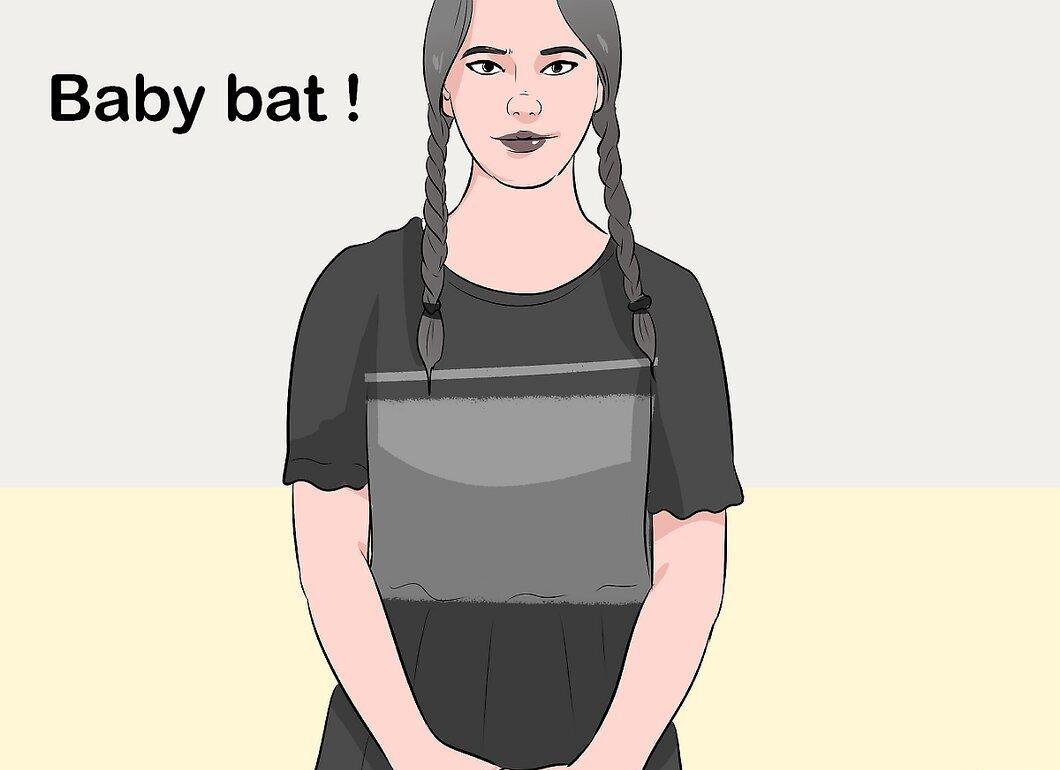
Familiarize yourself with gothic slang. Gothic slang is the internal language of the community, helping you feel at home.
- Consider some phrases and definitions: Rest in peace — the same as "goodbye," while the phrase "Memento mori" serves both as a greeting and farewell.
- Hearse — a sarcastic term for any land transport.
- Gothic Lolita — a girl with a childlike face, pale skin, bright eyes, and a petite figure.
- Baby Goth — a child imitating adult goths in clothing and makeup, or a newcomer.
- Fake goths, posers — imitators who pretend to be goths as a fashion statement.
- True goths — real goths who have a deep understanding of the subculture they belong to.
Step 3. Raise Awareness

Raise awareness. Members of the subculture always educate newcomers and inform those genuinely interested about goths. Such actions prevent the spread of misinformation and help baby goths form a correct understanding of the subculture. If they first encounter a false "definition" from the media, they might feel compelled to uphold negative stereotypes about devil worship or self-harm. Worse still, many modern baby goths gradually forget the true gothic customs and traditions that formed this subculture in its classical sense. If the origins, history, and unifying aspects are forgotten, the subculture will lose its essence and value. Without history and significant events, goths cannot truly...