
To stay competitive, businesses must continuously enhance their work processes, both operational and financial. This creates a need to assess the outcomes of such innovations. As the saying goes, "You can't improve what you can't measure." To tackle this challenge, businesses should develop metrics to measure the key components of their processes and organize data collection before and after the innovations. A subsequent analysis of these metrics will allow conclusions to be drawn about the effectiveness of the changes. But it all starts with selecting the most important metrics for your business processes.
Organizing a Work Process Evaluation System
Step 1. Identify What Needs Measuring.

Identify what exactly needs measuring. In other words, what should the new innovation achieve? Do you want to make the work process more reliable, faster, more efficient, or improve it in some other way? The answer to this question will clarify your intent. Ensure there is a specific, measurable outcome at the end of the work process.
- For example, if a company wants to speed up delivery, it will measure delivery time. A data digitization company may measure the number of errors in batches of digitized data or the overall workload.
Step 2. Use a Unified Set of Terms for Your Project.

Use a unified set of terms for your project. You need to use commonly understood terms so that everyone comprehends and uses them consistently. This will enhance the reliability of the information passed between employees in different departments. To avoid misunderstandings, provide clear definitions for all metrics that need to be measured.
- For instance, if your company measures time in days, different departments might interpret the term "day" differently. It could refer only to working calendar days, to any full 24-hour days, or just to an eight-hour workday. Such discrepancies can create confusion.
Step 3. Determine the Data Collection Method.

Determine how data will be collected. Data must be collected consistently across all departments. For example, if one department uses random sampling for data, the same should be done by other departments. If not, the data will be incomparable. It's also essential to agree on the units of measurement. These units must be the same, regardless of which department is evaluating the results.
- For example, delivery speed can be measured in minutes or hours, and needing to convert one unit of measurement into another cannot be considered an effective approach.
Step 4. Standardize the Accuracy of Calculations.

Standardize the accuracy of calculations. This means one department should not round time to the nearest hour while another reflects it in hundredths. Otherwise, varying levels of detail will distort overall results. Remember that smaller units of measurement will allow for a more precise evaluation of results.
- For example, all departments should agree on unified rounding rules for decimal fractions.
Selecting the Right Metrics for Project Assessment
Step 1. Choose the Primary Production Metric.
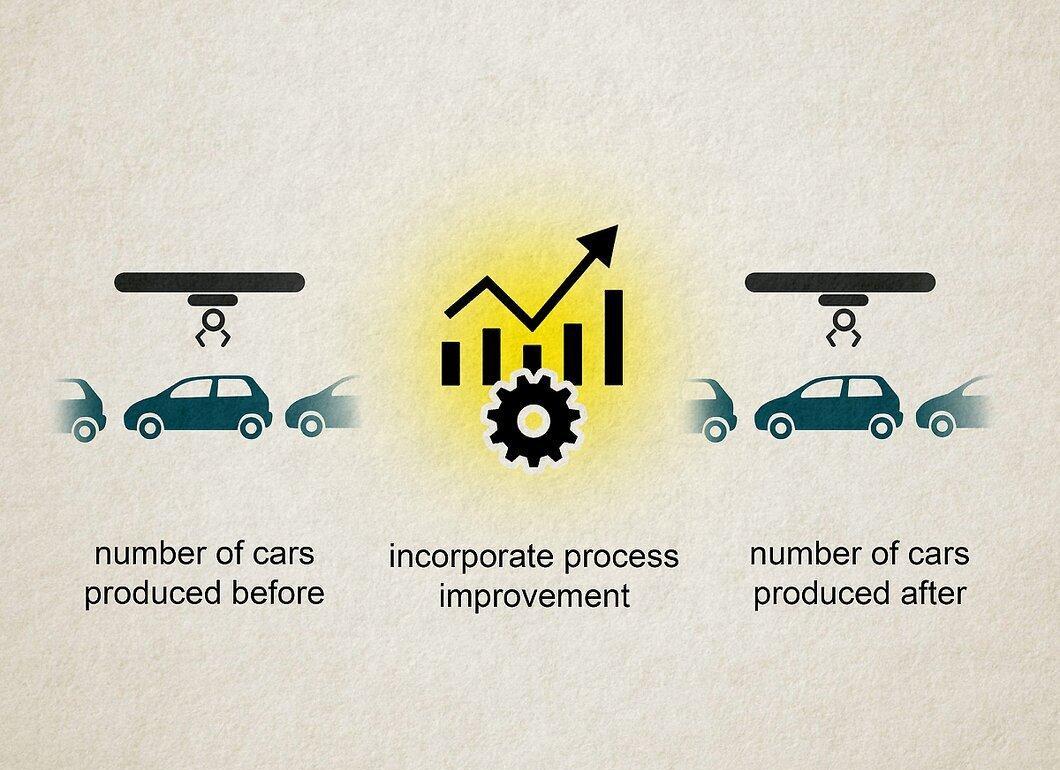
Choose the primary production metric. The primary metric should reflect the outcome or goal of the changes being introduced in the business processes. For instance, in an automotive plant, this could be the number of cars produced per hour. Before the innovations, it's necessary to determine the baseline value of the chosen metric, and after the project implementation, it must be measured again. Only then can the positive changes (if any) be evaluated.
Step 2. Alongside the Primary Metric, Select Supporting Activity Metrics.
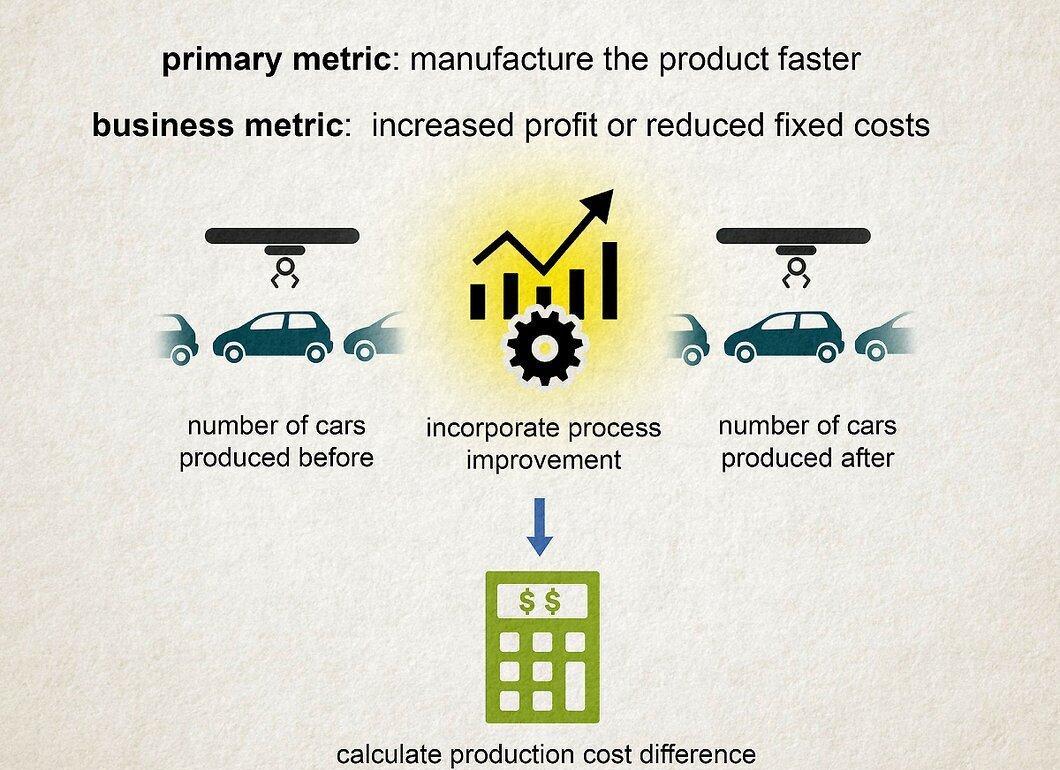
Alongside the primary production metric, select supporting activity metrics. Evaluating these supporting metrics will help understand how changes in work processes assist the company in achieving one of its main operational goals. For example, if the primary production metric chosen was the speed of product output, it may be directly related to increased company profits or reduced fixed costs. There should be causal relationships between the primary and supporting metrics, as these will demonstrate why improving the primary production metrics is essential for the business.
Step 3. Account for the Likelihood of Unforeseen Outcomes.
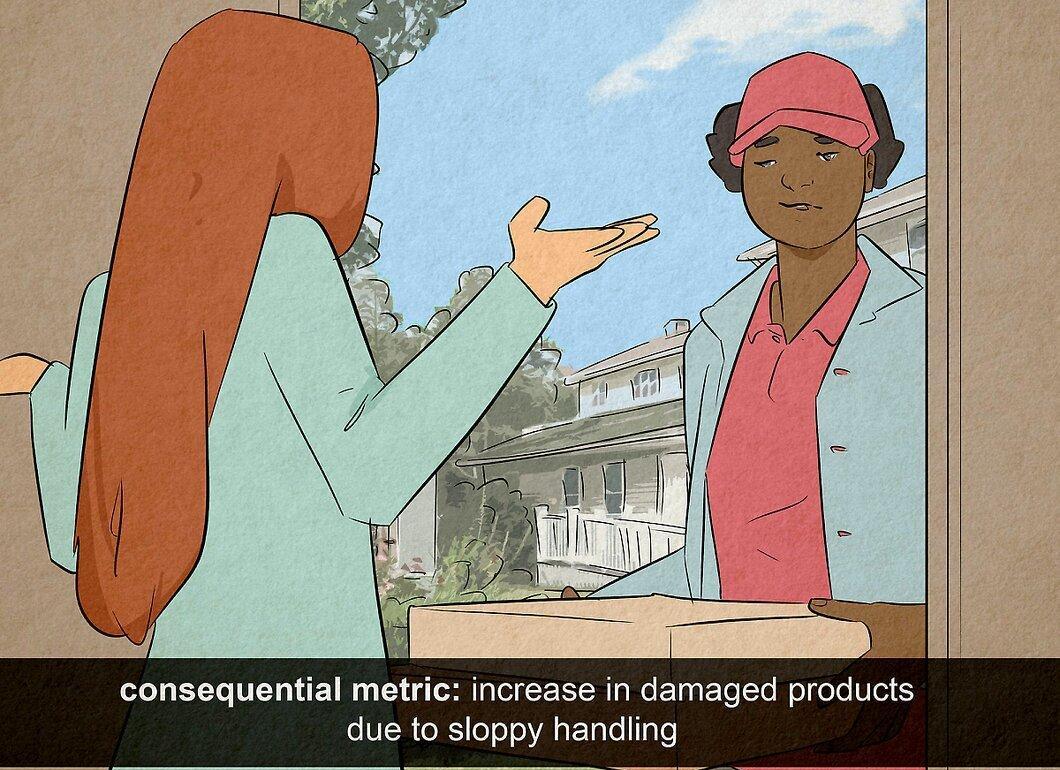
Account for the likelihood of unforeseen outcomes. Innovations can bring not only benefits but also unintended drawbacks. If the primary metric is meant to measure what should be improved, additional indirect metrics should measure what should not change. Collect data on these indirect metrics before, during, and after the relevant project implementation. From all the indirectly related metrics, select only the few most important ones that consider the quality of the products produced.
- For example, a company aiming to speed up product delivery should not see an increase in damage rates due to careless handling. In this case, an additional indirect metric could be the proportion of damaged goods to the total volume sold.
Step 4. Establish Financial Metrics.

Establish financial metrics. Cost savings may not be the primary goal for the company. Nevertheless, the enterprise should track the financial results from implementing changes in work processes. However, these should not be confused with calculating the cost of the change project itself. Here, financial metrics should serve as a means to assess the profitability of this project. Many companies continue to track financial metrics for an entire year after implementing changes.
- For example, one can expect that reducing the time it takes to produce a unit should increase the company's revenue. The company should closely monitor revenue volumes and other financial metrics, such as profit, starting from the moment the idea for innovations emerged and after their implementation, to evaluate how the changes in business processes affected performance.
Data Collection and Analysis
Step 1. Measure Time.

Measure time. Evaluating the duration of business processes helps understand how much time is spent on individual stages of product production or service delivery. Time accounting can also track how much time is spent creating added value for the product or responding to customer inquiries. Additionally, metrics such as the percentage of deliveries completed without violating contractual deadlines can be applied.
- Reducing the duration of business processes is an effective strategy for business improvement. It allows for increased production and faster delivery times to consumers. Take furniture manufacturing as an example. Under equal conditions, consumers would prefer to receive their new sofa sooner rather than later. By shortening production time, you increase the chances of repeat orders and business growth.
Step 2. Measure Costs.

Measure costs. Cost statistics should reflect the total cost of the production process. It should also include operational expenses at various levels of the production process. Metrics like cost per unit allow for evaluating the expense of producing a single product. Cost savings can be expressed as a reduction in this metric per unit produced. Labor cost savings will be shown as a reduction in the hours worked needed to produce a product or service.
- Cost reduction strategies can be particularly important for businesses facing declining revenue. For example, when the 2011 crisis hit, American Bank of America faced a collapse in the credit market and income from securities. The decision was made to reduce the bank's workforce to continue generating income for its shareholders. The bank's management and hired consultants decided to utilize cost metrics to identify jobs whose elimination would result in substantial savings.
Step 3. Assess Quality.

Assess quality. Quality assessment metrics help measure customer satisfaction levels. Customer satisfaction information can be gathered through surveys, complaint registrations, and other feedback methods. Quality metrics also help determine whether changes in business processes benefit customers. Metrics to consider include the frequency of errors and the need for rework. The defect rate allows for assessing the percentage of production errors. The rate of quality products helps understand how often errors are absent in production.
- For instance, the healthcare sector heavily relies on quality metrics for medical service delivery. Improvements in quality should be determined by incoming statistical data. This analysis should cover both financial and clinical data to identify changes in the quality of healthcare services provided by healthcare organizations. The analysis can be broken down by stages to identify losses or redundant duplicative functions and create processes that enable the highest efficiency.
- The key to improving quality is increasing productivity without compromising efficiency. Productivity relates to the amount of resources needed to create a product or deliver a service, while efficiency relates to how fully the product or service performs its intended functions.
Step 4. Measure Production Output.

Measure production output. Output metrics reflect the volume of production over a specified period. The production goal should align with consumer demand levels. Additionally, the analysis of production metrics may include assessing deficiencies or surpluses in production inventories. These deviations should be minimal. Finally, it's essential to measure work-in-progress, which refers to the volume of goods or services still in the production stage.
- One way to increase production volumes is through the standardization of work processes. For example, automotive manufacturers have their own assembly standards. Manufacturers can standardize production processes to enhance output. In this case, metric indicators will help understand how much such measures affect production levels. If production output per unit of time increases after standardization, then the innovations were successful.
Step 5. Evaluate the Complexity of Production Processes.

Evaluate the complexity of production processes. Here, one can consider the number of stages in the production process. It's also essential to account for production slowdowns due to shift changes or the need for supervisory oversight. The analysis includes both the total number of production stages and the number of stages where added value is created. These stages make the product or service more valuable. Additionally, the number of returns should be assessed when products are sent back to the manufacturer for correction of deficiencies.
- Companies strive to simplify production processes, organizational structures, products, and information systems to stimulate growth, reduce costs, and increase profits. Evaluating the complexity of production processes helps managers determine how to fully satisfy customers with their products or services at minimal costs. It reveals hidden costs in overly complex production processes and helps understand which aspects can be streamlined.