If you've stumbled upon a rock that looks unmistakably like it came from another world, it might just be a meteorite. Although meteorites are relatively rare on Earth, it's not impossible to find one in the wild. However, you'll likely want to ensure that what you've found is indeed a fragment of stone or metal of cosmic origin, and not just a chunk of ordinary earthly material. You can identify whether the rock you found has extraterrestrial origins by looking for common visual and physical signs of a meteorite.
Look for Visual Signs
Step 1. Assess if the rock has a black or rusty-brown color.
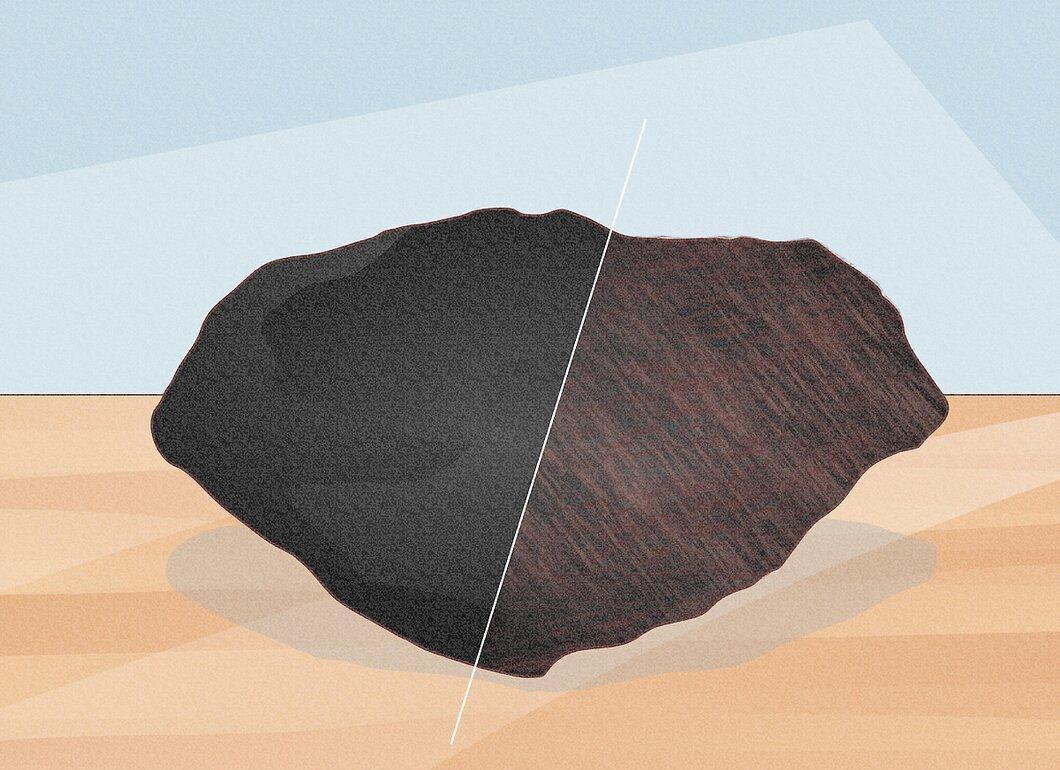
Assess if the rock has a black or rusty-brown color. If the rock you found is a recently fallen meteorite, it will appear black and shiny due to having burned while passing through the atmosphere. However, if the meteorite has been on Earth for a long time, the metallic iron in it will rust, giving it a rusty-brown color.
- Rust will start to appear as small red and orange spots on the surface of the meteorite, which will gradually cover larger and larger areas. You might still see a black crust even if it has partially rusted.
- A meteorite may have a color slightly different from black (for example, steel bluish-black). But if the color of the rock you found doesn't resemble black or brown at all, it's likely not a meteorite.
Step 2. Ensure the rock has an irregular shape.
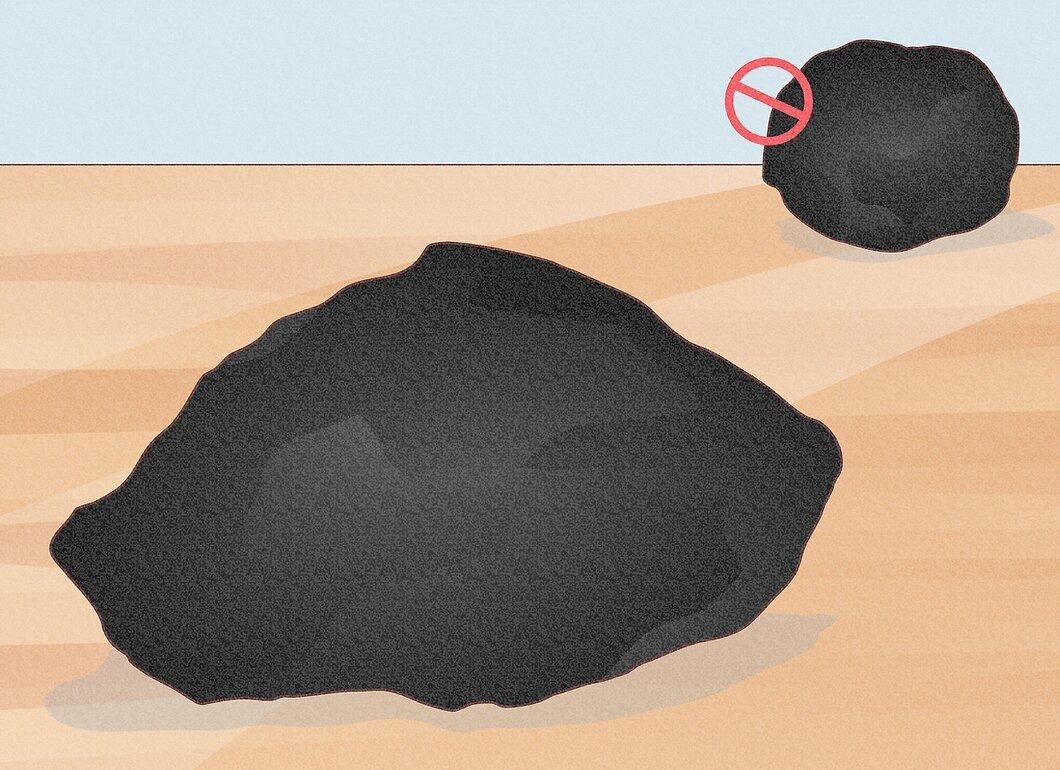
Ensure the rock has an irregular shape. This may seem strange, but most meteorites are not round. Instead, they tend to have quite irregular shapes, with different sides varying in size and form. While some meteorites may have a conical shape, most do not appear aerodynamic when found on the ground.
- Although meteorites have irregular shapes, the edges of most of them are rounded rather than sharp.[3] X Source
- If the rock you found is relatively normal in shape or round like a ball, it could still be a meteorite. However, the vast majority of meteorites have irregular shapes.
Step 3. Determine if the rock has a fusion crust.
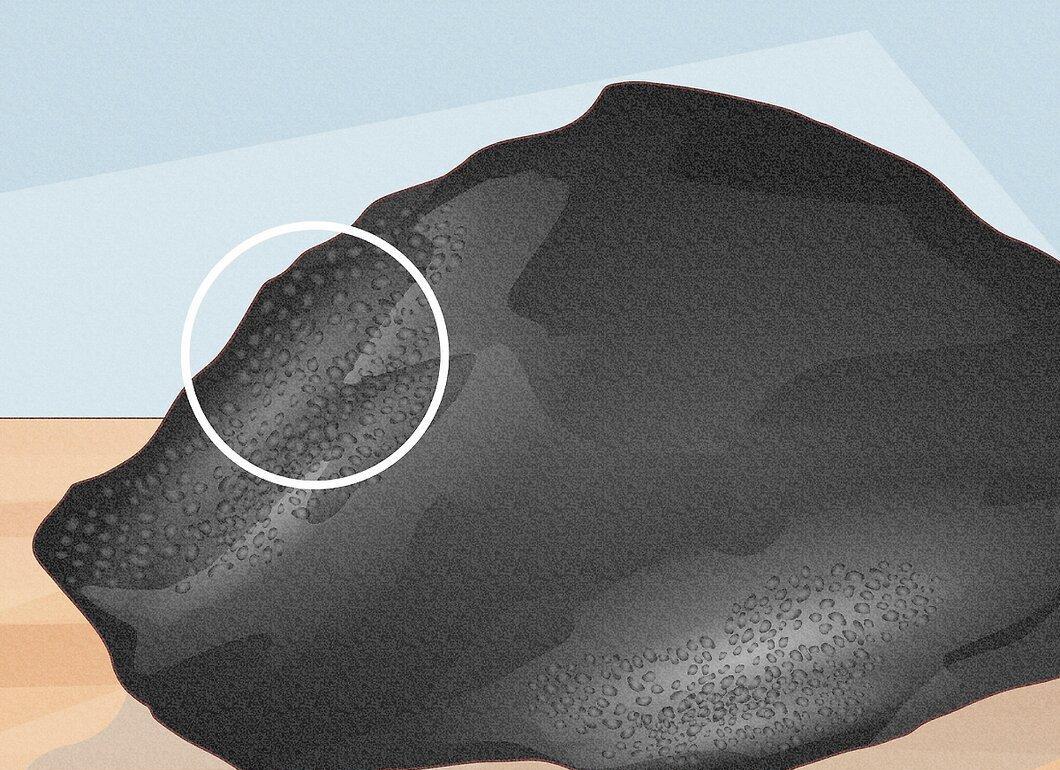
Determine if the rock has a fusion crust. When a meteorite passes through the Earth's atmosphere, its surface begins to melt, and air pressure pushes the molten material back. This results in a completely smooth melted surface known as a fusion crust. If the rock you found looks melted and altered, it may be a meteorite.
- The fusion crust is usually smooth and completely even, although it may also have ripples and "droplets" formed where the molten rock moved and solidified again.
- If the rock you found lacks a fusion crust, it is likely not a meteorite.
- The fusion crust may look like a black shell covering the rock.[5] X Source
- Rocks in the desert are sometimes covered with a black shiny crust that resembles a fusion crust. If you found the rock in the desert, keep in mind that its black surface may be desert varnish.
Step 4. Check for flow lines where the surface melted.
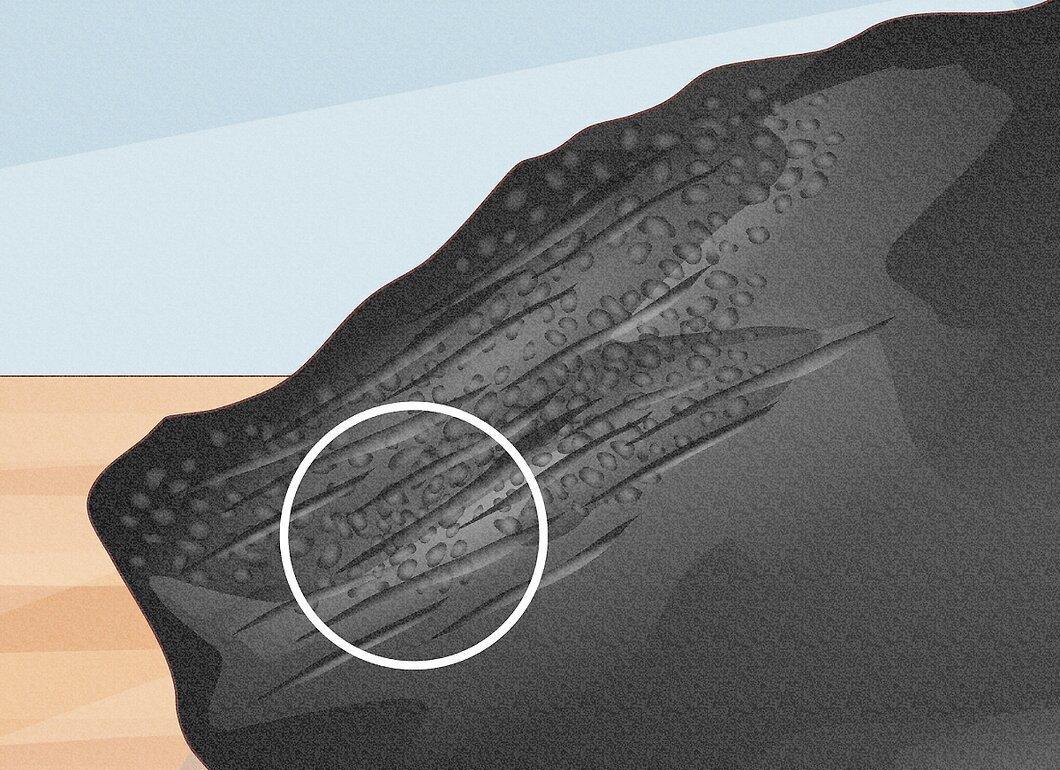
Check for flow lines where the surface melted. Flow lines are small streaks on the fusion crust where the rock melted and was pushed back. If there are lines with small streaks crossing the crust of the rock, it is likely a meteorite.
- Flow lines can be small or even not immediately noticeable to the naked eye, broken or not quite straight. You may need to use a magnifying glass to closely inspect the surface of the rock for flow lines.[7] X Source
Step 5. Look for pits and indentations on the surface of the rock.
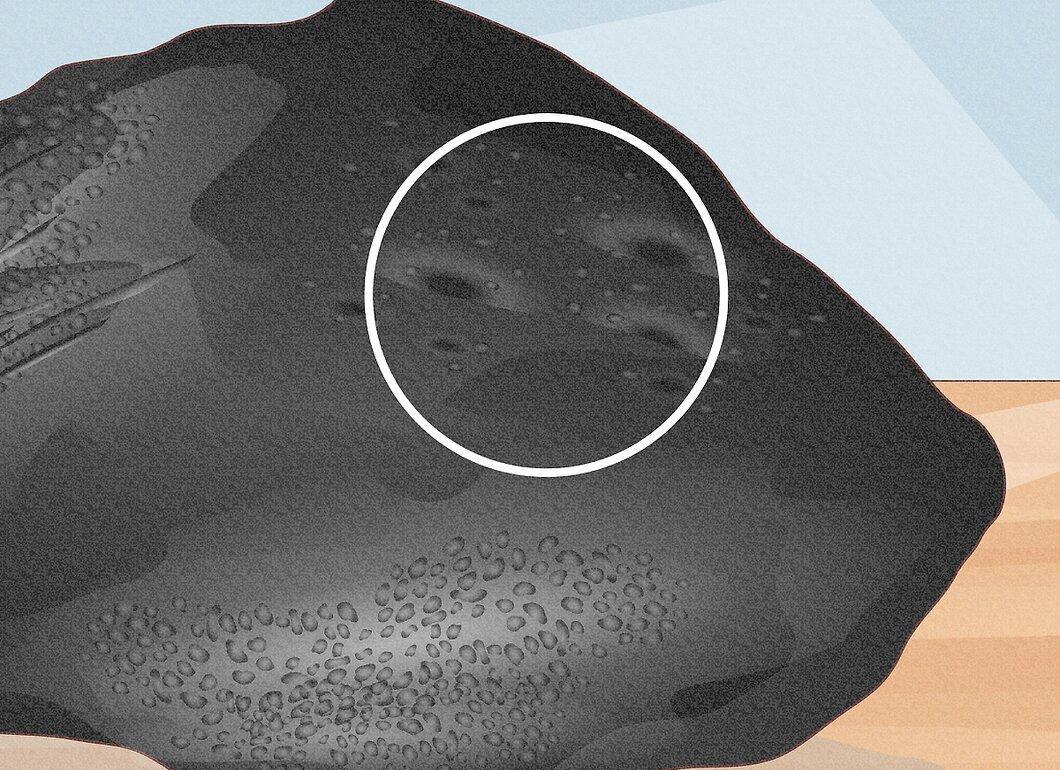
Look for pits and indentations on the surface of the rock. While the surface of a meteorite typically lacks distinctive features, it may have small dimples and deep cavities that resemble fingerprints pressed into soft clay. Look for these on the rock you found to determine if it's a meteorite and what type it might be.
- Iron meteorites are particularly susceptible to uneven melting and have deeper, more pronounced cavities, while the surface of stony meteorites may have depressions that are smooth like the rest of its surface.[9] X Source
- These indentations are called "regmaglypts."
Step 6. Ensure the rock is not porous and filled with holes.
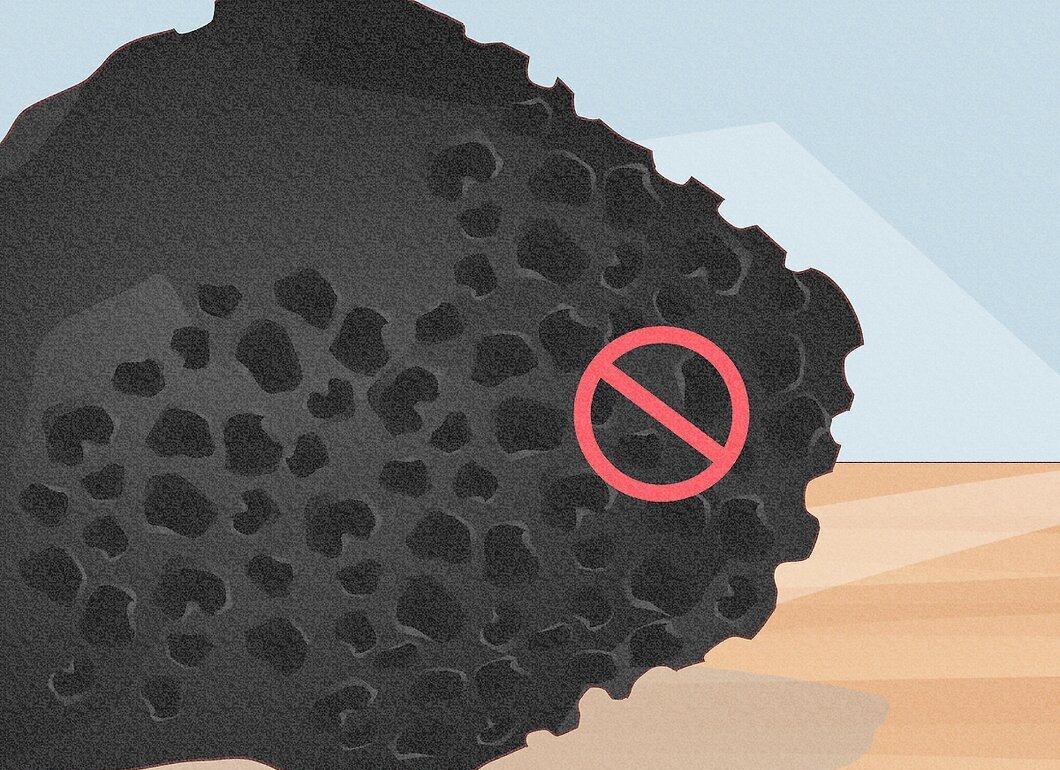
Ensure the rock is not porous and filled with holes. While pits and cavities on the surface may indicate that the rock you found is a meteorite, no meteorites have internal cavities. Meteorites are solid chunks of dense rock; if the rock you found is porous or has a "bubbly" appearance, it is unfortunately not a meteorite.
- If the rock you found has holes on its surface or looks "bubbly" as if it was once molten, it is definitely not a meteorite.[11] X Source
- Slag produced during metallurgical processes is often confused with meteorites, but slag has a porous surface. Volcanic rocks (solidified lava) and black limestones are also often mistaken for meteorites.
- If you're struggling to distinguish pits from regmaglypts, you might want to look online for photographs of rocks with these features to see the differences.[12] X Source
Determine the Physical Properties of the Rock
Step 1. Calculate the density of the rock if it feels heavier than usual.
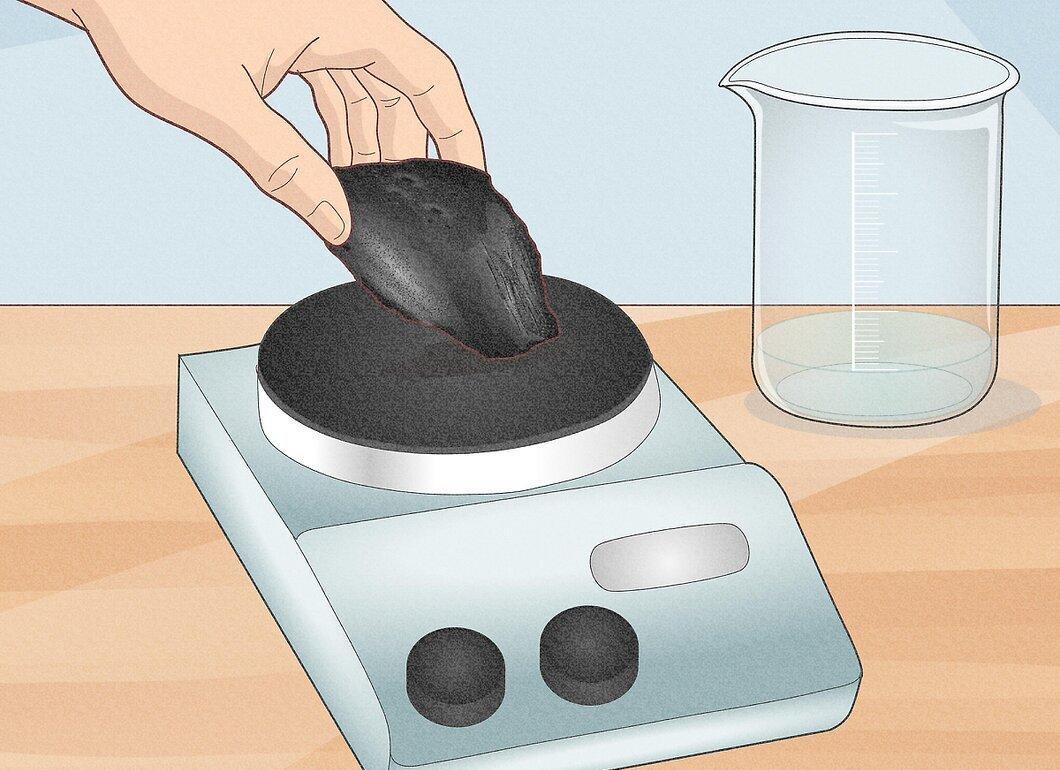
Calculate the density of the rock if it feels heavier than usual. Meteorites are solid chunks of rock that typically contain a lot of metal. If the rock you found looks like a meteorite, compare it with other stones to make sure it feels relatively heavy, then calculate its density to determine if it is a meteorite.
- You can calculate the density of a potential meteorite by dividing its mass by its volume. If it is indeed a meteorite, its density is likely to be above 3 g/cm³.[14] X Source
Step 2. Check with a magnet to see if your rock is magnetic.
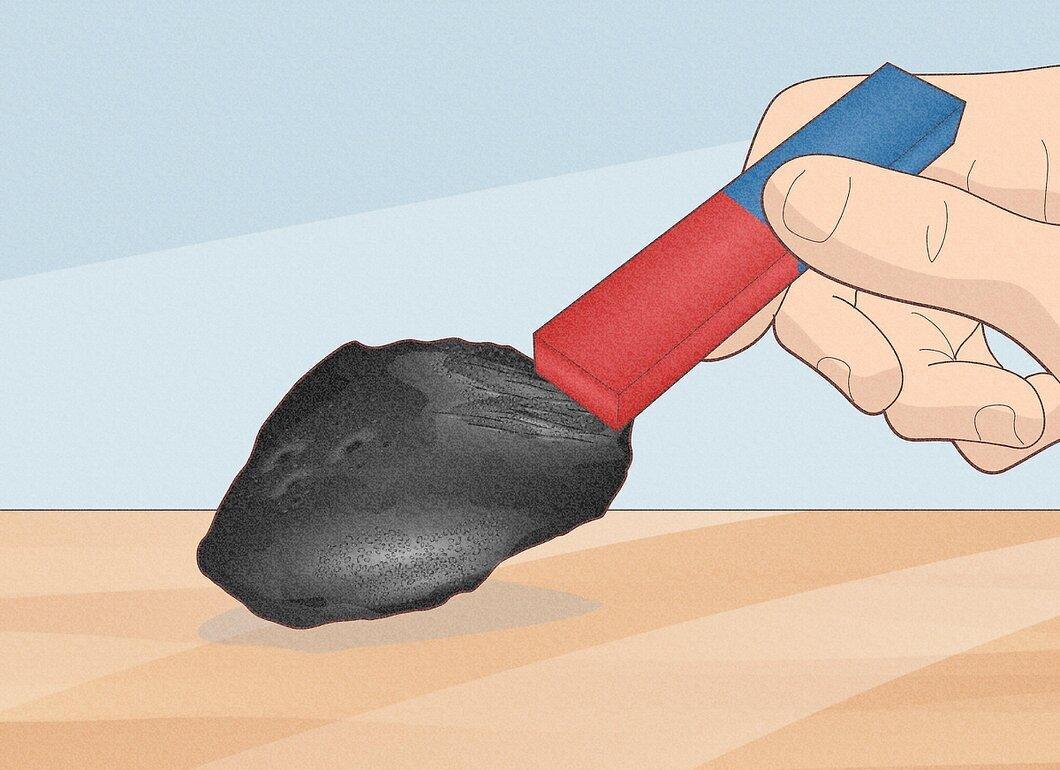
Check with a magnet to see if your rock is magnetic. Almost all meteorites are at least somewhat magnetic, although this property can be weak. Magnetism arises from the high iron and nickel content in most meteorites, which possess magnetic properties. If a magnet does not attract the rock you found, it is almost certainly not a meteorite.
- Because many earthly rocks are also magnetic, a positive result for magnetic properties does not definitively prove that the rock you found is a meteorite. However, a negative result is a strong indication that your rock is not a meteorite.
- Iron meteorites will have much stronger magnetic properties than stony ones. Many iron meteorites can even deflect a compass needle when brought close to them.[16] X Source
Step 3. Scratch the rock on unglazed ceramic to see if it leaves a streak.
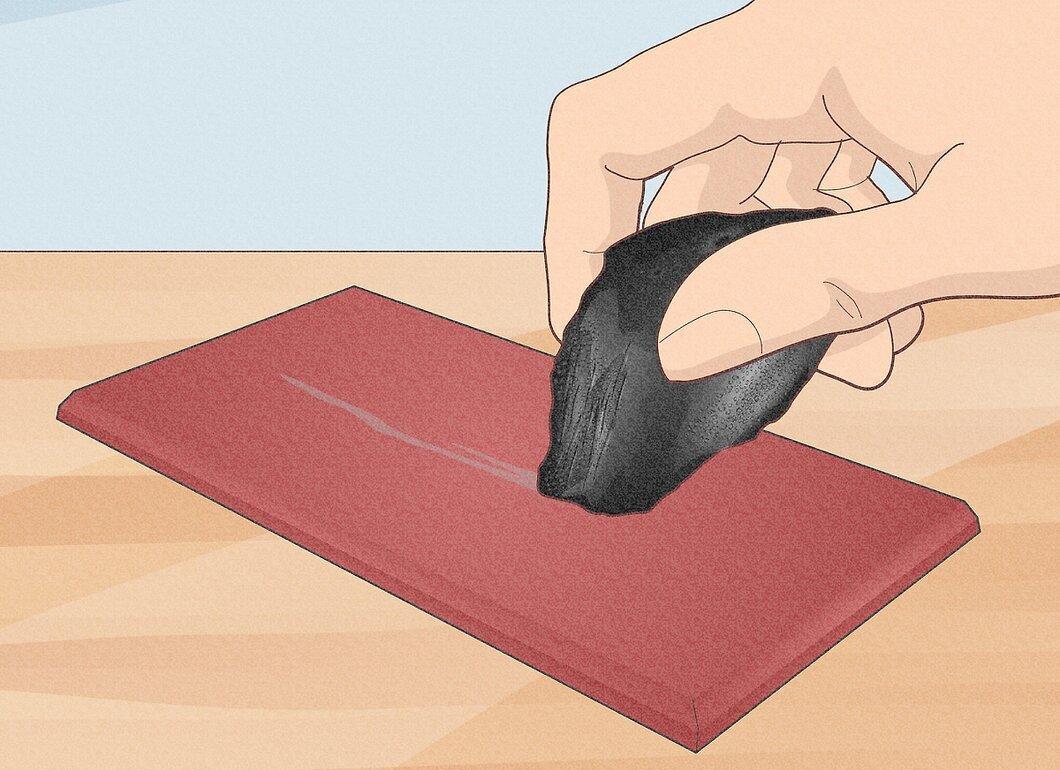
Scratch the rock on unglazed ceramic to see if it leaves a streak. This is a good way to rule out earthly materials. Scrape the found rock against the unglazed side of a ceramic tile; if it leaves any marks other than a faint gray streak, it is not a meteorite.
- You can find unglazed ceramic tile at the edge of the wall tiles in your bathroom or kitchen, on the outer bottom of a teacup, or inside the toilet tank.[18] X Source
- Hematite and magnetite are often mistaken for meteorites. Hematite leaves a red streak, while magnetite leaves a dark gray one; thus, you can determine that they are not meteorites.[19] X Source
- Keep in mind that many earthly rocks also do not leave a streak. While the streak test helps rule out hematite and magnetite, it does not itself definitively prove that the rock you found is a meteorite.
Step 4. File the rock and look for shiny metallic flakes at the filing site.
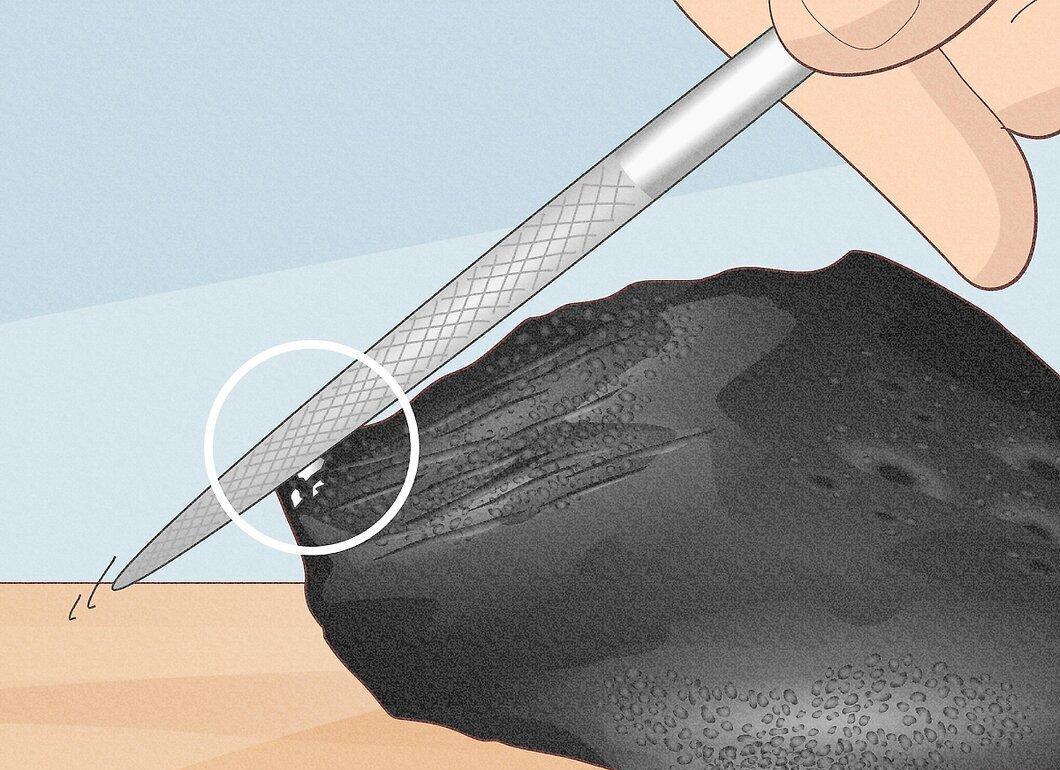
File the rock and look for shiny metallic flakes at the filing site. Most meteorites contain shiny-looking metal beneath the fusion crust. File down a corner of the rock with a diamond file and check for any metal inside.
- To grind the surface of the meteorite, you will need a diamond file. The filing process will take some time and considerable effort. If you're unable to do this yourself, you can take the rock to a lab for examination by a specialist.[21] X Source
- If inside, the rock is ordinary, it is likely not a meteorite.
Step 5. Check for small spherical inclusions of stone material inside the rock.
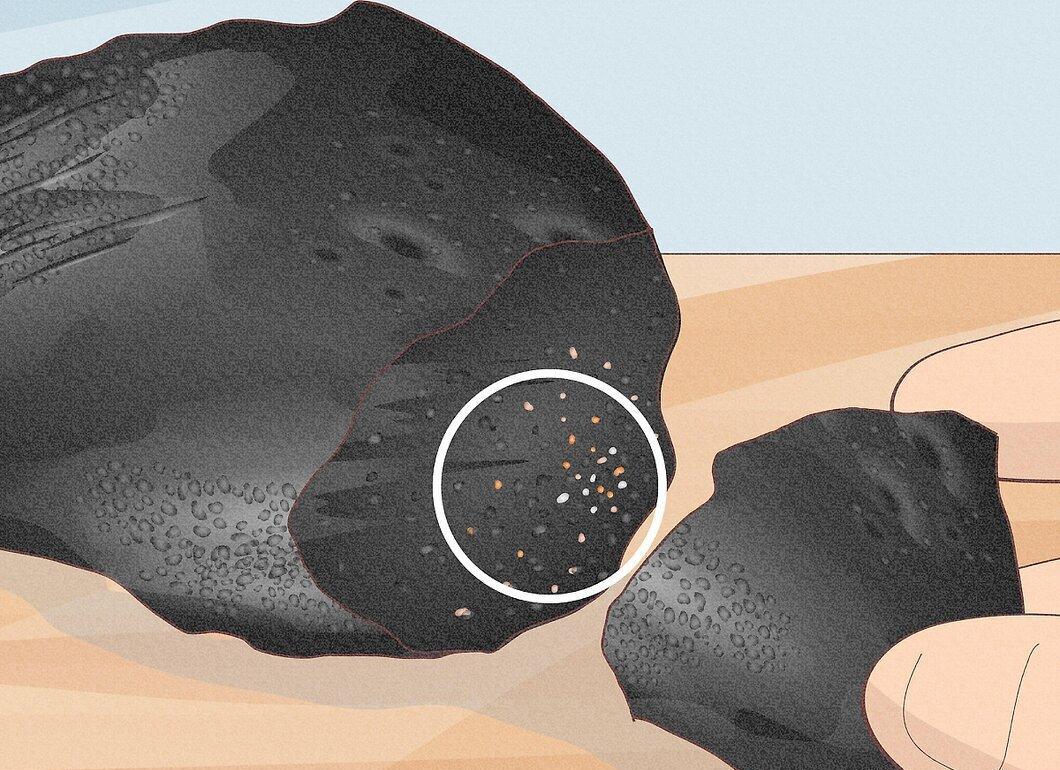
Check for small spherical inclusions of stone material inside the rock. Most meteorites that fall to Earth are of the chondrite type. Such meteorites contain small stone granules inside, known as chondrules. They look like tiny pebbles of varying sizes, shapes, and colors.
- While chondrules are typically found inside the meteorite, weathering may make them visible on its surface if it has been exposed to the elements for a sufficient time.
- In most cases, you'll need to break open the fusion crust of the meteorite to check for chondrules.[23] X Source