When you hold a volcanic rock in your hand, you’re holding one of the oldest materials on Earth. Volcanic rocks form from lava, magma, or ash during a volcanic eruption. Learn how to identify volcanic rocks, and you’ll be able to distinguish them from the two other types of rocks: sedimentary and metamorphic.
Sedimentary and Metamorphic Rocks
Step 1: Differentiate igneous rocks from sedimentary rocks based on the absence of fossils, shells, and rounded grains in igneous rocks.
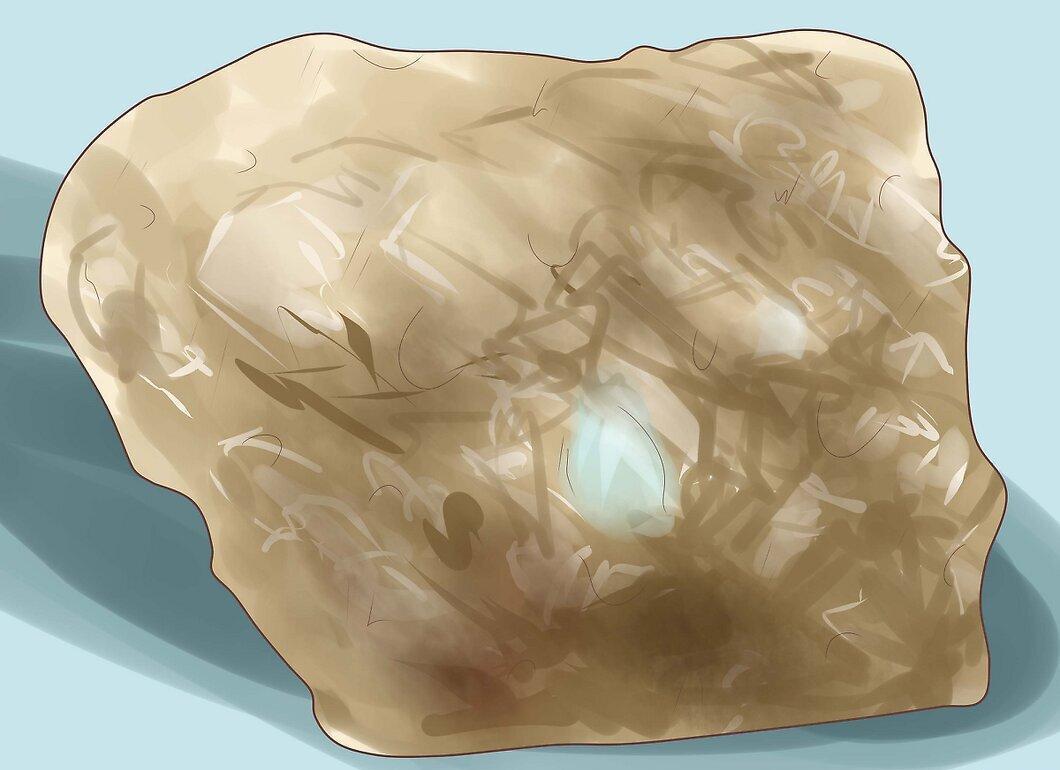
Differentiate igneous rocks from sedimentary rocks based on the absence of fossils, shells, and rounded grains in igneous rocks. All igneous rocks are characterized by interlocking crystals. In some igneous rocks, these crystals are large enough to see without a lens. Other igneous rocks are formed from such small crystals that the rock appears uniform. Sedimentary rocks lack a crystalline structure; instead, they are granular (clastic). The grains in sedimentary rocks can be seen through a magnifying glass.
Step 2: Pay attention to the layering of metamorphic rocks.
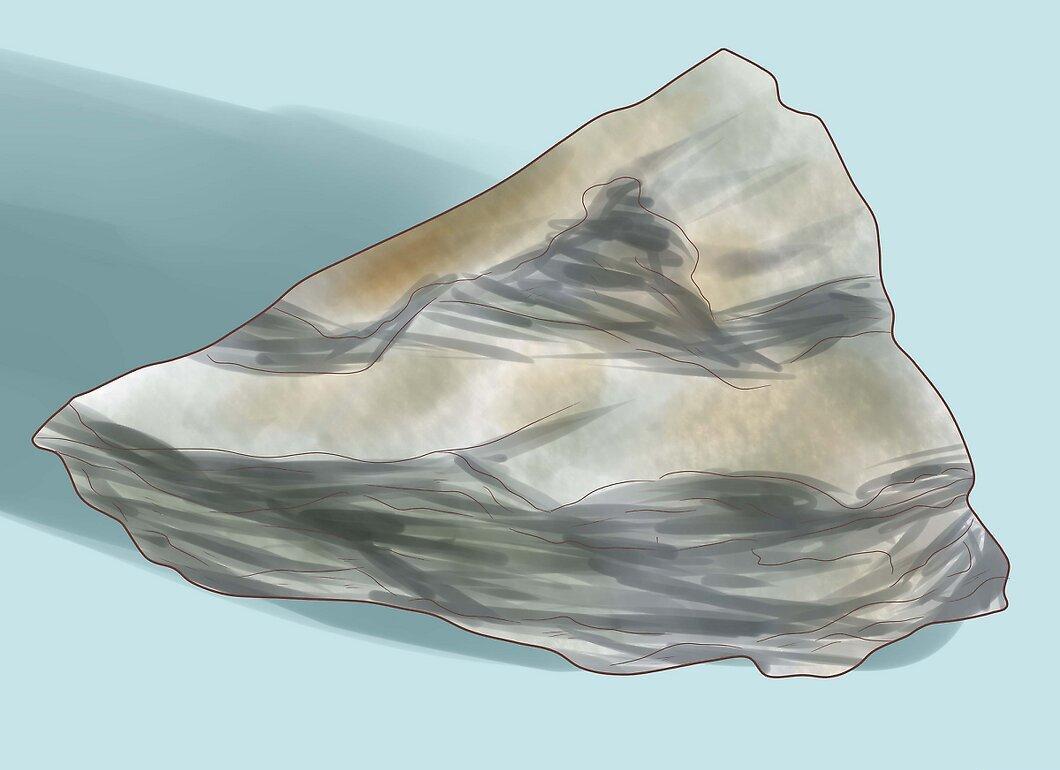
Pay attention to the layering of metamorphic rocks. Igneous rocks do not have layering. Some common metamorphic rocks, such as marble made of calcite and quartzite made of quartz grains, do not exhibit layering. Igneous rocks are never composed solely of calcite or quartz grains.
Identifying Igneous Rocks
Step 1: Classify igneous rocks into two main types:
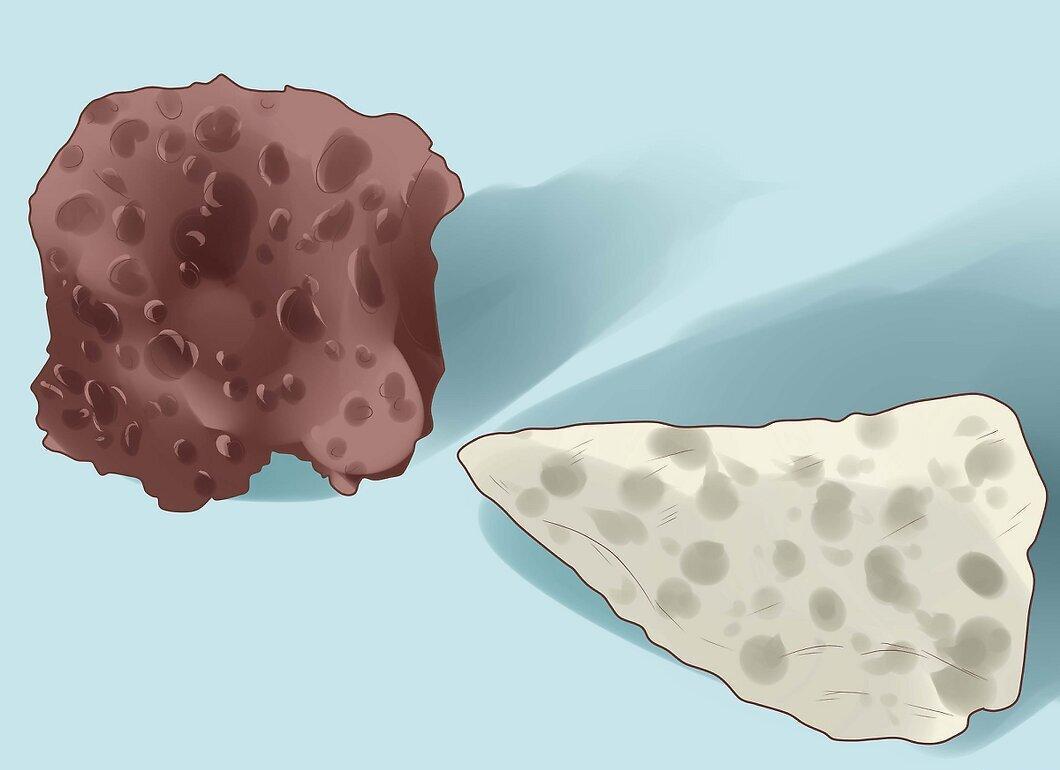
Classify igneous rocks into two main types: volcanic (or extrusive), which form when lava, ash, and dust flow or are explosively ejected from a volcano, and intrusive (or plutonic), which form when magma or molten rock cools and solidifies beneath the Earth's surface.
- Assign the igneous rock to one of two categories: rock formed from flows of molten rock (lava); and tephra, or pyroclastic material, which forms when ash and dust are ejected or explosively expelled from a volcano and settle on the ground.
Step 2: Determine the type of igneous rock—pegmatitic, phaneritic, aphanitic, porphyritic, glassy, vesicular, or pyroclastic—based on crystal size or texture.
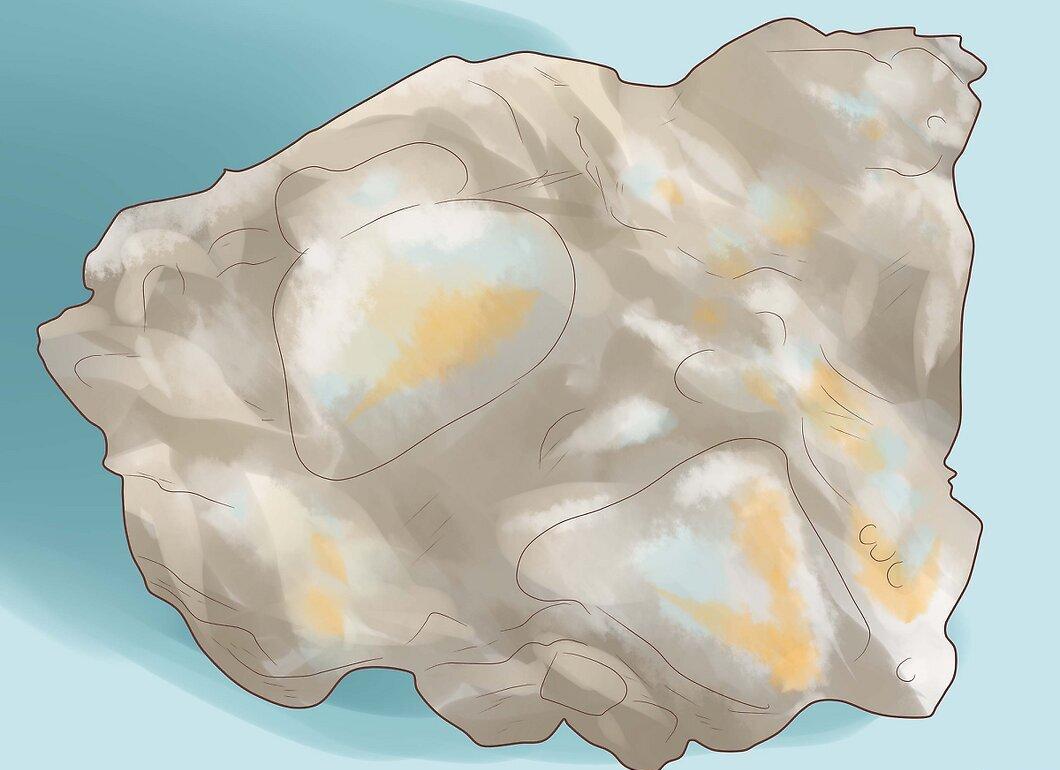
Determine the type of igneous rock—pegmatitic, phaneritic, aphanitic, porphyritic, glassy, vesicular, or pyroclastic—based on crystal size or texture. Igneous rocks with larger crystals formed more slowly beneath the Earth's surface. Rocks with finer crystals formed more quickly after lava was erupted and cooled. Glassy igneous rocks formed so quickly that crystals did not have time to form. Large crystals are visible to the naked eye, while small crystals are not.
- Pegmatitic igneous rocks have very large crystals, over 2.5 cm.
- Phaneritic igneous rocks consist of interlocking crystals smaller than those in pegmatitic rocks, but still visible.
- Aphanitic igneous rocks have a fine-grained texture, most of their crystals are too small to see.
- Porphyritic igneous rocks have crystals of two different sizes.
- Igneous rocks that formed too quickly for crystals to develop have what is called a glassy texture. This means the rock cooled too quickly to form crystals and has an unordered structure. Obsidian is the only glassy igneous rock distinguishable by its dark color (though it is transparent in thin layers).
- Vesicular igneous rocks, such as pumice, appear bubbly and form before gases can escape from the solidifying lava. They also form from very rapid cooling.
- Pyroclastic igneous rocks have a texture formed from volcanic fragments ranging in size from very fine (ash) to coarse (lapilli) or very coarse (bombs or blocks).