Incense is used in many cultures for religious ceremonies or aromatherapy. The process of making incense sticks is quite simple and will appeal to those interested in creating their own unique scent.
Quick Incense Sticks (Using Essential Oils)
Step 1. Purchase a pack of unscented sticks.
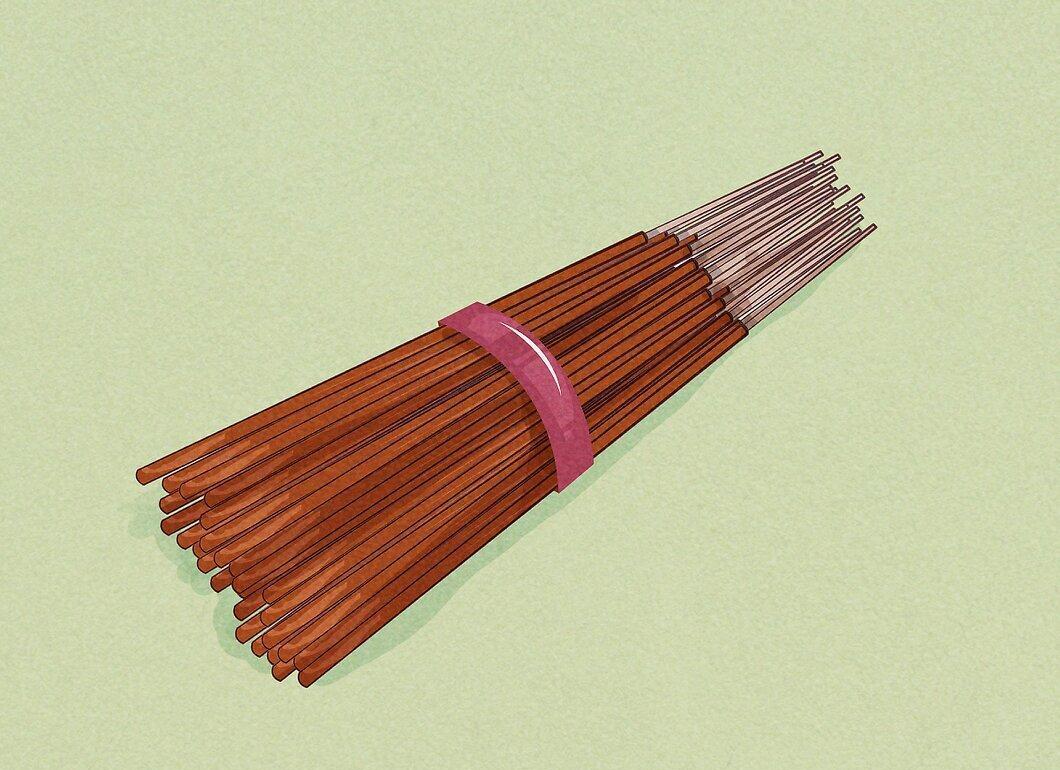
Buy a pack of unscented sticks. You can find base sticks for incense online. They are usually black and odorless, costing around 50-100 rubles per pack.
- They have a charcoal coating that is necessary for absorbing the scent. Simple old bamboo sticks won't work here![1] X Source
Step 2. Choose your own essential oils and mix them in the desired ratios.
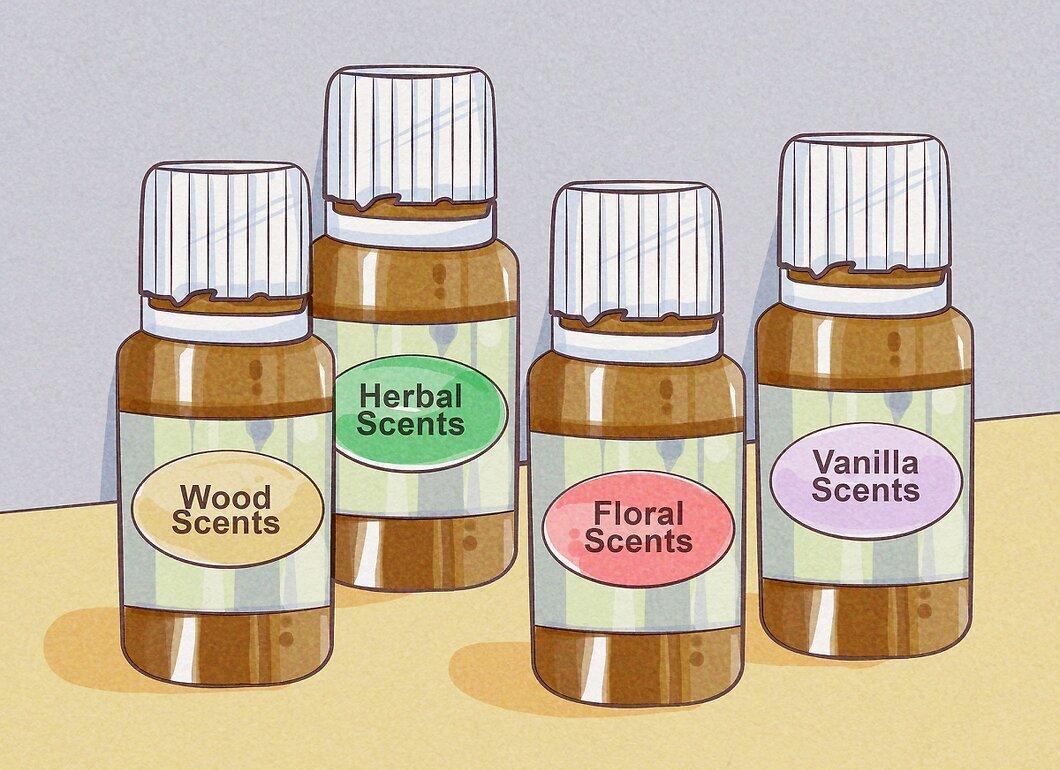
Select your essential oils and mix them in the required amounts. Essential oils can be purchased at any pharmacy or online store. They come in a wide variety and have different concentrations. Choose the most concentrated, aromatic oils for a stronger scent. Popular oils for making incense include:
- Woody scents: sandalwood, pine, cedar, juniper, spruce;
- Herbal scents: sage, thyme, lemongrass, rosemary, star anise;
- Floral scents: lavender, iris, rose, saffron, hibiscus;
- Other scents: orange, cinnamon, calamus root, frankincense, vanilla, myrrh.[2] X Source
Step 3. Mix 20 drops of essential oil per incense stick in a shallow bowl.
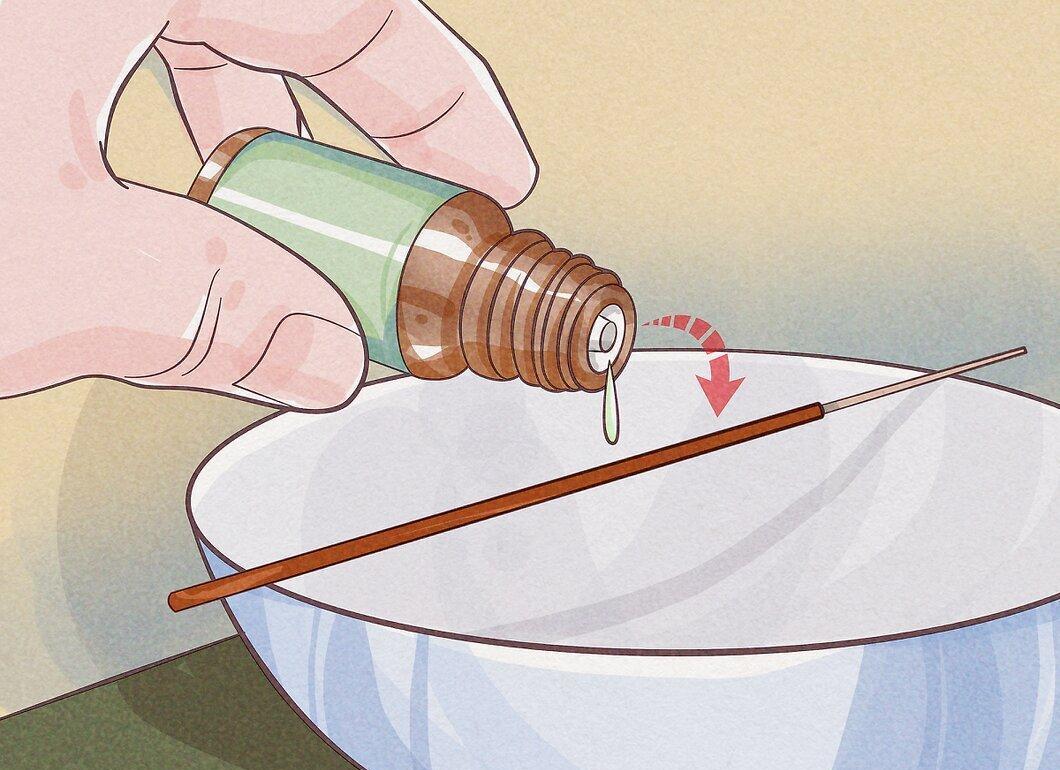
In a shallow bowl, mix 20 drops of essential oil per incense stick. If you want to make just one stick, you'll need 20 drops of essential oil; if you're making several, don't make more than 4-5 at a time. For 5 sticks, you'll need 100 drops of essential oil, or about 4 ml.
- If you decide to mix several scents, start with a few drops and keep adjusting until you achieve the desired blend. It's unlikely that the scent will turn out unpleasant, but you may need to experiment before finding the perfect combination.
Step 4. Place the sticks in a shallow bowl.
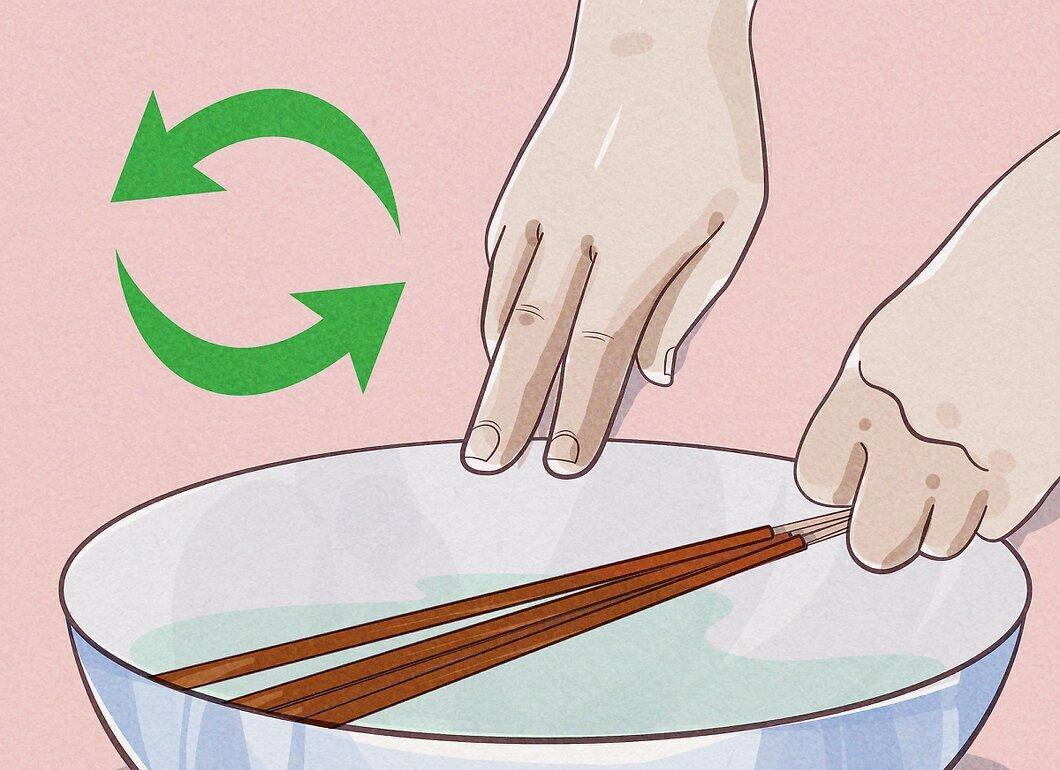
Lay the sticks in a shallow bowl. If they don't fit, pour the essential oil onto a piece of foil shaped into a V to prevent spillage. Make sure the essential oil covers the sticks on all sides.
Step 5. Flip the sticks and gently press down to ensure they absorb all the oil.
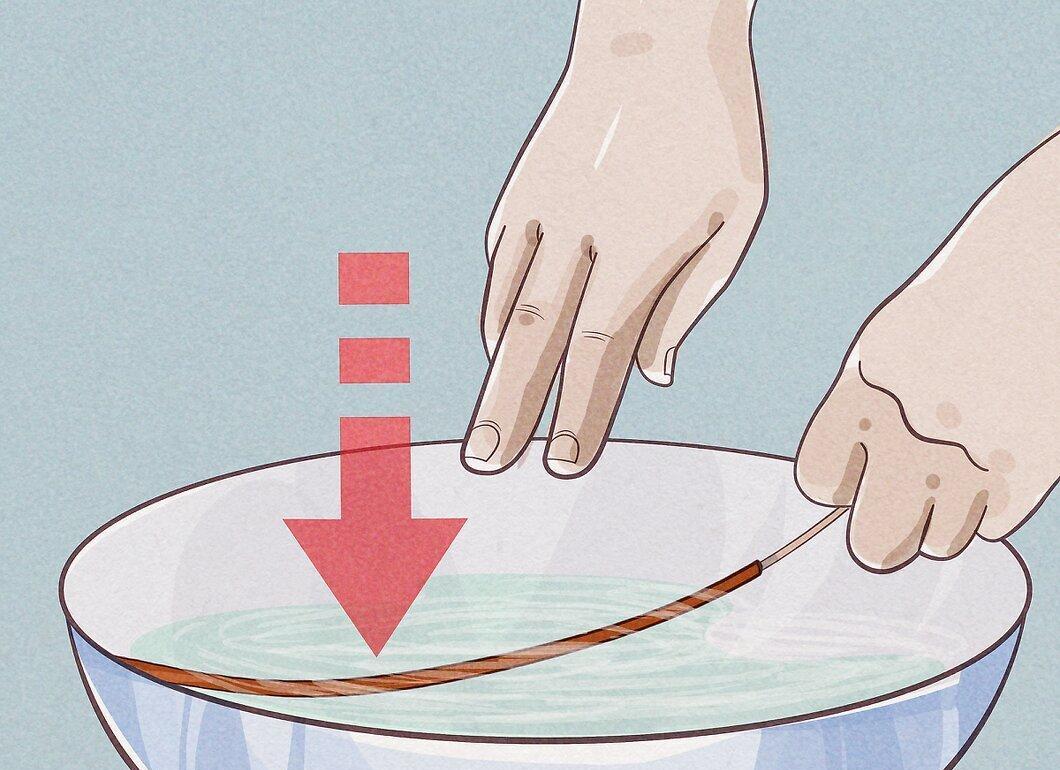
Flip the sticks and gently press down to ensure they absorb all the oil. This process doesn't take long. Once there's no oil left in the bowl, you can move the sticks.
Step 6. Place the sticks in a cup to dry.
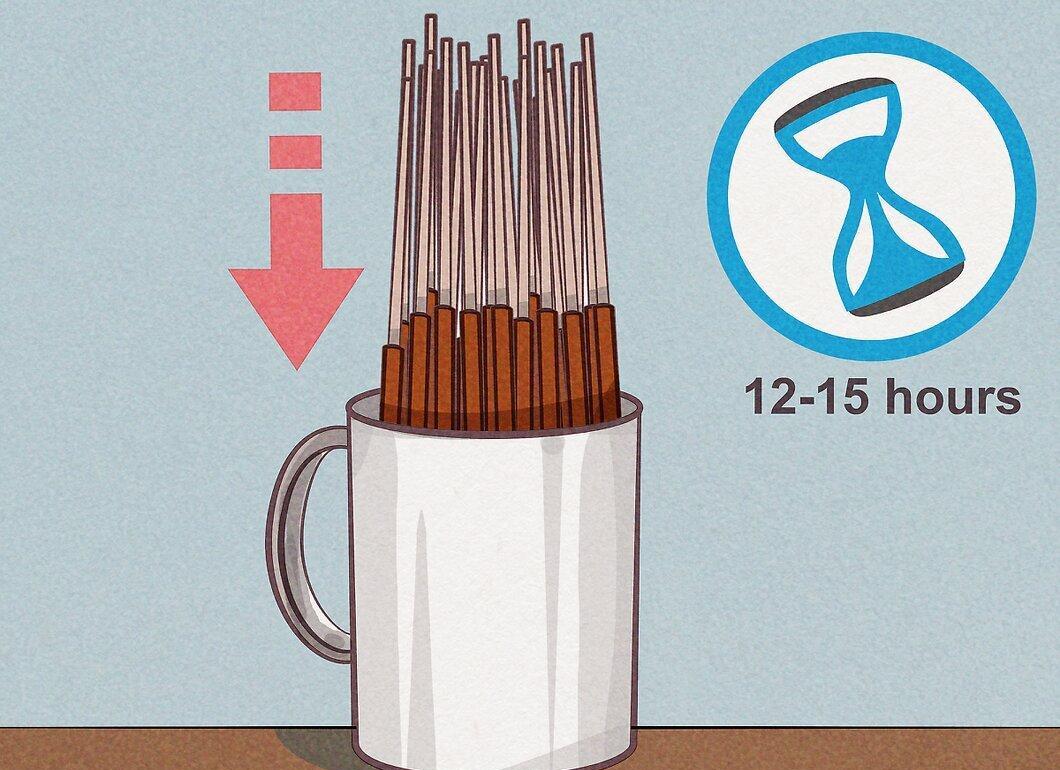
Put the sticks in a cup to dry. Before lighting the sticks, they need to dry for about 12-15 hours. Even while drying, they will emit a delightful aroma, which means they can work even without being burned!
Step 7. For a longer-lasting scent, you can also mix the essential oils with dipropylene glycol and soak the sticks in this mixture overnight.
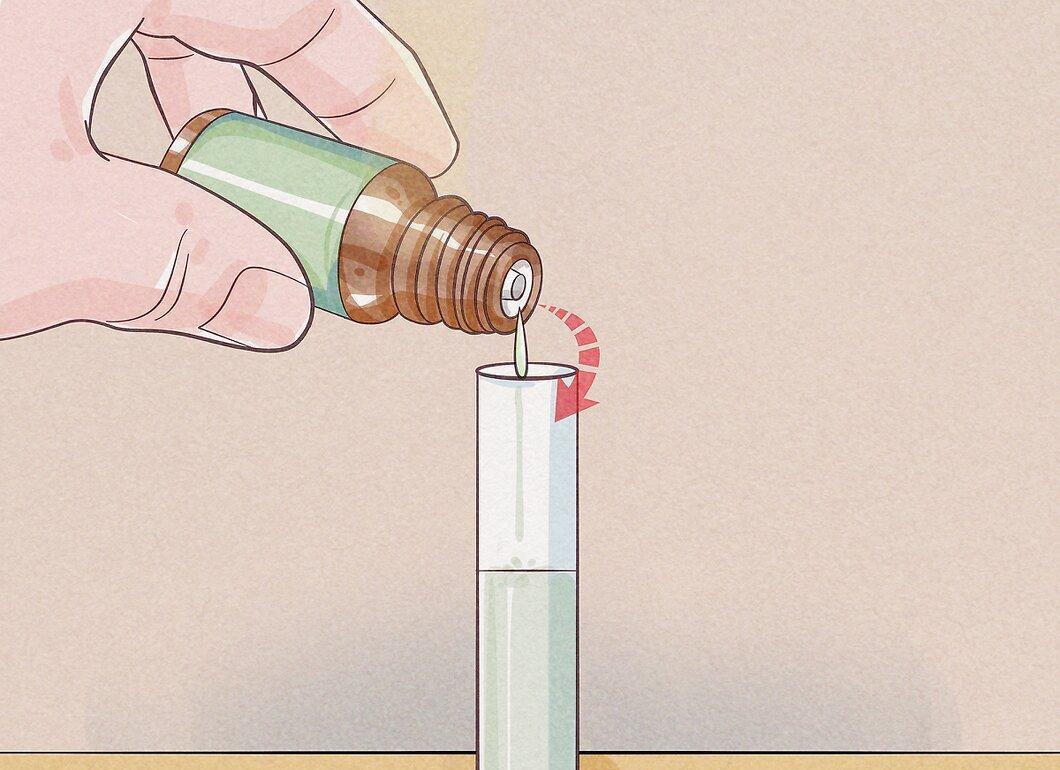
You can mix essential oils with dipropylene glycol and soak the sticks in this solution overnight for a more lasting scent. It sounds crazy, but you can buy dipropylene glycol online at a low cost. It's often available in the same online stores as the base sticks. Take a vial of the necessary size. Use 20 drops of essential oil per stick and add dipropylene glycol so that the stick is immersed 3/4 in the solution. Soak the stick in the mixture for at least a day, and then let it dry for 24 hours or longer if needed.
- Instead of dipropylene glycol, you can use a carrier oil commonly used in the production of scented candles.
Hand-Rolled Incense Sticks
Step 1. Decide which scents you want to mix and take 1-2 tablespoons of each.
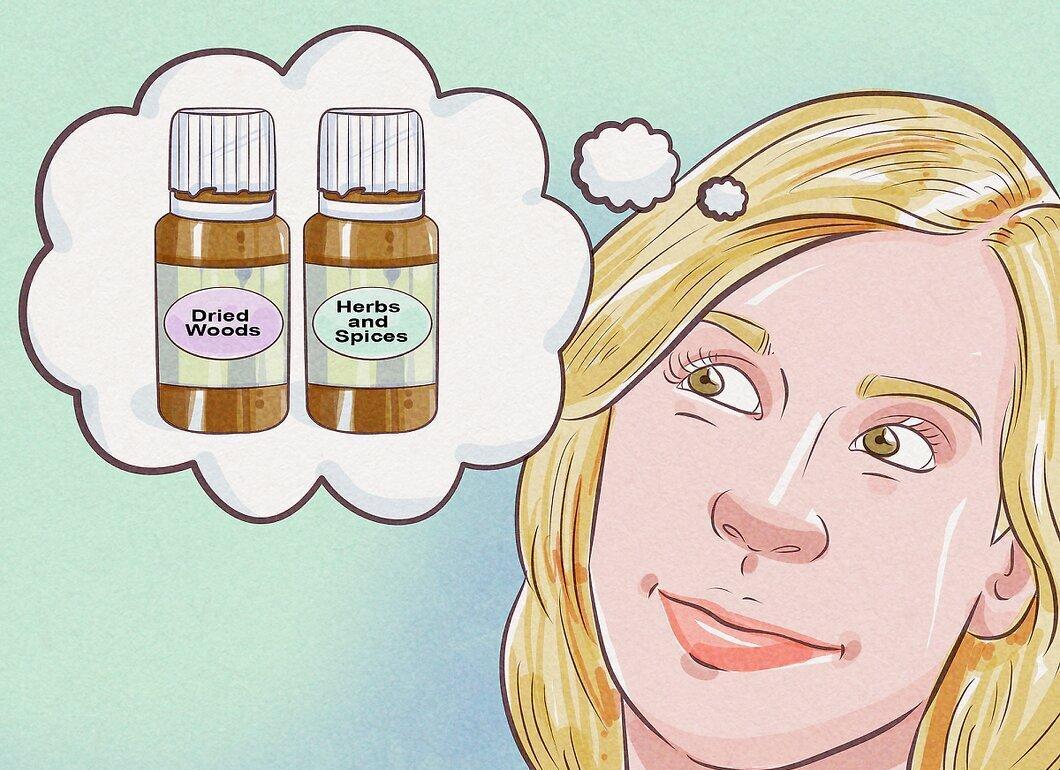
Decide which scents you want to mix and take 1-2 tablespoons of each. Start by trying only 2-3 different scents, and once you get the hang of it, experiment with more. While making incense isn't complicated, there will still be trial and error, as different scents require more or less water and makko (the combustible binding agent). All ingredients can be purchased whole or in powdered form, but powders are much easier to work with:
- Herbs and spices: cassia, juniper leaves, lemongrass, lavender, sage, thyme, rosemary, orange powder, patchouli;
- Resins and tree saps: balsam, acacia, copal, hibiscus, myrrh, burgundy resin;
- Dry wood: juniper, pine, piñon, cedar, sandalwood, or agarwood.[7] X Source
Step 2. Keep track of how much of each scent you use, and take notes if you plan to make incense often.
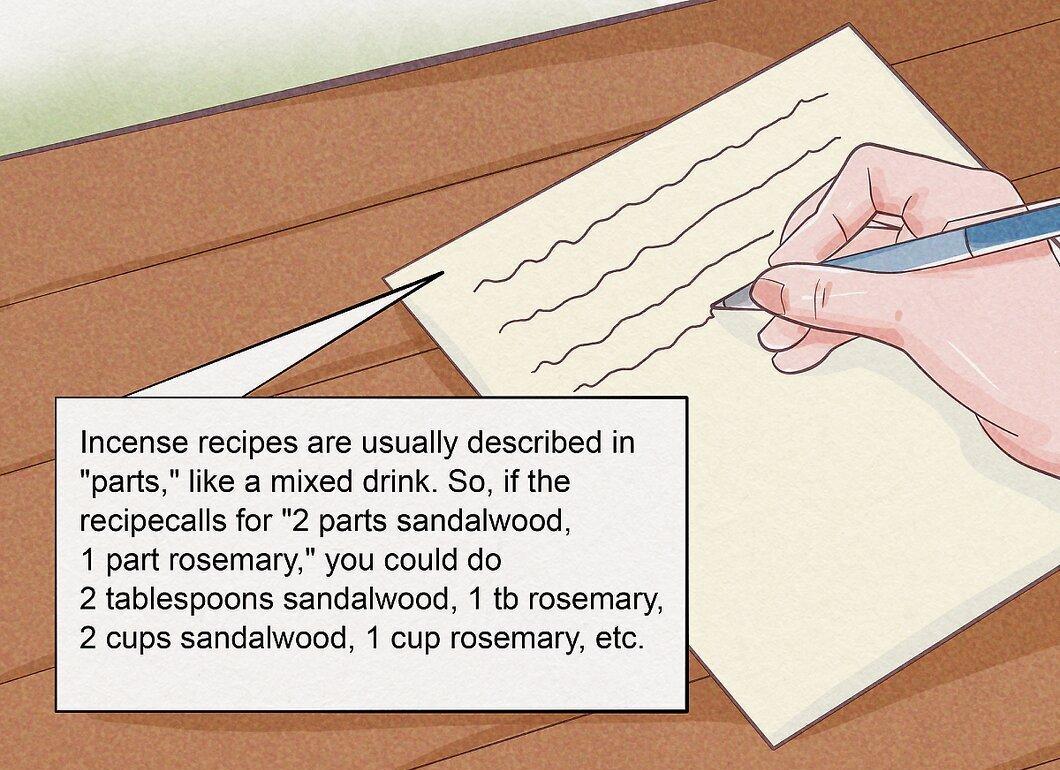
Keep track of how much of each scent you use, and take notes if you plan to make incense often. The amount of water and binding agent needed depends on the quantity of powdered ingredients, so monitor the amounts and make notes for yourself. Usually, 1-2 tablespoons of each ingredient is sufficient, but kitchen scales can be used if necessary.
- Recipes for incense sticks generally specify proportions, so if a recipe says “2 parts sandalwood and 1 part rosemary,” you can mix 2 tablespoons of sandalwood with 1 tablespoon of rosemary or 2 cups of sandalwood with 1 cup of rosemary, and so on.
Step 3. Use a mortar and pestle to mix all the chosen ingredients.
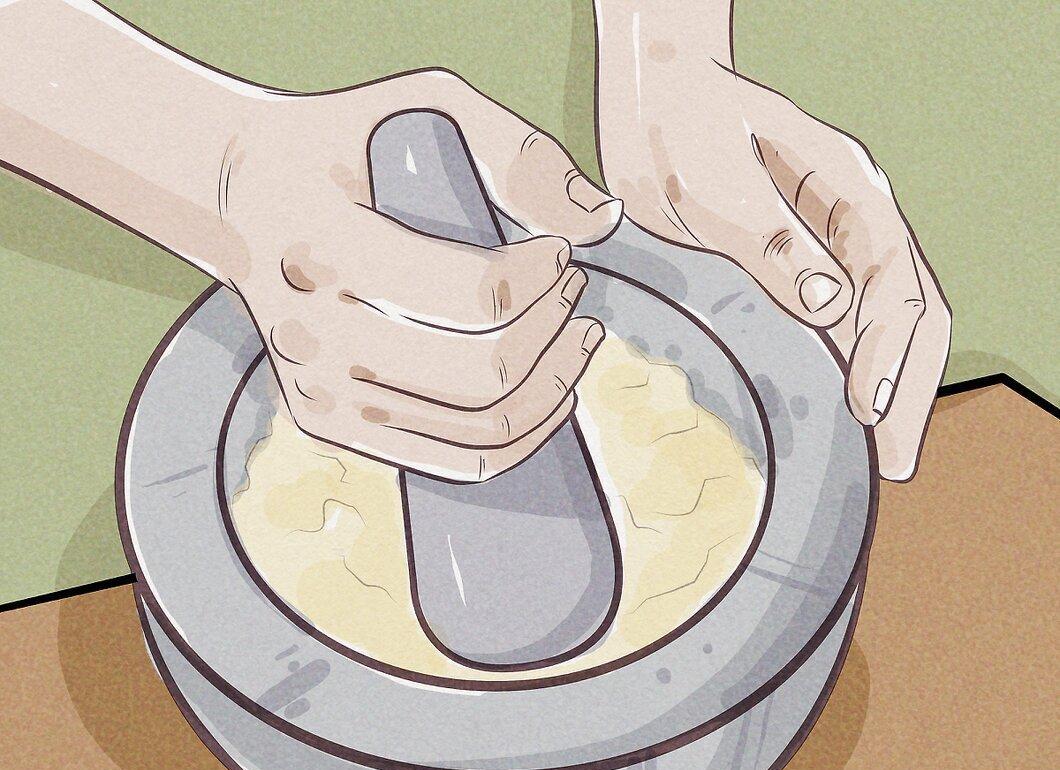
Use a mortar and pestle to mix all the selected ingredients. If you are using fresh ingredients instead of powdered ones, they must be ground into a powder first. Herb grinders can help with this, but avoid using coffee grinders as they heat up, negatively affecting the aromatic compounds in the ingredients. When grinding, remember:
- Start with the wood, as it is harder and more difficult to grind finely. If you've tried hard but still can't grind the wood well, you may break the rule of “no coffee grinders or electric grinders,” since wood retains its aroma well enough.
- Freeze the resin by placing it in the freezer for 30 minutes before grinding. It will become harder and break more easily into small pieces.[10] X Source
Step 4. Let the powder sit for a few hours to allow the scents to blend.
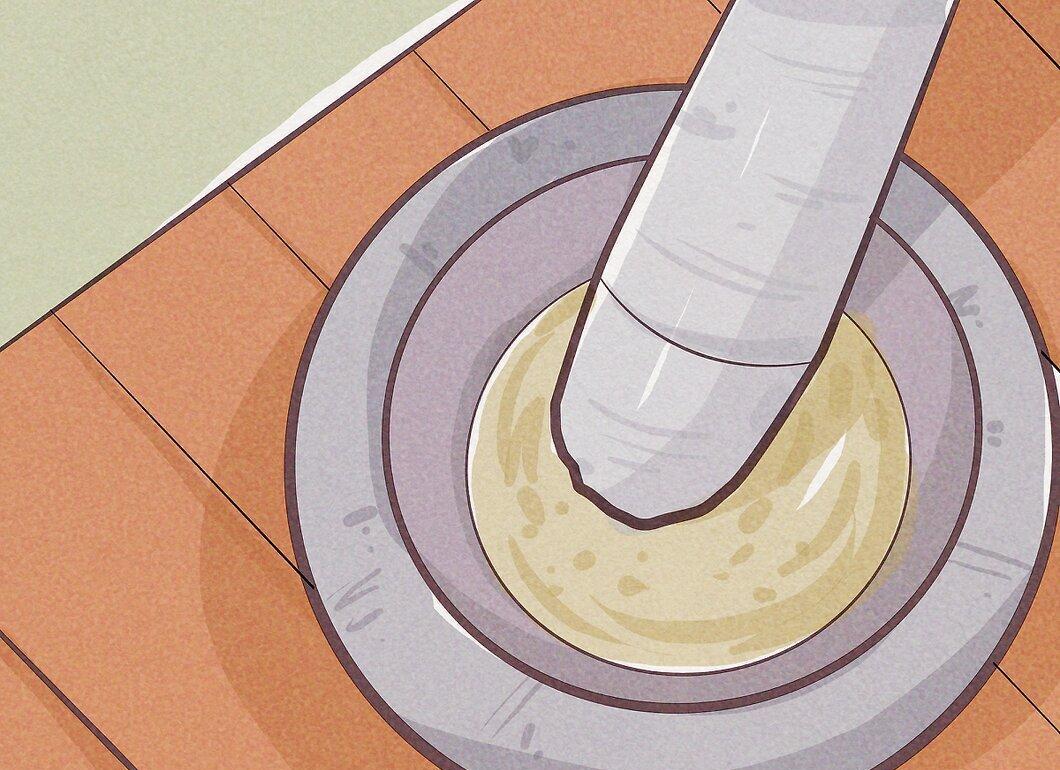
Let the powder sit for a few hours to allow the scents to blend. After mixing all the ingredients, stir them again and let the mixture steep. While this is not necessary, it will result in a fuller aroma.
Step 5. Determine how much makko you need by calculating the total amount of dry ingredients.
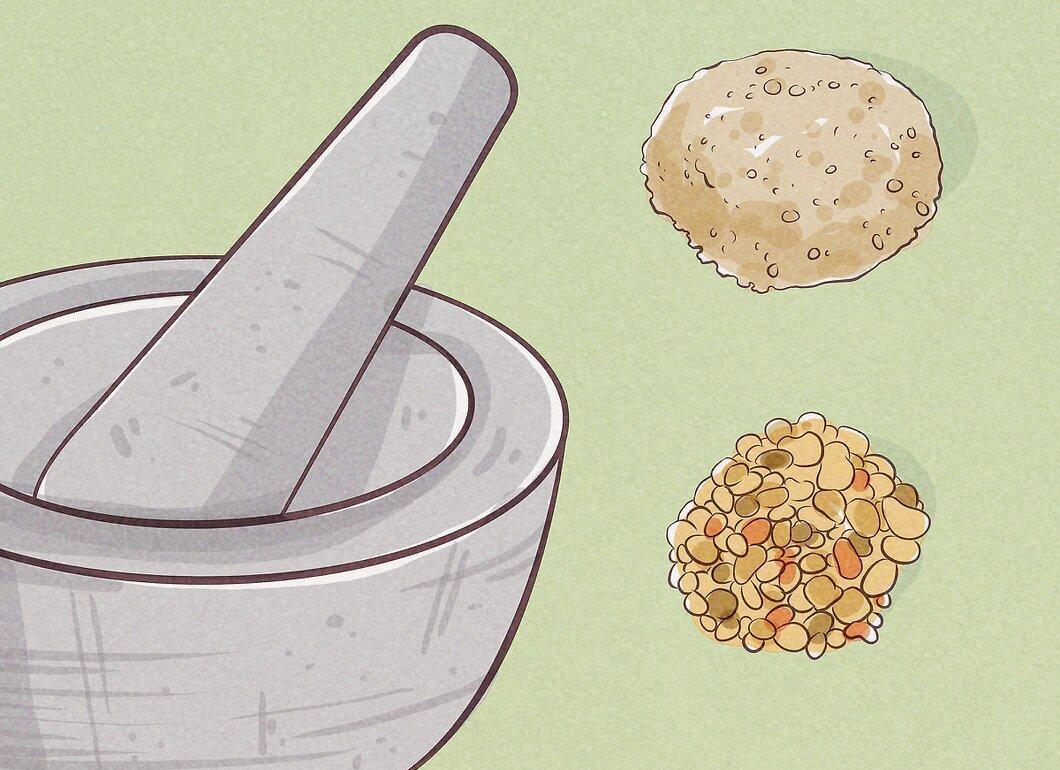
Determine how much makko you need by calculating the total amount of dry ingredients. Makko is a combustible resinous substance that is needed in a certain ratio to the total mass of the incense to ensure they burn well. Unfortunately, this is the most challenging step—determining the right amount of makko will only come through trial and error:
- If you are using only herbs and spices, you'll need only 10-25% makko of the total incense mass.
- If you are using resins, you will need significantly more makko, about 40-80%, depending on the amount of resin added. All resin mixtures require 80% makko.
Step 6. Multiply the amount of spices by the desired percentage of makko to know how much makko to add.
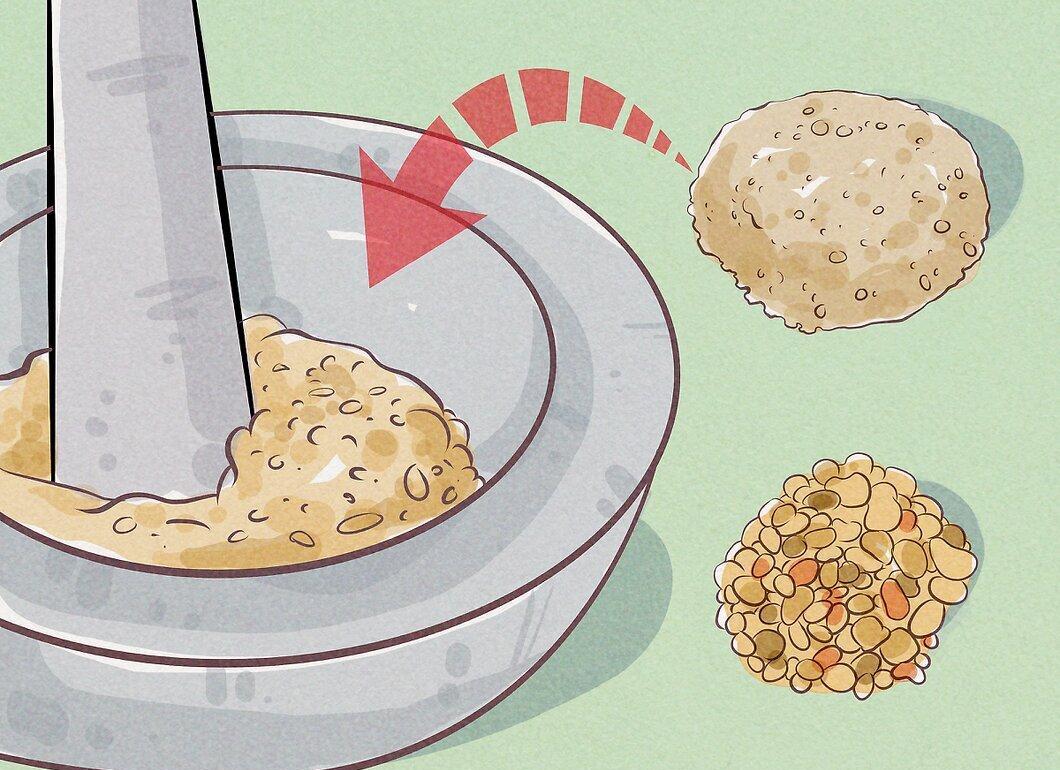
Multiply the amount of spices by the desired percentage of makko to know how much makko to add. For example, if you have 10 tablespoons of powder with a small amount of resin, you'll need 4 tablespoons of makko. You can make these simple calculations with any amount of powder and makko.
- You can always add more makko, but it's hard to reduce it. If you’re unsure, start with the lowest estimated amount of makko.[11] X Source
Step 7. Set aside a small amount of the mixture.
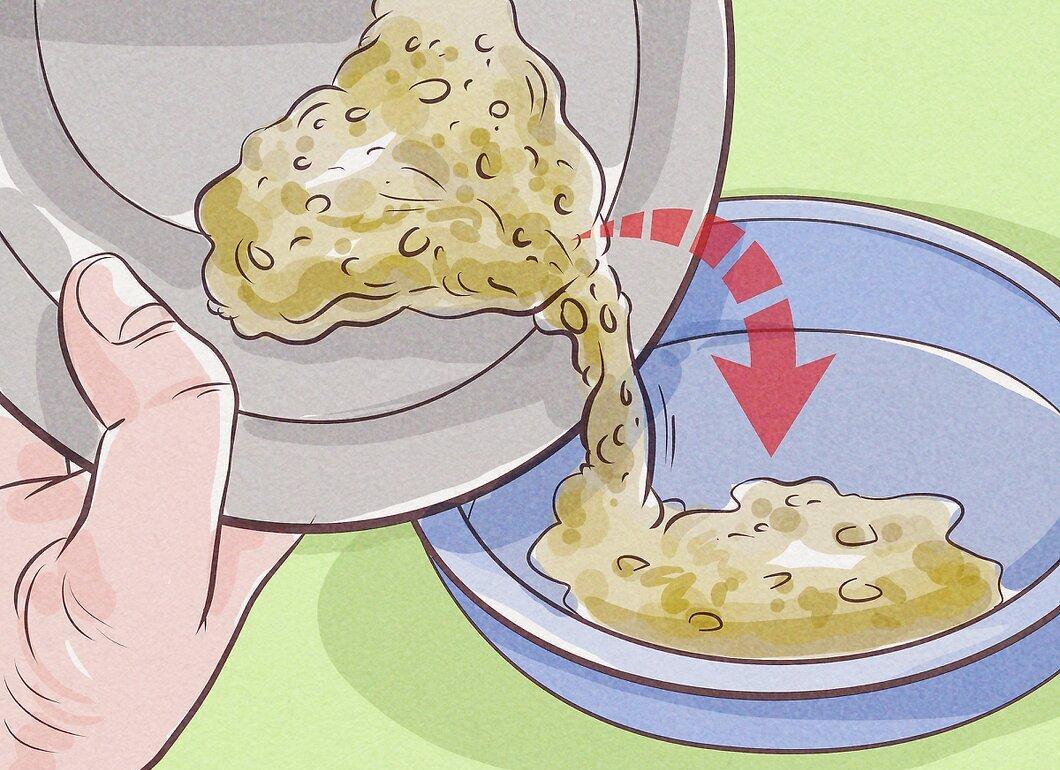
Set aside a small amount of the mixture. Take about 10% of the mixture and set it aside. This portion will be necessary for thickening in case you accidentally add too much water in the next step, preventing you from ruining the entire batch of incense.
Step 8. Take a dropper and carefully add warm distilled water to your incense mixture, mixing it into a paste.
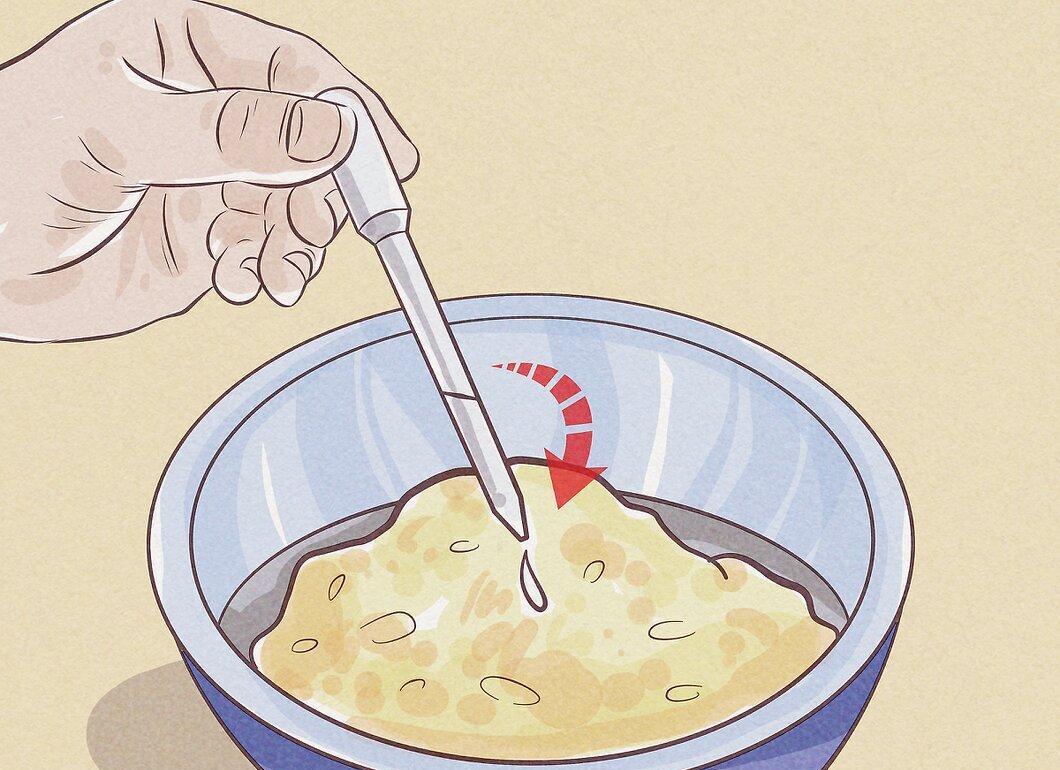
Use a dropper to carefully add warm distilled water to your incense mixture and mix it into a paste. The texture should be like that of modeling clay, as makko absorbs water and turns into dough. The resulting mass should hold its shape but be pliable enough. Add 3-5 drops of water, mix, and continue to add more until you achieve a liquid but not overly sticky consistency. When you reach the ideal texture, the mixture should not crumble or form dry cracks when shaped.
- If you add too much water, pour as much as possible into the bowl with the remaining paste to dry it out a bit.[12] X Source
Step 9. Knead the dough in your hands for a few minutes.
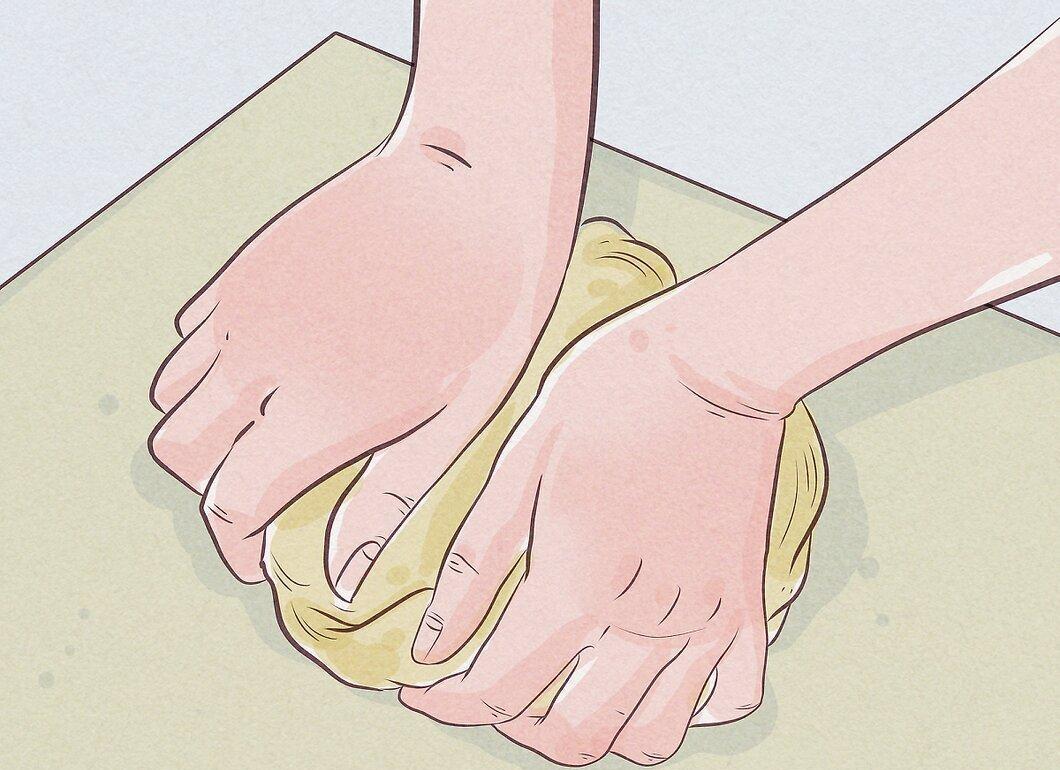
Knead the resulting dough in your hands for a few minutes. This process requires constant pressure. Use the tips of your fingers to press the “dough” into a flat disk. Then fold the disk and form another ball of dough, and press it again. Continue doing this, turning and rotating the piece of “dough” for several minutes.
- If you are making incense professionally, after kneading, leave a piece of dough under a damp towel overnight. The next morning, spray it with water, knead it a bit again, and then proceed to the next step.[14] X Source
Step 10. Pinch off a small piece (2-5 cm) of dough and roll it into a long thin rectangle.
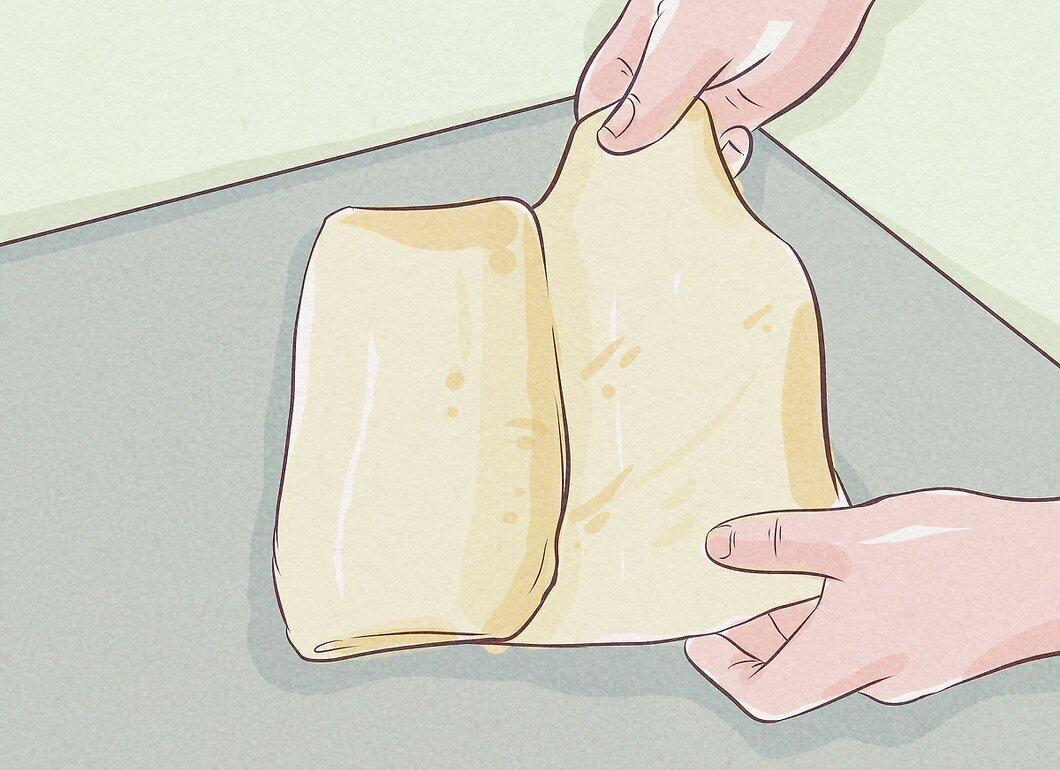
Pinch off a small piece (2-5 cm) of dough and roll it into a long thin rectangle. Start by rolling the piece of dough into a long rope or “snake” with your palms, making it about 3/4 the length of an incense stick. Then flatten it with your fingers. The rectangle should be flat, only a few millimeters thick.
- If you are not using sticks, leave the rolled pieces of dough in the shape of “snakes.” Cut the edges with a knife and let them dry, being careful that the pieces don't stick together.
Step 11. Place the uncovered part of the incense stick on the dough, then roll the dough to cover 3/4 of the stick.
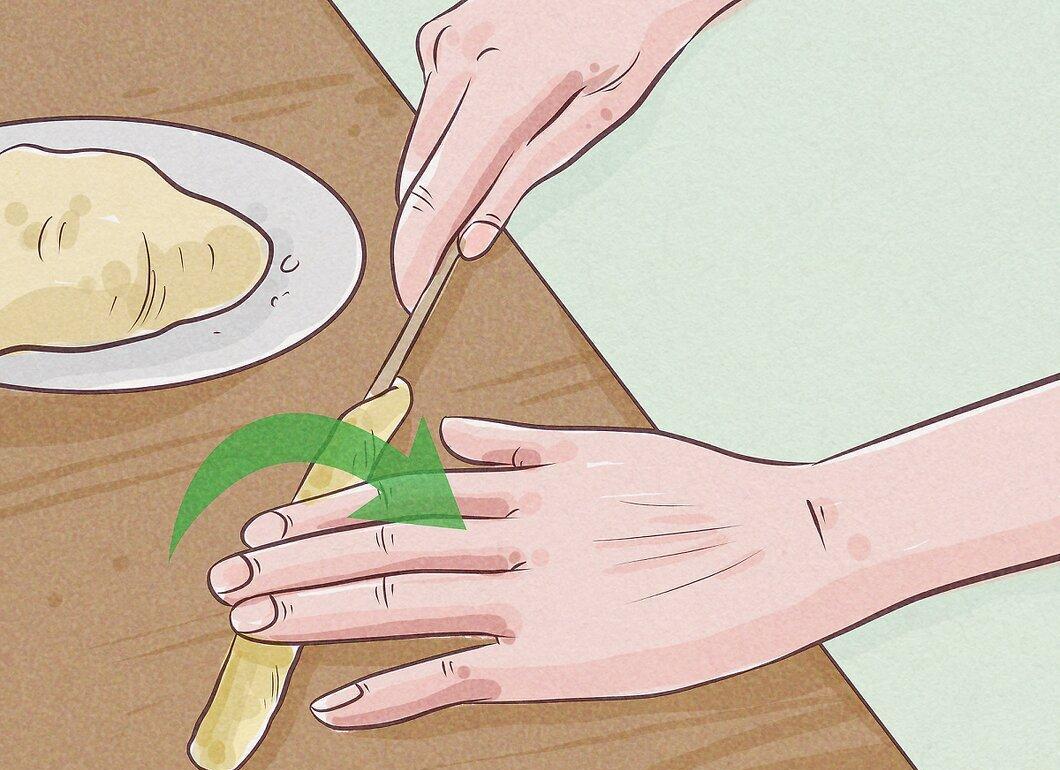
Put the uncovered part of the incense stick on the dough, then roll the dough to cover 3/4 of the stick. You will need bamboo sticks, which can be purchased online. Wrap the dough around the stick so that it is fully covered.
- The incense stick should be slightly thinner than a regular pencil.
Step 12. Place the sticks on a surface lined with parchment paper and let them dry.
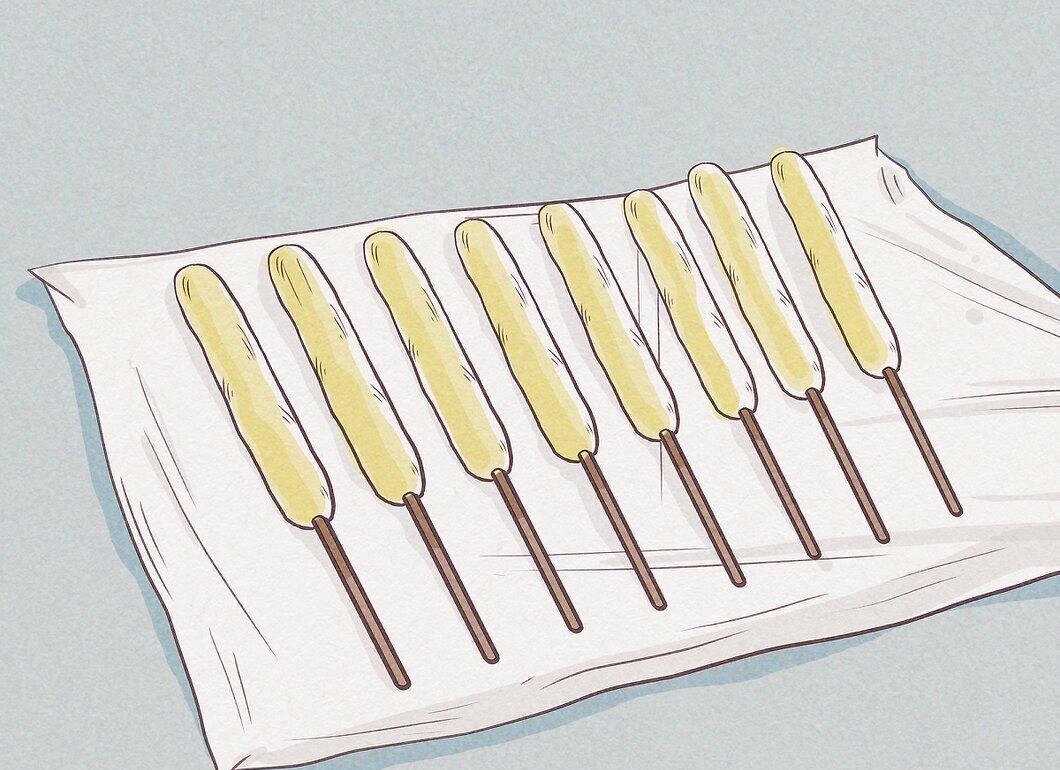
Put the sticks on a surface lined with parchment paper and let them dry. While the sticks are drying, remember to turn them once or twice a day. To speed up the drying process, you can place the sticks on a board lined with parchment paper and put all of this in a paper bag. The bag should be tightly tied or closed. Don’t forget to turn the sticks to ensure they dry evenly.
Step 13. After 4-5 days, when the dough has started to hold its shape, you can begin to burn the sticks.
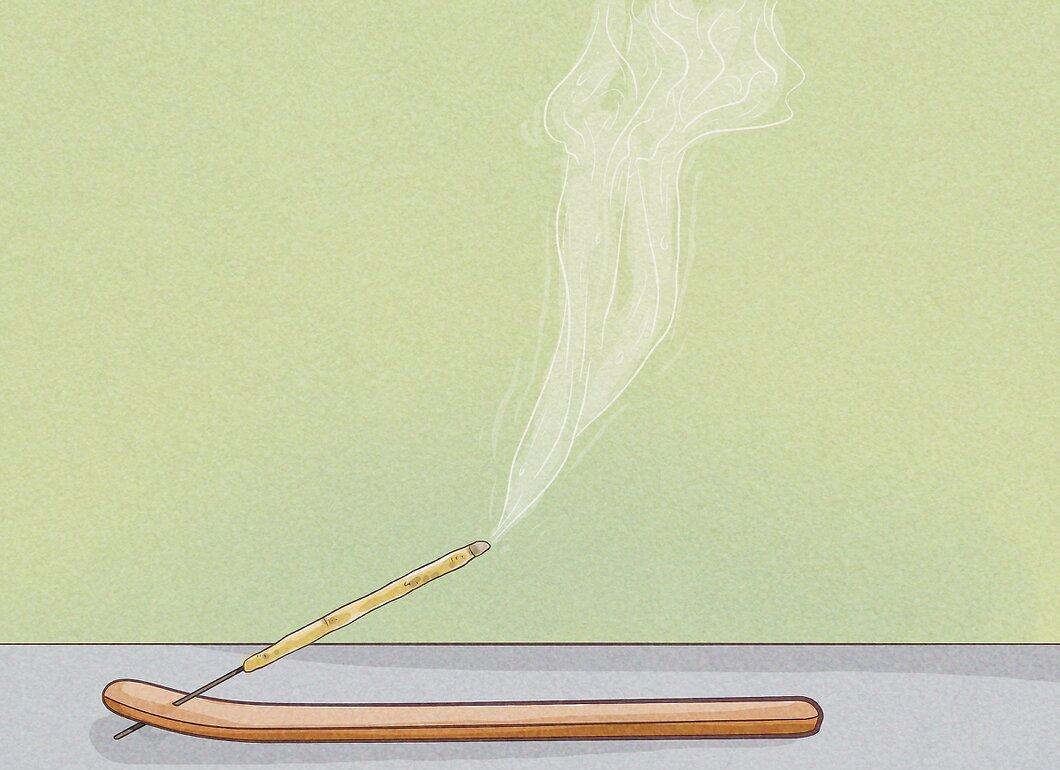
After 4-5 days, when the dough has started to hold its shape, you can begin to burn the sticks. Once the incense has dried and no longer changes shape, they can be used! If you live in a humid climate, drying may take about five days. However, in a dry climate, the sticks will dry in 1-2 days.
- The more makko and water used, the longer the incense will take to dry.[16] X Source
Trying Other Incense Stick Recipes
Step 1. Experiment with different combinations and observe how the resulting incense burns.
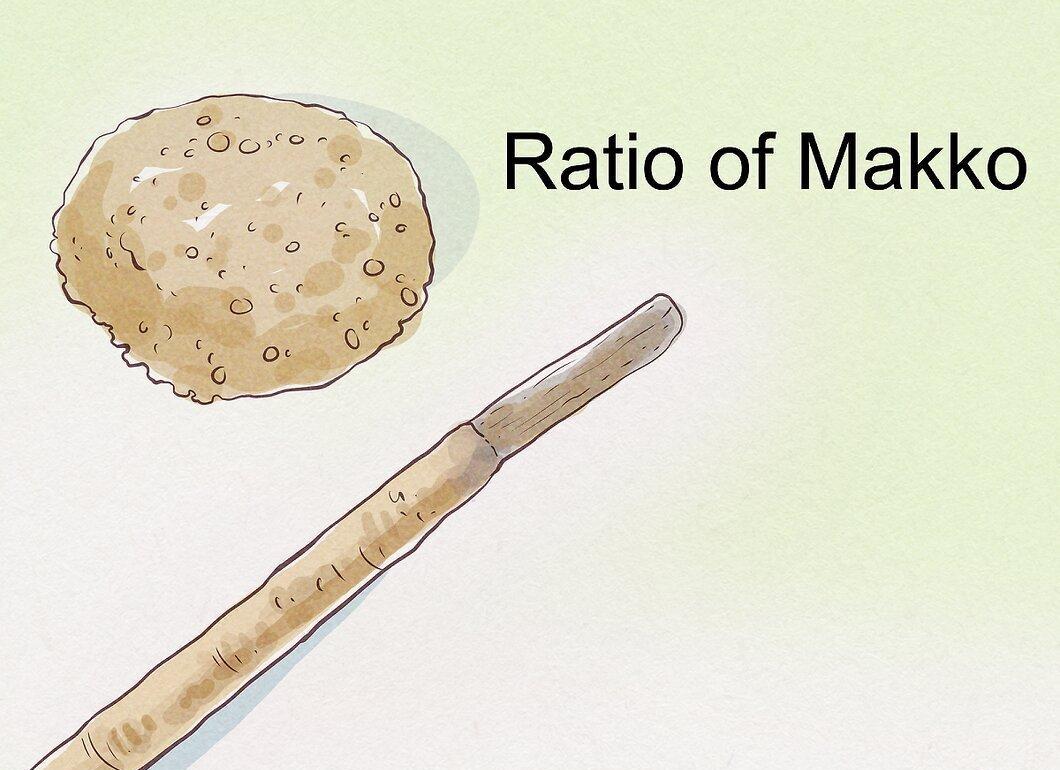
Try different combinations and experiment while observing how the resulting incense burns. Making incense takes some time to get the exact proportions of makko and water right. Learn from your mistakes, and be sure to record the amounts of ingredients used to reference in future recipes or your own:
- If you have trouble lighting the incense, you likely need to add a bit more makko next time.
- If you only smell makko or the incense burns too quickly, use less makko next time.[17] X Source
Step 2. Try several recipes with more sandalwood for a more classic scent.
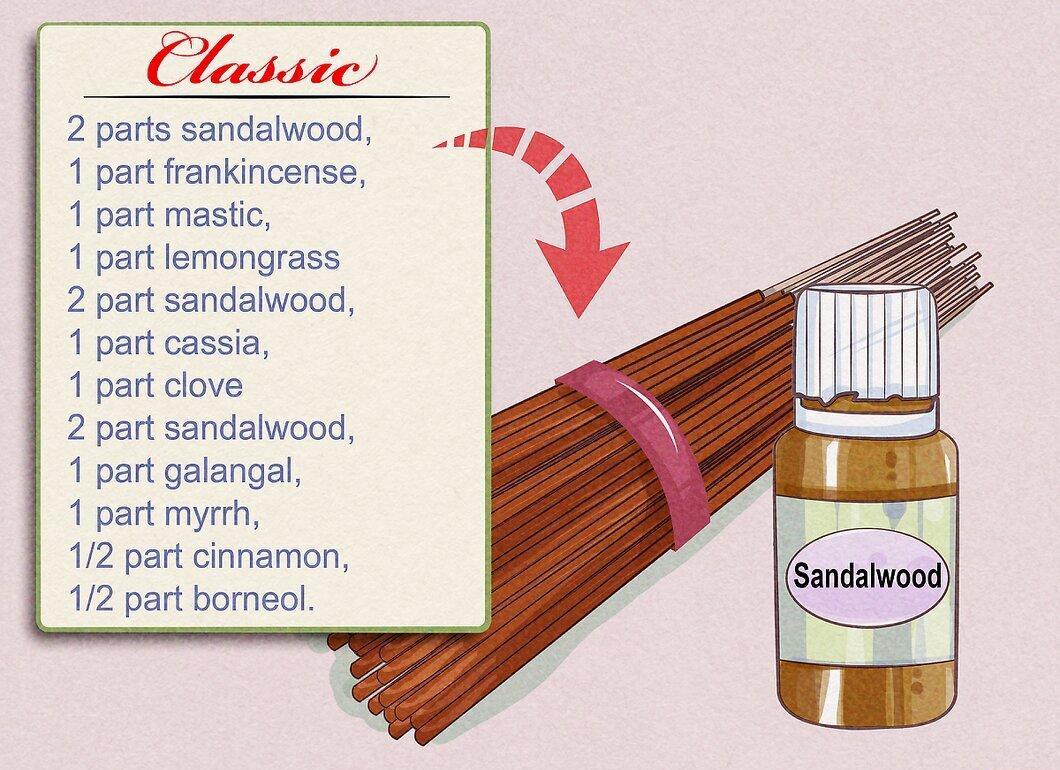
Experiment with several recipes that contain more sandalwood to achieve a more classic aroma. Sandalwood is one of the most popular scents for incense. The following proportions will help you achieve the most classic aromas that burn quickly:
- 2 parts sandalwood, 1 part frankincense, 1 part mastic resin, 1 part lemon grass;
- 2 parts sandalwood, 1 part cassia, 1 part clove;
- 2 parts sandalwood, 1 part galangal, 1 part myrtle, 1/2 part cinnamon, 1/2 part borneol.
Step 3. Experiment with vanilla-based scents.
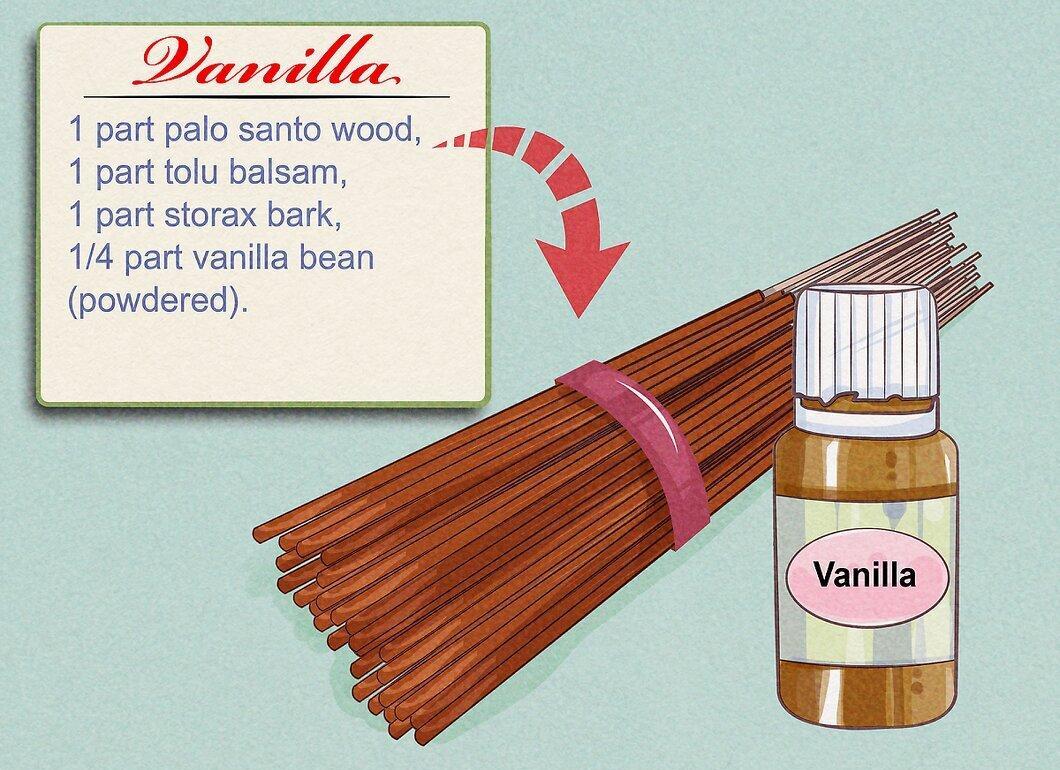
Try scents based on vanilla. The following recipe is also easy to adapt. Consider using cloves or cinnamon for a spicier aroma, or mix in woody scents like cedar:
- 1 part palo santo, 1 part tolu balsam, 1 part styrax bark, 1/4 part vanilla (powdered).[18] X Source
Step 4. Experiment with wood blends.
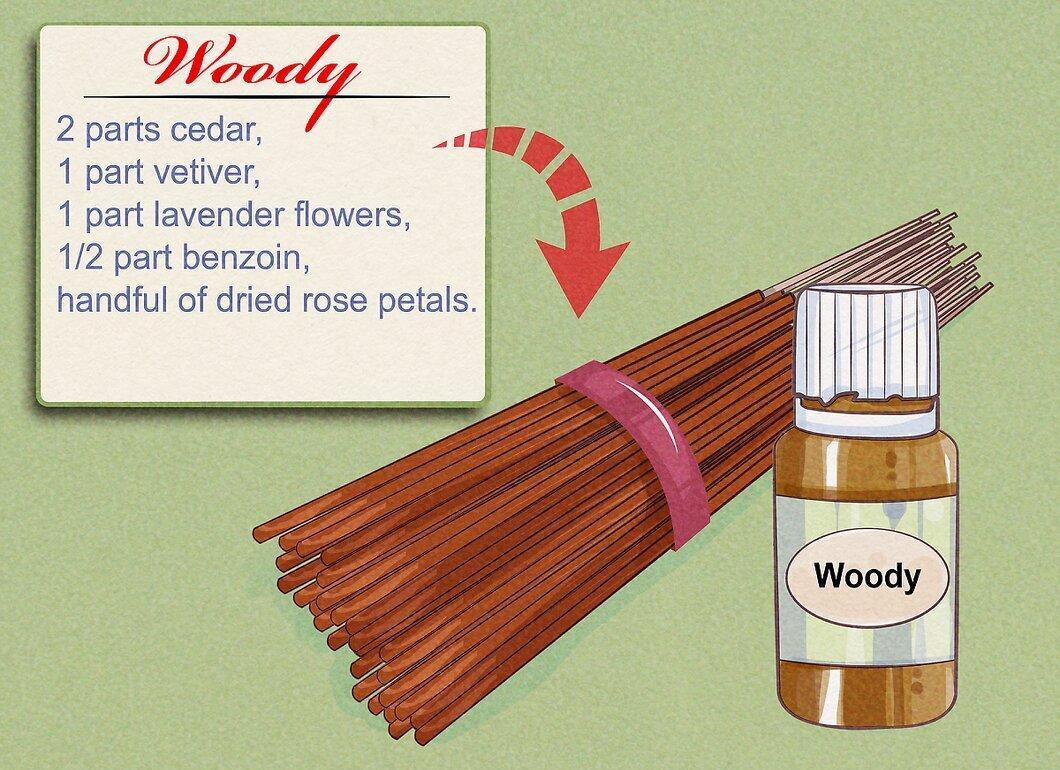
Try using wood blends. This recipe uses both pine and cedar, and you can add a bit of myrrh to give the incense an old-world aroma:
- 2 parts cedar, 1 part vetiver, 1 part lavender flowers, 1/2 part benzoin, a handful of dried rose petals.
Step 5. Try a Christmas recipe.
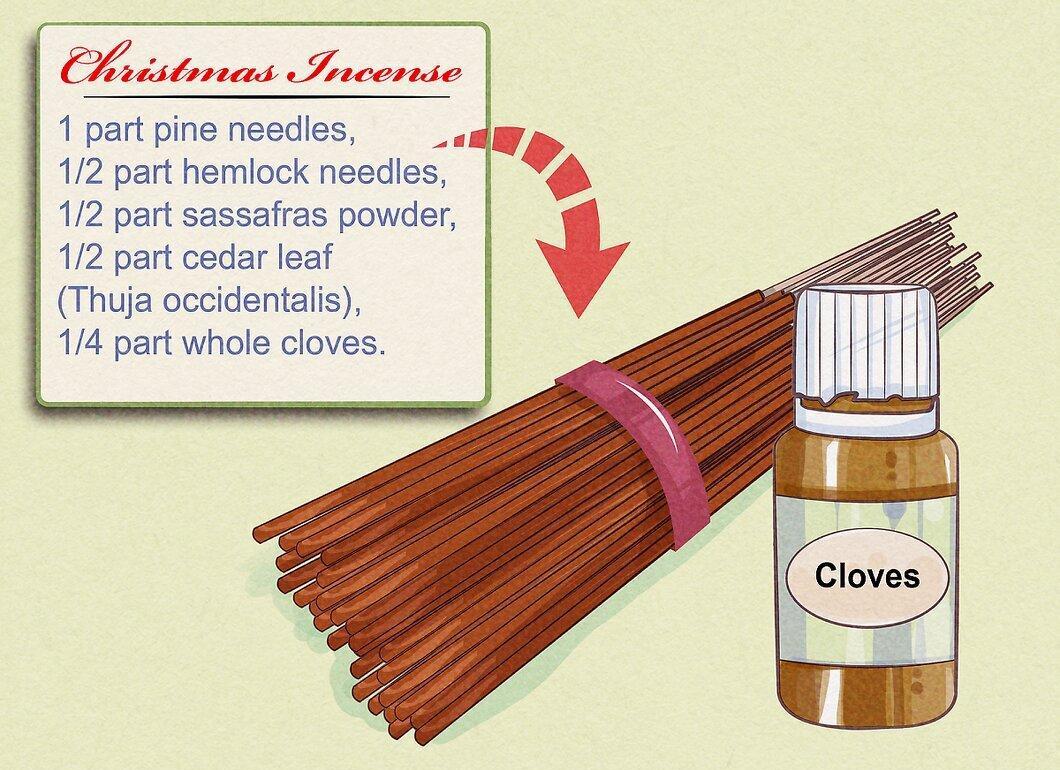
Experiment with a Christmas recipe. This recipe beautifully combines the aromas of clove and cinnamon, perfectly complemented by the scent of vanilla. At the same time, it contains fresh pine notes and the scent of foliage; dried needles are also good, although their scent may not be as strong:
- 1 part pine needles, 1/2 part hemlock needles, 1/2 part sassafras powder, 1/2 part thuja leaves, 1/4 part whole cloves.
Step 6. Add a touch of romance to this recipe.
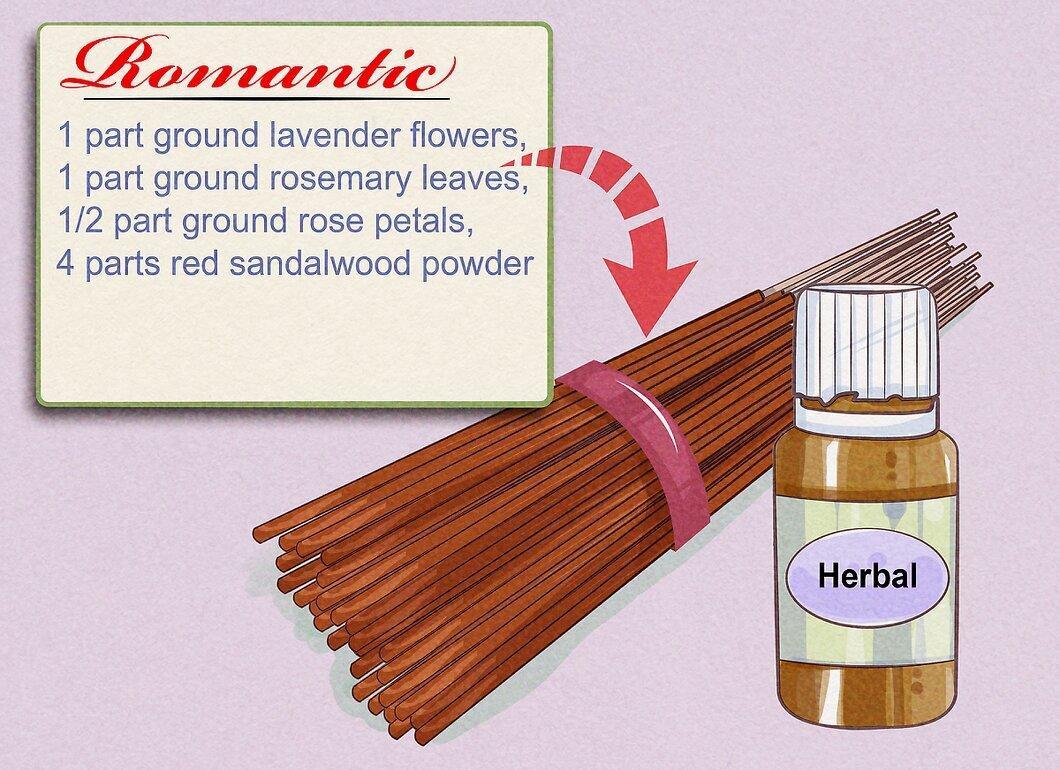
Incorporate a touch of romance into this recipe. Herbs, flowers, and bright notes of lavender create an irresistible scent that’s hard to resist.
- 1 part lavender flower powder, 1 part ground rosemary leaves, 1/2 part rose petal powder, 4 parts red sandalwood powder.[19] X Source