
The Pleiades is a magnificent star cluster located in the constellation Taurus. It is one of the closest formations to Earth and arguably the most beautiful, visible without a telescope. For centuries, this cluster has inspired creators and myth-makers across the globe, and today it is studied as a region of recent star formation.[1] Source [2] Source
In the Northern Hemisphere
Step 1. Observe the Pleiades in fall and winter.
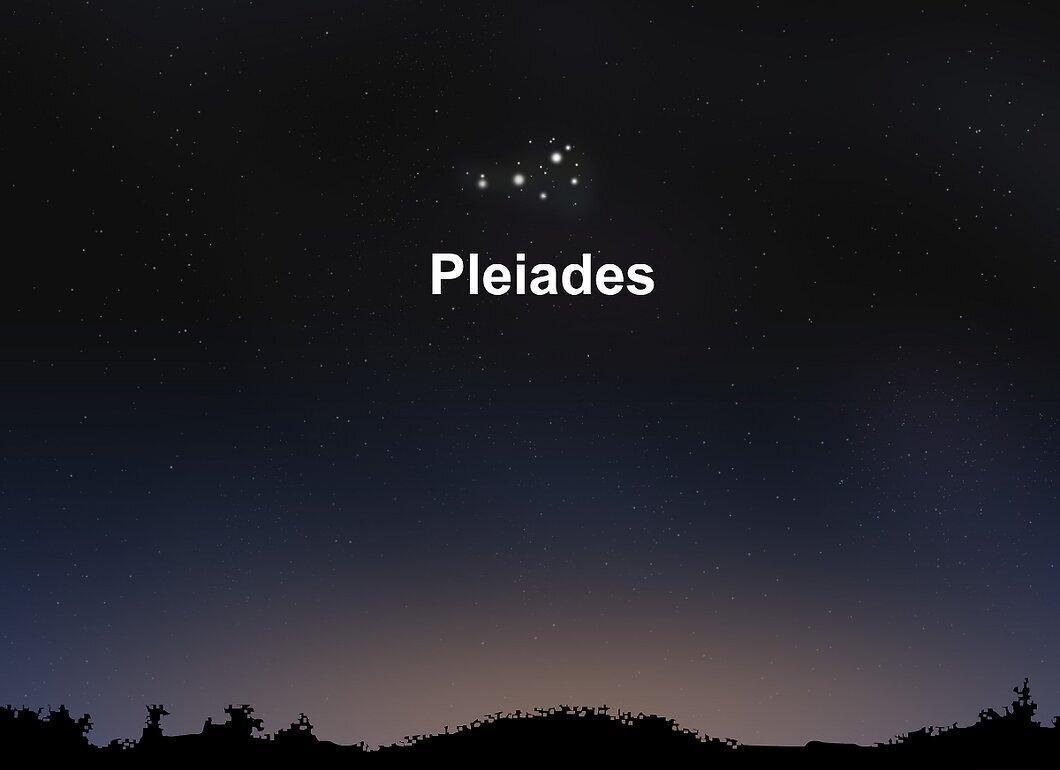
Look for the Pleiades during the fall and winter months. In the Northern Hemisphere, this star cluster is visible from October to April. The best time to view it is in November when the Pleiades can be seen from sunset to sunrise, reaching their highest point in the night sky.
- At the beginning of October, the Pleiades are visible for only a few hours after sunset. By February, they rise high above the horizon after sunset.[4] Source The viewing time may vary depending on latitude.
- The Pleiades are also observable in late summer and early fall, but during this time, they can only be seen in the middle of the night.[5] Source
Step 2. Face south.
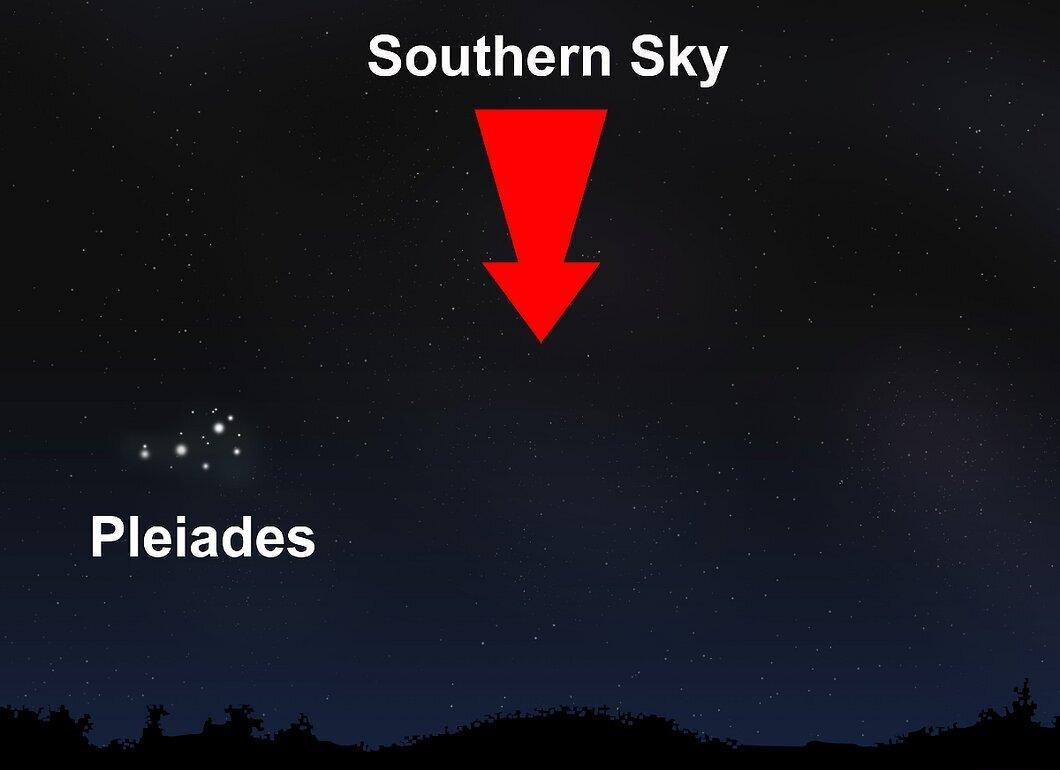
Turn towards the south. After sunset, the Pleiades appear in the southeast and gradually move westward. In November, when this cluster is most prominent, it rises high and disappears in the northwest before dawn. In late winter and early spring, when the Pleiades are visible for only a few hours, they traverse the southern part of the sky from east to west.
Step 3. Locate the constellation Orion.
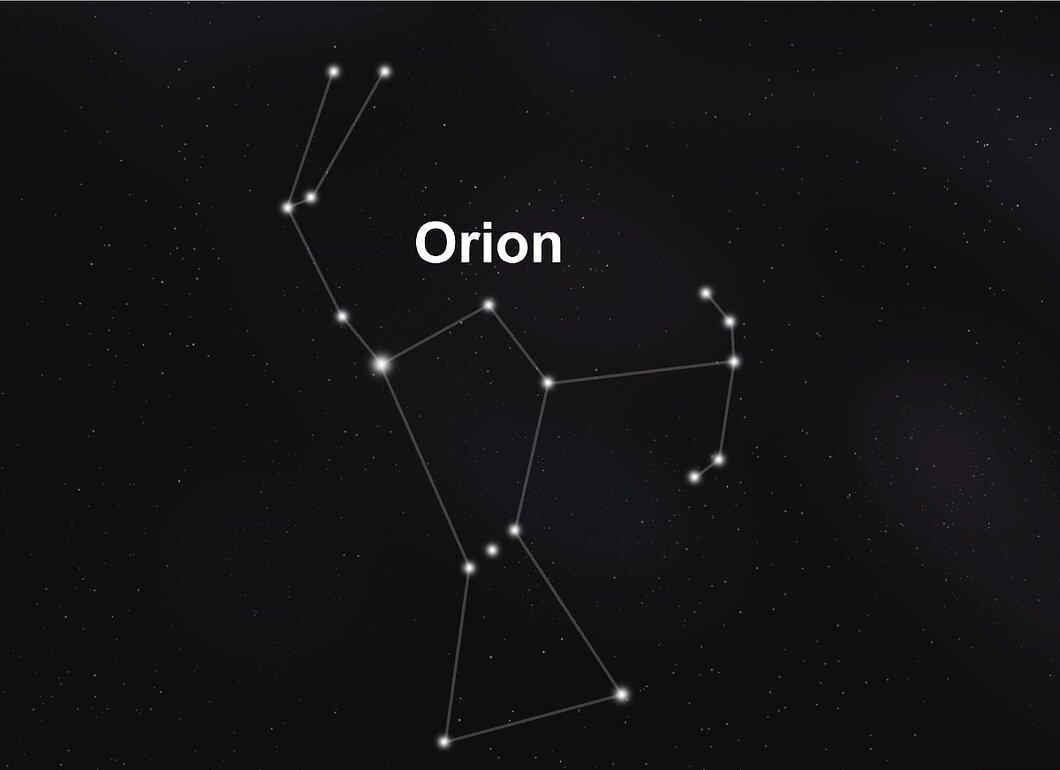
Identify the constellation Orion. This is one of the most recognizable constellations in the night sky. In mid-latitudes of the Northern Hemisphere, it is located almost directly south after sunset, halfway between the horizon and the zenith. Pay attention to its "belt," which consists of three bright stars closely spaced. The red star Betelgeuse is on the left and represents the hunter's shoulder, while the blue giant Rigel is his right leg.
Step 4. Follow the belt to Aldebaran.
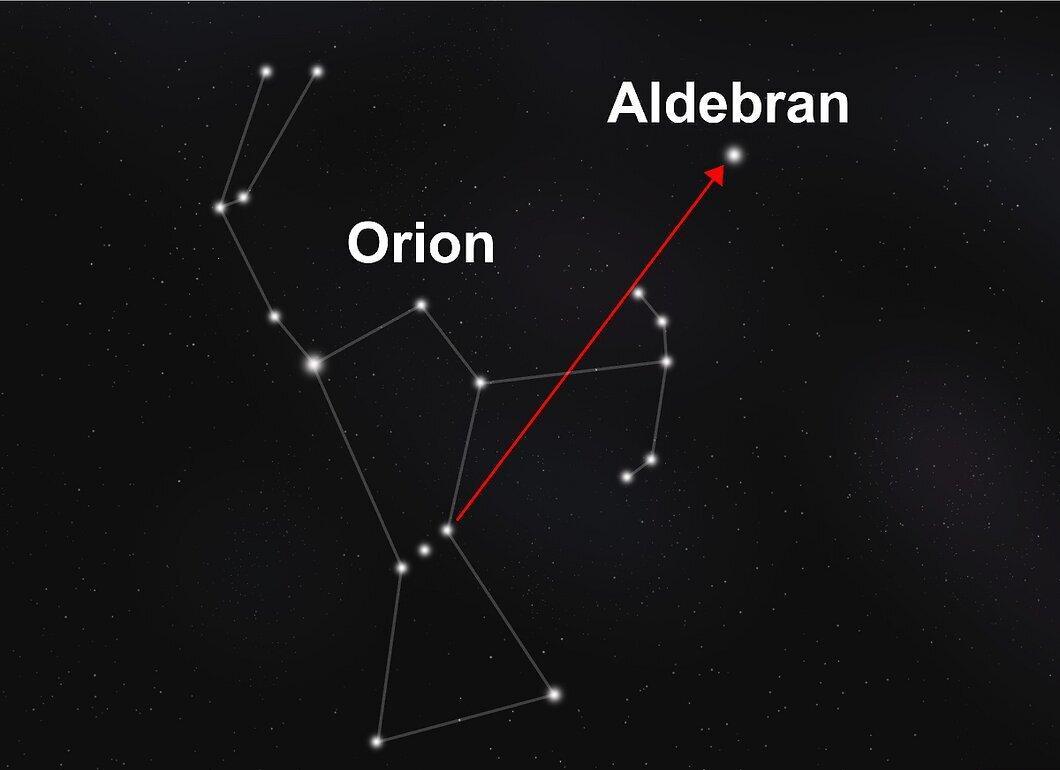
Trace the line of the belt to Aldebaran. Imagine that Orion's belt is an arrow pointing to the next landmark in the sky. The direction may vary depending on the time and place of observation, but typically the arrow points northwest. The next bright star you will see is the reddish-orange Aldebaran. This Arabic word translates to "the follower," likely because this star always accompanies the Pleiades.
- Aldebaran does not form a perfect straight line with Orion's belt. Don't try to locate it using binoculars, or you risk missing it.
- Aldebaran disappears below the horizon around March (or earlier in northern latitudes).[10] Source If you can't see Aldebaran, continue searching for the Pleiades along the line of Orion's belt.
Step 5. Keep moving to find the Pleiades.
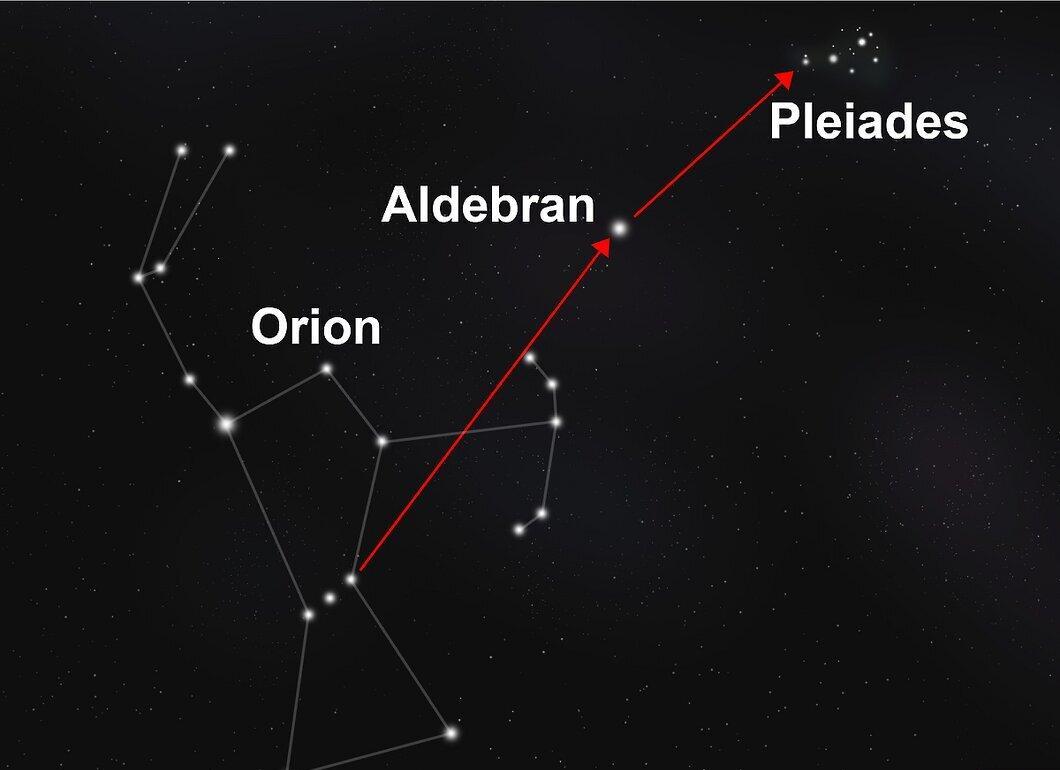
Continue moving in the same direction (usually northwest), following from Orion's belt to Aldebaran and beyond. Close to Aldebaran, you should notice a dense cluster of blue stars—that's the Pleiades, or M45.
- Most people can only see six stars with the naked eye or even just a hazy spot if there are clouds and other obstructions.[12] Source On a clear night, after your eyes adjust to the darkness, you might be able to distinguish more than seven stars.
- The stars in the cluster are closely packed together. The distance from one end of the Pleiades to the other is only ⅔ the length of Orion's belt.[13] Source This is less than the length of the Big or Little Dipper, although novice astronomers may confuse them due to their similar positioning.
Step 6. Use the constellation Taurus as a reference for future observations.
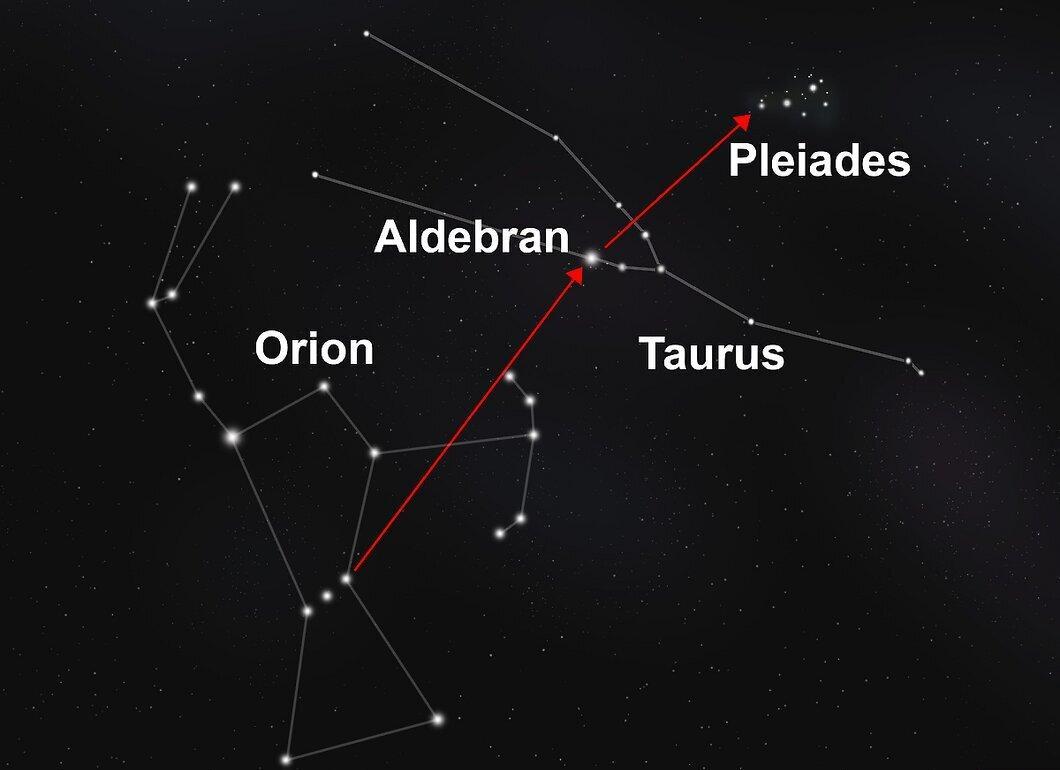
Next time, use the constellation Taurus as a reference point. The mentioned red star Aldebaran is the "eye" of the bull in Taurus. The star cluster Hyades forms the "chin" of this bull. Once you learn to recognize this constellation, you'll easily find the Pleiades nearby.
- The Taurus constellation can be hard to spot in bright moonlight, especially in urban conditions.[15] Source
In the Southern Hemisphere
Step 1. Observe the Pleiades in spring and summer.
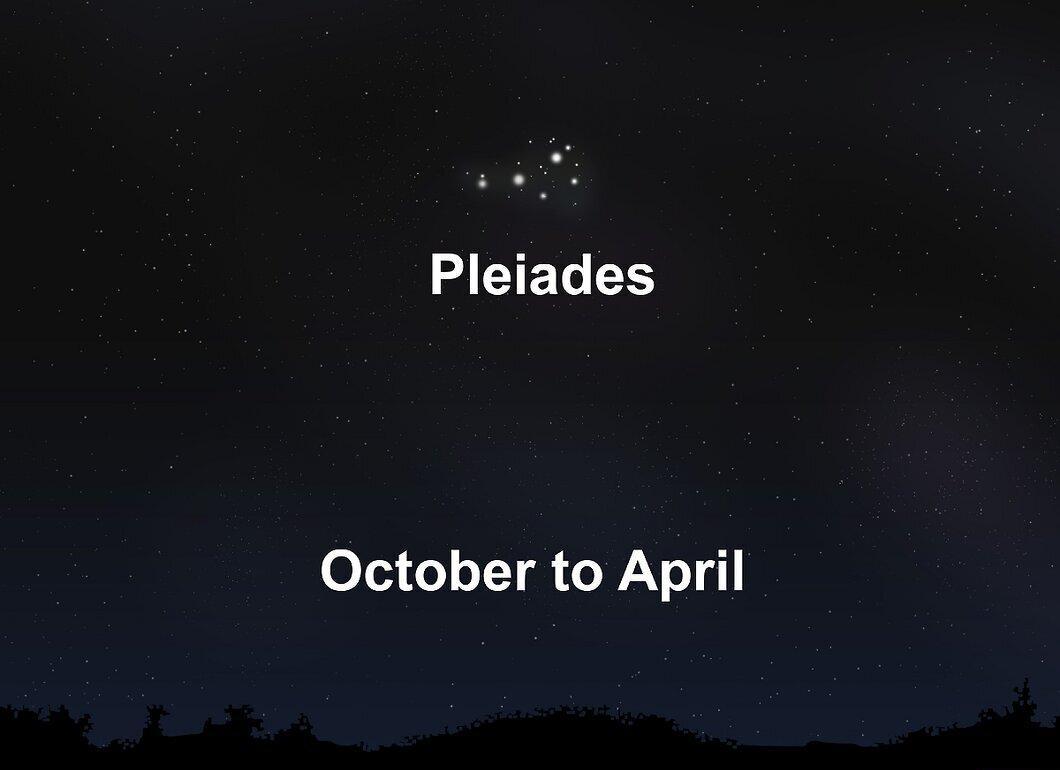
Look for the Pleiades in spring and summer. This star cluster is visible from October to April, during the spring and summer months in the Southern Hemisphere.
Step 2. Face north.
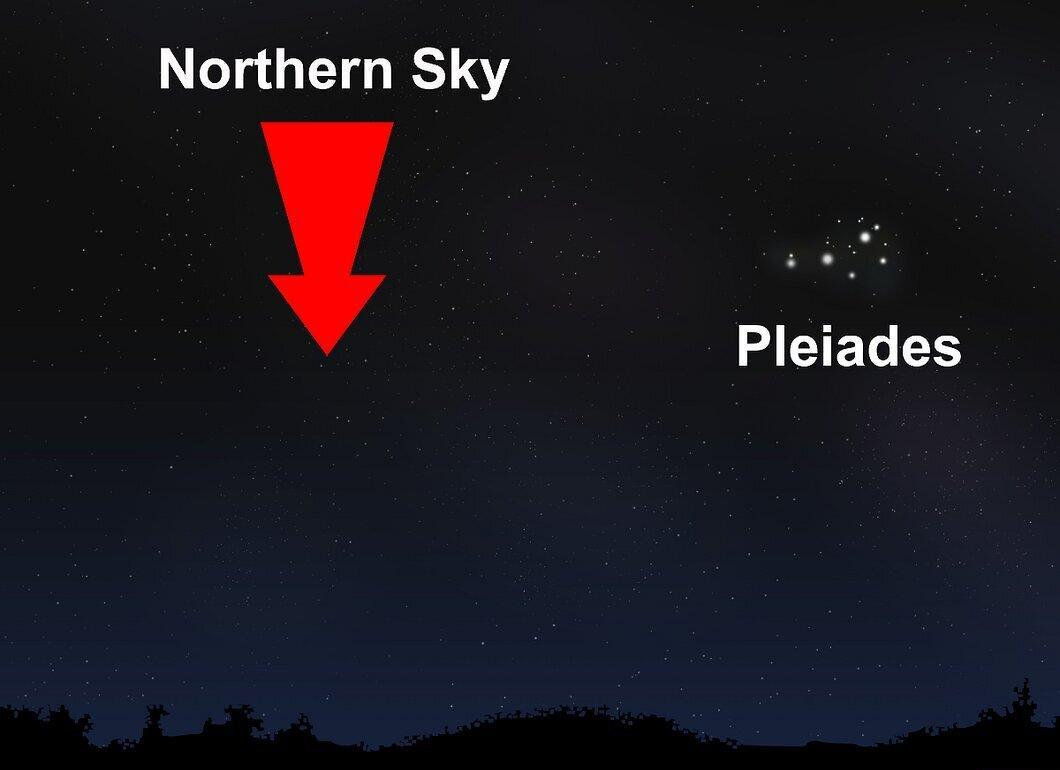
Turn towards the north. In the second half of November, the Pleiades appear in the northeast after sunset and move westward until dawn. The cluster then gradually rises in the night sky, staying up for less time.
Step 3. Look for the line of bright stars.
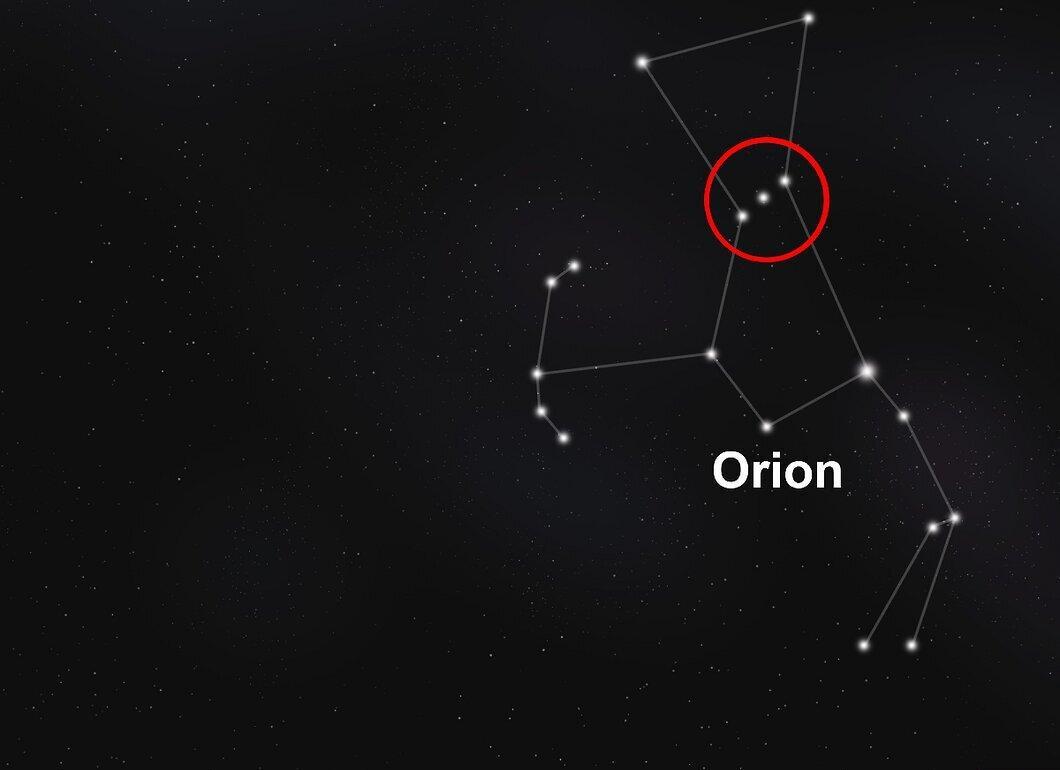
Search for the line of bright stars. In the Southern Hemisphere, Orion is upside down, so some observers refer to it as a dipper, where the handle (Orion's sword) points upward. The rim of this dipper (Orion's belt) consists of three bright stars in a line. This recognizable shape will help you find many other constellations.
- On one side of this line is the bright red star Betelgeuse, and on the other side is the blue star Rigel.
Step 4. Extend this line left to Aldebaran.
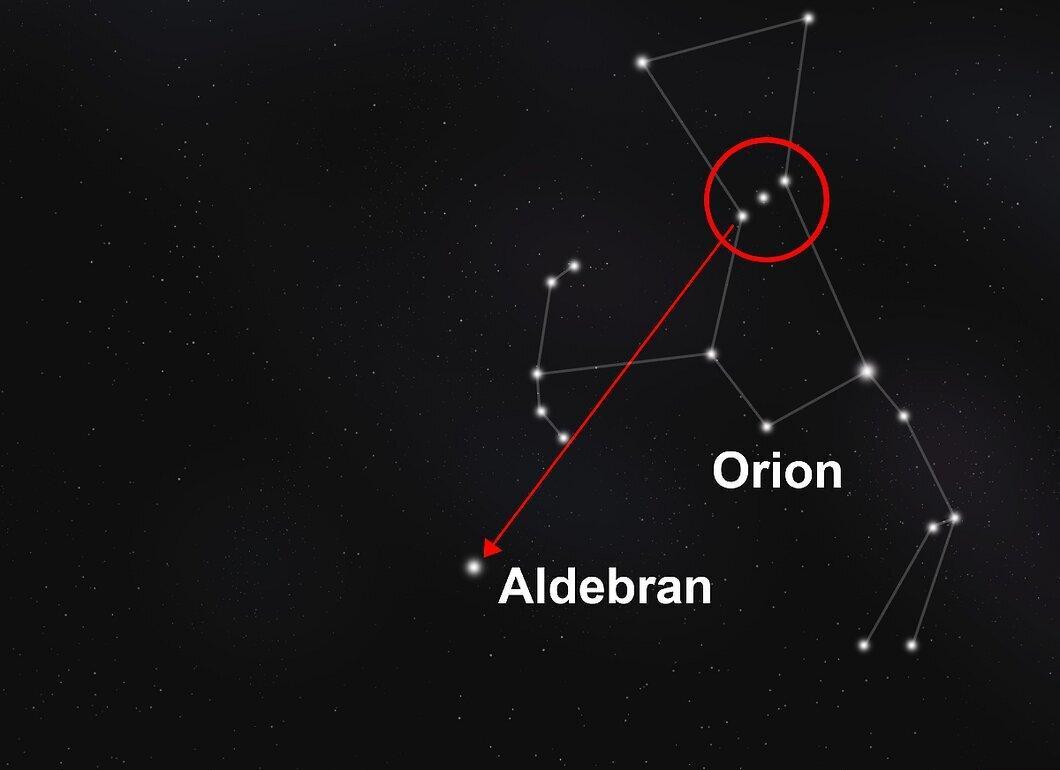
Continue this line left to Aldebaran. Imagine that the line you've found is an arrow in the night sky pointing left. The next bright star in that direction will be Aldebaran—a bright red supergiant representing the eye of the bull (from the constellation Taurus). On a clear night and with a dim moonlight, you will also see the chin formed by the star cluster Hyades to the right of Aldebaran.
Step 5. Move on to the Pleiades.
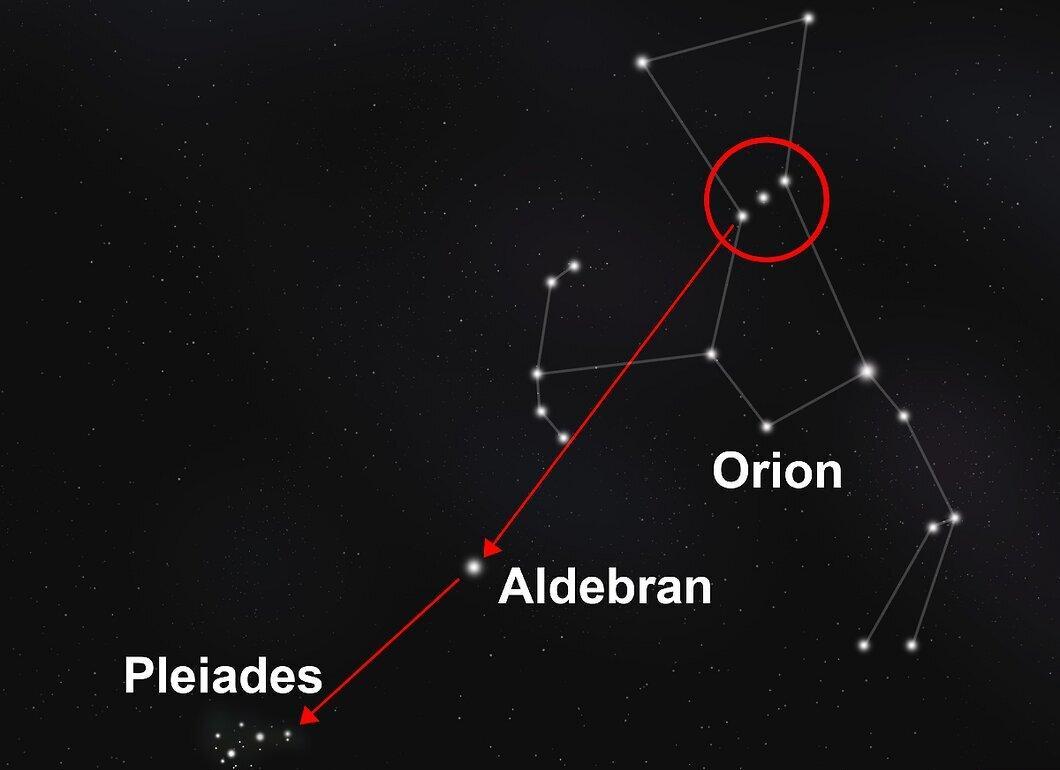
Continue along Orion's belt to the Pleiades. Move in the same direction until you see a rather faint cluster of blue stars—that's the Pleiades, or the Seven Sisters constellation. Most observers can distinguish no more than six stars, although there are many more visible through a telescope. The Pleiades are an "asterism", meaning a easily recognizable group of stars, while the distances between the visible stars are much smaller than the size of the cluster itself. If you extend your arm and raise your thumb, you will notice that the constellation is roughly twice the width of your thumb.