
You will encounter research projects repeatedly in both your academic and professional life. If you find yourself facing a challenging topic, this brief guide will prove helpful in not only launching your project but also completing it on time.
Stages of Preparation and Justification
Step 1. Generate Ideas and Define the Problem.
Start with brainstorming to identify the problem or question you want to explore. Regardless of the number of suggestions, the key to any research project is the researcher’s ability to offer their own thoughts. Define a problem in your chosen field that requires a solution or a question that has yet to be answered. During this process, paper and pen will be your best allies. Write down everything that piques your interest without worrying about structure or format. The more engaging the topic is for you, the easier it will be to overcome any challenges that arise. EXPERT TIP Chris Hadley, PhD, University of California, Los Angeles:
- Don’t hesitate to jot down any ideas, even if they seem odd. You might end up with a jumble, but that’s okay! Think of it like cleaning out an attic — soon enough, you’ll stumble upon higher-quality ideas (and have a laugh at yourself).
Step 2. Utilize Available Resources.

Make use of all the tools at your disposal. If brainstorming yields nothing and the hints seem unclear, return to textbooks or lecture notes. Flip through them and look for something interesting. You can also refer to the index to select an interesting term or topic as a starting point. Scientific journals can be valuable sources where research in a specific area is compiled. For example, if your project is about radiology, check out the journal "Radiology and Radiology Bulletin".
Step 3. Review Other Researchers' Works.

If possible, familiarize yourself with the research of your peers. If you’re a student, ask your instructor if similar studies have been conducted before. If so, they might still have those works. Request to take a look at them — this could provide you with ideas for further research. You might even decide to alter your project topic based on what you see. By studying others' works, you can apply tried-and-true methodologies to your own research.
- Some instructors may even share examples of successful topics if you ask. Don’t hesitate to borrow ideas for fear that someone has already done it.
Step 4. Examine the Issue from Different Angles.
Look at the problem from various perspectives. If methodological guidelines provide direction, use that to explore the topic from different positions. Write down all ideas, even if they seem impractical. Start with obvious conclusions and move on to questions related to the main topic. Continue adding ideas until you exhaust your thoughts.
- For example, if your topic is "urban poverty," explore it from the perspectives of ethnic or gender differences, wage levels, minimum wage laws, and so on. Compare poverty in urban and rural areas by examining the differences.
Step 5. Systematize Specific Topics.
Synthesize various aspects to formulate specific questions for your research. For instance, while studying the eating habits of low-income people in urban and rural areas, you might compare them to the diets of wealthier populations and determine whether income or environment has a greater influence on food choices.
Step 6. Define Your Data Collection Methodology.
At this stage, you need to have a clear understanding of the methodology you will use for data collection. The methodology is the foundation of your project. Avoid tackling complex tasks that could lead to methodological difficulties. Also, steer clear of projects that may be beyond your financial means. Typically, students face a lack of time and resources, so it’s essential to choose something that is realistically achievable.
- Think about the questions you want to answer. A successful research project should gather information that allows you to answer specific questions. By linking different topics, you can identify questions that lack clear answers. These questions will form the basis of your research.
Step 7. Explore Available Information Sources.

Examine all available information. Once you have enough ideas, select the most interesting one and conduct preliminary research. If you manage to find useful data, continue working on the chosen topic; if not, you may need to either change the topic or take a risk and become a pioneer. Don’t shy away from challenges if information is scarce, as this could draw attention to your project.
- Don’t limit yourself to libraries and online databases. Explore other sources: primary sources, governmental institutions, educational TV programs. For example, if you’re interested in animal population differences, call a reservation and speak with their wildlife conservation department.
- If you plan to conduct your own research, that’s great, but we won’t be covering that in this article. Discuss with your supervisor how to organize a controlled and verifiable data collection process.
Step 8. Clearly Define Your Project.
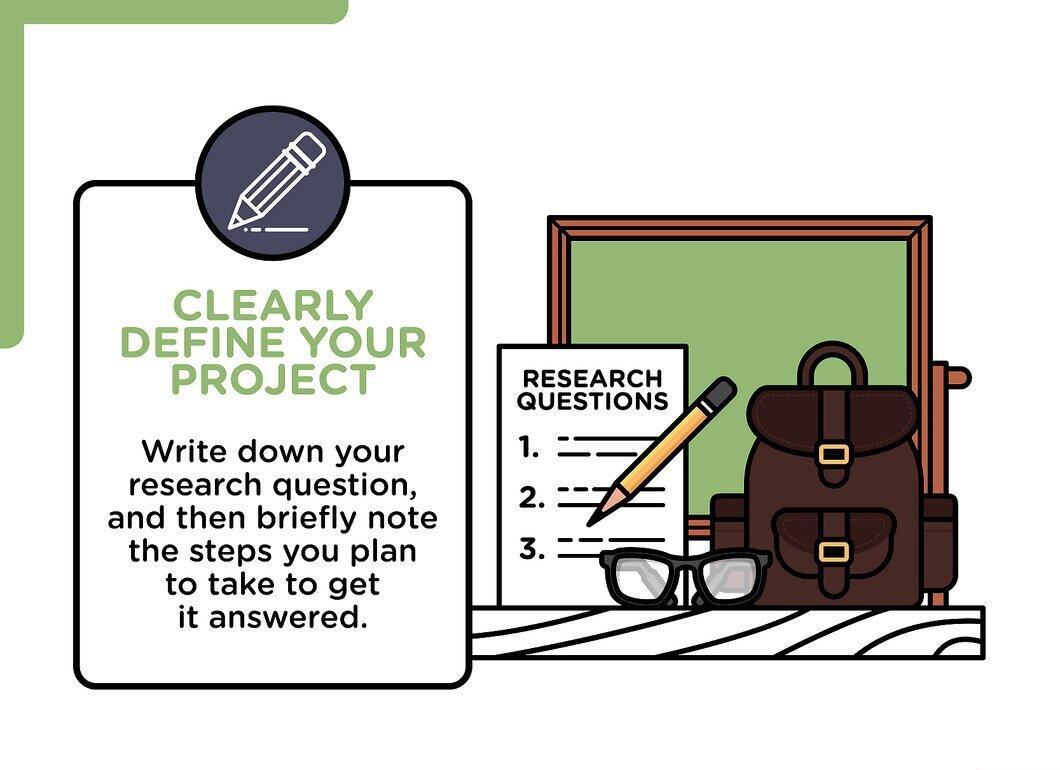
Clearly formulate your project. You have narrowed down the search area and identified the question you want to explore. Now it’s time to formalize your ideas a bit. Write down the research question and briefly outline the steps you intend to take to address it. At the bottom of the page, note potential answers to the main questions. There are three possible answers: one approach, another option, or no significant differences.
- If your plan boils down to "researching a topic," and you can’t say anything more specific, note the types of sources you want to use: books (library or personal?), journals (which ones?), interviews, and so on. Preliminary research should help you understand where to start.
Developing Ideas During Research
Step 1. Start with the Basics.
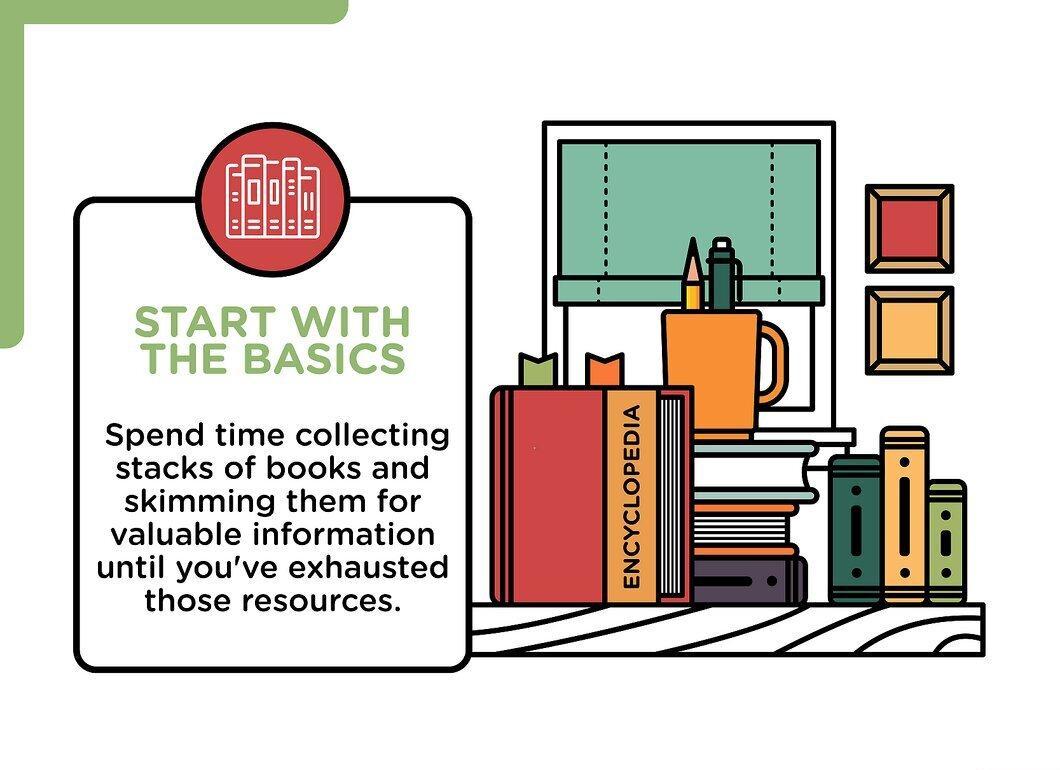
Begin with the basics. Just start your research. Trying to create a detailed plan may waste your time as the outcomes can differ from your expectations. Use your school or local library to browse as much literature as possible and extract valuable information. Always keep a notebook or laptop handy to jot down the information you need.
- References to three or more sources on one question appear more convincing than frequently citing a single source. The number of sources should correspond to their quality. Always check quotes and bibliographies — they may lead you to additional sources.
- By recording the titles of sources and details (such as context) next to the information, you’ll save time and effort in the future.
Step 2. Explore Further.
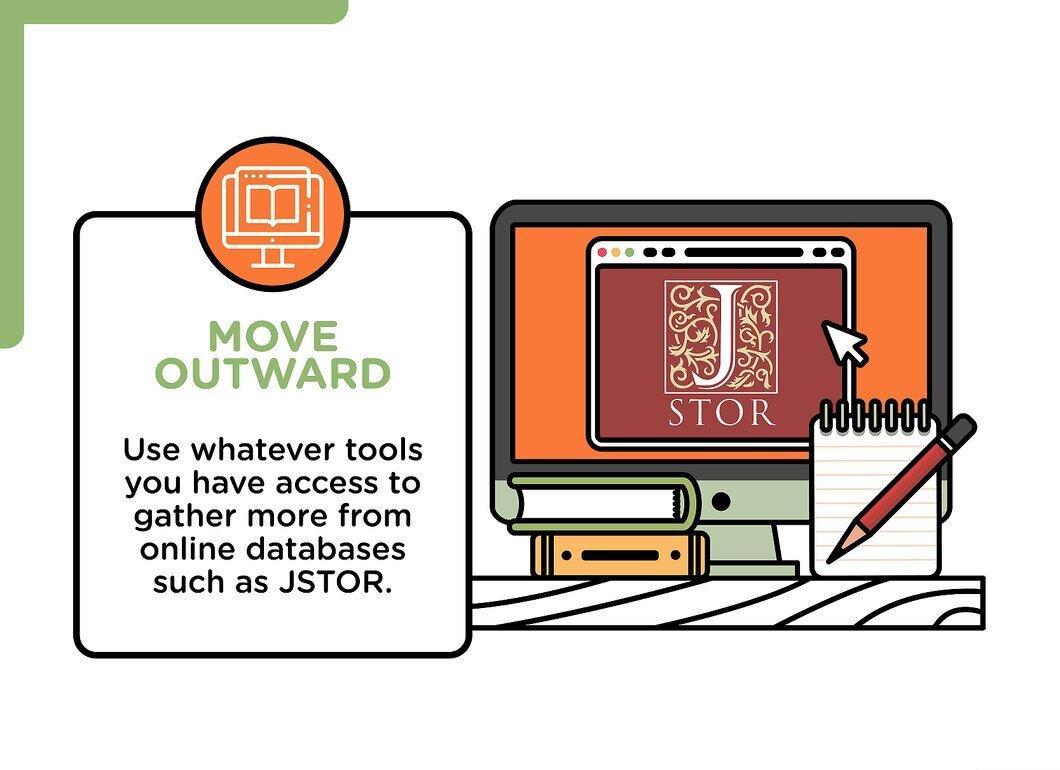
Expand your horizons. After gathering information from local sources, use all available tools to search for information online, including databases like JSTOR. If you’re in college, you may have access to many such resources. If not, you might need to subscribe for a fee. At the same time, conduct general online research on reliable information sites, such as government websites or reputable NGOs.
- Ask questions in different ways to get the results you need from databases. If your search phrases yield no results, try rephrasing your queries or using synonyms. Academic databases often respond poorly to direct queries, so employ indirect terms and a creative approach.
Step 3. Look for Unusual Sources.
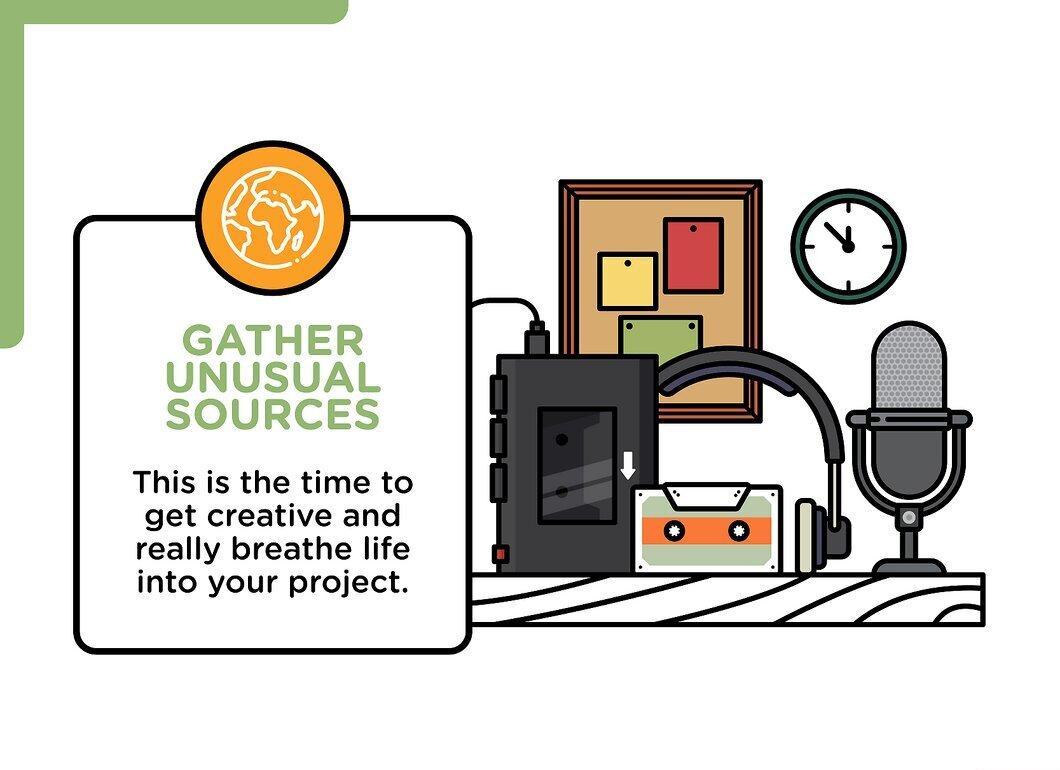
Gather unusual sources. By now, you should have more information than you can use in your work. It’s time to get creative and breathe life into your project. Visit museums and historical societies — they may have information you won’t find anywhere else. Talk to respected professors to learn which sources are best to use as primary ones. Reach out to professionals in your field and get their opinions.
- It might make sense to "hit the field" and talk to everyday people to gather their opinions. This isn’t always appropriate in academic work, but in some cases, such an approach can open up new and interesting perspectives for your project.
- Cultural artifacts can also be helpful, as they reflect the views and hopes of people during a certain period regarding art, music, or literature.
Step 4. Review and Organize Information.
Review and organize your materials. You should have a wealth of information well-cataloged or at least somewhat sorted. Carefully go through everything you’ve gathered in the context of your research question and try to find answers to it. Read between the lines, paying attention to the context, the age of the sources, and other additional information. You’ll be able to determine which answer option is correct and whether you have enough arguments to justify it. Review your sources again and set aside any unnecessary materials. Now, it’s time to format the collected information, give it your own interpretation, and prepare for presentation.