
The metric system is the most widely used measurement system in the world, but it's not the only one. In some countries, including the United States, pounds are preferred over grams for measuring weight. But don't worry, converting between metric units and pounds is a fairly straightforward task.
How to Convert Kilograms to Pounds
Step 1. Remember that 1 kilogram equals 2.2 pounds.
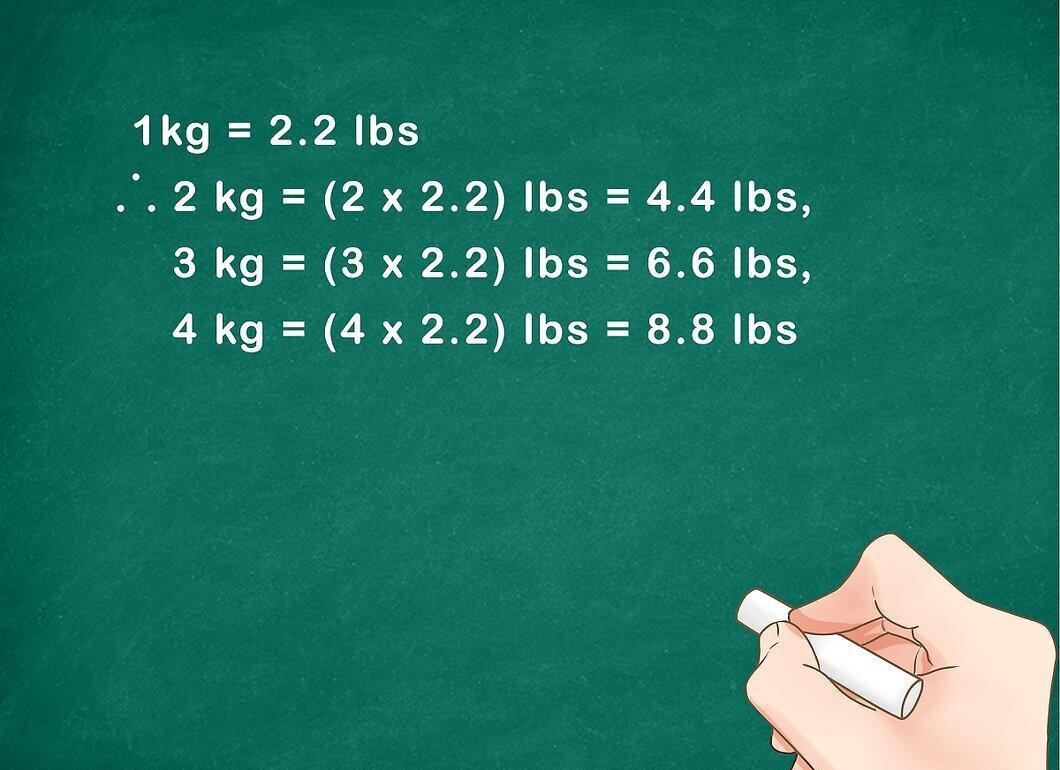
Keep in mind that one kilogram is equivalent to 2.2 pounds. So, if you have 2 kilograms, that's 4.4 pounds, and 3 kilograms equals 6.6 pounds, and so on.
- 1 kg * 2.2 (pounds/kg) = 2.2 pounds.
- Here, kg stands for kilograms.
Step 2. Multiply the weight in kilograms by 2.2 to get the weight in pounds.
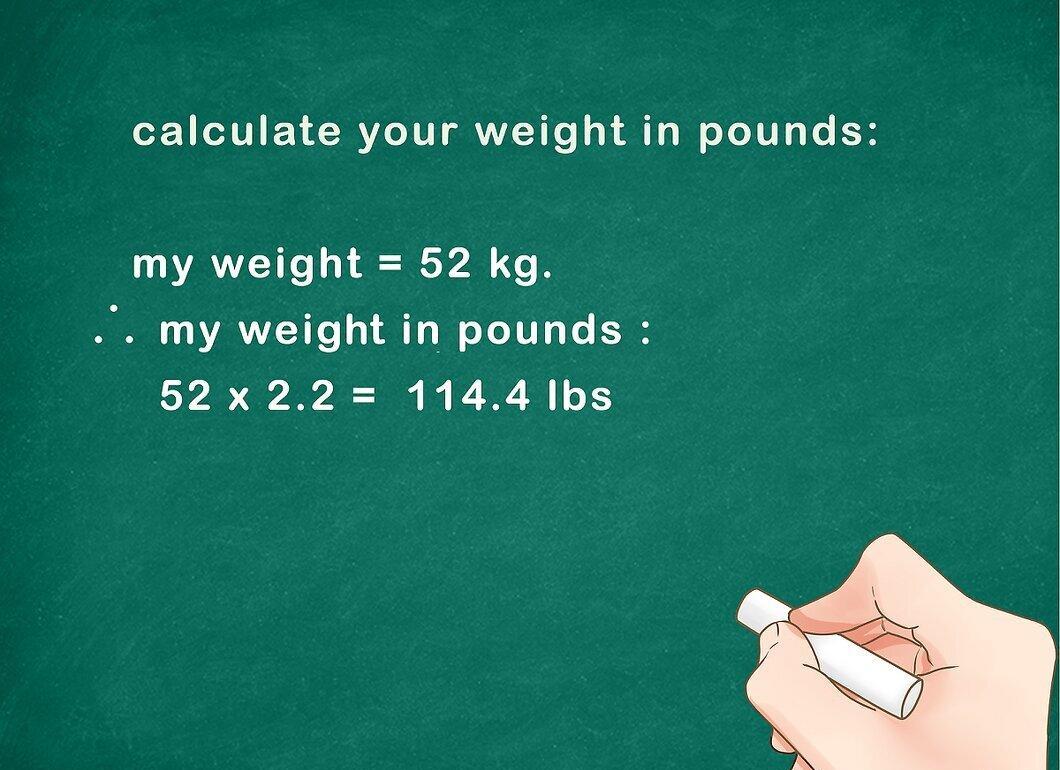
To find the weight in pounds, simply multiply the number of kilograms by 2.2. For example:
- 100 kg = 2.2 (pounds/kg) * 100 kg = 220 pounds.
- 38 kg = 2.2 (pounds/kg) * 38 kg = 83.6 pounds.
- 69.42 kg = 2.2 (pounds/kg) * 69.42 kg = 152.724 pounds.
Step 3. Make a more precise conversion.
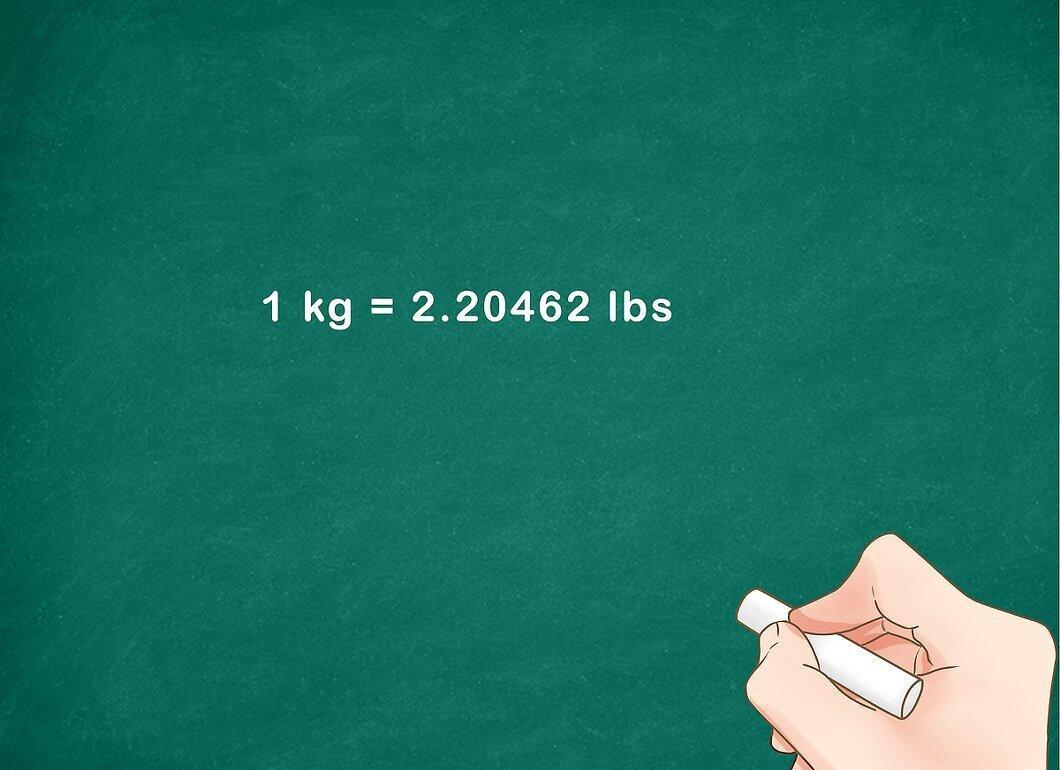
For a more accurate conversion, remember that 1 kilogram is actually equal to 2.20462 pounds. Although the difference is slight, in situations where precision is critical (like chemistry), it's worth using this multiplier.
Step 4. Convert kilograms to pounds in your head.
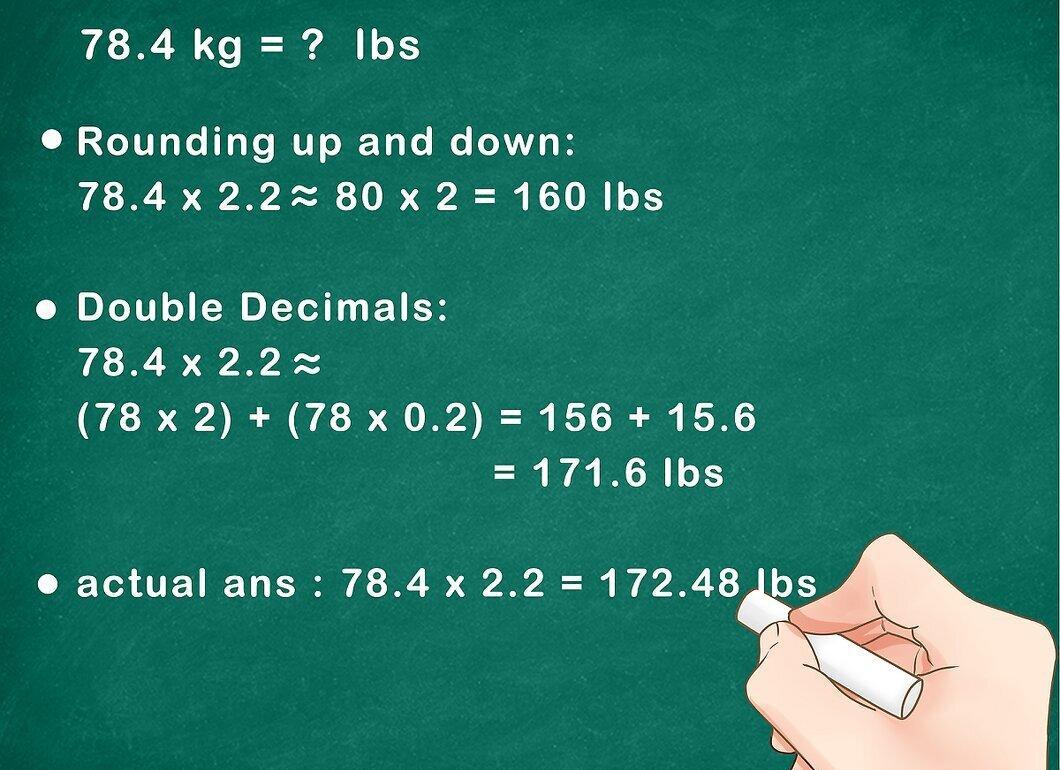
Try quickly converting 78.4 kilograms to pounds. There are methods that can help you arrive at an approximate value:
- The two-decimal method. For example, 78.4 * 2.2 = (78.4 * 2) + (78.4 * 0.2). This can be tricky, so round 78.4 down to 78 and get (78 * 2) + (78 * 0.2). Multiply 78 by 2 to get 156. Then the second part will be 15.6. Add 156 and 15.6 to get 171.6 pounds. The exact value: 78.4 kg * 2.2 pounds/kg = 172.48 pounds.
- The rounding method: round 78.4 kg to 80 kg and 2.2 pounds/kg to 2 pounds/kg. Approximate calculation: 80 kg * 2 pounds/kg = 160 pounds.
Converting Other Metric Weight Units (Grams, Milligrams, etc.) to Pounds
Step 1. Convert metric units to others representing powers of 10.
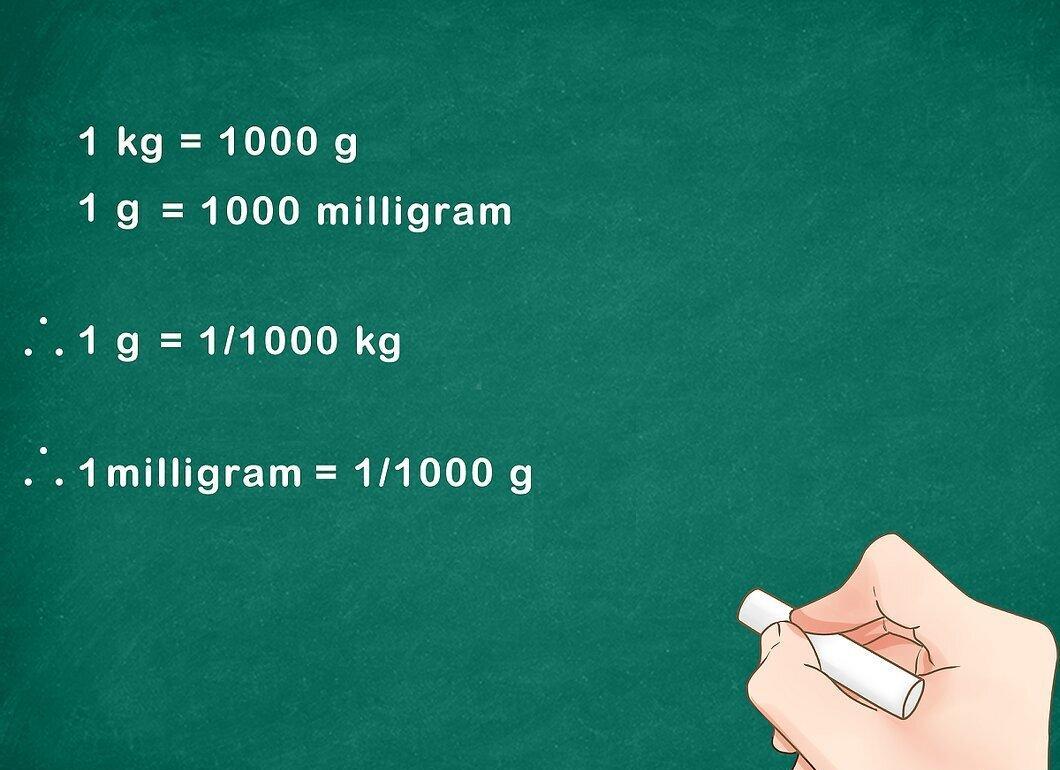
To start, remember that the base metric unit of weight is the gram (g). All other units are grams multiplied by 10 to a certain power. For example, "kilo" means 1000, so 1 kilogram equals 1000 grams; "milli" means 1/1000, meaning 1 milligram (mg) is one-thousandth of a gram (1 g = 1000 mg).
- 1 kg = 1000 g
- 1 mg = 1/1000 g = 0.001 g
- In this article, decimals are represented with a comma, unlike in English literature where a point is used.
Step 2. Convert weight to kilograms by moving the decimal point.
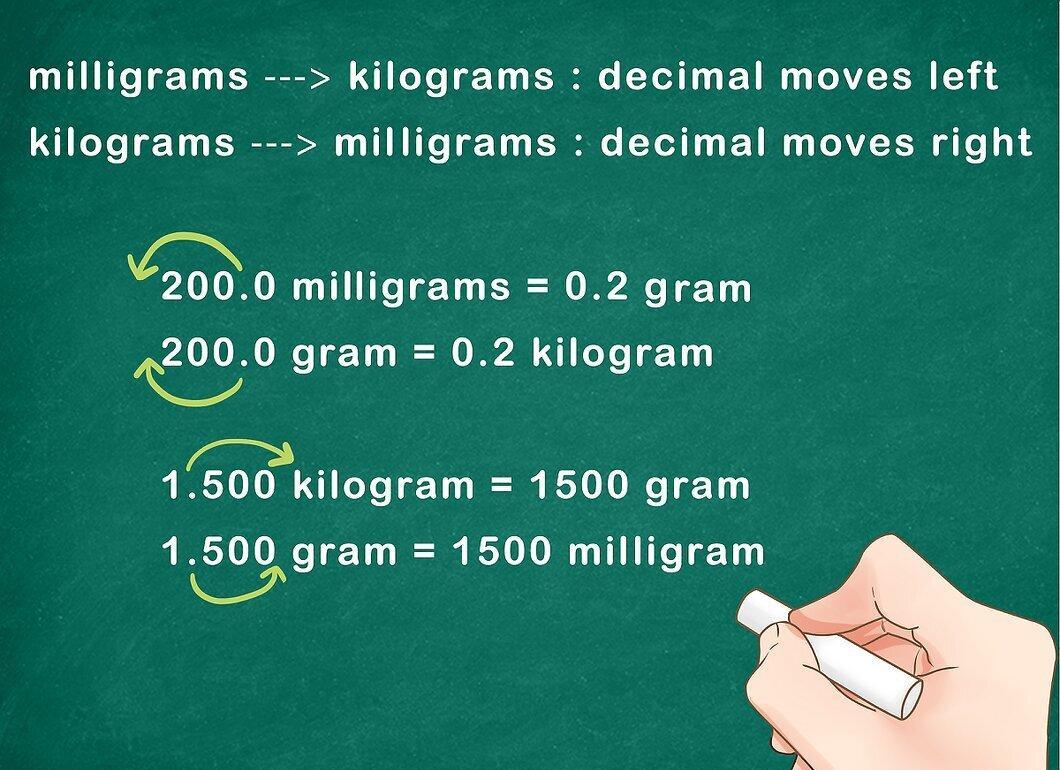
To convert one metric unit to another, simply move the decimal point. Moving left divides by 10, while moving right multiplies. For example:
- To convert 450 grams to kilograms, remember that 1000 g = 1 kg, so 1 gram = 0.001 kg.
- For a quick conversion of 1 g to 0.001 kg, move the decimal three places to the left (1 → 0.1 → 0.01 → 0.001).
- For 450 grams, move the decimal three places left and get 0.45. So, 450 g = 0.45 kg.
Step 3. Multiply by 2.2 to convert to pounds.
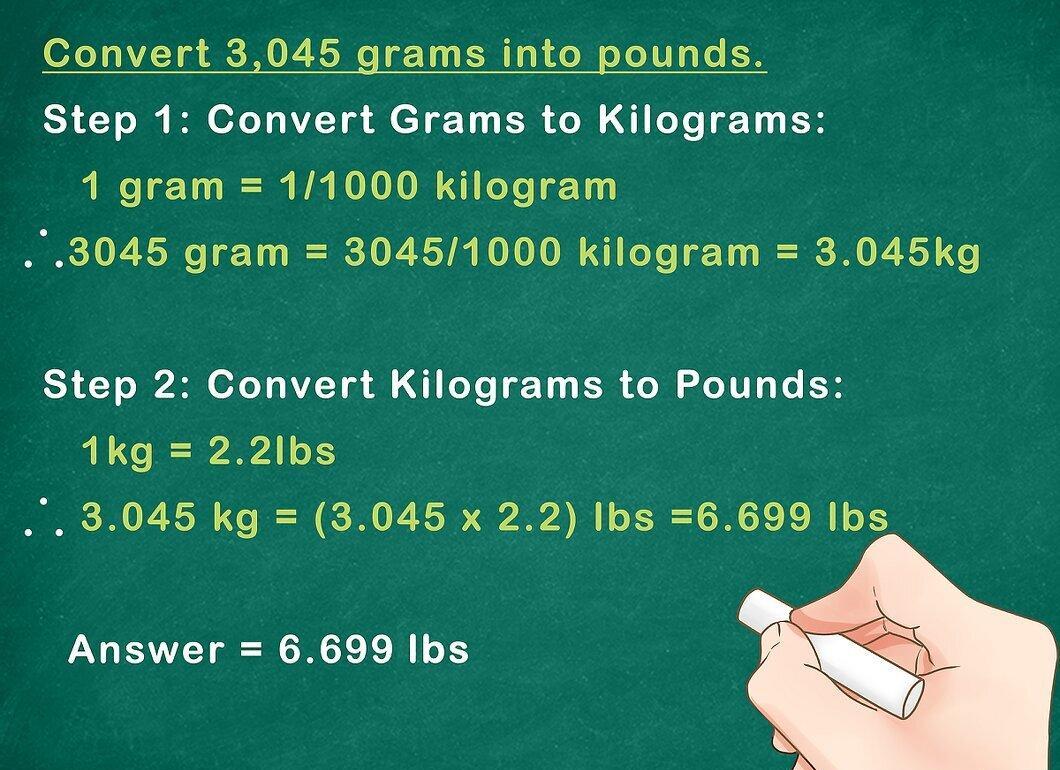
After converting grams to kilograms, multiply the resulting kilograms by 2.2 to convert to pounds. For example:
- Convert 3045 g to pounds.
- First, convert grams to kilograms: 1 g = 0.001 kg, so 3045 g = 3.045 kg.
- Then convert kilograms to pounds: 1 kg = 2.2 pounds, so 3.045 kg * 2.2 pounds/kg = 6.699 pounds.