
You can find many converters online that automatically change kilometers (km) to miles. However, sometimes teachers require you to show your calculations on paper. In this article, we'll explore an algebraic method that allows you to convert km to miles, specifically— we'll provide a simple formula where you can plug in the values you need.
How to Convert Kilometers to Miles
Step 1. Enter the value in km that you want to convert to miles and plug it into the following formula.

Input the value in kilometers into the formula: ____ km * 100,000 cm / 1 km * 1 inch / 2.54 cm * 1 mile / 63,360 inches = ? miles.
Step 2. Using a calculator, perform the calculations to obtain the final result in miles.
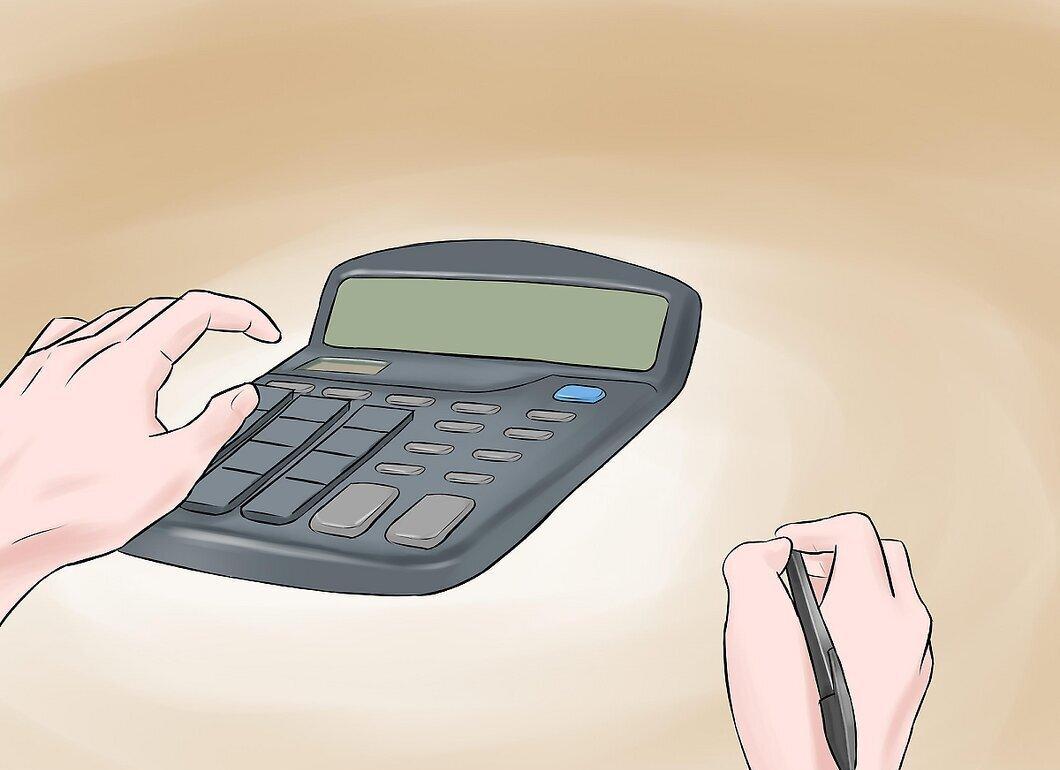
With a calculator, carry out all necessary calculations to find out the result in miles. Note that the provided formula includes all steps for reducing units of measurement, which may help you better understand the process and present the calculations on paper.
Step 3. If you don't need to show your calculations on paper, use the following expression to convert km to miles.
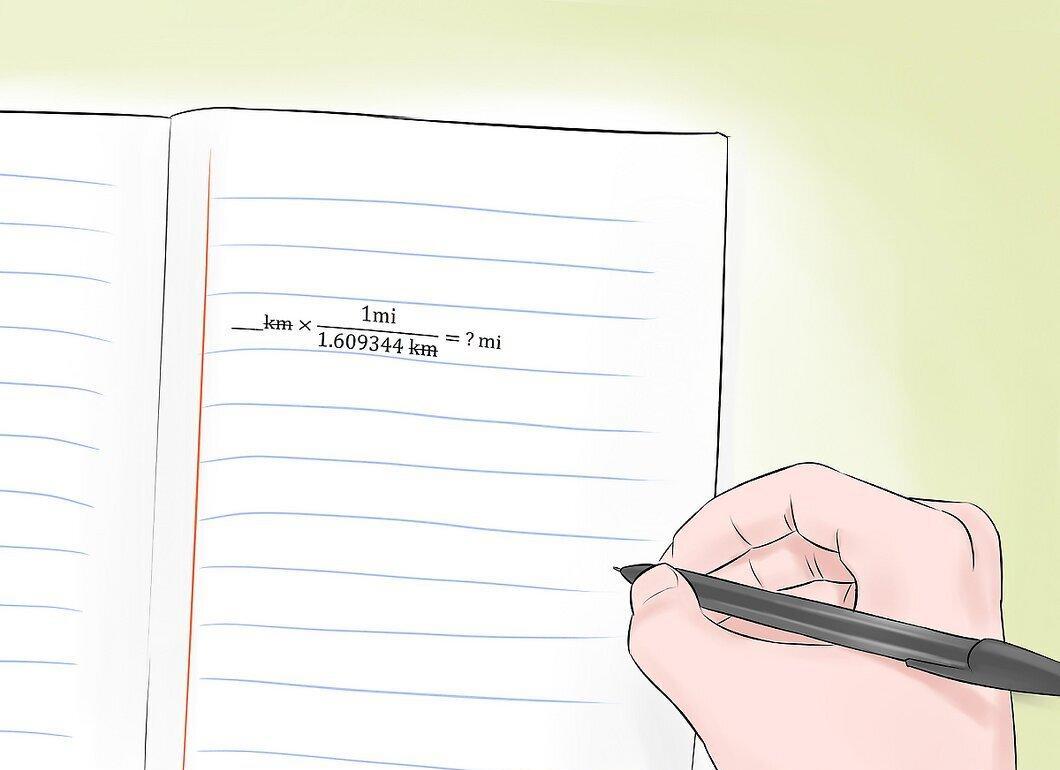
If you don't need to display calculations, you can use the simplified formula: ____ km * 1 mile / 1.609344 km = ? miles.
How to Use the Fibonacci Sequence to Convert Miles to Kilometers
Step 1. The Fibonacci sequence is a series of numbers where each subsequent number is the sum of the two preceding ones.
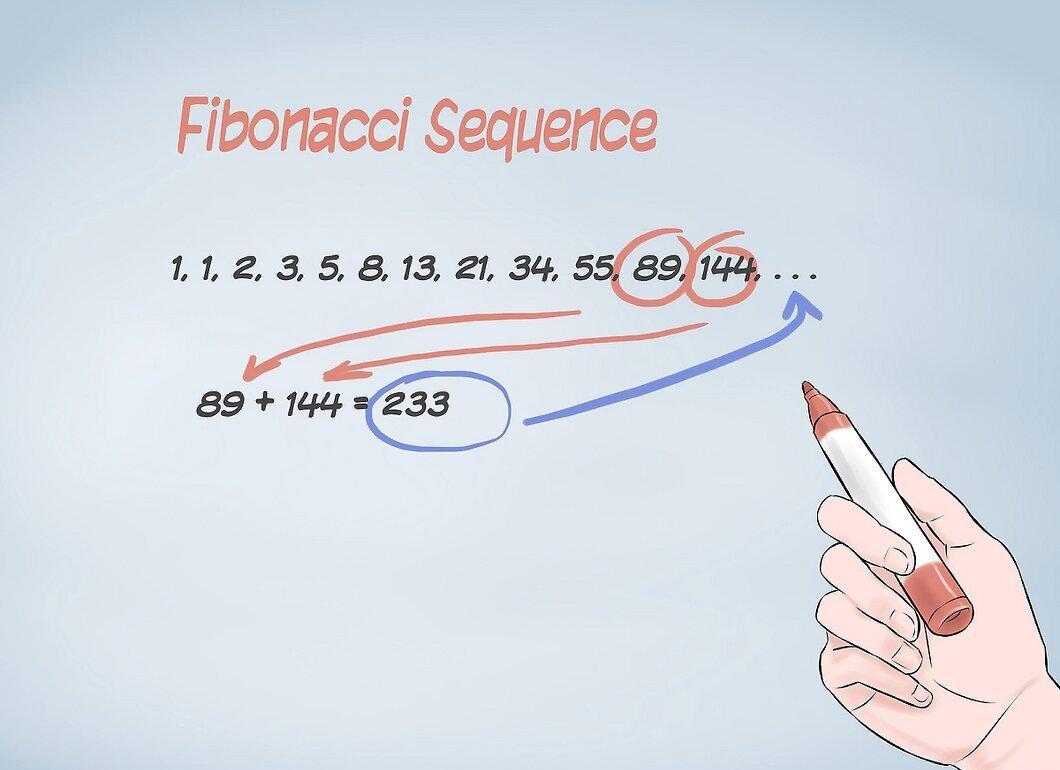
The Fibonacci sequence is an infinite series where each next number is generated by adding the two previous ones. This sequence can help in converting values from miles to kilometers. The first two numbers in the sequence are 0 and 1.
- Fibonacci sequence: 0, 1, 1, 2, 3, 5, 8, 13, 21, 34, 55, 89, 144 ...
- To calculate the next number, add the two previous ones: 89 + 144 = 233.
Step 2. The Fibonacci sequence closely reflects the relationship between kilometers and miles.
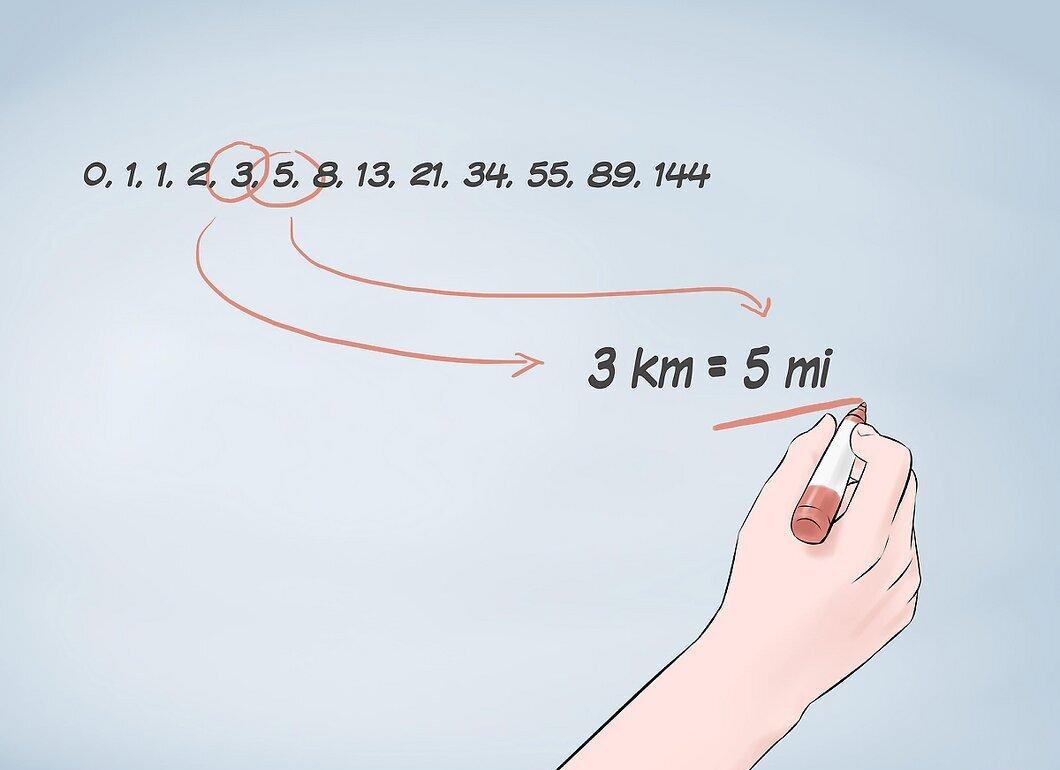
This sequence closely corresponds to the ratio between kilometers and miles. If you take any number from the Fibonacci sequence as a value in miles, the next number will be approximately equal to that value in kilometers. For example, three miles is (approximately) five kilometers, and eight miles is about 13 km (and so on). Although this system isn't perfect (in reality, 8 miles = 12.875 km), it's great for approximate and quick conversions.
Step 3. If you need to convert a number that's not in the Fibonacci sequence, break it down into a sum of Fibonacci numbers.
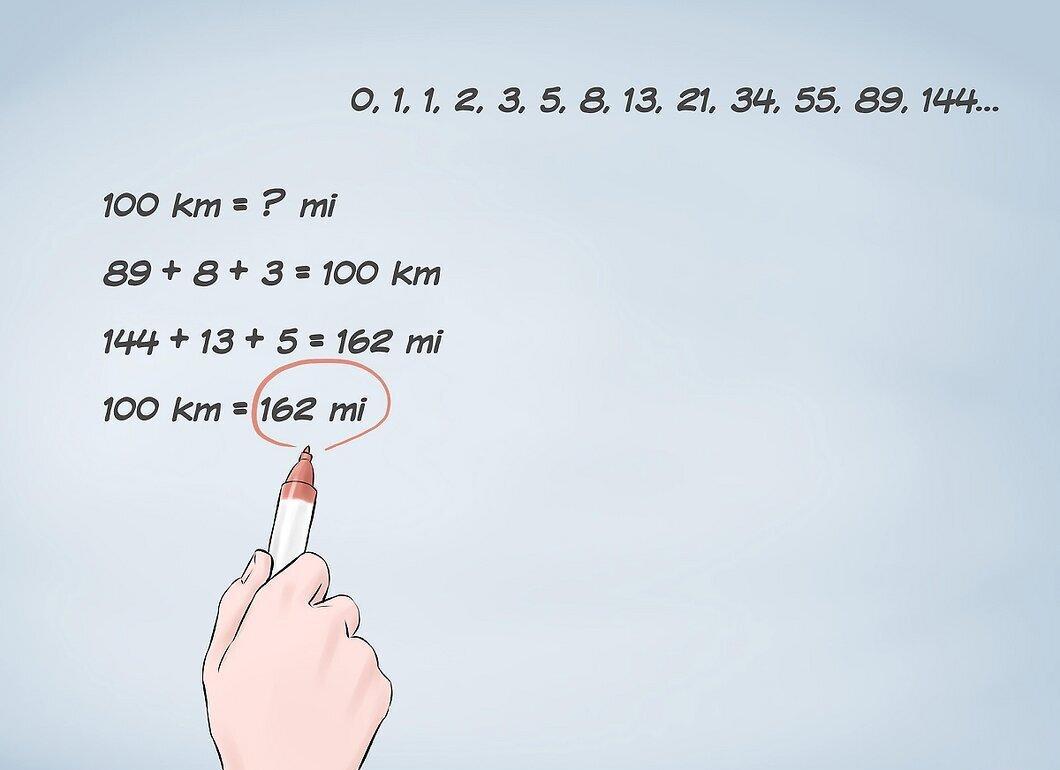
To convert a number not found in the Fibonacci sequence, break it down into a sum of numbers from that sequence. Then find the subsequent numbers in the sequence and add them up to get the value in kilometers.
- For instance, if you need to convert 100 miles to kilometers, you can break down 100 into the sum of Fibonacci numbers 89 + 8 + 3. The subsequent numbers in the sequence would be 144 (for 89), 13 (for 8), and 5 (for 3). Adding them together: 144 + 13 + 5 = 162. Thus, 100 miles is approximately 162 km.
- In reality, 100 miles = 160.934 km.