
Many people feel anxious about speaking in class, at meetings, or during presentations. Careful preparation of your speech text will significantly boost your confidence. By paying attention to details and thoughtfully considering your words, you can create content that is engaging, persuasive, and inspiring! Don’t forget to allocate time for writing the text and practicing its delivery.
How to Create a Draft
Step 1. Research the Topic Thoroughly.

Start with an in-depth study of your topic. To prepare an informative or argumentative speech, you need to have a solid understanding of the subject! This approach will help you create a truthful and convincing text. Use reliable information sources such as books, academic journals, articles, and government websites.
- If it’s a school project, check with your teacher about how many sources you need to use and what types are acceptable.
Step 2. Create an Outline

Develop an outline that includes your key statements and arguments. Organize your ideas and findings in a structured format to ensure completeness and coherence. Typically, a speech consists of an introduction, five main points, each supported by evidence (statistics, quotes, real-life examples), and a conclusion. Use numbered or bulleted lists. Remember, you can always adjust the outline during the drafting stage. Include all important ideas, but keep in mind that the text may need to be shortened later.
- For an informative or persuasive speech, consider a problem-solution structure. Start by describing the problem, then explain how it can be solved.
Step 3. Start with an Interesting Fact to Grab Attention.

Share an interesting fact to immediately capture your audience's attention. The opening line of your speech is crucial, as this is when listeners decide whether to engage with your content. Depending on the topic and your goals, begin with something funny, sad, or even shocking to intrigue your audience.
- For example, if you’re preparing a motivational speech about weight loss, you might start with: "Five years ago, I struggled to climb a single flight of stairs without stopping."
- If your goal is to persuade people to reduce fossil fuel consumption, you could say: "Cars with internal combustion engines contribute to global warming, threatening the existence of our planet."
Step 4. Connect the Topic to a Broader Issue for Context.
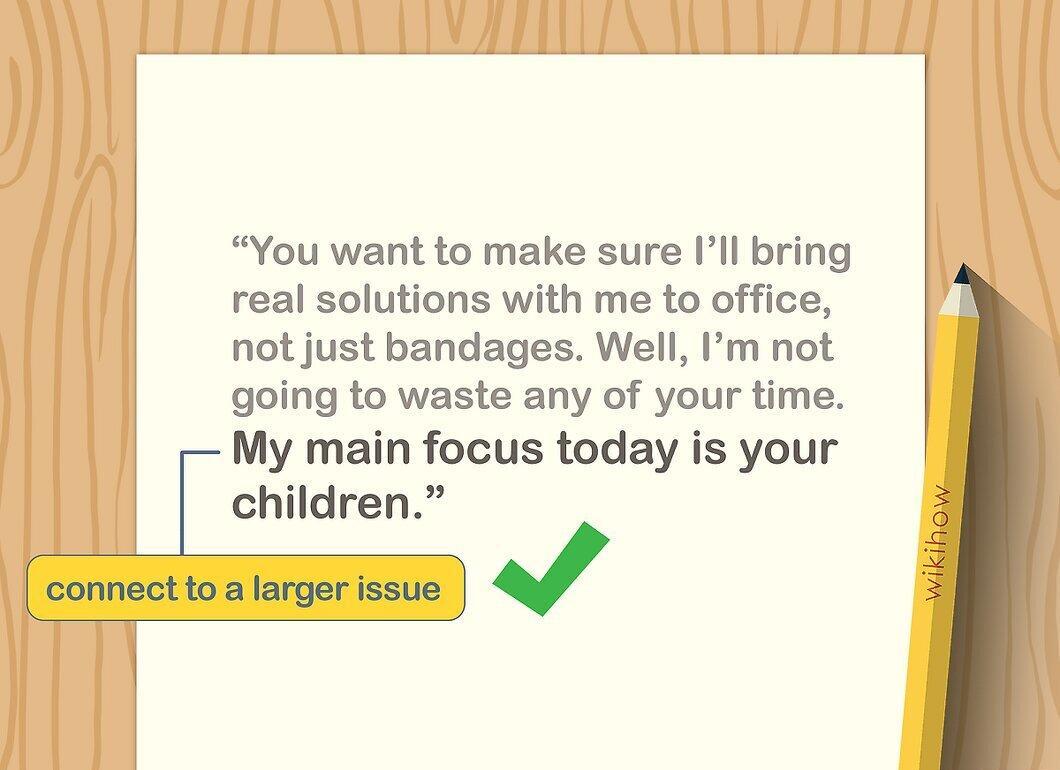
Link your topic to a larger issue to provide additional context. Your audience may find it challenging to grasp the importance of your subject without your explanation. If your topic seems insignificant, listeners may lose interest. Aim to present your topic within a broader framework. Why should people care? It’s advisable not to exceed one paragraph or one double-spaced page for the introduction to keep it concise and move quickly to the main points.
- For instance, if you want to attract funding for Alzheimer’s disease research, mention the prevalence of the disease and its impact on people's lives. You can include statistics and a personal example.
Step 5. Present Points in a Logical Order.
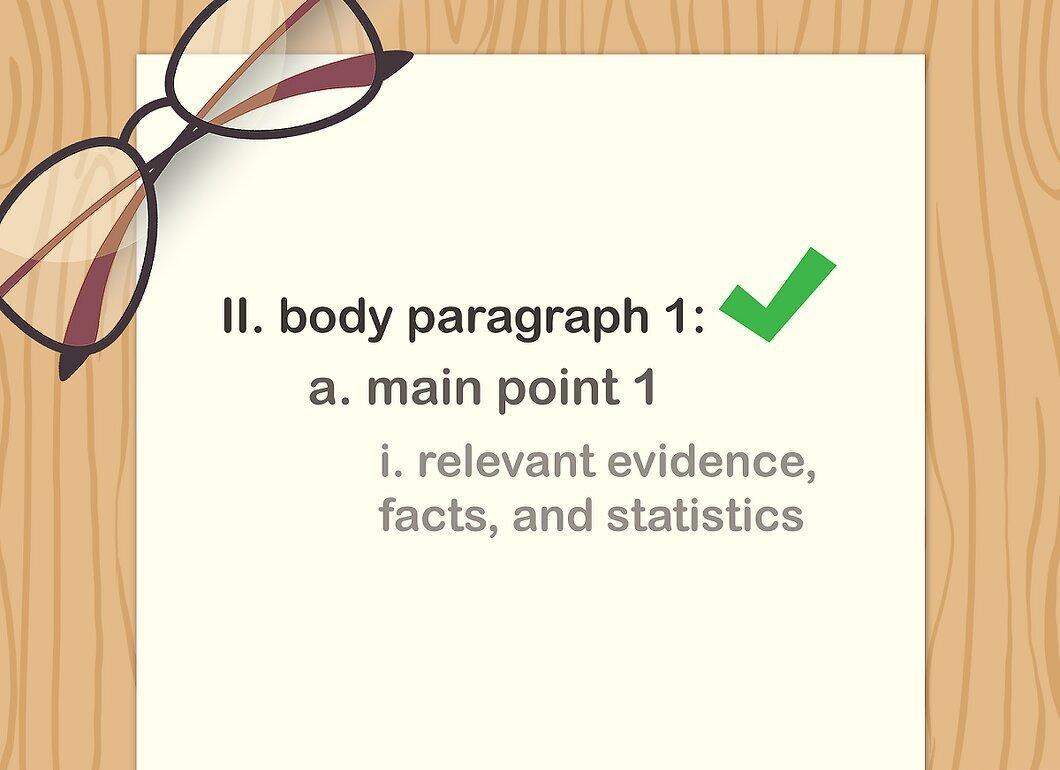
Present your points in a logical order. After introducing the topic, move on to your main points. Clearly state each point and support it with relevant information, facts, and statistics. Aim for one paragraph per thought.
- For instance, if discussing animal testing in cosmetics, begin with a statement about the cruelty of the process, then discuss its impracticality and alternative methods.
Step 6. Transition to New Topics and Summarize.

Transition to new topics and summarize the material discussed. To help the audience absorb the content, provide a brief overview of the topic in 1-2 sentences before moving on to the next point, and briefly recap the main points after explaining them. Use simple language to make your ideas more accessible.
- For example, if you want to explain delayed onset muscle soreness (DOMS), start with a general explanation, then delve into details, and conclude with a summary of the main point.
Step 7. Use Transitional Phrases to Enhance Flow.

Transitional phrases help improve the flow of your speech and show connections between points. Their absence can be noticeable when you read or write. Ensure your speech contains a variety of transitions. Examples include:
- furthermore;
- then;
- previously;
- subsequently;
- initially;
- secondly;
- currently;
- next week.
Step 8. Conclude with a Call to Action.

End your speech with a call to action. As you approach the conclusion, ensure the audience is engaged and ready to act. Encourage people to learn more and participate in solving the issue you’ve described by indicating how they can do so. This is a great opportunity to share resources and guide your listeners.
- For example, if discussing how global warming affects polar bears, you might end with information about nonprofit organizations dedicated to wildlife and polar bear conservation.
- If you shared your personal weight loss story, explain where to start and what helpful resources to use.
How to Make Your Speech Interesting and Engaging
Step 1. Use Short and Simple Words and Sentences.
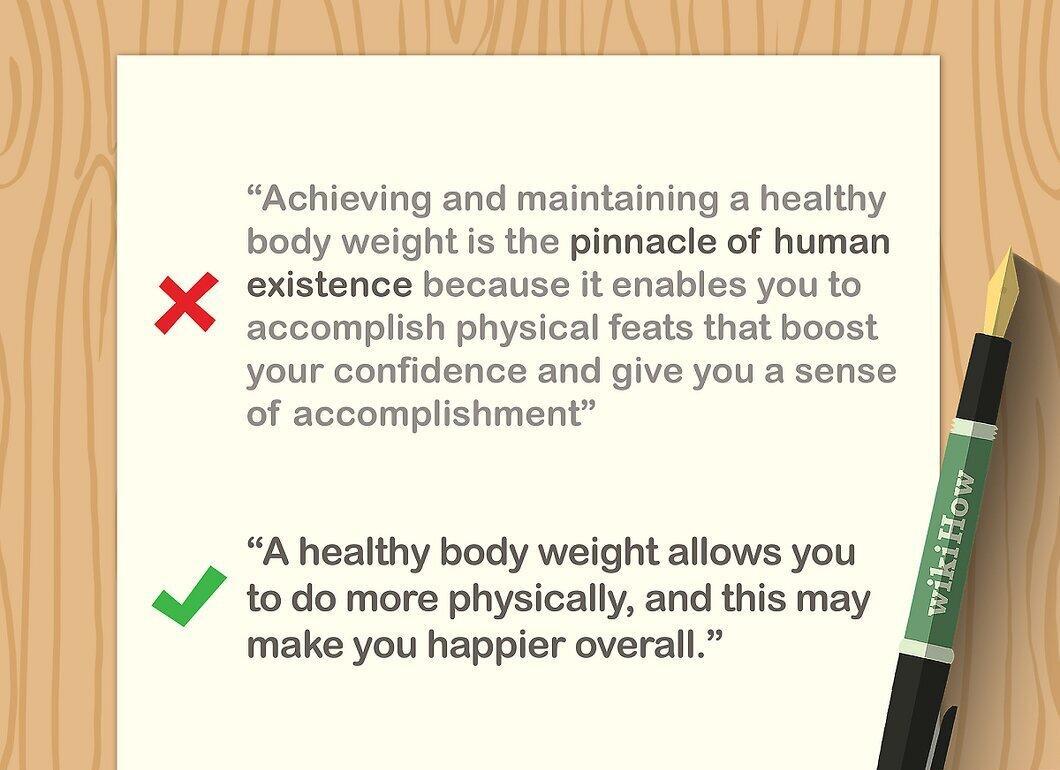
Opt for short and clear words. Complicated terms can alienate listeners, and lengthy sentences may confuse them. Generally, it’s better to use simple language. Exceptions arise when a thought cannot be expressed otherwise.
- For instance, instead of saying: "The ability to achieve and maintain a healthy weight is the pinnacle of human existence, as it allows for the demonstration of agility, bolstering self-confidence and providing a sense of satisfaction," you could simply say: "A healthy weight makes you stronger and happier."
- Also, try to vary sentence structure. Use one or two longer sentences per page to add variety, but avoid excessive complexity.
Step 2. Avoid Overusing Pronouns.

Don’t replace nouns with pronouns too frequently. While sometimes necessary to avoid repetition, an overabundance of pronouns can complicate understanding. Use proper names whenever possible and avoid overusing pronouns.
Step 3. Repeat Key Words and Phrases.

Use repetition in your speech. This effective technique helps highlight your ideas and keeps the audience engaged. While excessive repetition can be distracting, emphasizing a particular word or phrase reinforces your message.
- For instance, if you’re speaking to a sales team wanting to promote a new product called ‘Synergy’, repeat the phrase: "Talk about ‘Synergy’" throughout your speech to remind listeners of the product.
- In a motivational speech about how running helps overcome emotional challenges, you might repeatedly say: "Overcome pain through running."
Step 4. Limit the Use of Quotes and Statistics.

Limit the number of quotes and statistics to avoid overwhelming listeners. While many figures and quotes may seem persuasive, they often backfire. It’s best to use 1-2 examples of statistics or quotes for each point and share only essential information.
- For example, when discussing moose reproduction, two examples showing their population decline over the past 50 years can be impactful. Too much data can confuse and distract the audience.
- Choose quotes that are easy to grasp and make sure to explain how they support your statements. Use simple language and aim to keep them to two lines.
Step 5. Mind the Tone of Your Speech.
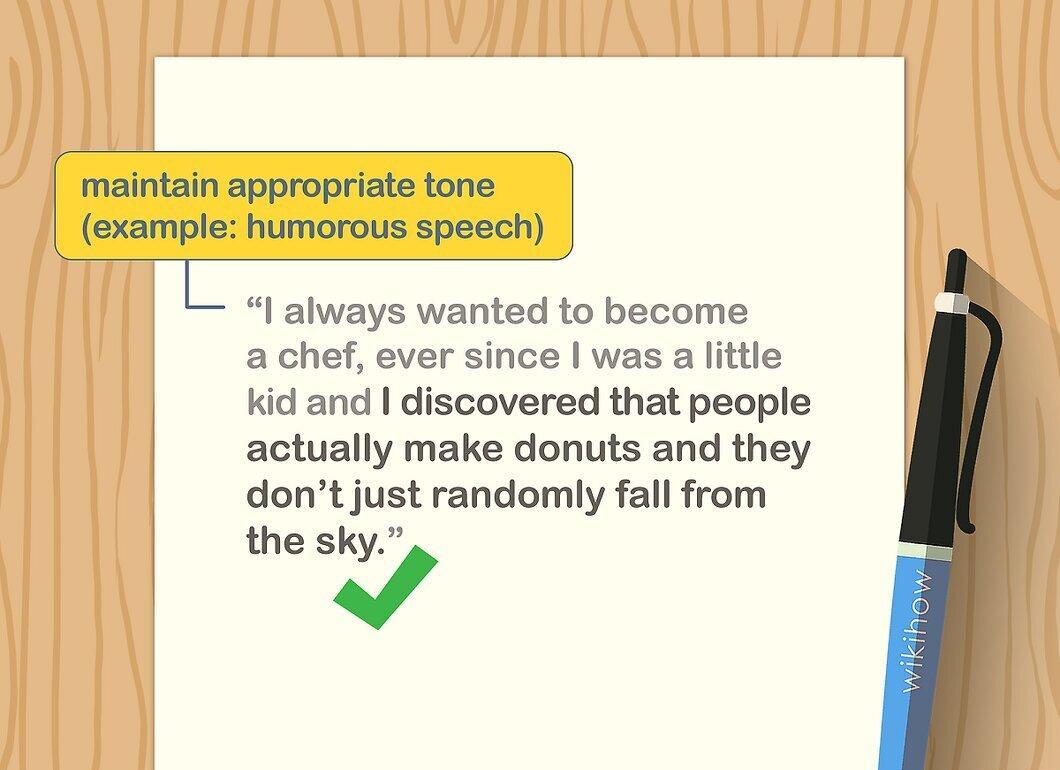
Maintain an appropriate tone throughout your speech. The tone sets the overall mood, which can range from serious to playful. Your choice of words and intonation will influence perception.
- For example, if you’re sharing your love for cooking in a motivational speech, you might add a joke: "I dreamed of becoming a chef since childhood when I realized cookies don’t just appear in a box — they’re made by people."
Step 6. Use Visual Aids If Possible.

Utilize visual aids when appropriate. A PowerPoint presentation isn’t essential for a successful speech, but it can help the audience follow your words, especially when explaining complex concepts. Use slides to visually present key ideas with images, charts, and quotes.
- However, don’t rely too heavily on slides. Your speech should be engaging and interesting, with slides serving as a supplement to your spoken words.
Step 7. Practice and Revise.

Regularly practice delivering your speech and make revisions. After finalizing your text, read it several times to identify areas for improvement. If you need to fit within a specific timeframe, use a timer during practice. It’s advisable to ask a friend or family member to listen to your speech and provide feedback.
- Be sure to read the text aloud! This will help you determine its flow and identify any awkward phrases that can be modified or rephrased for clarity.