
Naming a piece of art is no easy task, as the title must not only reflect its essence but also add a special meaning. While there is no universal recipe, there are several methods and principles that can help you choose a title that accurately conveys the intent and effort invested in your creation. In this article, we will explore how to find the best title for your artwork.\
Consider Ideas and Themes
Step 1. Make a list of key themes of your artwork.

Start by creating a list of the main themes that reveal the intent of your work. Include both simple concepts like "trees" or "girl" and more abstract ideas such as "friendship" or "childhood." Aim to capture the essence of your work in the title.
Step 2. Understand your internal motivation.

Reflect on what inspired you to create this piece. What emotions does it evoke, and what message do you want to convey to the viewers? What is the message you want to express through your work?
Step 3. Identify the main focus of your artwork.

Determine what the focal point of your artwork is. Every piece of art has key elements that should stand out to the viewer. What aspect of your painting do you want to highlight? Think about a title that will help viewers understand your idea more deeply.
- For example, in Johannes Vermeer’s painting "Girl with a Pearl Earring," the focus is on the pearl earring of the main character.[2] Source
Step 4. What do viewers need to know?

The title often helps viewers better understand what is depicted in the painting. It can serve as a key to interpreting your work. What do you want to communicate about your piece to the audience?
- A title can guide the viewer’s thoughts in a specific direction. For instance, if a painting depicts a dog on the beach, the title "Abandoned" may create an impression that the owner left it, while "Best Friend" would provide a completely different connotation.
- Some artists prefer to use multi-layered titles to leave room for various interpretations.
Step 5. Choose a title with personal significance.

Create a title that holds special meaning for you. An artist creates a piece primarily for themselves, and the title can contain hints about the context of the work or sources of inspiration.
- For example, Frida Kahlo, inspired by a tumultuous romance with Leon Trotsky, titled one of her works "I Belong to My Owner," featuring field flowers symbolizing her passion.[5] Source
Seek Inspiration
Step 1. Find inspiration in quotes and poetry.

Look for inspiration in famous quotes and lines from poetry. You can use them as a title, as long as they are short and clear, resonating with the meaning of your work.
- Short quotes should not pose copyright issues. Choose a few words that you can use without infringing rights.[7] Source
- Artist Pam Farrell titled one of her works "Sailor Suffering from Seasickness," borrowing a line from a song.
- David Whyte used titles from books and films, adding his ideas to create unique titles for his series of paintings.[8] Source
Step 2. Discuss ideas with others.

Talk with friends, family, or fellow artists to hear new ideas. You may receive interesting suggestions that hadn’t occurred to you.
- Organize a gathering for artists and friends, showcase your painting, and ask each guest to come up with a title. You can set a rule that no one leaves until they propose at least one title.[9] Source
- Jackson Pollock often simply numbered his paintings, while art critics like Clement Greenberg gave them poetic titles to facilitate identification.[10] Source
Step 3. Acknowledge the influence of others.

If your work or style has been inspired by other artists, give them credit in the title. This can be a great way to create an interesting name.
- For instance, Andy Warhol created a series of works titled "The Last Supper," inspired by Leonardo da Vinci's famous painting.[11] Source
Step 4. Study the titles of famous artworks.

Investigate how renowned artists chose titles for their works. Learn about the stories behind these titles and explore the titles of various pieces—from classics to contemporary art.
Choose the Right Wording
Step 1. Look for synonyms.

If your title relates to a specific theme but you are not satisfied with the word choices, try using synonyms. A thesaurus can help you find suitable alternatives.
Step 2. Add descriptive words.

If you already have key words related to the theme, add descriptive words to enrich the title. Think of appropriate adjectives and adverbs that can add depth.
- For instance, Georgia O'Keeffe titled her work "Purple Calla Turned Away" to clarify the depiction of the flower.[13] Source
- Mary Cassatt described her painting as "Mrs. Duffy Sitting on a Striped Sofa Reading," emphasizing obvious details.
Step 3. Experiment with combinations.

Try different word combinations to assess their sound. Sometimes, changing the order of words can create a more harmonious and melodious title.
- Read the chosen words aloud to evaluate how well they sound together.
Step 4. Use a fully descriptive title.

Don’t be afraid to keep it simple. A title can be very straightforward and descriptive: "Wooden Table with Fruits," "Red Ball," or "Girl on a Swing."
- Emily Carr often used simple titles like "Breton Church" and "Big Raven."[14] Source
- "Still Life: Apples and Grapes" by Claude Monet simply describes the depicted items.[15] Source
Step 5. Translate the title into another language.

Sometimes key words sound better in another language. Try translating them and see how they come across.
- Make sure you spell the words correctly and use punctuation properly so as not to change their meaning.
- Find someone fluent in the language and ask how your title sounds to avoid unexpected interpretations.
Refine the Title
Step 1. Check for other works with the same title.

Ensure that your title is unique. If it coincides with a well-known piece, it may cause confusion and hinder the perception of your work.
- Enter the title into a search engine and review the results.
Step 2. Get feedback on your title.

Ask others for their opinions on your title. You might have infused it with specific meaning, but others may see it differently. Initial reactions can help assess how effective the title is.
- The title might turn out to be ambiguous or open to different interpretations.
Step 3. Check the spelling.

Avoid any spelling errors in the title unless they are intentional. This can affect how your professionalism is perceived. Also, check grammar if the title is long.
Step 4. The title should work for you.

The title should be not only informative but also contribute to your promotion as an artist. Avoid names like "Untitled" and opt for something more memorable. A title can add value to your work.
- You can give paintings in a series sequential titles, such as "Blue Fence No. 1," "Blue Fence No. 2," and so on. This will help identify your works.
- Unique titles make it easier for people to search for your paintings and your name online.[19] Source
Step 5. Include the title on your artwork.
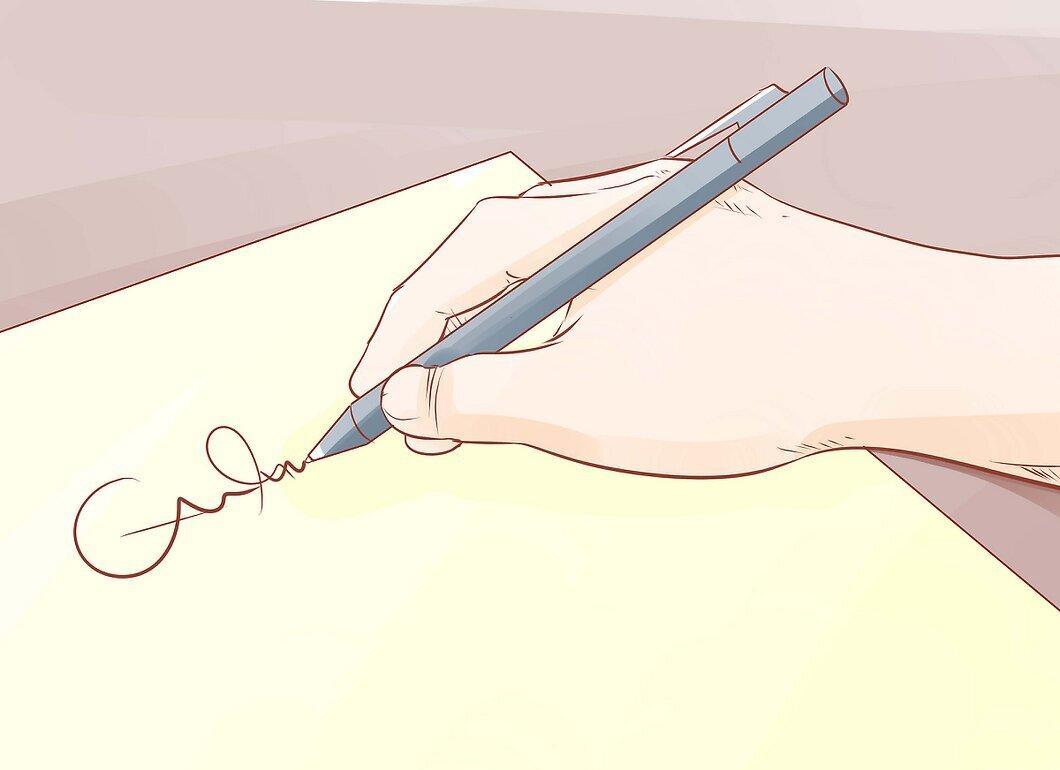
If you plan to exhibit your piece, don’t forget to include the title. Write it on the back of the canvas.
- When publishing the work online, ensure to include its title alongside the image.[21] Source