If you're passionate about crafting things yourself, knowing how to cut aluminum can be very beneficial. While it may seem daunting, there are actually several straightforward methods to help you work with this material quickly and safely. You can use power tools for thicker stock, process thin rods with a chisel, or use special metal shears when it comes to aluminum sheets — put in a little effort, and you’ll succeed.
Power Tools in Action
Step 1: Cutting Aluminum with a Circular Saw
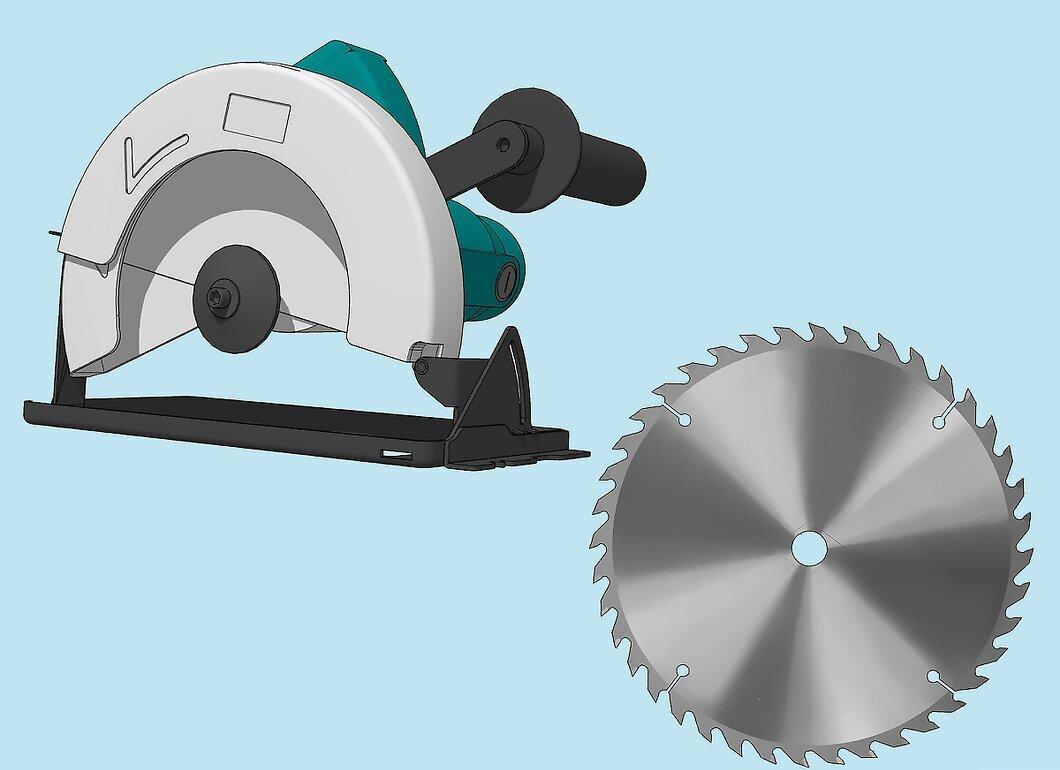
A circular saw with a carbide blade is an excellent tool for cutting aluminum. Choose a blade with fine teeth and avoid cutting aluminum sheets thicker than 6 millimeters. Opt for a blade that leaves a narrow kerf.
- The edges of aluminum after cutting do not close up, so it's better to use a narrow blade.
Step 2: Lubricating the Blade
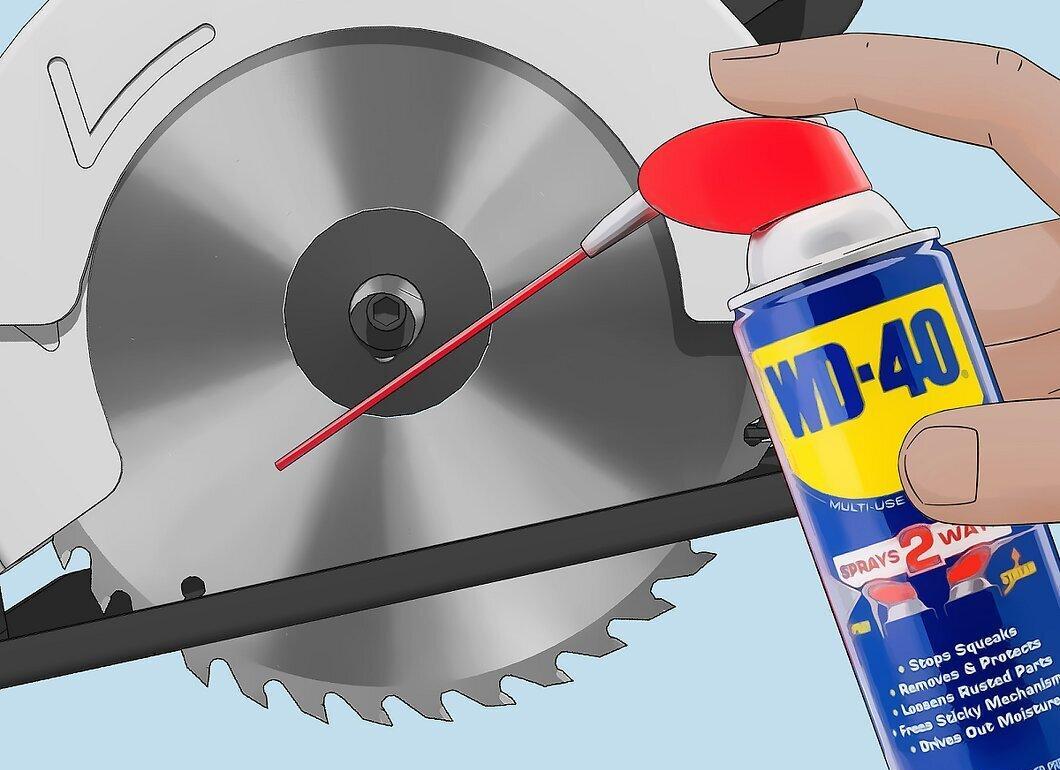
Apply lubricant to the blade or cutter. This can be regular oil or a specialized lubricant. When working with metal, lubrication helps prevent sparking and binding.
- WD-40 in aerosol form is often used for cutting aluminum. Lightly spray 5–6 times on both sides of the blade.
Step 3: Choosing a Smaller Diameter Blade
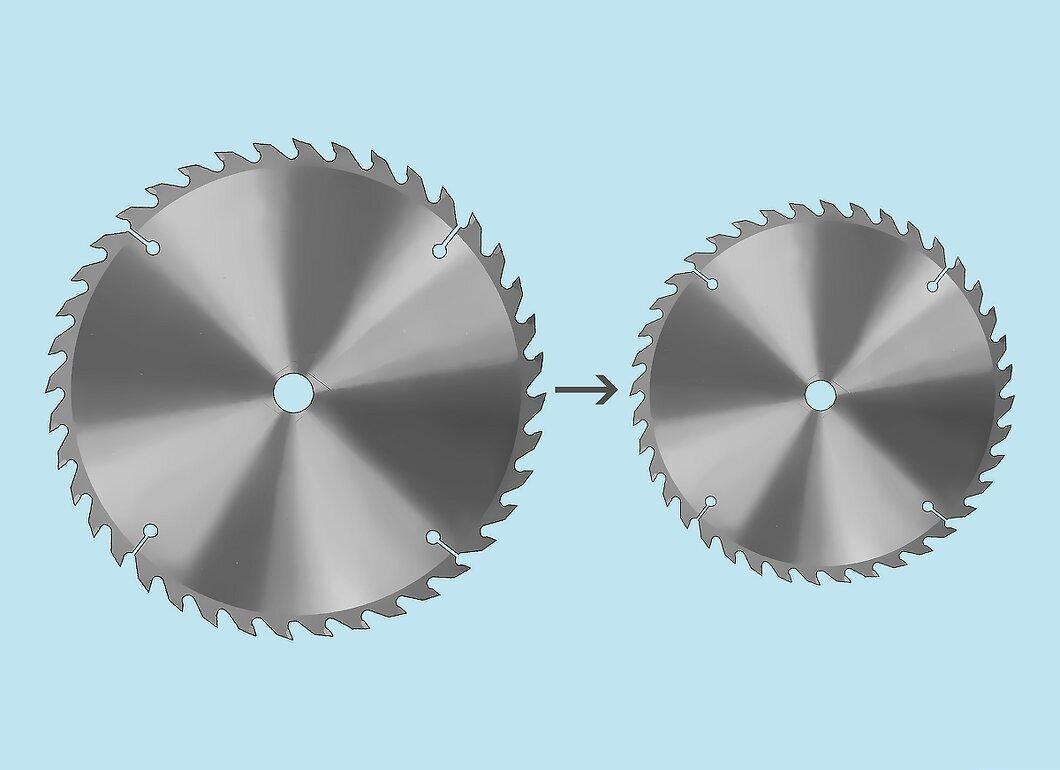
It is recommended to use a smaller diameter blade. The speed at which you work with wood may be too high for cutting aluminum. For example, if you’re using a 25 cm blade for wood, switch to an 18 cm blade for aluminum. This will help reduce the cutting speed.
- If you cannot change the blade diameter, consider buying a saw with adjustable speed. Although these saws tend to be more expensive, they are convenient for working with various materials, including aluminum.
Step 4: Securing the Workpiece in a Vice
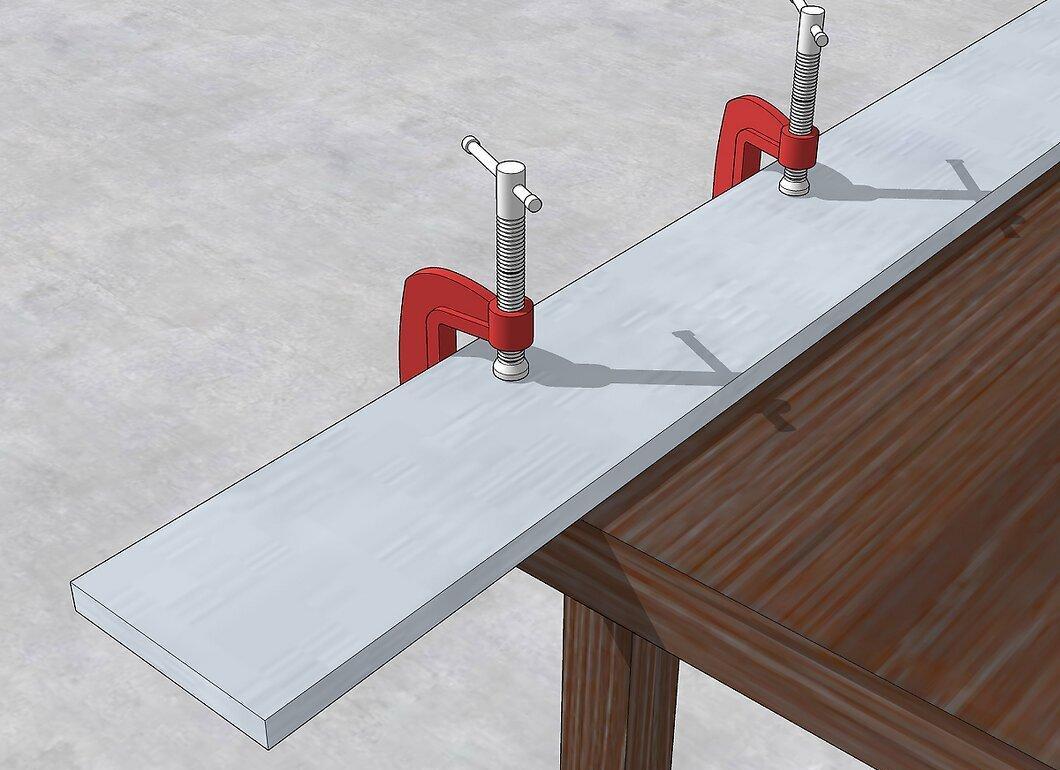
Secure the aluminum piece in a vice. Turn the vice screw counterclockwise to open the jaws. Position the vice vertically so that the top is above the work surface and the bottom is below it. Place the aluminum in the vice and turn the screw clockwise to tighten it.
- Use a guide rail (push stick) for safety to keep your hands away from the blade.
Step 5: The Cutting Process
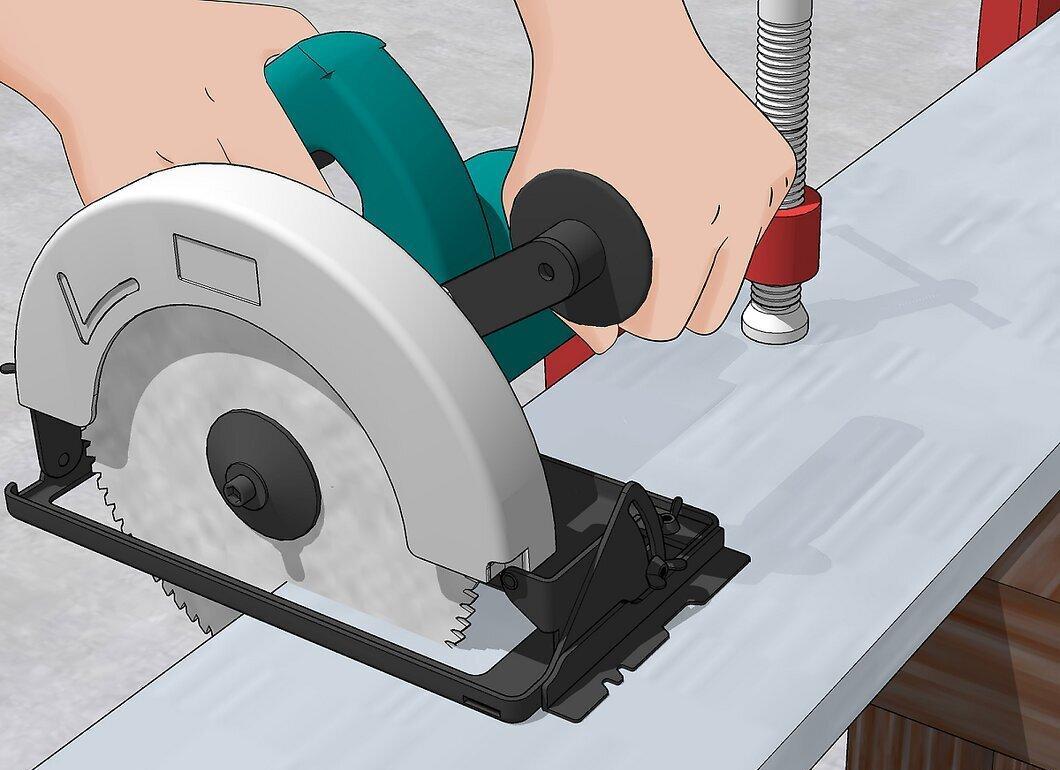
Move the aluminum piece through the blade or vice versa. Hold the saw with your dominant hand. Apply downward pressure until the blade cuts through the metal. Cut slower than you would with wood and try to maintain a constant pressure.
- Do not remain in the area where sparks and shavings can fly behind the blade. You can also cover the blade with a shield for spark protection.
- Keep your hands away from the cutting blade.
Step 6: Adjusting the Cutting Depth
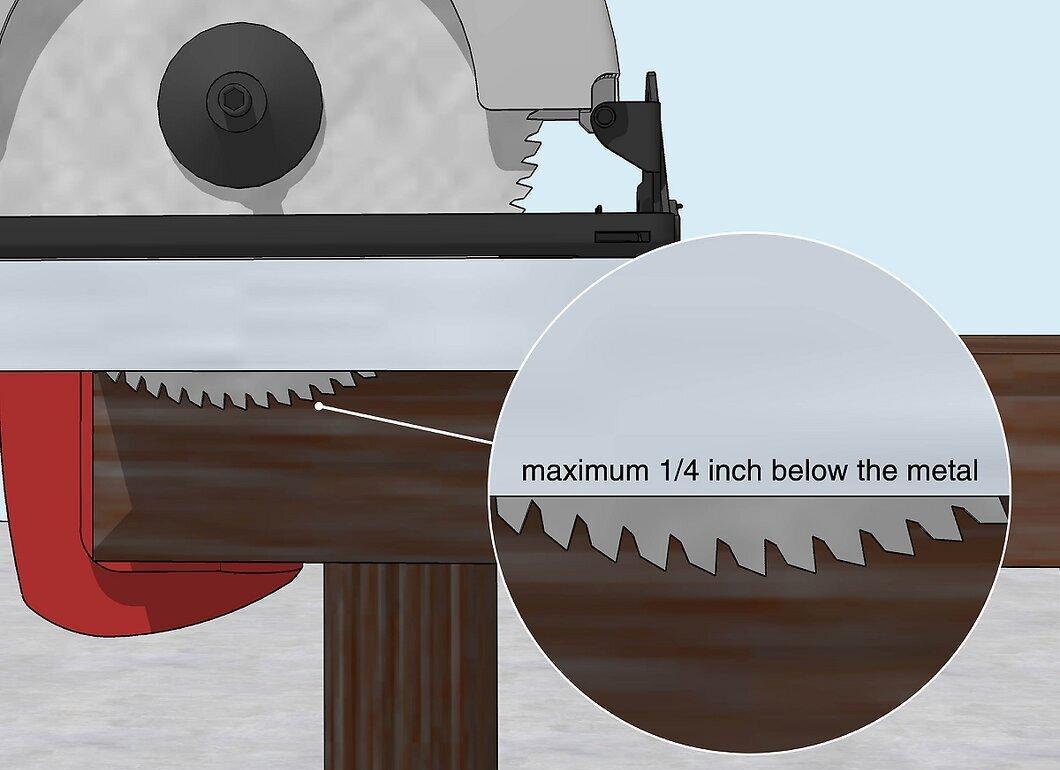
Adjust the blade depth so that it does not exceed 6 millimeters. Remove the guard and bring the cutting wheel close to the aluminum. Loosen the adjustment lever and rotate the base of the saw until the wheel drops below the metal level by no more than 6 millimeters, then secure it.
- Make sure to turn off the power when adjusting the cutting wheel depth.
Step 7: Using a Jigsaw for Round Cuts
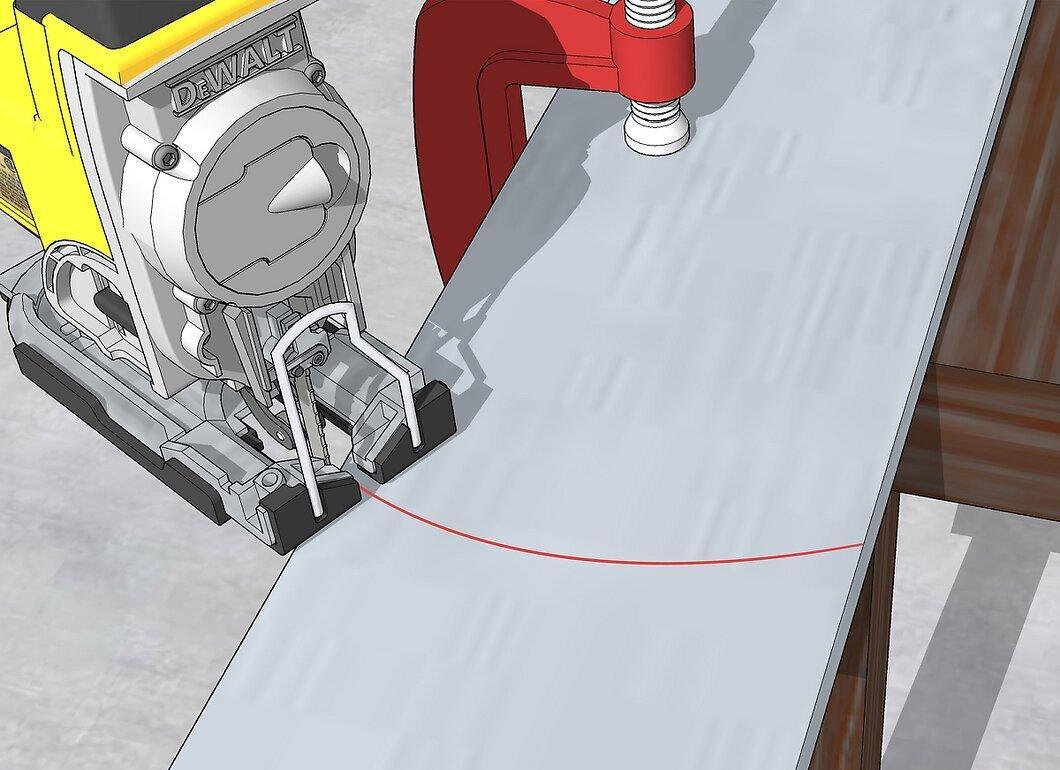
If you need to make round cuts, use a jigsaw. Secure guides on both sides of the saw and raise the blade 1 centimeter above the surface before inserting it into the aluminum. Turn on the feed and slowly push the jigsaw into the metal, turning it in the opposite direction from the blade's movement.
- Ensure that the jigsaw blade is parallel to the cut line.
- Always use carbide blades.
- Apply lubricant to the blade and work slowly.
Cutting with a Chisel
Step 1: Choosing the Chisel
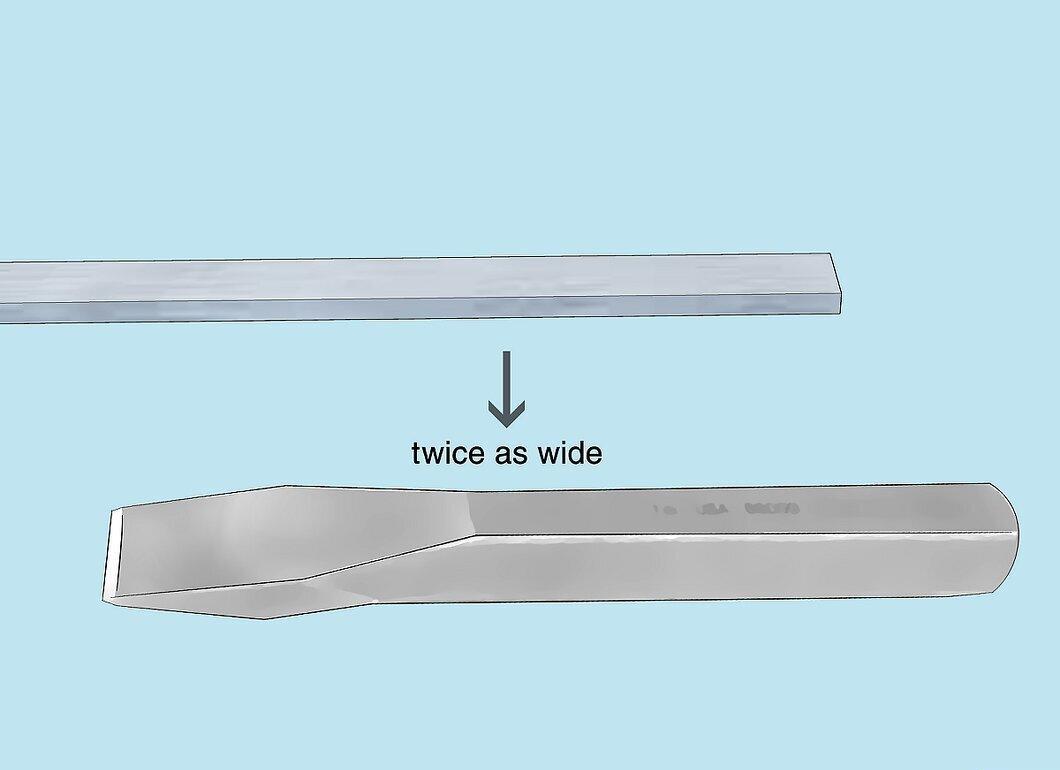
Select a chisel that is 1 size wider than the aluminum piece. Measure the width of the aluminum strip with a tape measure and choose the appropriate chisel. Standard chisel sizes are 10, 14, 22, and 28 millimeters.
- If the strip width is 5 millimeters, select a 10-millimeter chisel.
Step 2: Sharpening the Chisel
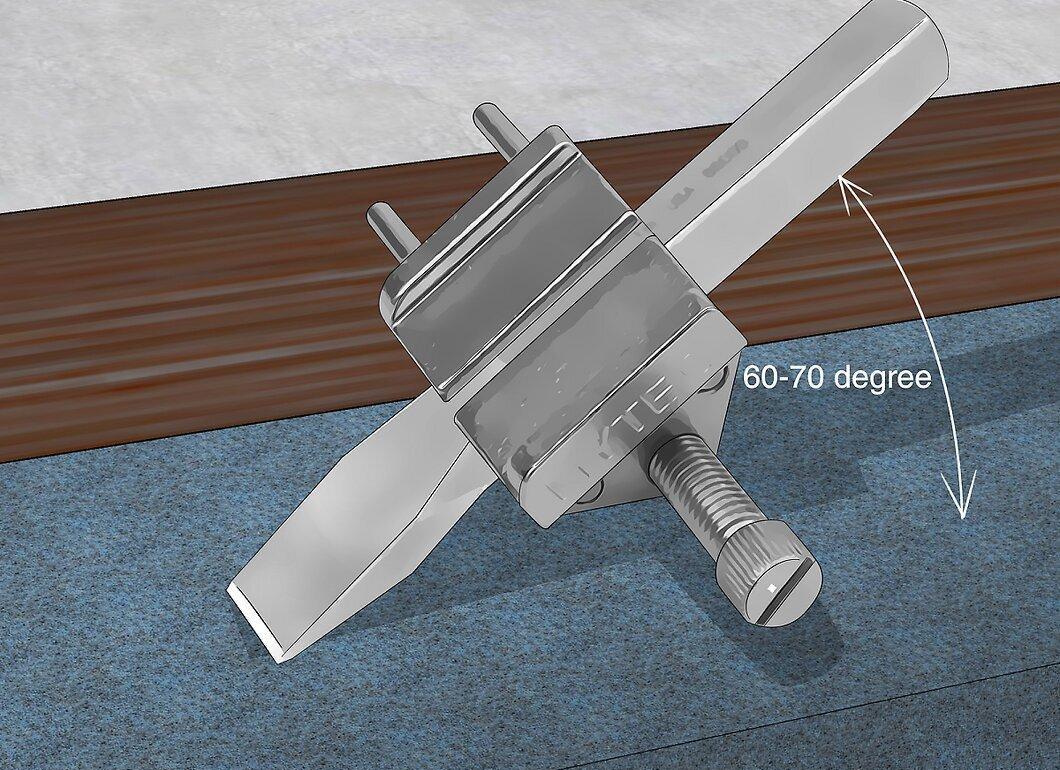
Sharpen the chisel at an angle of 60–70 degrees using a rolling guide. Place the chisel in the guide and tighten the screws to secure it. Ensure the angle is correct and carefully sharpen the chisel edge with a coarse file, making light strokes.
- Once scratches appear on the bevel, move to a medium file, then to a fine one. Wipe the chisel with a dry cloth between sharpenings.
Step 3: Securing the Aluminum in a Vice
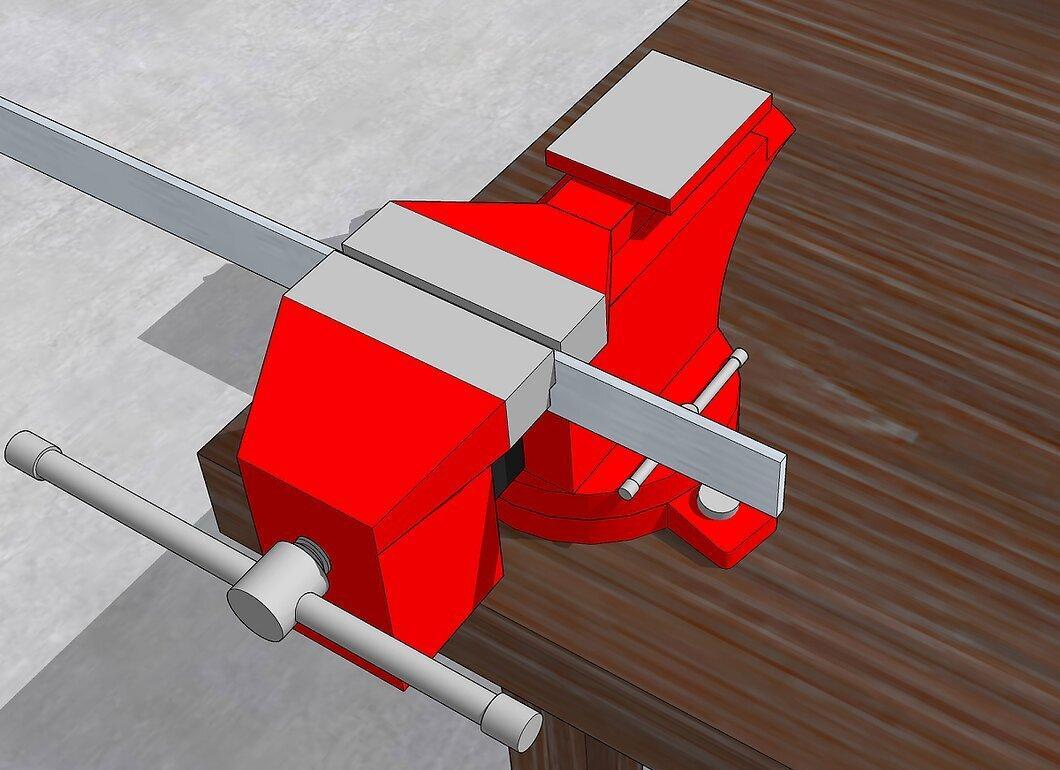
Secure the aluminum piece in a vice, positioning it in the center of the jaws and tightening it firmly.
- Use sturdy tabletop vices.
Step 4: Striking the Chisel
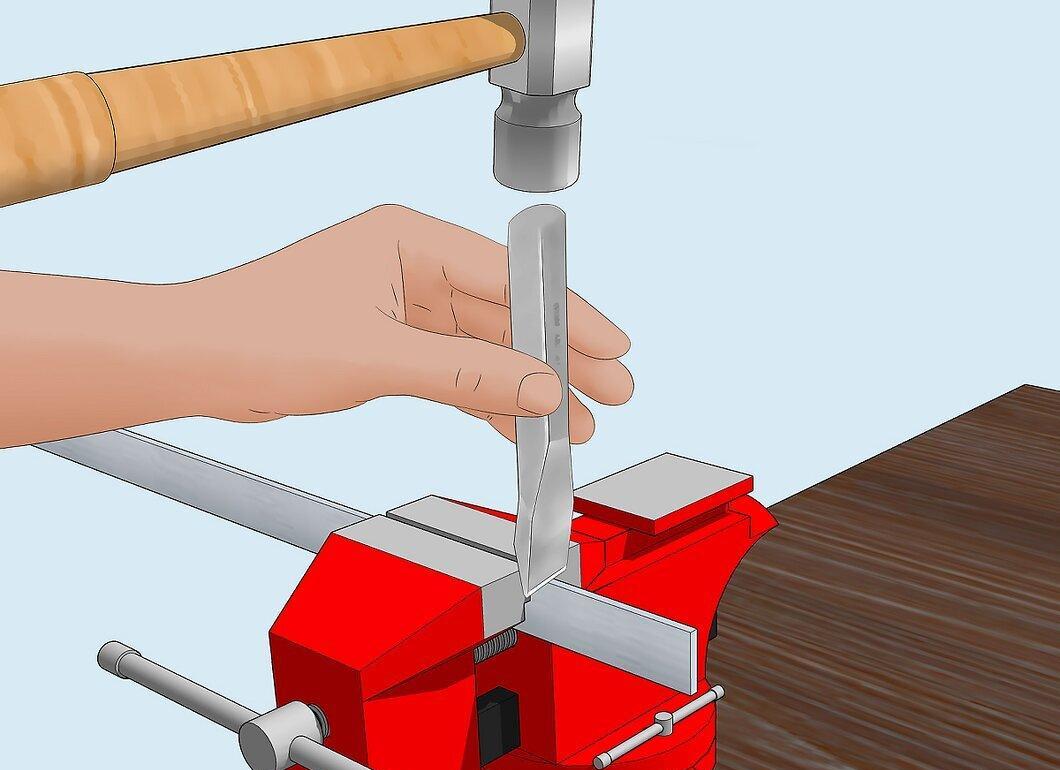
Place the chisel on the aluminum next to the vice's jaws and strike it with a hammer. Keep the chisel perpendicular to the metal and use a hammer suitable for metal work. Strike the chisel handle until a dent forms, allowing you to break the aluminum into two parts easily.
- You should penetrate the aluminum within 30 seconds. If not, you may have chosen an unsuitable chisel or it may be better to use a saw.
- For easier cutting, you can apply a drop of viscous motor oil to the chisel edge.
- Avoid a claw hammer as it is not suitable for working with hard metals and may get damaged.
- If you need to cut a sheet of aluminum along a line, simply lay it on a flat surface and place a board beneath to prevent the chisel from dulling.
Cutting with Metal Shears
Step 1: Cutting Circles with Shears
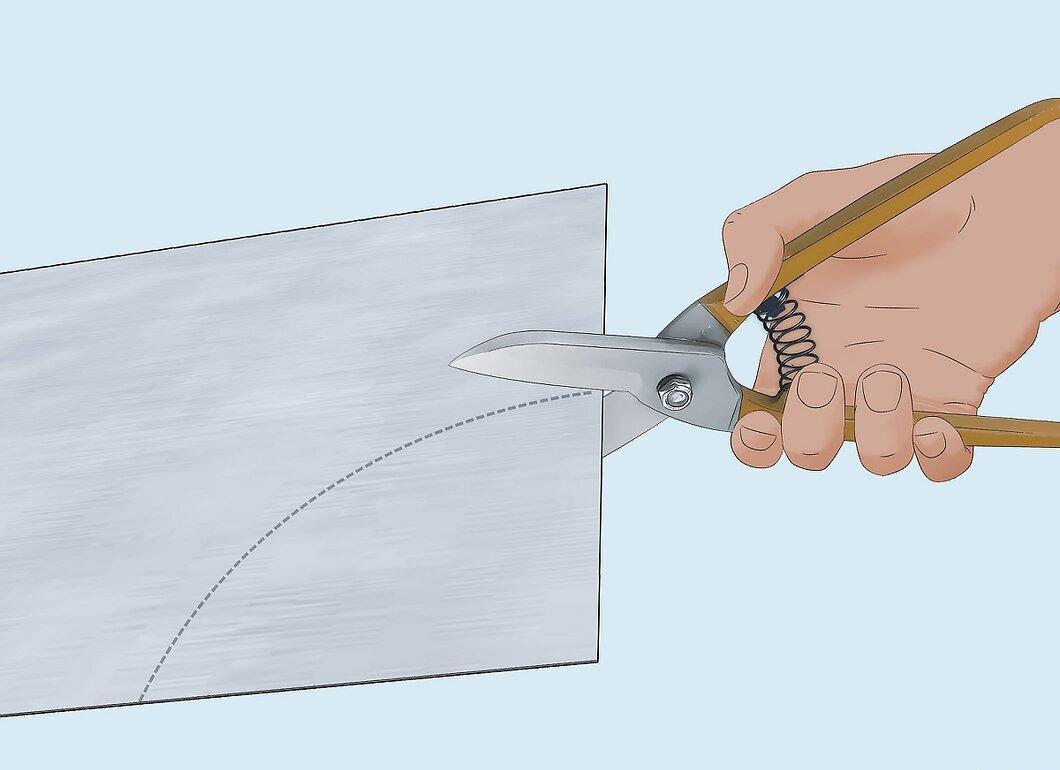
Use curved shears to create circles in aluminum. Draw a circle on the sheet with a marker and make an initial hole with a flat screwdriver and hammer. Then insert the shears and start cutting. If you’re cutting counterclockwise, use shears with a red handle; if clockwise, use green-handled shears.
- Straight shears are not suitable for circular cuts as they will leave uneven edges.
- If cutting becomes difficult, alternate between using the red and green-handled shears.
Step 2: Using Large Shears for Straight Cuts
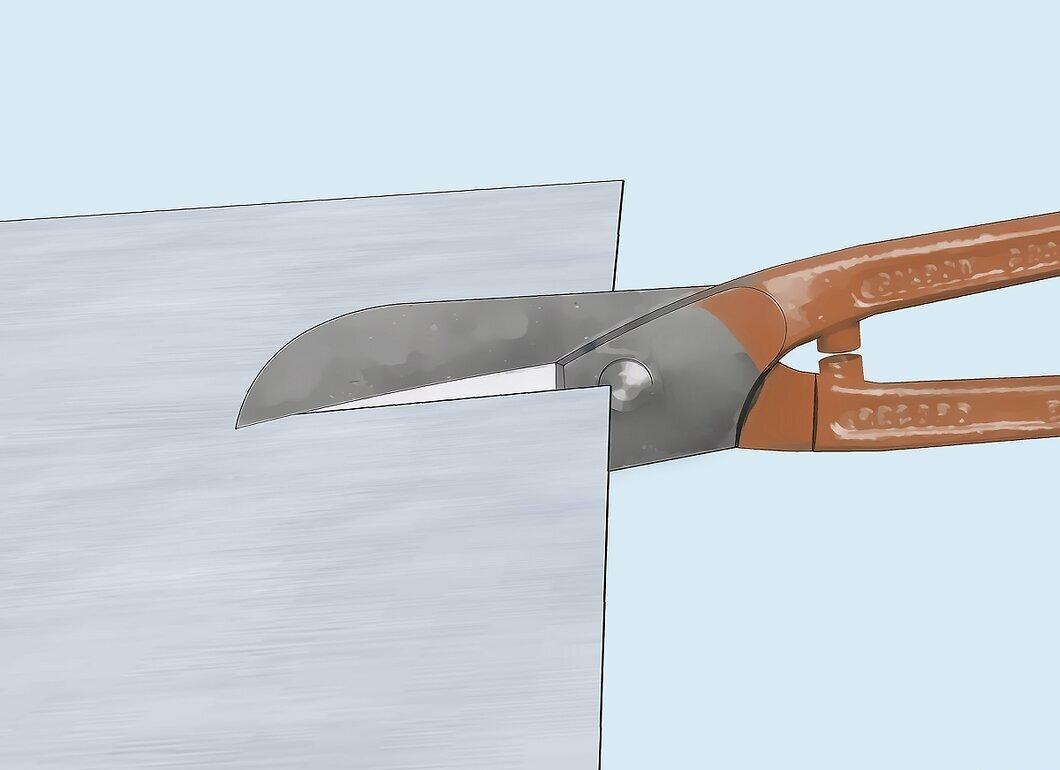
Get large metal cutting shears to make straight cuts. Before cutting, open the shears as wide as possible and try to make smooth, long strokes. Tilt the cut strip upwards to prevent it from jamming.
- The longer the cut, the more sweeping your movements should be.
Step 3: Cutting Thick Metal
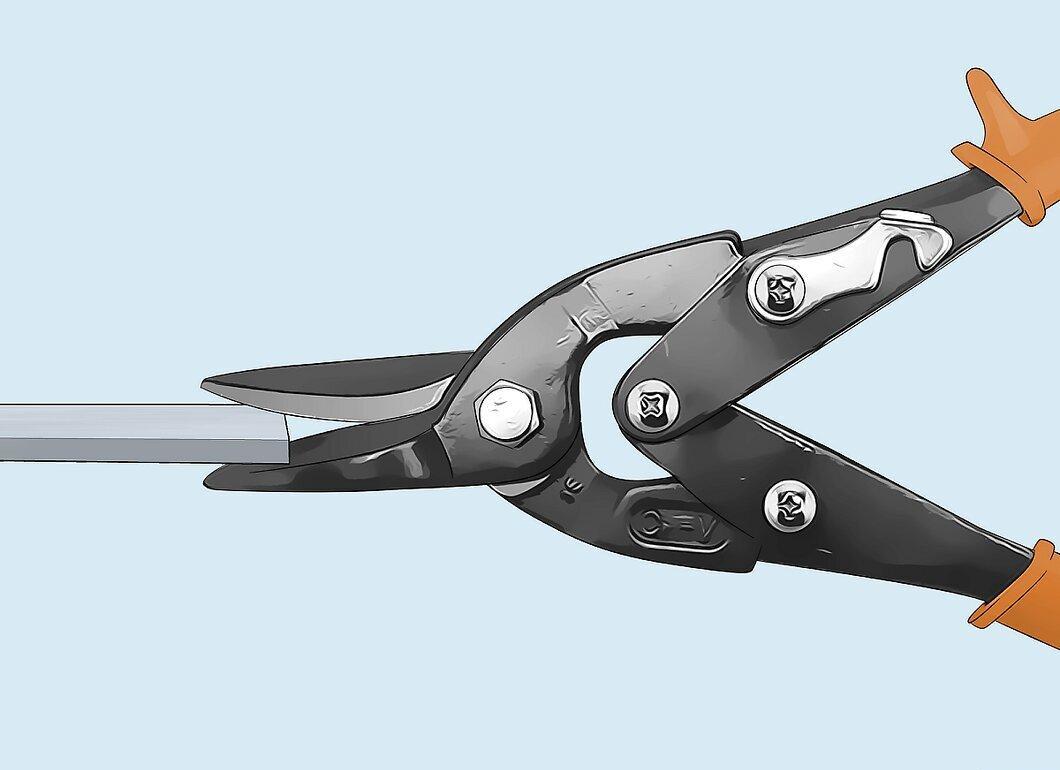
If you need to cut a thick aluminum sheet, use straight compound shears with a wide angle of opening. Make sure the sheet remains straight and push it deep into the shears before cutting. These shears are ideal for working with thick metals.
- Straight compound shears are most effective for cutting double or thick sheets of metal, such as soft steel about 1 millimeter thick, which is comparable to aluminum of the same thickness.