Often, we neglect the need to clean our dishwashers. If the plates come out clean, doesn't that mean the machine is fine? Unfortunately, food debris and grime can negatively affect its functioning. If it's time for a deep clean, start with the first step outlined below.
Deep Cleaning
Step 1. Prepare a Cleaning Solution.
Fill your sink halfway with water and add 2 cups of vinegar. This solution will help soften any buildup while you clean the interior of the dishwasher. If you don't have vinegar, you can use:
- Carbonated lemon beverage (avoid bright colors to prevent staining);
- Lemon juice;
- A specialized dishwasher cleaner.
Step 2. Remove Shelves and Holders.
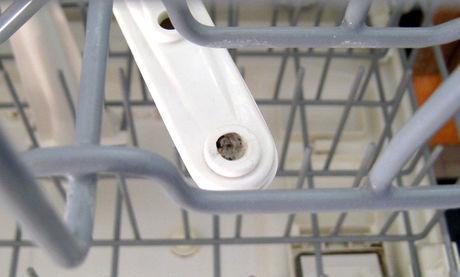
Take out the shelves and holders. Remove the two shelves from the machine along with the dish holders and any other non-removable parts. If the parts are small, place them in the cleaning solution. Otherwise, wipe them with a cloth soaked in the same vinegar solution.
- Check for any stuck food pieces! If found, carefully extract them with a toothpick or similar tool.
Step 3. Clean the Spray Arm Holes.
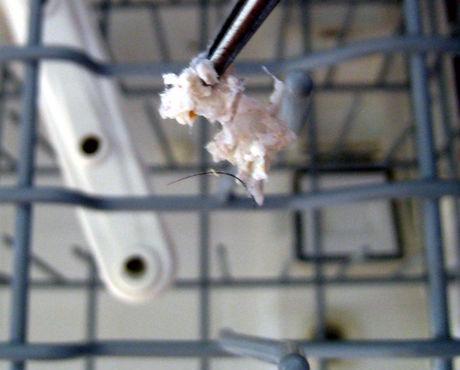
Inspect and clean the holes in the spray arms. Ensure all holes are clear and water can flow freely. If not, use needle-nose pliers or tweezers, and if you don’t have those, try a toothpick or a similar item. Be careful not to damage the surface.
- If the holes are too small, make a hook out of thin wire to carefully extract debris.
- Alternatively, you can drill a larger hole and use a brush for cleaning.
Step 4. Wipe the Door Edges and Around Baskets.
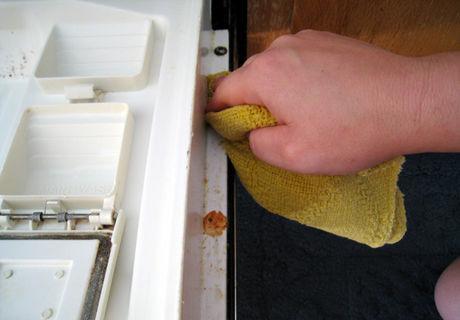
Clean around the edges of the door and around the baskets. These areas do not get cleaned during the dishwasher's operation. Use a dry cloth and the vinegar solution (or a mild cleaning agent). An old toothbrush can help reach corners and under the baskets.
- Don’t forget the bottom of the door and the space underneath! In some models, this area can trap debris due to lack of water access. Wipe it with a cloth soaked in vinegar. If something is stuck, use a brush.
Step 5. Use Bleach for Grease and Mold Removal.
If there is grease and mold, run a wash cycle without using any acidic cleaners that were used previously. Never mix bleach with other cleaners! It can have a strong impact both on you and the dishwasher, so use it in minimal amounts only when necessary.
- If there is grease and mold in the dishwasher, leave the door open for a while after each cycle to allow it to dry completely.
- Avoid using bleach if the door and interior walls of your dishwasher are stainless steel.
Step 6. Watch for Rust.
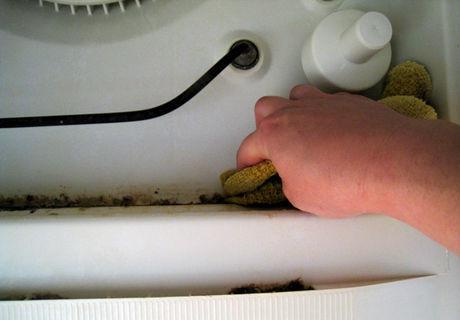
If there is a lot of iron in the water, you can't control the appearance of rust stains. Try to address this issue if it’s not in the pipes. A water softener can reduce the amount of iron, but it works by replacing hard-to-remove minerals with easily soluble salts. If you have high iron content in your water, consider purchasing a filter.
- Use a rust remover that won’t damage the dishwasher, but consult a professional first about the causes of its appearance.
- If the coating on the wire racks is cracked, use a special dishwasher sealant. Check the tracks and their underside. If there are many damages, it might be worth replacing the rack. There are many spare parts available online, and you can easily find your option.
Step 7. Reassemble All Parts.
Once all parts are cleaned and dried, put them back in the dishwasher. If it’s in poor condition, you might want to take apart the bottom for a more thorough cleaning.
Removing the Bottom of the Dishwasher
Step 1. Disconnect Power.
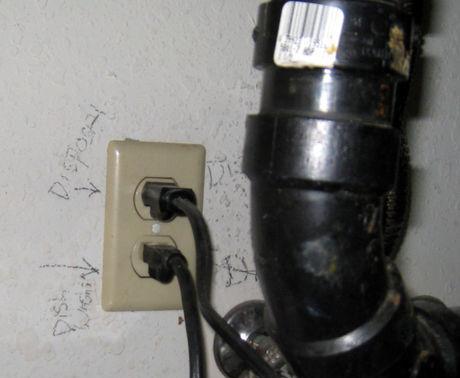
Before removing accumulated debris, disconnect the dishwasher from the power supply. Locate the outlet under the sink and ensure you have turned off the dishwasher, not the garbage disposal. Just to be sure, follow the cord.
- If you have a non-built-in model, pull it out to access the cord.
Step 2. Carefully Unscrew the Bottom Screws.
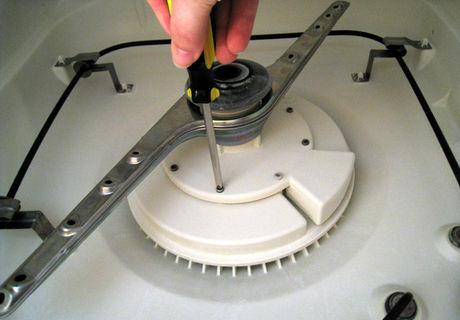
Unscrew the screws at the bottom, being careful not to drop them! The filter cover will lift, giving you access to the internal parts.
- As you disassemble, remember where each part goes. Take photos and keep the parts in the order of removal to avoid confusion during reassembly.
Step 3. Tape the Filter Shut.
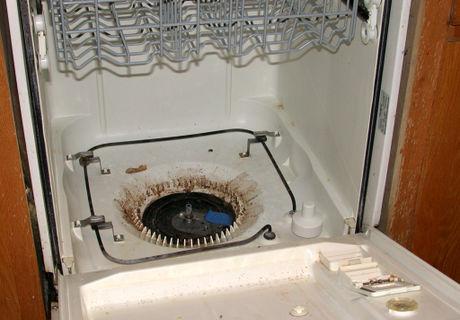
Cover the filter's inlet with a piece of tape to prevent debris from entering during cleaning. You want to remove the debris, not clog the pipes further.
Step 4. Remove Solid Residues and Wipe the Bottom.
Use a cloth to remove any solid residues and wipe the bottom if necessary. Be careful with glass shards; it’s best to wear rubber gloves.
- Use a brush or cloth to remove stuck pieces. If the dishwasher hasn't been cleaned in a while, consider using a strong cleaner to remove years of buildup.
Step 5. Reassemble Everything.
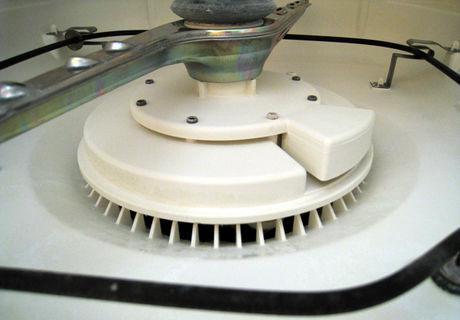
Put all the parts back together in the reverse order of disassembly. Don’t overtighten the screws, especially if they are screwed into plastic parts.
- To ensure everything works properly, turn on the machine for a short time.
Daily Maintenance
Step 1. Use the Dishwasher Regularly.
Frequent use of the dishwasher helps prevent food residues and grime buildup, making cleaning less frequent. Occasionally run it empty on an economy cycle!
Step 2. Run Hot Water Before Starting.
Before turning on the dishwasher, let hot water run in the sink for a bit. Plates will be cleaner when washed with hot water. You can use this water for watering plants. Keep the tap running until the water is hot.
- Set the thermostat to 50°C. Cold water will not be effective for cleaning, while hot water can cause burns.
Step 3. Run the Garbage Disposal Before the Dishwasher.
Run the garbage disposal before starting the dishwasher. They share the same drain pipe, so the drain should be clear. If you have issues with the dishwasher, it could be related to a clog in the disposal.
Step 4. Occasionally Run the Dishwasher with Vinegar.
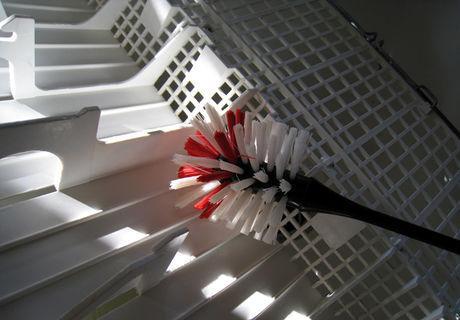
Sometimes run the dishwasher with vinegar. Pour two cups of vinegar into the bottom and run it on the economy cycle. Midway through the cycle, stop the machine and let the vinegar soak for 15-20 minutes.
- After that, restart the dishwasher to complete the cycle. If there is a lot of grime, let it soak overnight.
- To eliminate odors, sprinkle baking soda in the bottom (half a cup or a full cup) and run the dishwasher as usual.
Step 5. Wipe the Dishwasher Door.
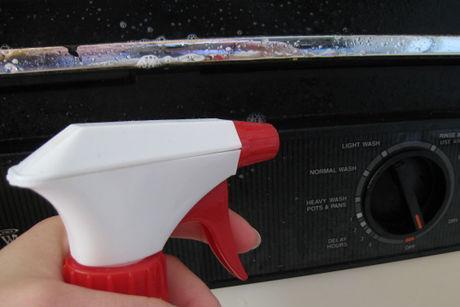
Spray the door with a mild cleaner and wipe it with a sponge. Don’t forget the control panel and handle. Pay attention to the gaps between the panels – debris can accumulate there.
Step 6. Add Rinse Aid Once a Month.
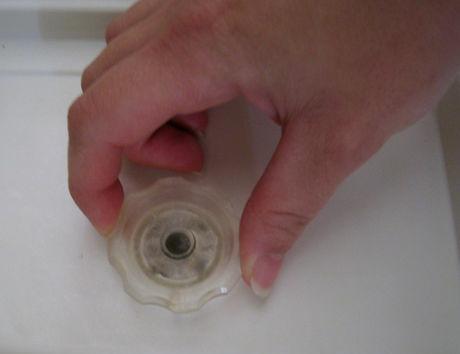
Add rinse aid once a month. This will help prevent spots on dishes. Open the round lid on the dishwasher door and pour in the rinse aid according to the instructions.
- Don’t add rinse aid if you’re using a water softener.
- There are dry rinse aids available. If you tend to forget the liquid option, use dry ones; they are easier to notice as they are more visible.
- If it’s more convenient for you, choose dishwasher detergents that already contain rinse aid.