
The Four Noble Truths are essentially the essence of Buddhism, explaining what needs to be done about human suffering. They state that the lives of sentient beings are filled with various sufferings, which have a beginning (cause) and an end, and that you can attain nirvana to end these sufferings. The Noble Eightfold Path outlines in detail what is necessary to achieve nirvana. In other words, the Four Noble Truths describe the ailment of human existence, while the Eightfold Path offers a remedy for healing. Understanding these truths and following the path will allow you to attain peace and happiness in this life.
How to Follow the Noble Eightfold Path
Step 1. Meditate Regularly.
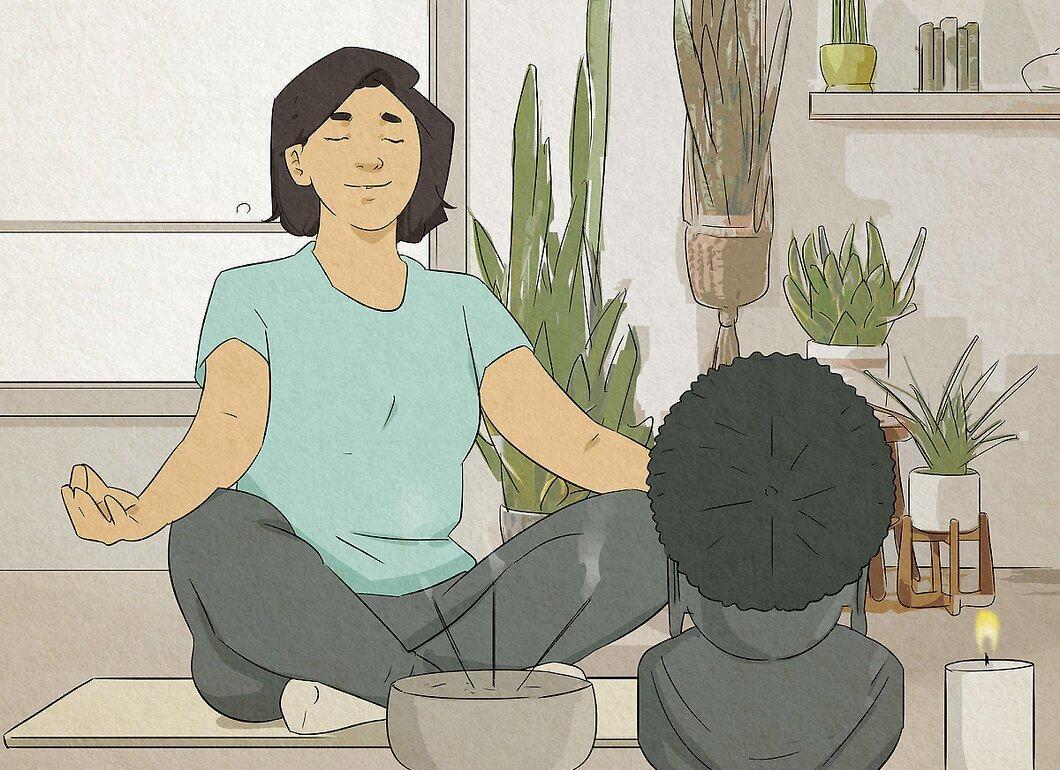
Meditate regularly. Meditation is key to working with the mind and brings you closer to nirvana. It should become a part of your daily life. You can learn to meditate on your own, but having a teacher will guide you and help you master the technique correctly. You can meditate alone, but group meditation under the guidance of a teacher yields greater results.
- You cannot achieve nirvana without meditation. Meditation helps you understand yourself and the world around you better.
Step 2. Practice Right View.

Practice right view. The Buddhist teachings (i.e., the Four Noble Truths) can be seen as a lens through which you should view the world. If you cannot accept the teachings, you will not be able to achieve nirvana. Right view and right understanding are the foundation of the path. Look at the world realistically, not how you wish it to be. You should strive to understand reality fully, through the lens of objectivity. This requires exploration, study, and knowledge.
- The Four Noble Truths form the basis of right understanding. You must believe that these truths describe things as they truly are.
- Nothing is perfect or permanent. Think critically about all situations instead of filtering them through your personal feelings, desires, and concerns.
Step 3. Cultivate Right Intentions.

Cultivate right intentions. Aim to develop behavior that aligns with your beliefs. Act as if all life deserves compassion and love. This should apply to both yourself and to all other sentient beings. Reject selfish, cruel, or hateful thoughts. Love and non-violence should be your core principles.
- Show love to all beings (people, animals, and even plants), regardless of their status. For example, treat both the rich and the poor with equal respect. Representatives of all professions, races, ethnic groups, and ages should be equal in your eyes.
Step 4. Practice Right Speech.

Practice right speech. The third step involves right speech. When practicing right speech, you should not lie, spread falsehoods, gossip, or speak harshly. Speak only kind and truthful words. Your words should inspire and uplift others. Know when to remain silent—this is very important.
- Practice right speech every day.
Step 5. Engage in Right Action.

Engage in right action. Your actions depend on what is in your heart and mind. Treat yourself and others kindly. Do not harm life or steal. Live peacefully and help others to do the same. Be honest in your interactions with others. For instance, do not deceive or mislead others to get what you want.
- Your presence and actions should be positive and enhance the lives of others and society as a whole.
Step 6. Choose a Right Livelihood.

Choose a right livelihood. Select a profession or activity that aligns with your beliefs. Do not engage in work that harms others, involves killing animals, or involves deception. Selling weapons or drugs, or working in a slaughterhouse, does not align with right livelihood. Whatever work you choose, you should perform it honestly.
- For example, if you work in sales, do not deceive or lie to people buying your goods.
Step 7. Practice Right Effort.

Practice right effort. Apply the right effort to everything you do to succeed. Free your mind from negative thoughts and focus on positive ones. Approach everything with enthusiasm (learning in school, building a career, making friends, pursuing hobbies, etc.). Continually practice positive thinking, as this does not always come naturally. This will prepare your mind for mindfulness. Here are the four principles of right effort:
- Avoid unhealthy and evil states (sensual desire, hostility, excitement, doubt, anxiety).
- If anger or other unhealthy states arise, avoid them—redirect your attention to something else, focus on good thoughts, or try to trace the state and find its source (reflection).
- Strive to cultivate good and wholesome states.
- Sustain good and wholesome states.
Step 8. Practice Mindfulness.

Practice mindfulness. Mindfulness allows you to see reality and things as they are. The four foundations of mindfulness are contemplation of the body, feelings, states of mind, and phenomena. When you are mindful, you are in the present moment and open to any experience. You focus on the present, not the past or future. Be attentive to your body, feelings, thoughts, ideas, and everything around you.
- Living in the present frees you from desires.
- Mindfulness also means being attentive to the feelings, emotions, and physical states of others.
Step 9. Focus on Your Mind.

Focus on your mind. Right concentration is the ability to focus your mind on a single object and not be distracted by external influences. Following the entire path allows you to learn to concentrate. Your mind will be focused and free from stress and anxiety. You will have good relationships with yourself and the entire world. Right concentration allows you to see clearly, to see the true essence.
- Concentration is similar to mindfulness. However, when you are concentrated, you are not aware of all feelings and sensations. For example, if you are concentrating on an exam, you are focused solely on the process of taking the exam. If you practiced mindfulness during the exam, you would be aware of your emotions while taking the exam, observe the actions of others, or how you are sitting during the exam.
How to Achieve Nirvana in Everyday Life
Step 1. Practice Loving Kindness (Metta Bhavana).

Practice loving kindness (metta bhavana). "Metta" means non-romantic love, kindness, and friendliness. These feelings come from the heart, and they can be cultivated and practiced. Typically, the practice involves five stages. If you are a beginner, try to dedicate five minutes to each stage.
- Stage 1: Feel "metta" towards yourself. Focus on feelings of peace, calm, strength, and confidence. You might say to yourself, "May I be healthy and happy."
- Stage 2: Think of friends and all the people you like. Repeat the phrase: "May they be healthy, may they be happy."
- Stage 3: Think of people towards whom you feel neutral emotions and mentally send them "metta."
- Stage 4: Think of those you dislike. Instead of pondering why you dislike them and cultivating thoughts of hatred, send them "metta."
- Stage 5: In the final stage, think of all people, each individual, and yourself. Send "metta" to people in your city, region, country, and all people in the world.
Step 2. Practice Mindful Breathing.

Practice mindful breathing. This type of meditation will teach you to concentrate and focus on your thoughts. Through this meditation, you will learn to practice mindfulness, relax, and reduce anxiety. Sit in a comfortable position. Your back should be straight and relaxed, shoulders relaxed and slightly pulled back. Place your hands on your lap or knees. Once you find a comfortable and correct position, begin the practice, which consists of several stages. Spend at least five minutes on each stage.
- Stage 1: Begin to mentally count (inhalation-exhalation - one, inhalation-exhalation - two, and so on) after each exhale. Count to 10. Focus on the feelings of inhalation and exhalation. If your mind wanders (which it will), simply bring your thoughts back, refocusing on your breath.
- Stage 2: Continue to breathe in cycles of 10, but at this stage, count before inhaling (for example, one - inhale-exhale, two - inhale-exhale, three...). Focus on the sensations arising during inhalation.
- Stage 3: Breathe, but no longer count your breaths. Try to observe the breathing as a continuous process, not just a series of inhalations and exhalations.
- Stage 4: Now focus on the sensations of how air enters your body and how it leaves it. Notice how the air passes through your nostrils and feel the exhaled air on your upper lip.
Step 3. Support and Inspire Others.

Support and inspire others. The ultimate goal of Buddhism is to achieve inner peace and share that experience with others. Attaining nirvana will benefit not only you but the entire world. You should become a source of support and inspiration for others. This is as simple as giving someone a hug or encouragement when they are feeling down. If someone is important to you or has done something good for you, express your feelings to them. Let people know how grateful you are and how much you appreciate them. If someone has had a bad day, listen and allow them to express themselves.
Step 4. Remember Compassion for Others.

Remember compassion for others. Your happiness is directly linked to the happiness of others. Showing compassion brings joy to everyone. You can practice compassion in various ways:
- Turn off your cellphone when spending time with friends or family.
- Look others in the eye, especially when they are talking to you, and listen without interrupting.
- Engage in volunteer work.
- Hold doors open for others.
- Be sensitive to the feelings of others. For example, if someone is upset, notice this and try to understand the reasons. Offer your help. Listen and show care.
Step 5. Remember Mindfulness.

Remember mindfulness. When practicing mindfulness, you should pay attention to what you are thinking and feeling in the present moment. Mindfulness should be practiced not only during meditations but also in everyday life. For example, be mindful while eating, taking a shower, or getting dressed. Start by practicing mindfulness in one specific activity, focusing on the sensations in your body and your breath.
- If you want to practice mindfulness while eating, focus on the taste, texture, and smell of the food you are consuming.
- When washing dishes, pay attention to the temperature of the water, how your hands feel as you wash the plates, and how the water rinses the dishes.
- Instead of listening to music or watching TV while getting ready for school or work, prepare to do this in silence. Pay attention to your sensations. Do you feel tired or energized when getting out of bed? What sensations do you experience in your body while showering or getting dressed?
The Four Noble Truths
Step 1. Identify Suffering.

Identify suffering. The Buddha describes suffering differently than we are used to thinking about it. Suffering is an inherent part of life. Dukkha is the truth that all sentient beings suffer. We usually describe suffering as conditions like illness, aging, injury, or physical or emotional pain. However, the Buddha describes suffering as primarily unfulfilled desires and attachment to something. Desires and attachments are the cause of suffering because people rarely feel satisfied or content. Once one desire is satisfied, a new desire arises, creating a vicious cycle.
- Dukkha means "that which is difficult to bear." Suffering is very diverse; it encompasses both global issues and minor annoyances.
Step 2. Identify the Causes of Suffering.

Identify the causes of suffering. Desires and ignorance are the root of suffering. Unfulfilled desires are the worst kind of suffering. For example, if you are ill, you suffer. When you are sick, you want to feel better. Your unfulfilled desire to be healthy is much heavier than the discomfort caused by the illness. Each time you desire something (a thing, opportunity, person, or achievement) that you cannot obtain, you suffer.
- The only guarantees in life are aging, illness, and death.
- Desires are never satisfied. Once you achieve or obtain something, you will begin to desire something else. The constant craving for something prevents you from experiencing true happiness.
Step 3. Cease Suffering in Your Life.

Cease suffering in your life. Each of the four truths is a kind of step. If everything in life is suffering, and suffering arises from our desires, then the only way to end suffering is to stop wanting anything. You must believe that you are not obligated to suffer and that you can stop suffering. To put an end to suffering, you need to change your perception and learn to control your desires.
- Controlling desires and cravings allows you to achieve freedom and contentment in life.
Step 4. End Suffering in Your Life.

End suffering in your life. Suffering can be ended through the Noble Eightfold Path. The path to nirvana should rely on three ideas. First, you must have right intention and thinking. Second, you must live with right intentions and thoughts every day. Finally, you must understand true reality and have the right attitude toward all things.
- The Eightfold Path can be divided into three categories: wisdom (right view, right intention), ethical conduct (right speech, right action, right livelihood), and mental discipline (right effort, right mindfulness, right concentration).
- The Eightfold Path offers guidance for everyday life.