In this article, we’ll share the secrets of writing a captivating vampire novel.
Getting Started with Your Creativity
Step 1. Don’t Rush the Title.

Don’t rush to come up with a title. It will be easier to decide on one as your plot develops.
Step 2. Determine the Time Context of Your Story.

Consider the time period in which your novel takes place. Is it modern, or do you want to explore a different era? You have the freedom to choose!
Step 3. Decide on the Narrative Perspective.

Decide whose point of view the story will be told from: first person (I, me) or third person (he, she, it). Rarely does a work use the second person, but if you want to experiment, you can. This will create a sense of intimacy with the reader.
Creating Characters
Step 1. Come Up with Interesting Characters.
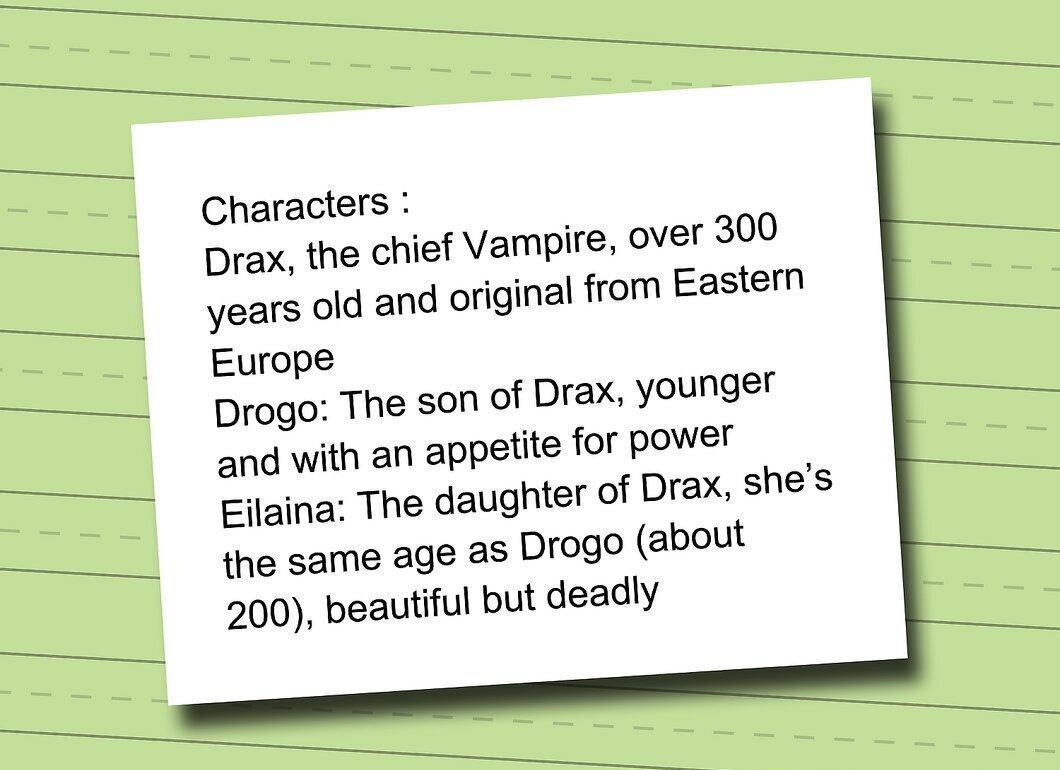
Create several characters. Do you want to focus on one vampire living among humans or a whole group of vampires? Each character should be well-developed, so start with a few until you feel confident in your writing.
Step 2. Choose Names for Your Characters.
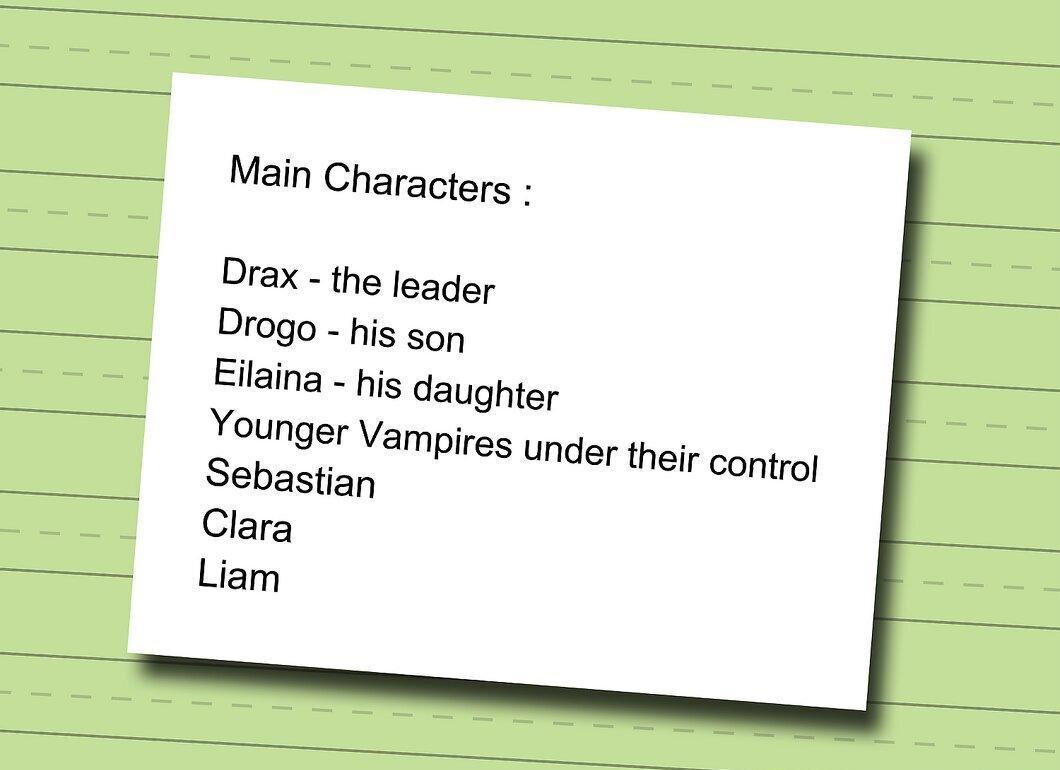
Pick names for your vampire and other characters. Names like Dracula can sound intriguing, but they’re not always realistic unless you want to reference the original. Why not give your vampire a regular name, like Liam? If you’re torn between two names, you can combine them; for example, Catherine and Madeline can become Cathryn.
- Also, decide on the age of your vampire. Vampires can be either immortal or mortal. This gives you the freedom to choose when and where your character was "born." Thus, your vampire could have grown up in the Victorian era or in modern times, so their name should fit the period.
Step 3. Define Your Vampire’s Abilities.
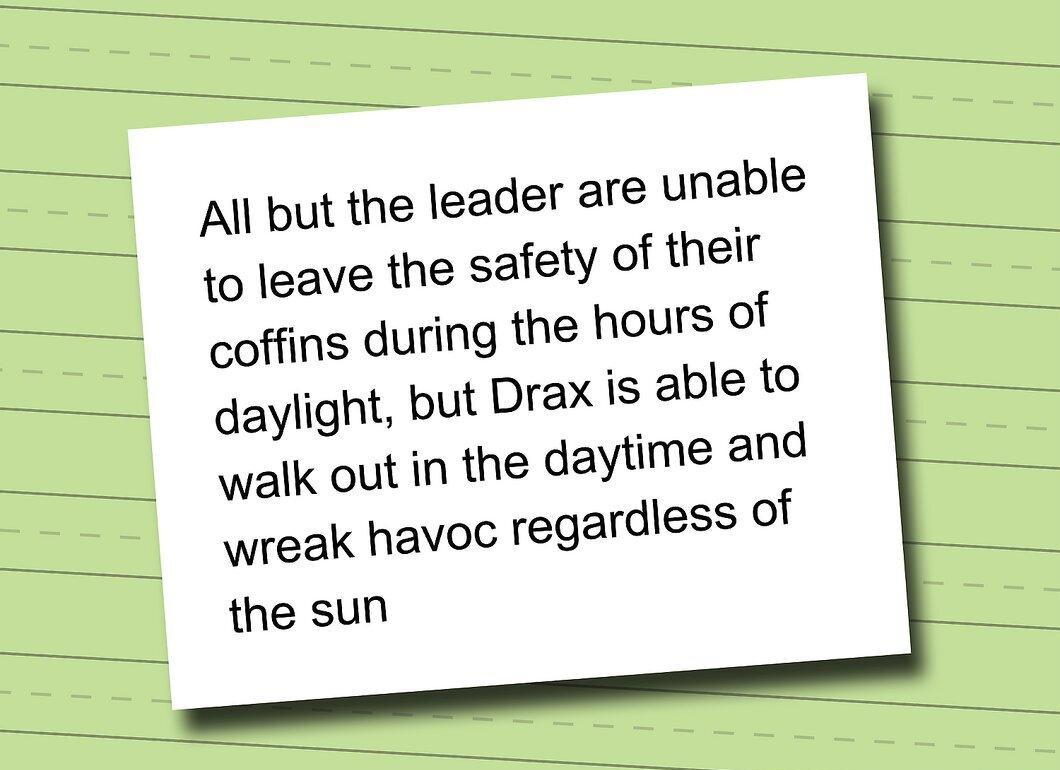
Decide what abilities your vampire will have. Can they shapeshift? Fly? It all depends on your imagination. Classic vampires, like Dracula, had abilities such as passing through walls and not being reflected in mirrors. Don’t hesitate to use these elements to make your character unique.
- Describe how your vampire feels about their actions. Are they proud of their nature, or do they feel shame and fear?
- Vampires usually fear sunlight, but you can create a character who is immune to this. Look at authors like Stephenie Meyer and Christopher Pike, who offered their own variations. However, it might be worth keeping vampires vulnerable to the sun or inventing special amulets that protect them.
Step 4. Determine What Your Vampire Will Feed On.
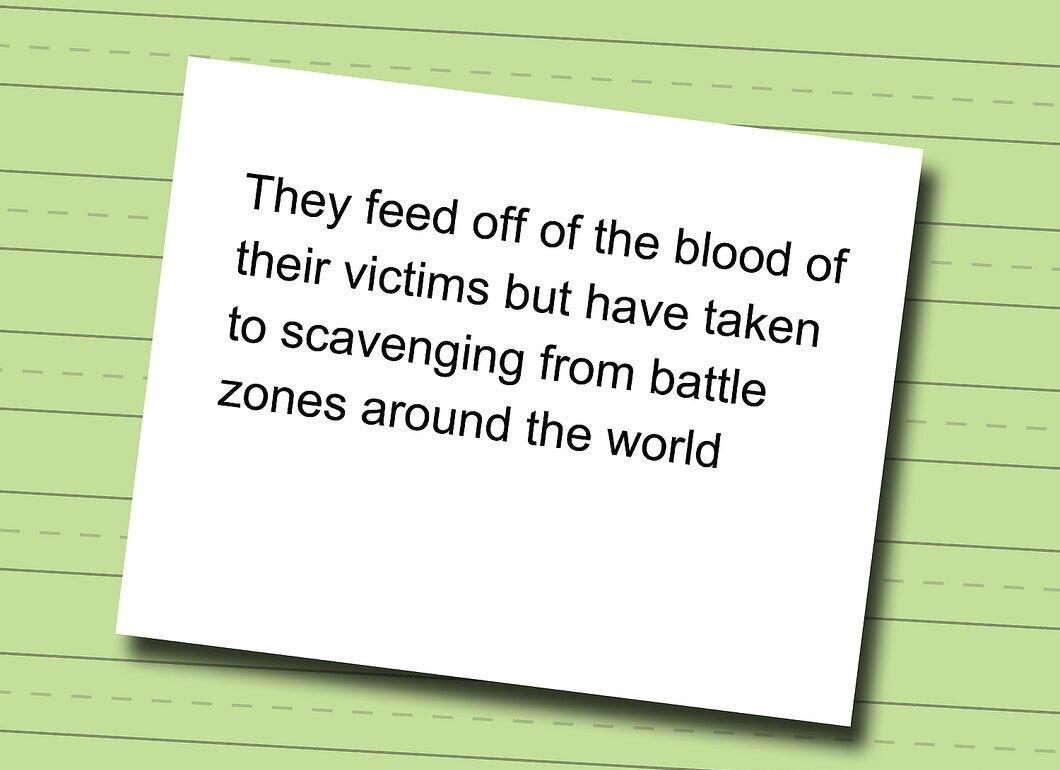
Decide how your vampire will obtain food. Vampires typically drink blood, but this can be interpreted in various ways in your novel. Some writers find alternatives, like vegetarian vampires. It’s important that this aspect is integrated with your hero’s personality.
Creating a Family for Your Vampire
Step 1. Consider Whether Your Character Needs a Family.
Decide if it’s worth creating a family for your character. This can enrich the plot significantly through interactions among family members.
- Do they have siblings? If so, how many?
- Come up with interesting names for family members, especially the last name.
- What is the social status of this family — noble, middle-class, or working-class? Avoid the clichéd image of the "rich and famous." Perhaps they are ordinary vampires who have never known luxury and live modestly!
- Has your vampire created other vampires? Or do they have a master or progeny? What are their relationships like? Is there rivalry, friendship, or love?
Step 2. Or Make Your Vampire a Loner.
Alternatively, let your vampire be completely alone. This could explain why they choose to pursue certain people — perhaps it’s driven by loneliness or a search for meaning in life.
Plot Development
Step 1. Create a Plot Outline Before Writing.

Draft a plot outline before you start writing. This will give you a basic direction and help create a cohesive story. Writing without a plan can be more challenging than with one, although some authors prefer to go spontaneously. Don’t be afraid to try different approaches.
- Even with a plan, your characters may surprise you. It’s an art to allow them to develop and change as you write.
- Remember, your vampire is not human, so their perception of the world will be different. This is a wonderful opportunity to describe human nature from a new perspective.
- When describing the transformation of people into vampires, try to depict it from their point of view. It might be worth switching perspectives between first and third person to diversify the narrative.
Step 2. Start Writing.

Begin writing! Gradually develop your style. Every author has a unique one. The key is to take the first step and then find the motivation to continue.
- How you write depends on your audience. If you plan to post the story online, it’s okay if there are minor mistakes. But if you want to publish, strive for perfection, as editors will pay attention to details.