The "secret ingredient" of all wisdom is likely understanding, akin to a magical insight where not only the concept but also its practical application makes complete sense. However, the challenge lies in the fact that understanding and knowledge are not always the same. While a person may diligently study philosophy, it may never help them on a deeper level or even acquire meaning, leaving the lesson abstract, inaccessible, and distant. This common issue affects many and becomes a major obstacle to the ability to develop skills in life.
Part 1
Step 1. Start by considering what knowledge is.

Start by considering what knowledge is. Knowledge is essentially an accumulation of facts, myths, general information, and beliefs. It is a comprehensive domain of data that we use for life—ranging from methods for completing tasks to data that allows us to plan, as well as the ability to reflect on what we have learned.
- Think about how you have accumulated this vast wealth of information. Information can be obtained from schools and other people, and consciousness retains it if it finds it interesting—be it simple curiosity or practical utility.
Step 2. Reflect on how much knowledge you actually understand at a deep level.

Reflect on how much knowledge you actually understand at a deep level. Generally speaking, the amount of knowledge we possess significantly exceeds what we truly comprehend. For example, we all likely know that if you place a raw egg in boiling water, it will eventually cook, but not everyone necessarily understands the process affecting the proteins in the egg. However, a specialist studying this process would know not just how, but also why. Similarly, we may possess fragments of wisdom, but most of it is stored as learned information without understanding, as we rarely observe it or apply it consciously.
Step 3. Explore your current relationship with knowledge.

Explore your current relationship with knowledge. Upon closer inspection, knowledge is entirely tied to the past, not the present. All our knowledge and information have been accumulated over a long period, while the present moment simply exists—there is just awareness and existence.
- It's important to consider this aspect. Very few pieces of informational knowledge are gained not through education but from experience and personal study; however, such data retention is merely data storage that wasn’t obtained "now" but was acquired "then," and now only exists for personal use in our consciousness.
Step 4. Experiment with what happens when you let go of the past.

Experiment with what happens when you let go of the past. You can try this as a mental exercise or during a meditation practice. If you can truly let go of the past enough to fully realize the present moment, it will likely last just a few minutes. The process of consciousness relies on knowledge, so it quickly returns to its habitual state.
Step 5. Reflect on your relationship with philosophy and religion.

Reflect on your relationship with philosophy and religion. What is the ratio of knowledge acquired to knowledge understood? It’s a fascinating thought that many methods for living well and being happy have already been discovered by numerous philosophers, saints, and religious leaders throughout time. So why is it that we hear the answer, but it changes nothing, even though it may change something for others?
Step 6. Start studying specific aspects of philosophy.

Start studying specific aspects of philosophy. By contemplating its meaning, as well as its application, alternatives, and non-application, you will gain a deeper understanding of this discipline. At this stage, such understanding is still insufficient, but it serves as a foundation for building comprehension. A more meaningful understanding occurs when the studied knowledge is applied directly in the present moment.
- A remarkable quality of consciousness is that it can see the same thing and still learn something new. Just like when you look at a photograph or painting multiple times, over time you notice more and more. You see subtler shades of light and shadow, brush strokes, and texture of paints and colors, as well as barely visible elements in the background that can add new meaning and engage you. Realizing this, one can study philosophy or teaching, or something more general—life itself.
Step 7. Consider the benefits and opportunities to enhance your understanding.
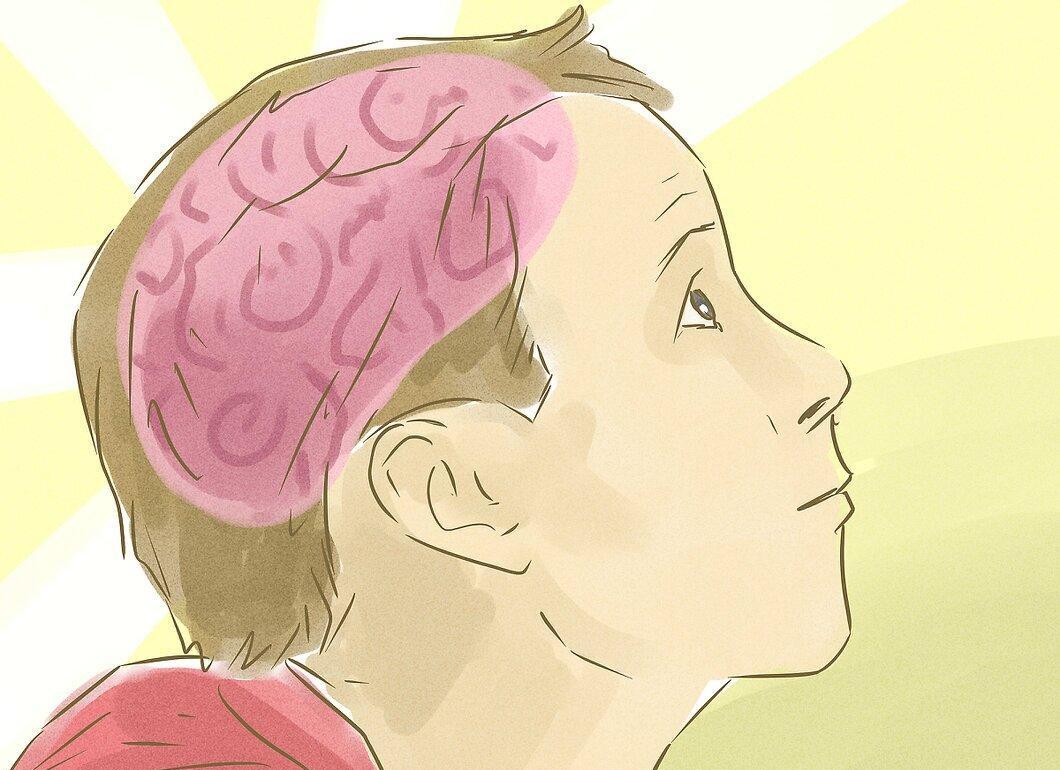
Consider the benefits and opportunities to enhance your understanding. Essentially, understanding is a very deep process with significant advantages, while conventional book knowledge, rote learning, or mnemonic information occupies a very superficial level of consciousness and therefore offers minimal benefits. Only when a person studies information well enough to apply it in the present moment does understanding arise from knowledge. Complete the process by reflecting on the difference between knowledge and understanding once again. Above all, knowledge represents a collection of past events and hearsay learned from various sources. In the present moment, there is only simple understanding and openness to tranquility and happiness.