
Critiquing artworks involves a detailed analysis and evaluation of pieces of art. Everyone experiences unique feelings when engaging with a piece, interpreting it in their own way, but there are several common rules for creating substantial and thorough critiques. Thus, art criticism includes four basic elements: description, analysis, interpretation, and evaluation.
How to Describe a Work
Step 1: Gather Basic Information About the Work.

Gather essential information about the work. You need details typically found on a plaque in museums and galleries or in the caption of an art album. This background knowledge greatly influences the interpretation and understanding of the work. At the beginning of the review, you should provide the following information:
- title;
- name of the artist;
- date of creation;
- place of creation;
- medium used (e.g., oil paint and canvas);
- exact dimensions of the work.
Step 2: Describe What You See.
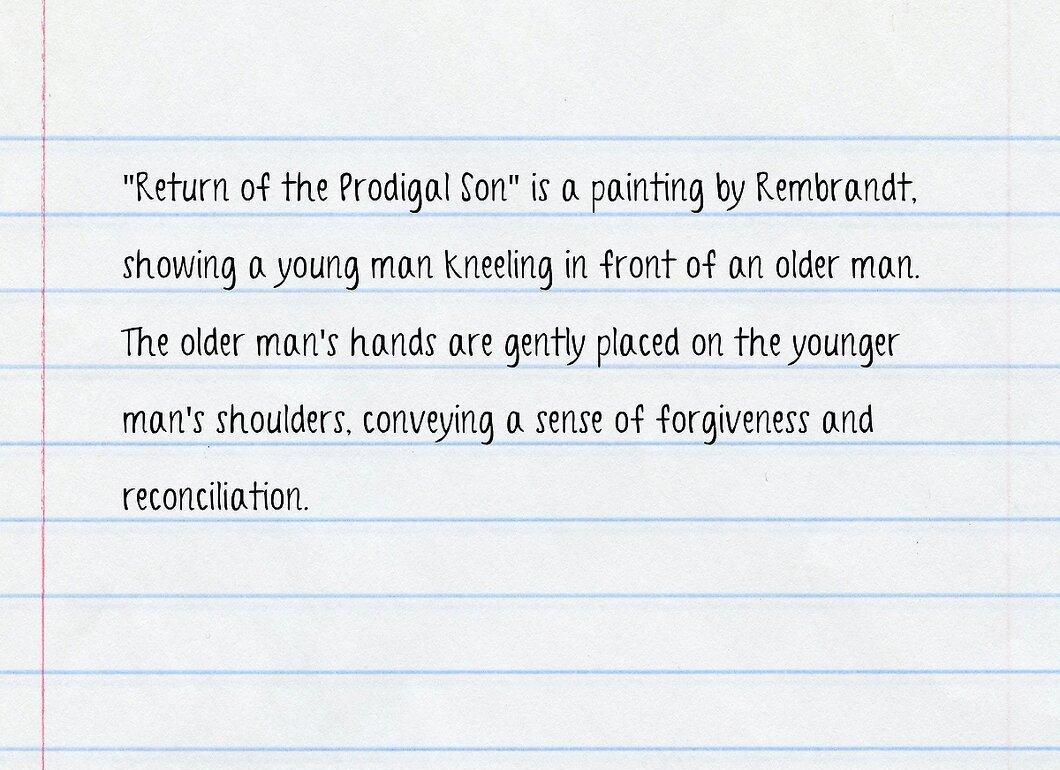
Describe what you see. Use neutral terms to describe the work. Include the form and scale of the piece. Describe the central and secondary objects, especially if the canvas depicts non-abstract forms.
- For example, you might say: “This is a small waist-length portrait of a young woman against a dark background. She has her hands clasped on her chest, and her gaze is directed upwards and to the right of the viewer. The woman is wearing a pink dress and a long veil that falls below her shoulders.”
- Avoid using words like “beautiful”, “ugly”, “good”, or “bad”. At this stage, you need to describe what you see, not express your own judgments!
Step 3: Consider the Main Elements of the Work.
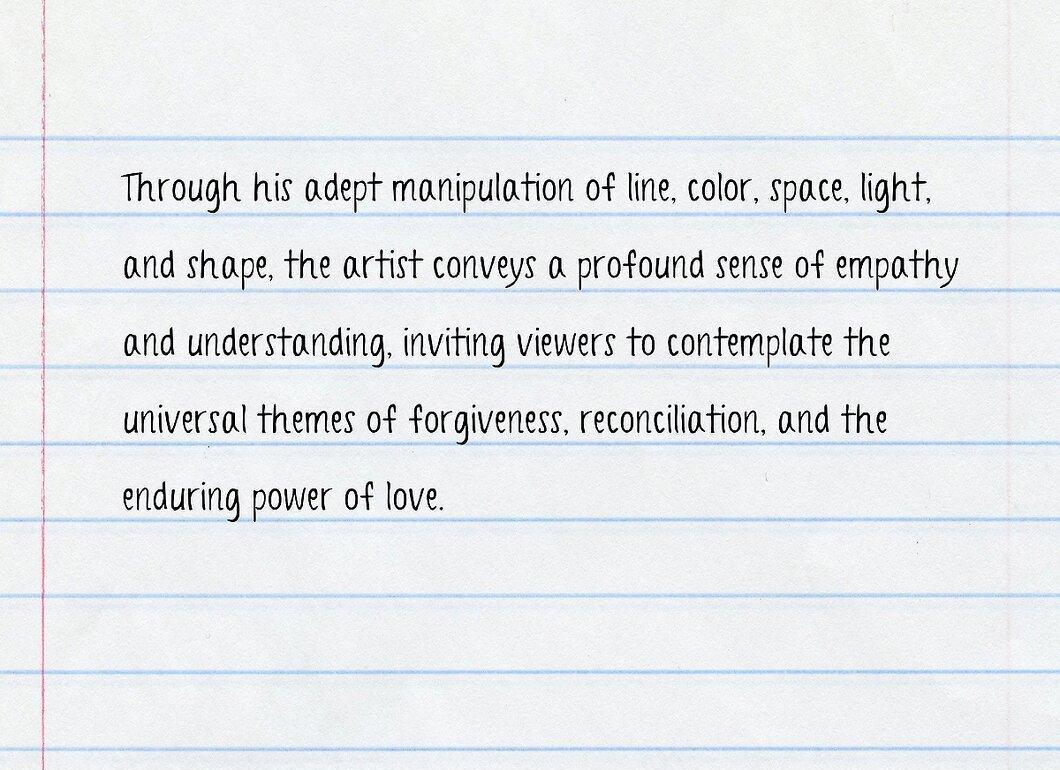
Consider the main elements of the work. Now it’s time to describe the work in detail. Report on the use of the five basic elements of visual art: lines, color, space, light, and form.
Step 4: Describe the Use of Lines.
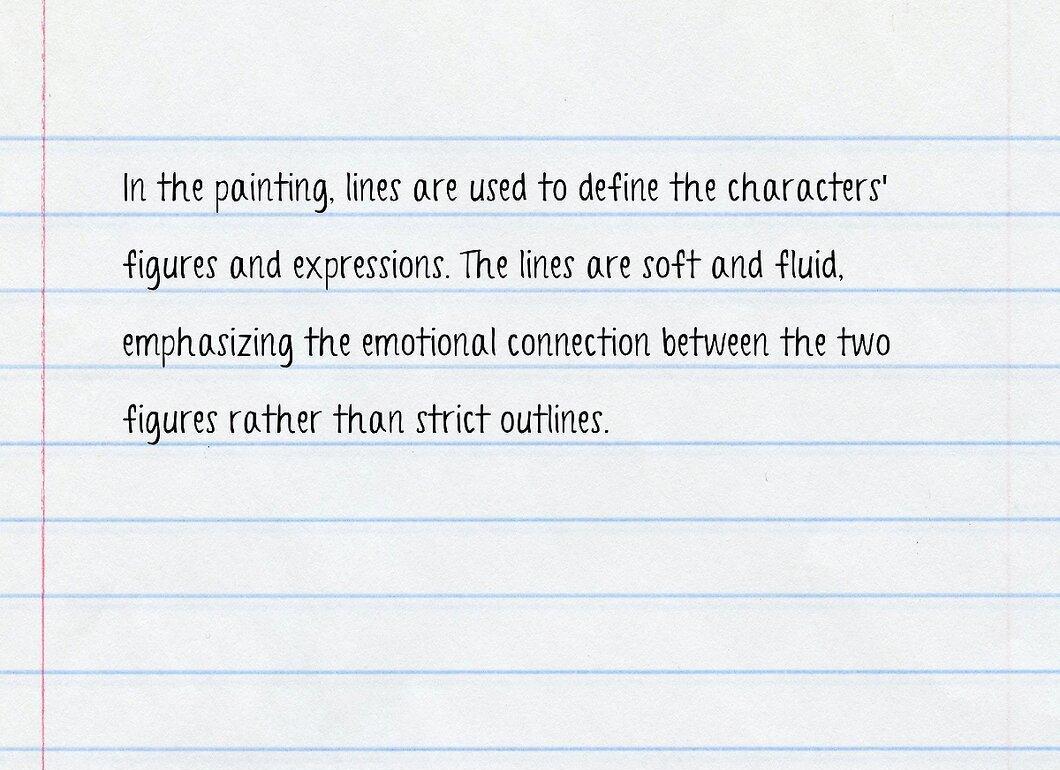
Describe the use of lines. Lines in a work of art can be literal or implied. Different types of lines create different tones and effects. For example:
- Smooth, curved lines create a calming effect, while jagged lines can appear rougher or enhance the energy of the canvas.
- Rough schematic lines convey a sense of movement and freedom, whereas smooth, continuous lines express calmness and create a sense of deliberation in the image.
- A line of sight or action may be implied by the arrangement of objects within the scene. For instance, a group of figures looking or facing in one direction can create an implied line that guides the viewer’s gaze.
Step 5: Discuss the Use of Color.
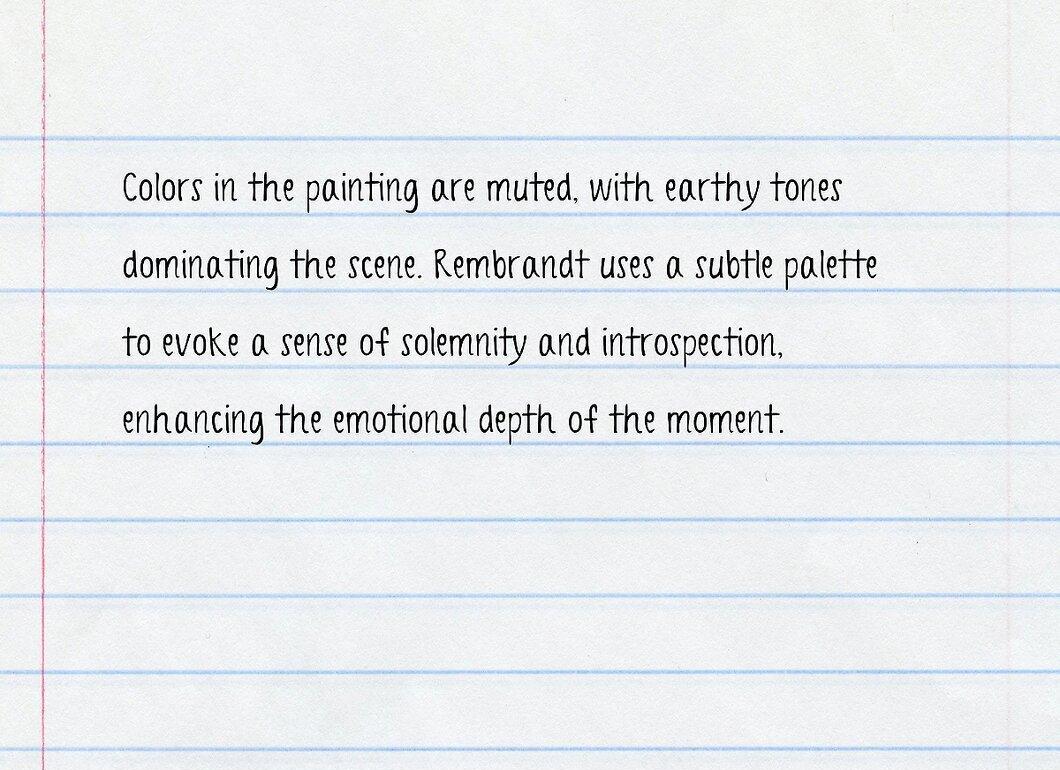
Discuss the use of color. Pay attention to parameters such as hue (red, green, blue), brightness (light or dark), and saturation. Note overarching color schemes and analyze the interplay of colors.
- For example, do the colors contrast with each other or harmoniously blend? Does the work use a variety of colors or focus on a single dominant color (e.g., various shades of blue)?
Step 6: Describe the Use of Space.
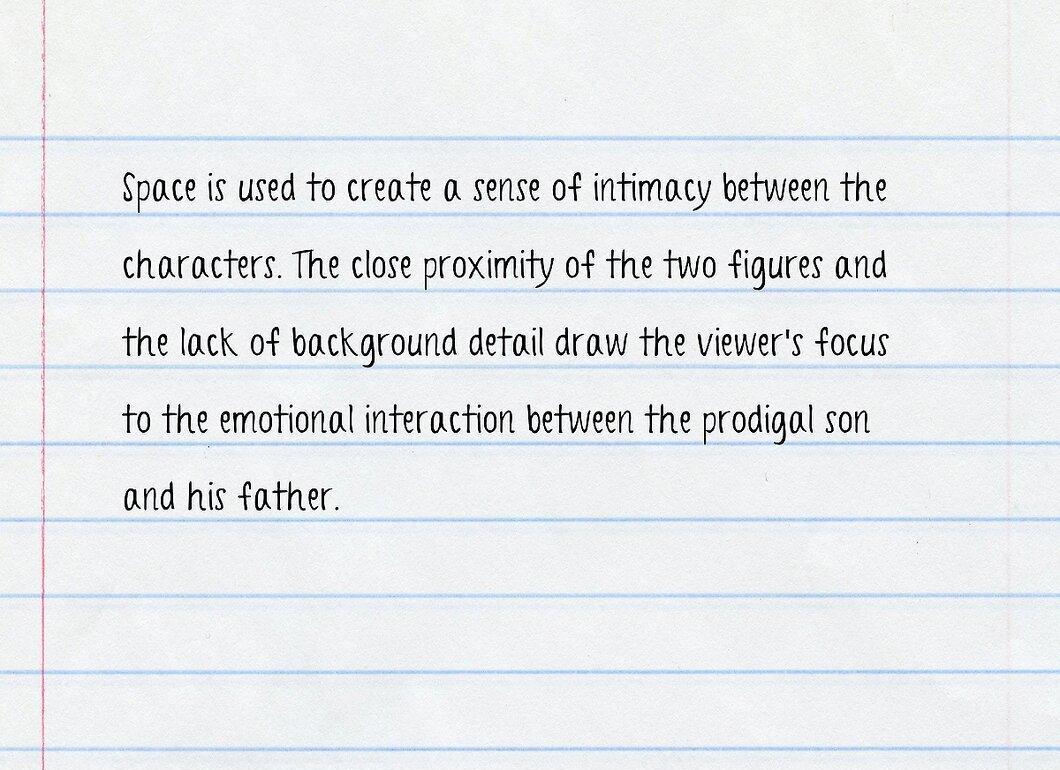
Describe the use of space. “Space” refers to the areas around and between objects. When discussing space, focus on depth and perspective, the overlapping of objects, and the combination of empty and detail-filled spaces.
- When describing a two-dimensional work, such as a painting, discuss the presence or absence of an illusion of depth and three-dimensional space.
Step 7: Describe the Use of Light.
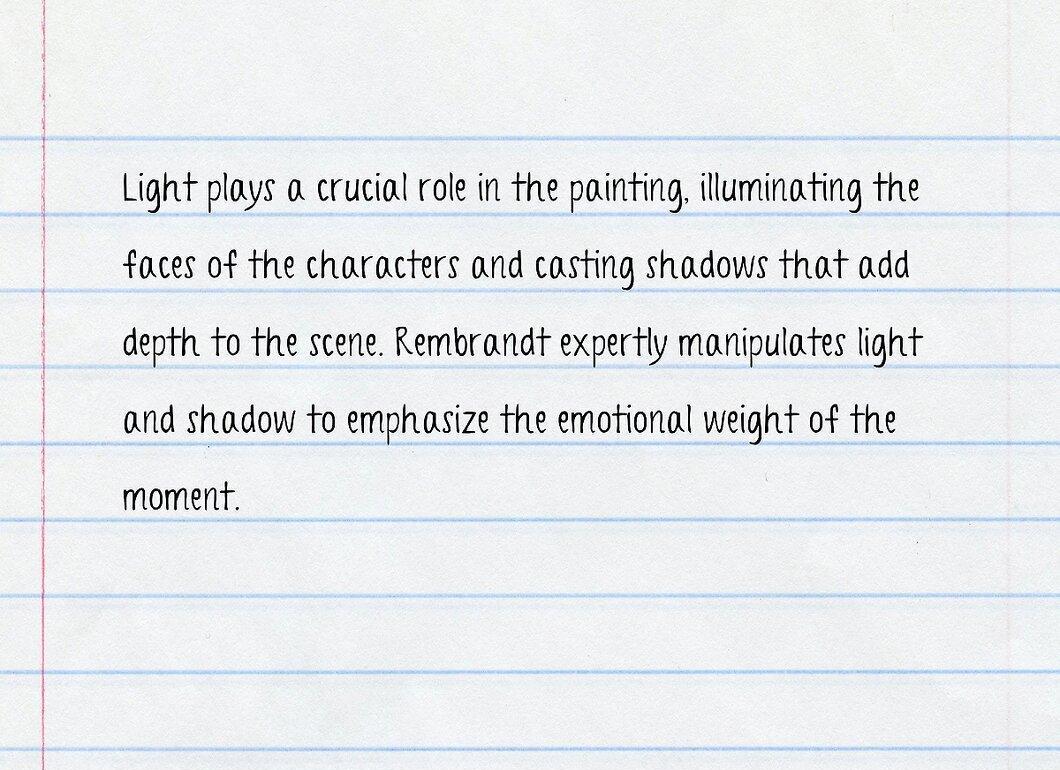
Describe the use of light. Light in visual art can be warm or cool, bright or muted, natural or artificial. Pay attention to the role of light and shadow in the work.
- If discussing a two-dimensional work, such as a painting, focus on the methods of creating an illusion of light or similar moments.
- When describing a three-dimensional work, such as a sculpture, consider the impact of real light on the piece. For example, does the sculpture have a reflective surface? Does it cast unusual shadows? Which elements are well-lit, and which are in shadow?
Step 8: Note the Use of Form.
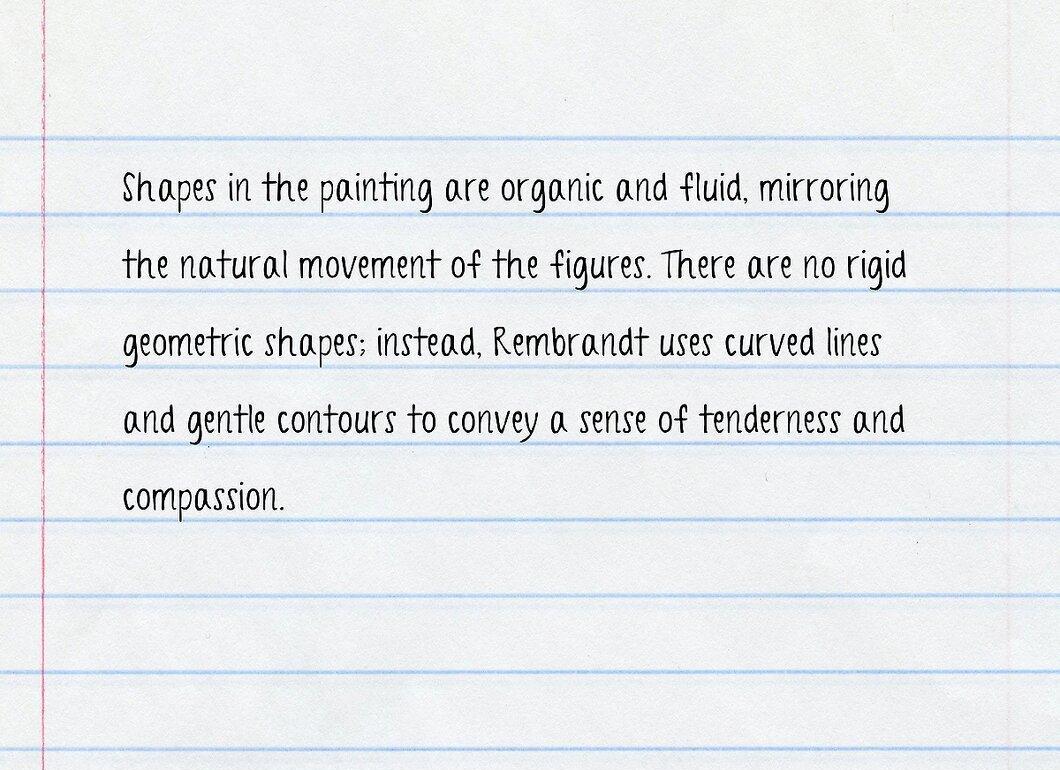
Note the use of form. Does the work feature geometric shapes with straight lines and perfect curves, or more organic forms? Is there one predominant shape or a variety of patterns?
- Forms play a significant role in both abstract and representational works. For example, in the portrait of a bride by James Senta, triangular shapes formed by the folds of the veil on her shoulders and her hands clasped on her chest draw attention.
- Analyze how frequently specific shapes are repeated in the painting.
How to Analyze a Work
Step 1: Consider the Use of Composition Principles.
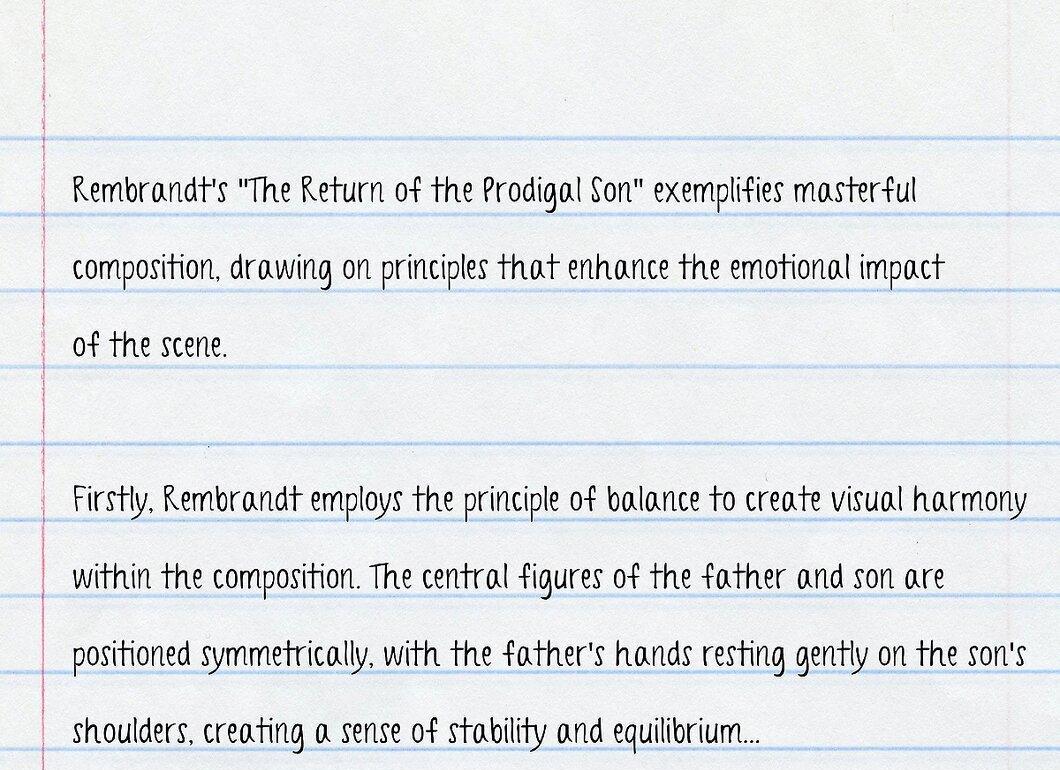
Consider the use of composition principles. After the description, it’s time for analysis or examining how all the aforementioned elements interact. Start by discussing the composition, keeping several key points in mind:
- Balance: How do colors, forms, and textures interact in the work? Do they create a balanced, harmonious effect, or does the work appear unbalanced?
- Contrast: Are contrasting colors, textures, or lighting used in the work? You can also identify contrast in the use of different shapes or contours, such as jagged versus smooth lines, geometric versus organic forms.
- Movement: How does the work achieve a sense of movement? Does the composition draw your gaze to specific elements and areas of the canvas?
- Proportions: Do the sizes of the elements in the painting appear familiar or unusual? For instance, if a group of people is depicted, do they appear larger or smaller than in real life?
Step 2: Identify the Focus of Attention.
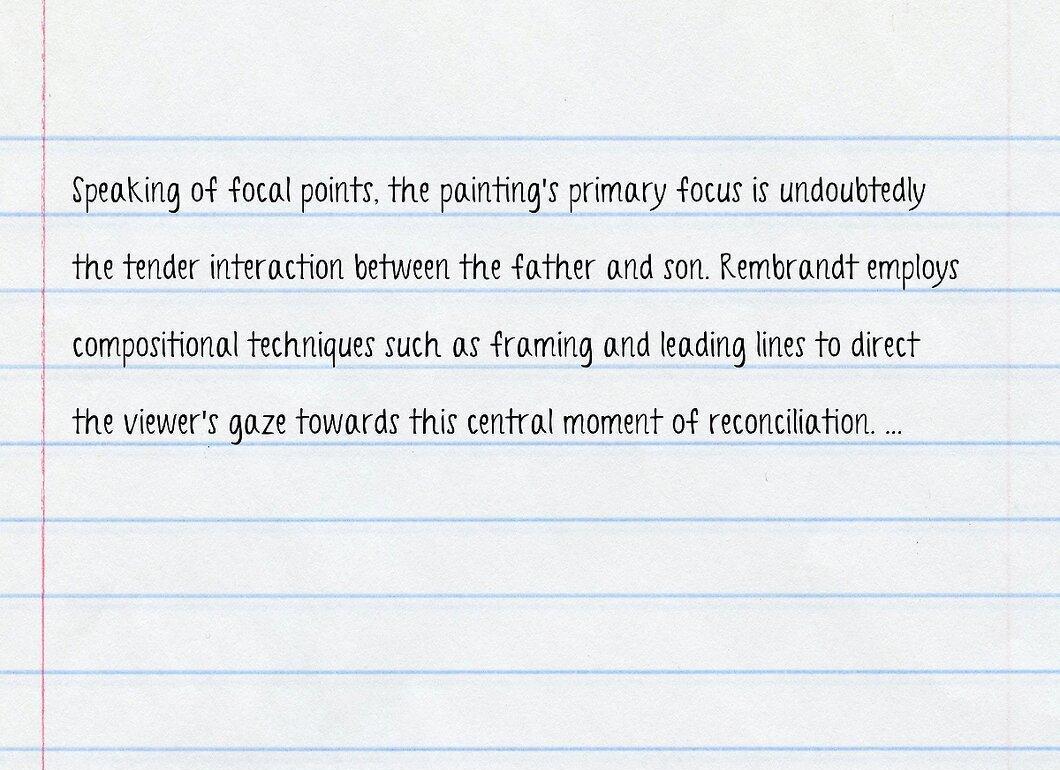
Identify the focus of attention. Most works have one or more points intended to draw the viewer's eye. In a portrait, this might be the face or the eyes of the subject. In a still life, it could be the central or well-lit object. Try to understand which parts of the work the artist wanted to emphasize.
- Look at the work and take note of which details instantly catch your eye or keep your gaze fixed.
- Consider why these details attracted you. For example, if your attention is drawn to one person in a group, is it because that figure is simply larger than the others? Closer to the viewer or better lit?
Step 3: Notice Themes.
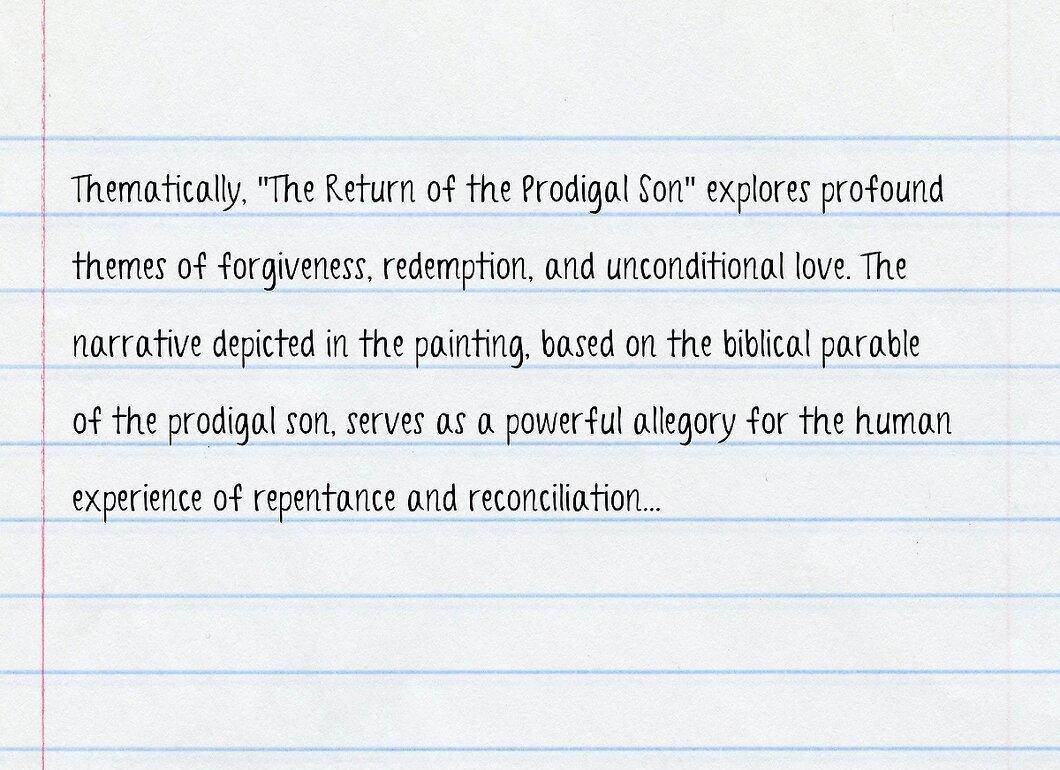
Notice themes. Identify several key themes and consider how the artist uses elements of visual art (color, light, space, forms, and lines) to convey those themes. Pay attention to:
- The use of color schemes to give the work a particular tone or meaning. For example, consider Picasso's paintings from the “Blue Period.”
- Symbolism and religious or mythological imagery. For example, examine the use of figures and symbols from classical mythology in Renaissance works like Botticelli's “Birth of Venus.”
- Recurring images or motifs in the work or a group of works. A vivid example would be the flowers and plants in Frida Kahlo's works.
How to Interpret a Work
Step 1: Try to Determine the Purpose of the Work.
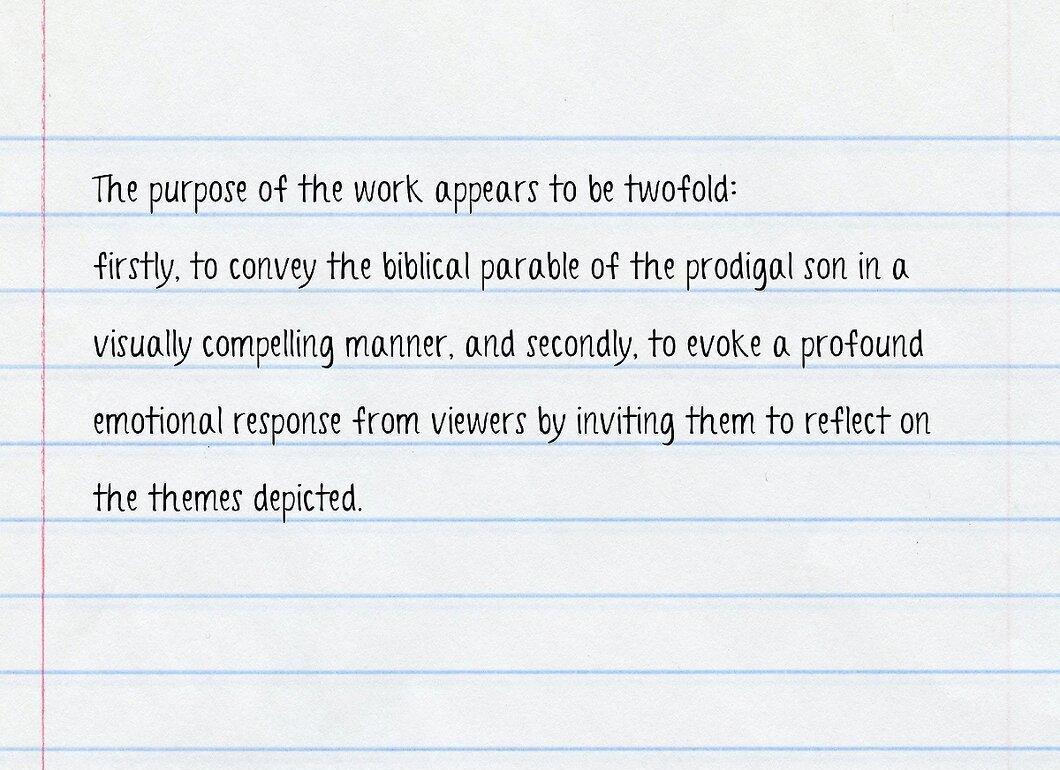
Try to determine the purpose of the work. In other words, what was the artist trying to say? Why did they create this work? Try to summarize your perspective.
Step 2: Describe Your Reaction to the Work.
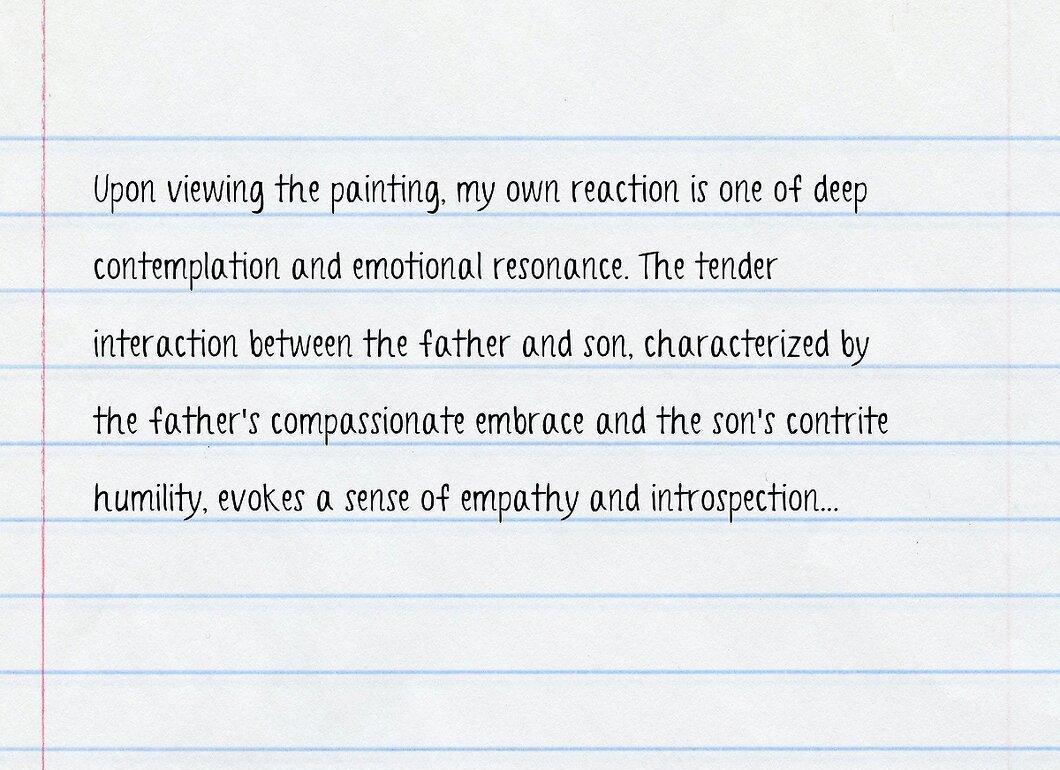
Describe your reaction to the work. It’s time to add a subjective touch. How do you feel when looking at the work? What overall tone does the piece convey? Does the work remind you of anything (ideas, experiences, other works)?
- Use expressive words to describe your reaction. For example, does the work evoke feelings of sadness? Hope? Calmness? Would you describe the work as beautiful or terrible?
Step 3: Support Your Interpretation with Examples.
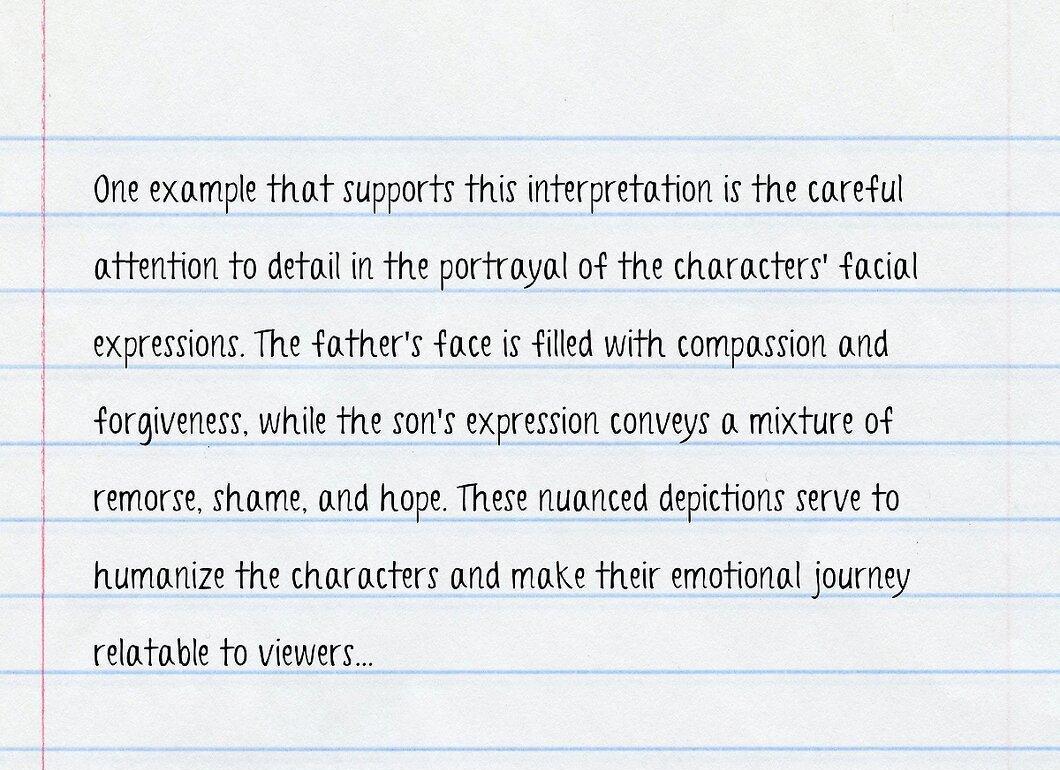
Support your interpretation with examples. Use examples from your description and analysis to explain your thoughts and feelings.
- For instance, “In my view, the portrait of the young bride by James Senta forms an image of the bride’s spiritual devotion. This is expressed in the composition’s line that directs the viewer’s attention upwards, following the gaze of the main subject. The painting also uses warm light, with the source positioned slightly above the girl.”
How to Evaluate a Work
Step 1: Assess How Successful the Work is, in Your Opinion.
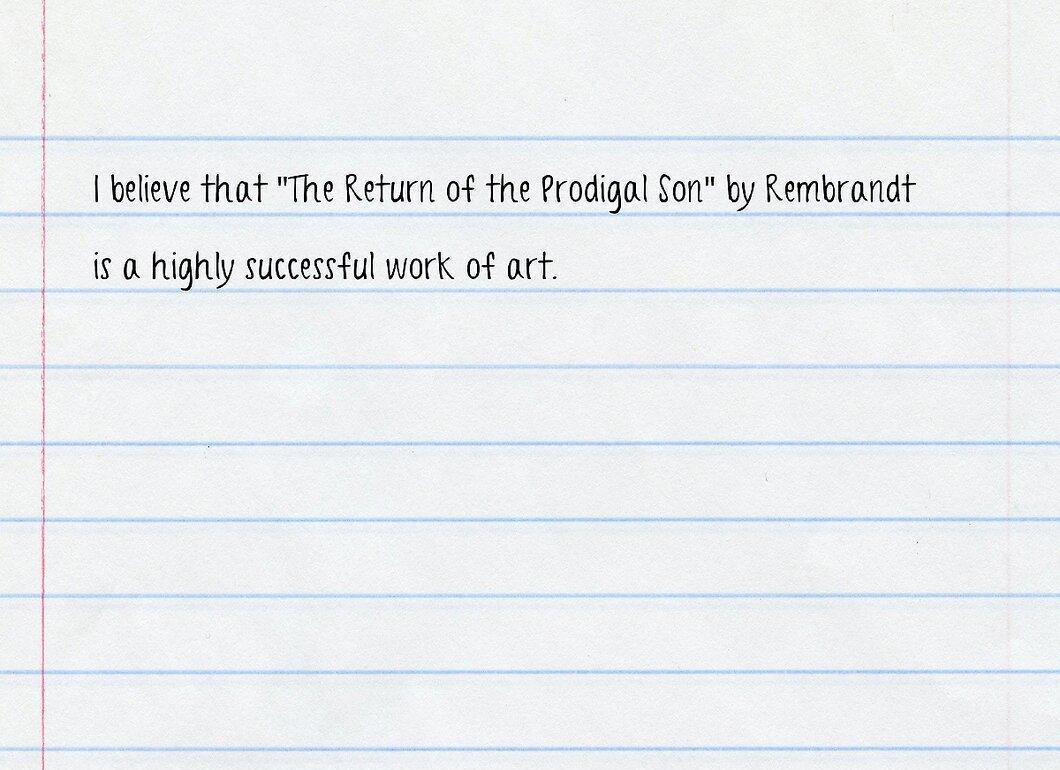
Assess how successful the work is, in your opinion. It’s not necessary to classify a work of art into categories of “good” or “bad.” It’s better to focus on the category of “success.” For example, consider the following:
- How successfully does the work express the artist’s intentions?
- How effectively did the artist use available tools and techniques?
- Is the work original or does it imitate others?
Step 2: Explain Your Evaluation.
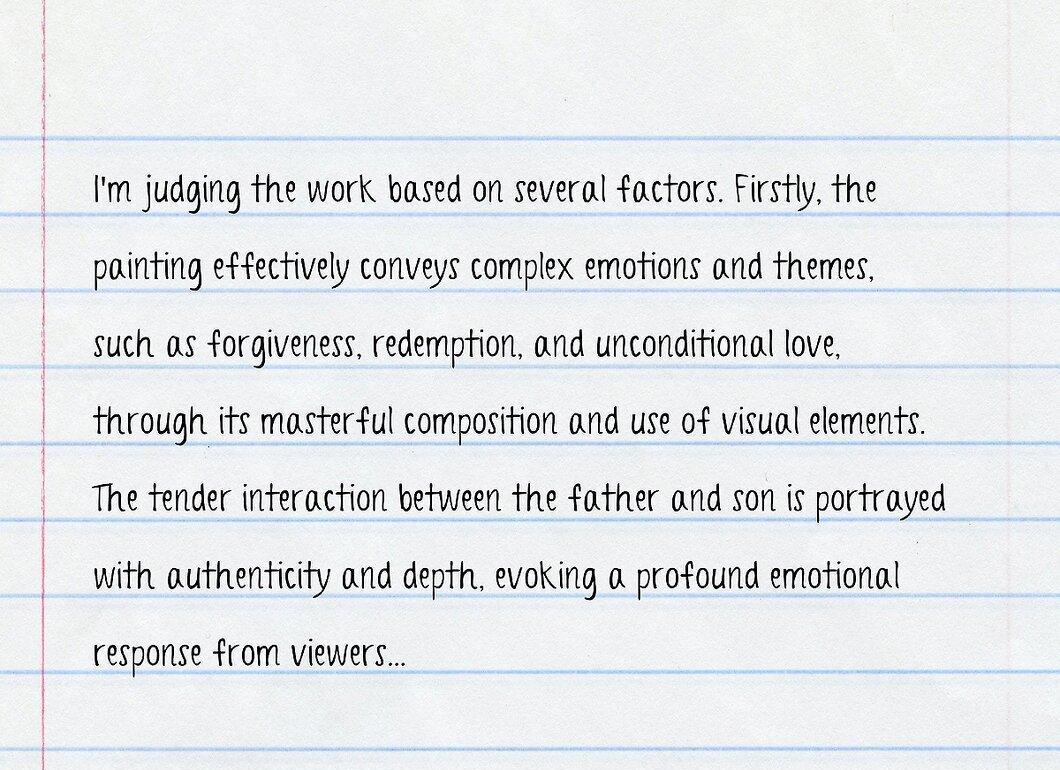
Explain your evaluation. When you choose several aspects for evaluation, clearly indicate the main element. For instance, you might say that you evaluate the work based on how well it is organized, how well it is executed from a technical standpoint, and how successfully it conveys the mood or themes chosen by the artist.
Step 3: Summarize Why You Think the Work is Successful or Not.
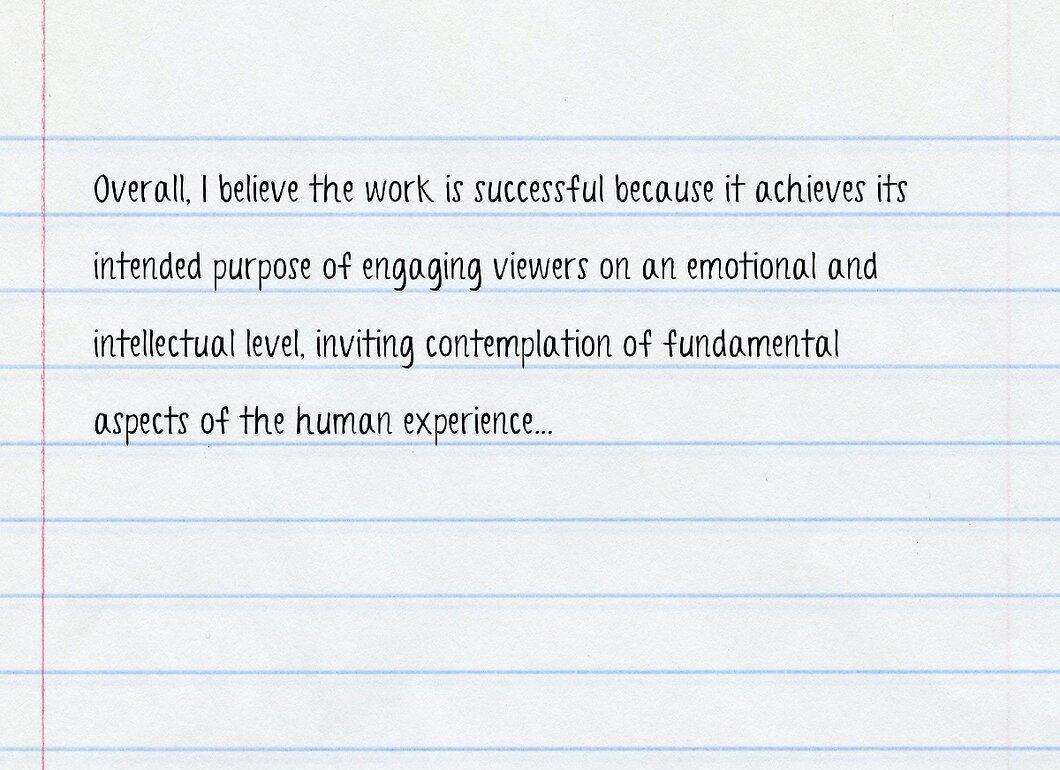
Summarize why you believe the work is successful or unsuccessful. Explain your judgments in a few sentences. Provide specific reasons for your evaluation based on the analysis and interpretation of the work.
- For example, “I consider the work successful, as the light, forms, gestures, and lines harmoniously blend together and convincingly convey the mood of the subject.”